
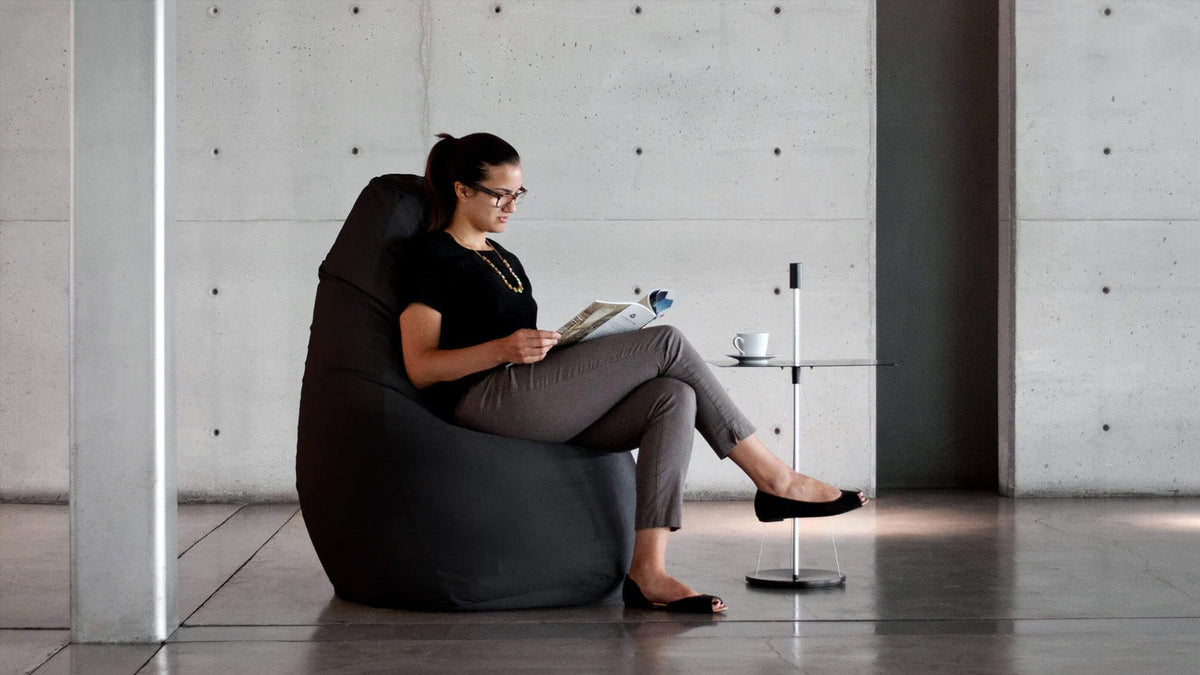
The sacco chair did not arrive as an evolution of earlier seating. It arrived as a refusal. When Piero Gatti, Cesare Paolini, and Franco Teodoro presented their proposal to Zanotta in 1968, the Italian manufacturer hesitated, and that hesitation is telling. The three Turin designers had drawn a bag. An actual sack, filled with expanded polystyrene pellets, sewn into a pear-ish form with no legs, no frame, no spine, no armrests. Zanotta ultimately agreed to produce it, and the Sacco entered the world the same year as the Paris uprisings, the Prague Spring, and the Columbia student strikes. The timing was not coincidental.
That object now sits in the permanent collection of the Museum of Modern Art in New York. It is one of the most duplicated forms in furniture history. And, in its authorized Zanotta edition, it remains in continuous production, which tells its own story about what radical design actually endures.
Italian design in the late 1960s was engaged in a conversation that went well beyond aesthetics. Groups like Archizoom and Superstudio were dismantling the very premise of "good design" as it had been codified by postwar modernism. The Sacco arrived at the same moment, but from a different angle: not from theoretical manifestos, but from a precise material proposition. What if the form of seating was determined entirely by the sitter?
That question had ergonomic implications, political ones, and philosophical ones. A chair without a fixed shape cannot impose a posture. It cannot signal hierarchy through its silhouette. It cannot be placed in a room as a statement of the designer's authority over the body that will occupy it. The polystyrene pellets inside the Sacco simply rearrange themselves. The chair, in that sense, has no opinion about how you should sit. It is one of the few pieces of furniture in the twentieth century that is genuinely indifferent to propriety.
This was not anti-design in the nihilistic sense. Gatti, Paolini, and Teodoro were not rejecting craft or care. The Sacco was the result of precise engineering: the pellet volume, the inner liner, the outer cover proportions, and the way the form distributes weight are all calibrated. What they rejected was the idea that furniture's job was to discipline the body rather than accommodate it.

The Sacco's form is deceptively simple to copy and genuinely difficult to replicate. Decades of knock-offs have taught the market the difference, even when buyers do not yet know it themselves. The failures share common tells: outer fabric that stiffens or pills within a year, inner liners that rupture under regular use, and pellet fills that compress into a flat, immovable mass rather than continuing to shift and support.
The authorized Zanotta edition addresses each of these through production standards that have been refined across more than five decades. The double inner liner retains pellet volume and prevents migration. The outer covers carry the Zanotta label and meet the material tolerances the original design specification requires. For buyers who ask whether the Sacco bean bag can be refilled over time: the answer is yes, and the double-liner system is precisely what makes that practical. Pellet density does decrease with extended use, and the ability to replenish the fill is a meaningful consideration for a piece meant to last.
Authenticity in this category is not a prestige argument. It is a durability argument. The copies fail on a timeline that the original does not.

The Sacco VIP is the current Zanotta production variant carried here, and it reflects both fidelity to the original and a considered update for high-use contexts. The cover fabric is treated with Permablock 3, an antibacterial and stain-resistant finish that does not alter the hand or the drape of the material. This makes the VIP variant genuinely appropriate for outdoor-adjacent settings, children's rooms, and media spaces where cleanability is a real condition, not a minor preference.
The color range available spans saturated primaries, including red and yellow, as well as black, allowing the chair to function either as a chromatic statement or as a quietly grounded presence within a more neutral scheme. These are not filler colorways. The primaries in particular connect directly to the visual language of 1960s Italian design: the same period that produced the Sacco also produced Ettore Sottsass's Valentine typewriter and Joe Colombo's Universale chair, all of them fluent in the rhetoric of bold industrial color.
For designers specifying the piece for a project, the Trade Program offers access to current material specifications, lead times, and project pricing. The VIP fabric's performance credentials make it one of the more straightforward calls when the design brief includes high-traffic or outdoor-transitional use.
The Sacco's greatest misuse is treating it as a casual afterthought, the comfortable chair added because the room felt too serious. Placed that way, it reads as an apology. Placed with intention, it reads as a counterpoint, and that is an entirely different thing.
In a study or home library, where the surrounding furniture carries the weight of wood, leather, and structure, a single Sacco chair functions as a deliberate release of tension. The room does not become casual; it becomes inhabited. The silhouette is low and rounded, and it holds the floor in a way that a conventional lounge chair does not. Against a built-in bookcase, it fills a corner with volume without competing for visual authority.
In a media room, its utility is self-evident and its design credentials remain intact. The body sinks and tilts without the chair doing anything. No mechanical recline, no adjustable headrest. The adaptation is entirely in the material.
Children's spaces are perhaps its most honest context. Children do not sit in chairs the way adults pretend to. They climb, they drape, they sprawl, they turn things upside down. The Sacco accommodates all of this without harm to the object or the child, and it introduces a MoMA-collected piece of Italian design history to a space that is too often furnished as if design history does not apply there.
There is a productive irony in the Sacco's institutional canonization. A chair conceived as a refusal of furniture conventions now resides in the permanent collection of the world's most authoritative modern design institution. MoMA's acquisition did not domesticate the object, it confirmed that the proposition was substantial enough to outlast its moment.
Many objects produced under the banner of Italian radical design in 1968 did not survive their decade. They were too tied to a specific ideological temperature, too dependent on the energy of their context to function once that context passed. The Sacco survived because its proposition was rooted in material behavior, not ideology. Polystyrene pellets responding to the weight and warmth of a human body is not a statement that dates. It is a fact of physics.
Gatti, Paolini, and Teodoro did not set out to design an icon. The word applies here in a precise, historical sense: the Sacco is an object that has come to represent a specific shift in how designers understood the relationship between form and body. That is different from being famous. Plenty of famous objects are empty. This one has retained its argument across more than five decades of use, production, and imitation, and the argument still holds.
For those specifying the piece for a project or personal collection, the Trade Program offers direct access to current material options, project-level pricing, and the support of dedicated design consultants familiar with Zanotta's full range.
In Conversation with Sophie Goineau
Interior architect Sophie Goineau designs across scales, from a single object to the architecture around it and the land beyond. She discusses composing interiors as one continuous experience, letting each place and its people shape a project's language, and her work on Selby Lane with the San Francisco team.
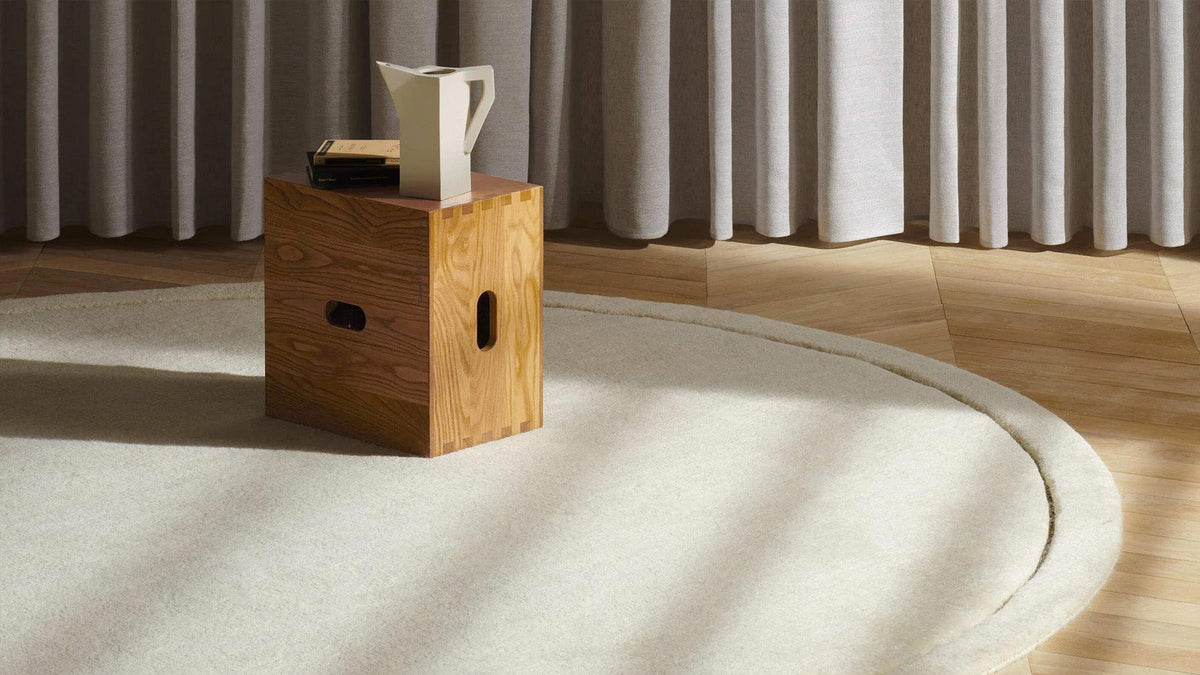
Charlotte Perriand's Tabouret Stools: Alpine Form, Modern Use
Read moreabout Charlotte Perriand's Tabouret Stools: Alpine Form, Modern Use
Inside Luminaire Chicago: Italian Design in River North Since 1989
Read moreabout Inside Luminaire Chicago: Italian Design in River North Since 1989
Eileen Gray's E 1027 Table: A Design Conceived for Living
Read moreabout Eileen Gray's E 1027 Table: A Design Conceived for Living
LC14 Tabouret Cabanon: Le Corbusier's Smallest Architecture
Read moreabout LC14 Tabouret Cabanon: Le Corbusier's Smallest Architecture
Sacco Chair by Zanotta: The 1968 Object That Refused to Be Furniture
Read moreabout Sacco Chair by Zanotta: The 1968 Object That Refused to Be Furniture
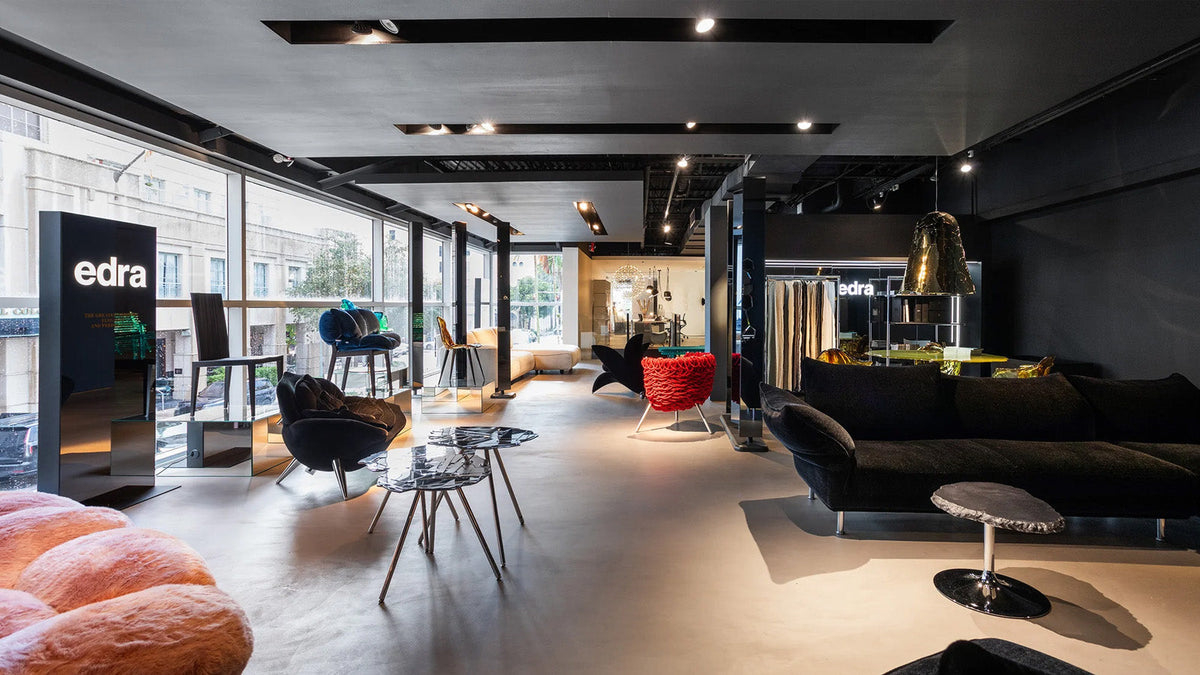
Inside Luminaire Coral Gables: The Showroom and Its Design Services
Read moreabout Inside Luminaire Coral Gables: The Showroom and Its Design Services
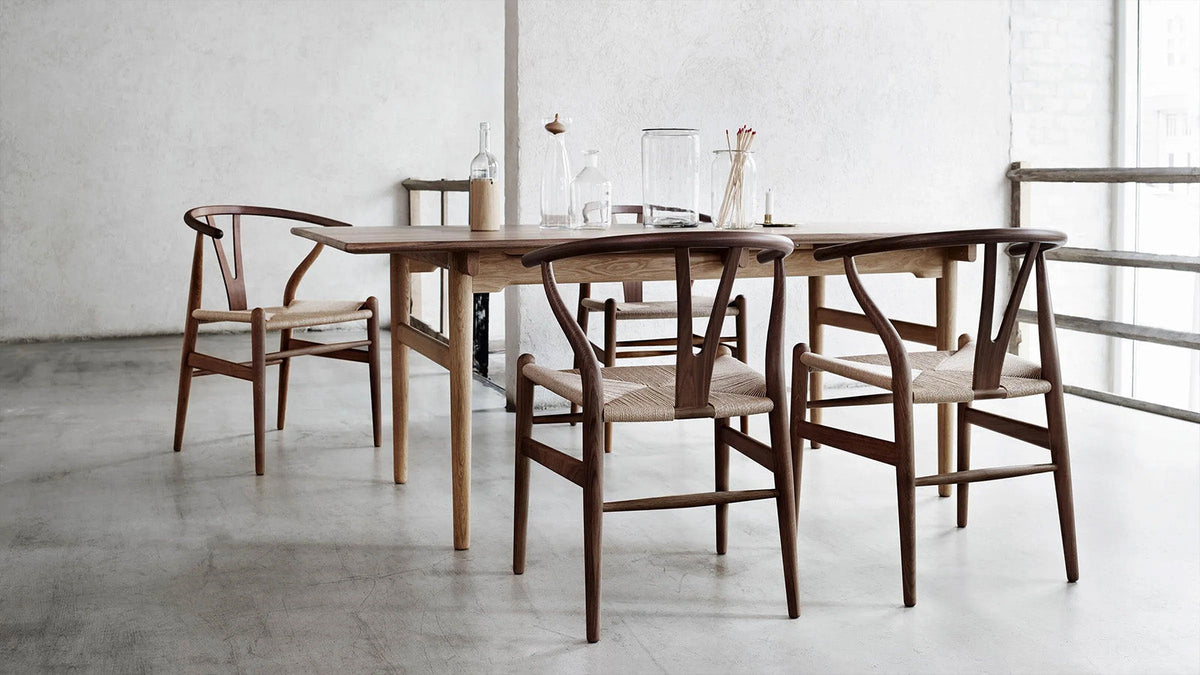
The Wishbone Chair: Hans Wegner's CH24 and the Art of Making
Read moreabout The Wishbone Chair: Hans Wegner's CH24 and the Art of Making
Cassina Chairs - The Collectors' Guide
Few furniture makers have shaped the chair as a cultural object the way Cassina has. From their earliest collaborations with the European avant-garde to their ongoing stewardship of the twentieth century's most consequential seating designs, the Meda-based manufacturer remains the standard against which Italian furniture brands are measured. This guide surveys the Cassina chairs we carry and the ideas embedded in each one.
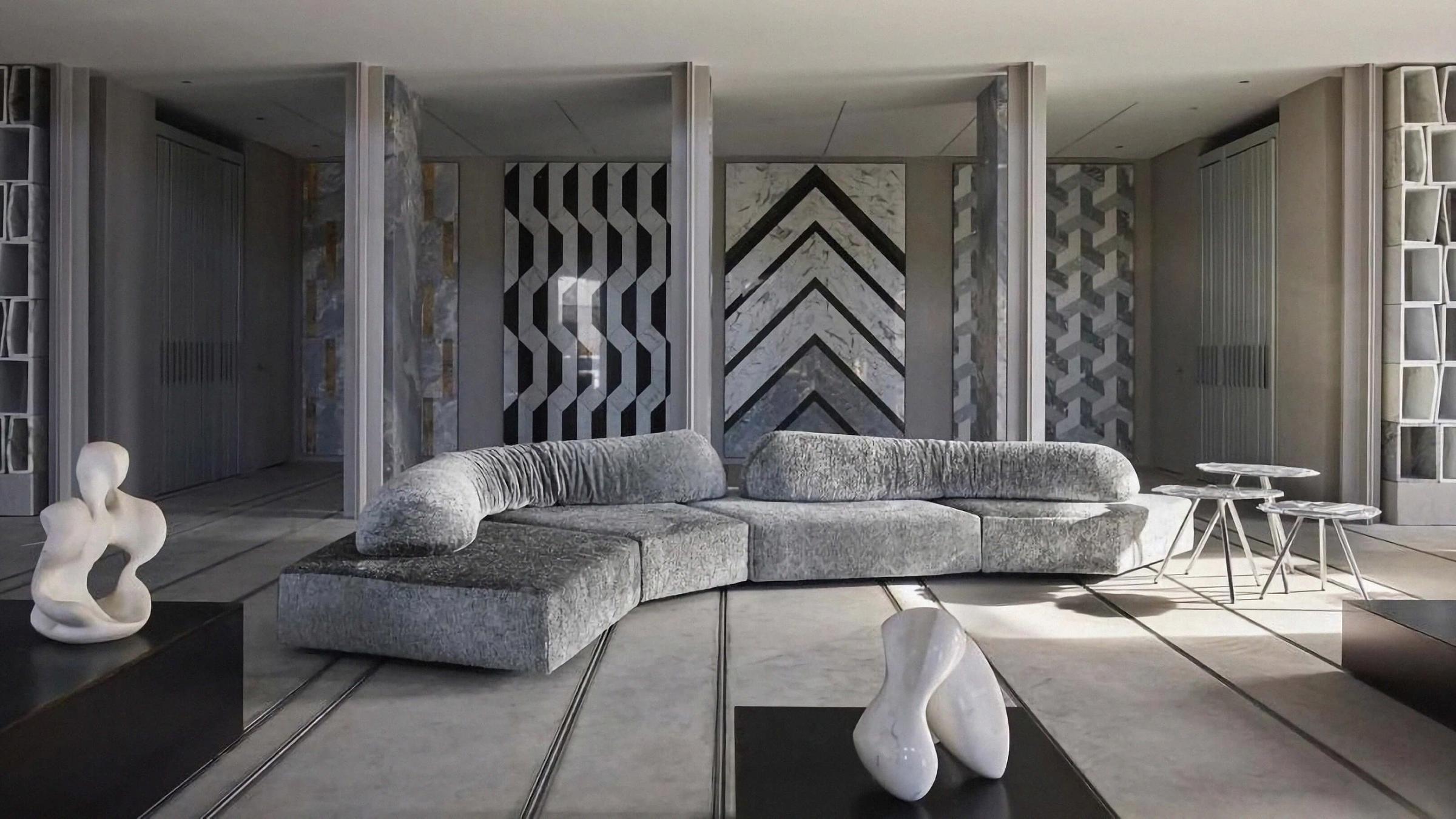
On the Rocks by Edra: Francesco Binfaré's Geology of Rest
Read moreabout On the Rocks by Edra: Francesco Binfaré's Geology of Rest
The 14p Portable Lamp: Bocci's Cast-Glass Sphere, Untethered
Read moreabout The 14p Portable Lamp: Bocci's Cast-Glass Sphere, Untethered
The Arco Lamp: Achille Castiglioni's Arc Over Sixty Years
Read moreabout The Arco Lamp: Achille Castiglioni's Arc Over Sixty Years
Our design services cover everything from concept development to installation, including product guidance, material selection, custom configurations, pricing, and lead‑time coordination.
Speak with a Design Consultant
Call 855-341-3620 for assistance during business hours.
Enroll for privileged access to iconic design, emerging trends, exclusive events, and thoughtfully curated offers.




Share:
Inside Luminaire Coral Gables: The Showroom and Its Design Services
LC14 Tabouret Cabanon: Le Corbusier's Smallest Architecture