
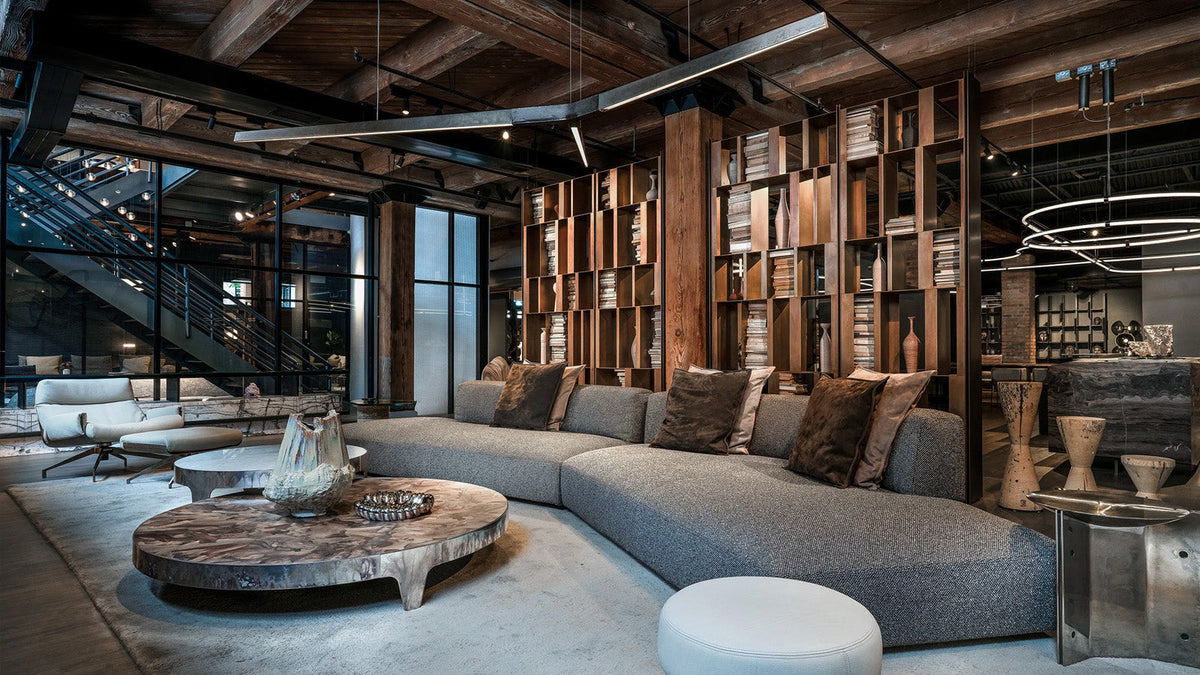
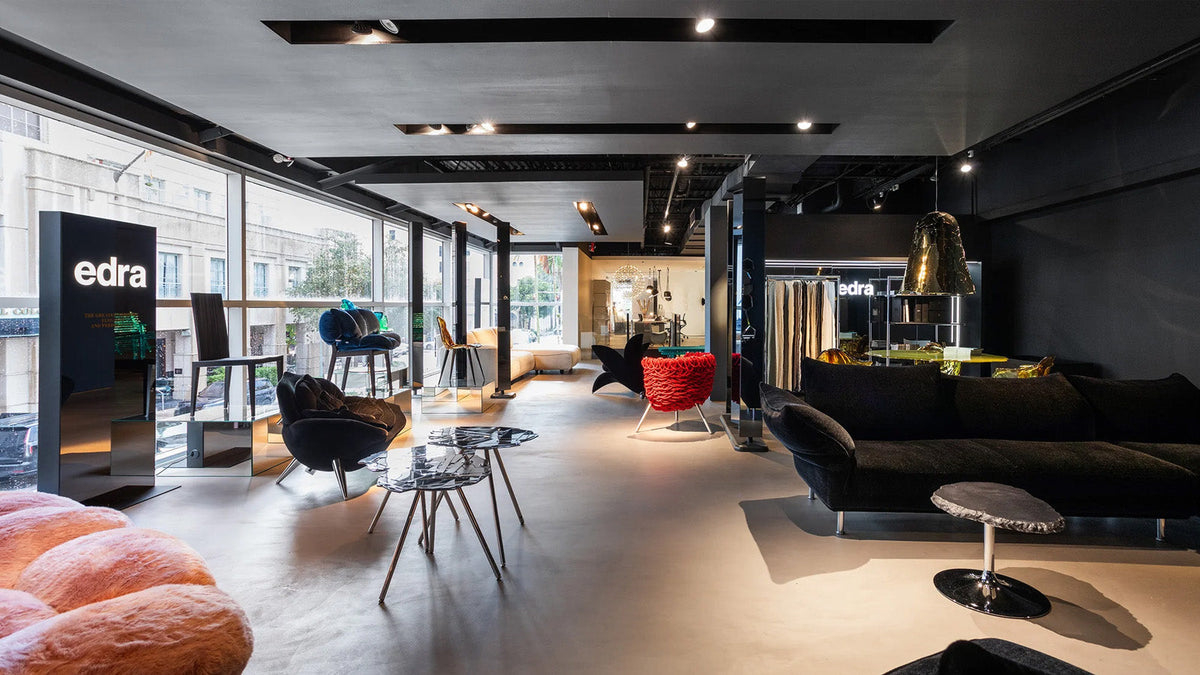
A furniture showroom Chicago has never quite seen another like it. Luminaire Chicago, at 301 W Superior Street in River North, opened in 1989 inside a converted timber loft, and its original architectural decision remains the defining one. The exposed beams, raw column grid, and warehouse proportions of that building did not need concealment. They needed curation.
Thirty-five years on, the showroom spans three levels and 21,000 square feet, making it one of the largest dedicated Italian and international design destinations in the American Midwest. The address sits at the edge of River North's gallery district, a neighborhood whose cultural identity has long been shaped by the proximity of art, architecture, and commerce. For a design house of this caliber, the location is not incidental.
The building at 301 W Superior is a particular kind of Chicago structure: heavy timber construction, generous ceiling heights, deep-set windows that draw northern light through the day. These are conditions that favor furniture with strong silhouette and material presence, objects that hold their identity across a room rather than collapsing into background. The collections shown here were selected with that spatial logic in mind.
Moving through three levels, visitors encounter each floor as a distinct register of the collection, not a continuation of the same floor plan scaled up. The lower level grounds the experience in the most material-forward work. Upper floors open the scale and allow larger seating compositions and dining environments to breathe. Throughout, the timber bones of the original loft remain visible, providing a consistent architectural counterpoint to the precision of Italian manufacturing.
The result is an atmosphere that reads less like a showroom and more like a well-curated residence, one that happens to contain some of the most significant contemporary European design available in North America. Architects visiting for the first time often note that the spatial sequencing itself is part of the editorial statement.

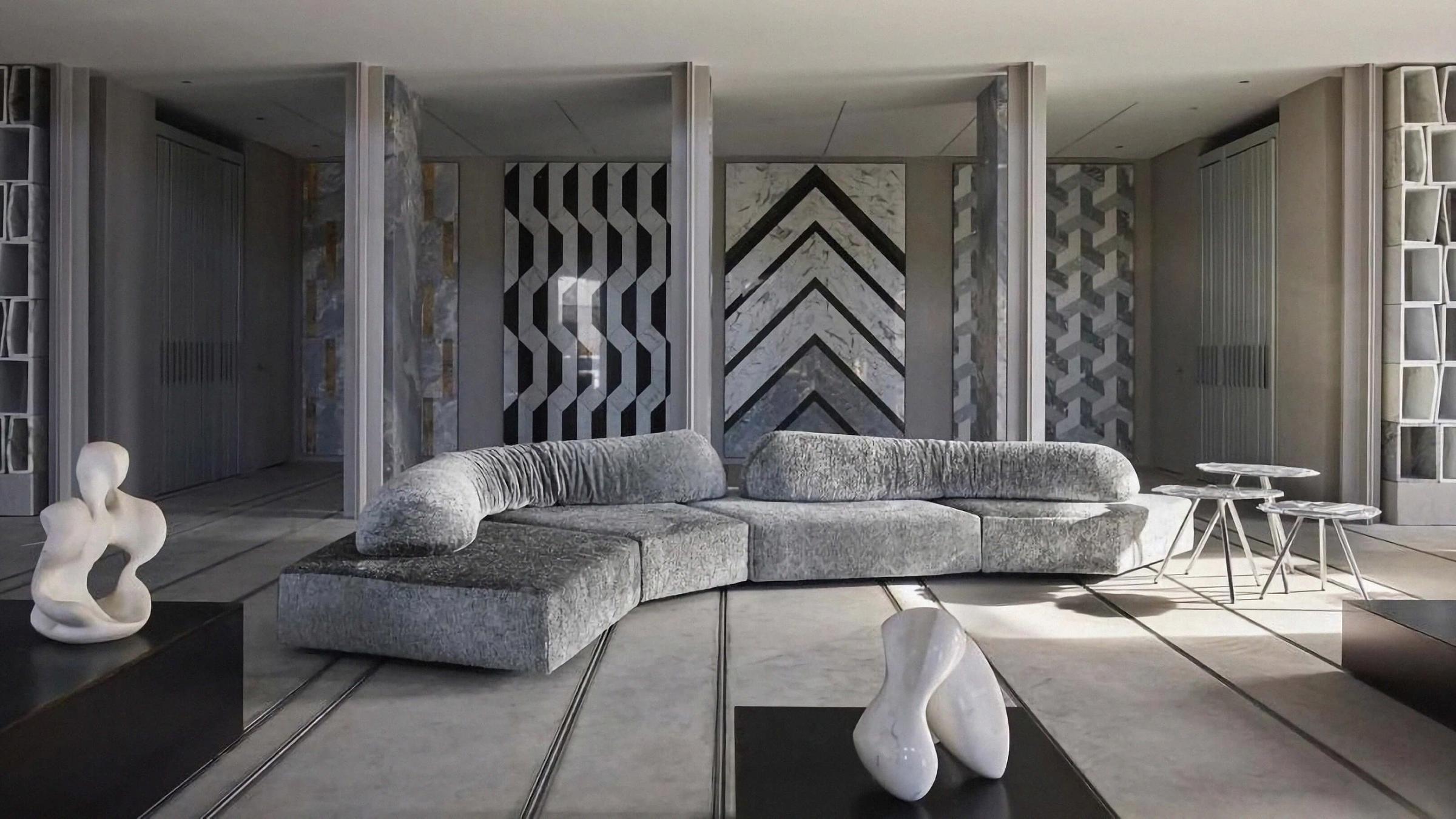
Within the Chicago showroom, the dedicated Flexform space functions as a showroom within the showroom. Flexform is a Meda-based manufacturer with a lineage that extends back to the 1950s, and its approach to upholstered furniture has remained consistent across that span: made in Italy, built with artisan precision, designed in close collaboration with a rotating group of the most rigorous names in European furniture design.
What the monobrand space offers is immersion. Rather than a single representative sofa positioned between pieces from other makers, visitors encounter Flexform's full vocabulary of living systems, from modular sectionals to freestanding armchairs, across a dedicated environment that allows each configuration to be read on its own terms. The upholstery choices, the depth of the seat, the calibration of the back angle: these are details that only become legible when the piece is in the room at full scale.
For architects and interior designers specifying at the level of a full residence, the Flexform space provides the spatial evidence that digital renderings cannot. The collection's Made in Italy identity is grounded in the choice of materials and the consistency of execution across different models, from the tight geometry of a single-seat chair to the lateral extension of a large sectional composition.

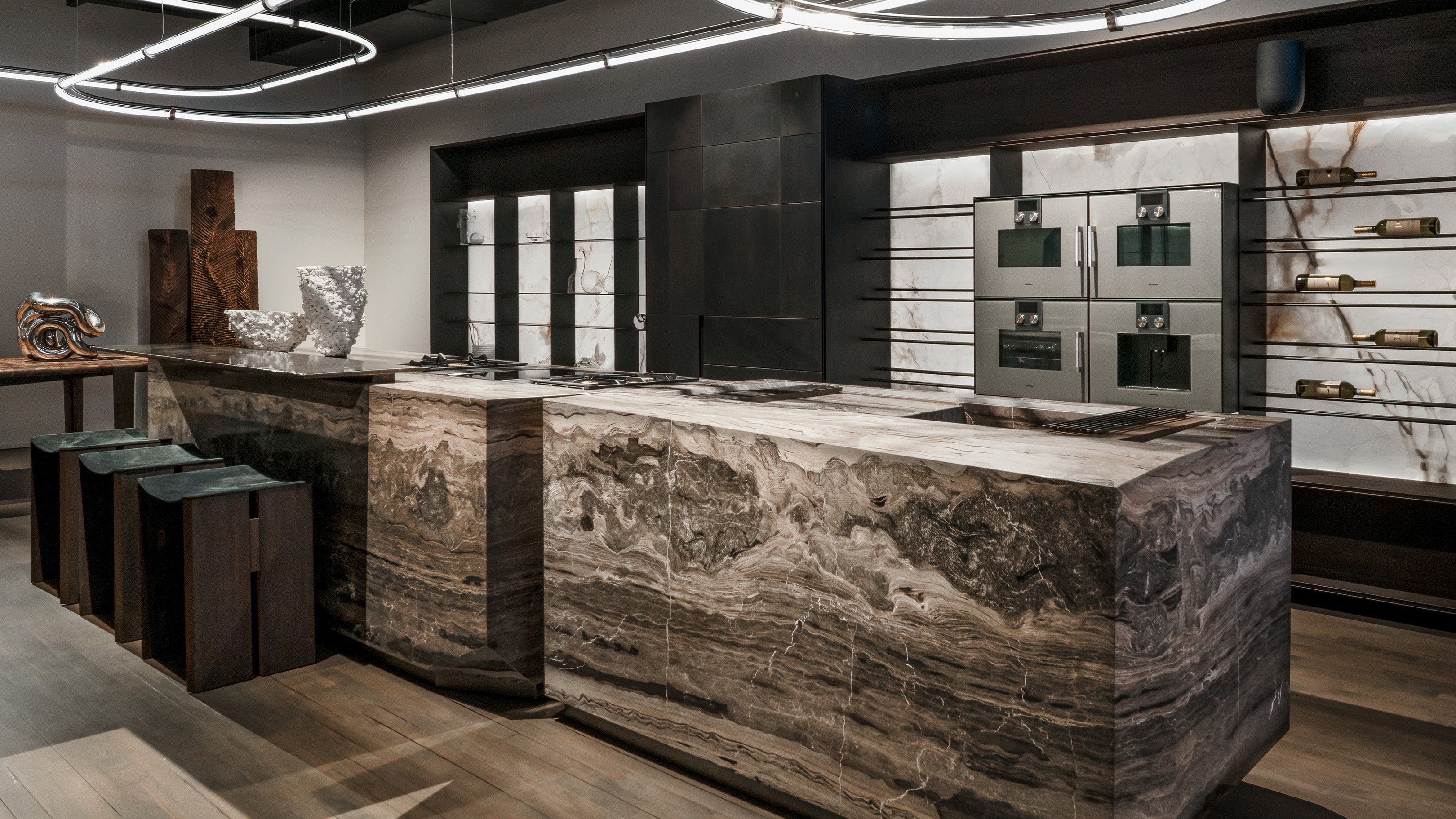
Henge occupies its own dedicated environment within the Chicago showroom, and the distinction between browsing and experiencing is felt immediately upon entering the space. The Henge Chicago monobrand space presents the Italian brand's material-driven approach to furniture, lighting, and architectural objects, with pieces rendered in natural stone, burnished metals, and refined textiles that read as geological rather than decorative.
Among the works presented: the Downtown sofa, the Oxymoron table, the Gattopardo seating system, and the Spectre bookshelf. Each of these pieces operates at the intersection of furniture and architectural installation. Henge does not produce objects that recede into an interior; its work demands that the surrounding space negotiate with it. In the context of Chicago's timber loft, that dialogue between raw structure and refined materiality is at its most productive.
For design professionals specifying a residence where the architecture itself is making a formal argument, Henge provides a vocabulary of furnishings that meet that argument at the same register. The monobrand space allows that conversation to be had at full scale, with lighting conditions and spatial adjacencies that approximate a real interior more closely than any digital presentation can.
Beyond the two monobrand spaces, the Chicago showroom presents a curated selection of the most significant names in Italian and international furniture. Cassina is represented with the depth its history demands: the brand's archive includes work by Le Corbusier, Charlotte Perriand, and Gio Ponti, and its current production continues to define the relationship between modernist heritage and contemporary manufacturing. Poltrona Frau brings its century-old tradition of Italian leather upholstery, a lineage grounded in Tolentino and carried forward in collaboration with architects including Gio Ponti and, more recently, Jean-Marie Massaud.
Living Divani offers a counterpoint: Brianza-based, spare in its formal language, and consistently at the edge of the discipline's conversation about materiality and proportion. Edra brings a more expressive register, with sculptural upholstered forms designed by the Campana Brothers and Francesco Binfaré. Minimal addresses the architecture of the kitchen and bath, extending the editorial coherence of the collection into spaces that many design destinations treat as afterthoughts.
Secondary presences in the collection include Bocci, Cappellini, Ceccotti Collezioni, Maruni, Moroso, Paola Lenti, Porro, and USM Haller, each represented at a scale that allows for meaningful specification without displacing the primary voices.
The interior design services offered through the Chicago showroom are structured for projects at full-residence and estate scale. The process begins with a consultation, during which the design team develops an understanding of the architecture, the client's way of living, and the spatial and material logic that should govern the project. This is not a room-by-room exercise. The team approaches each engagement as a single, continuous brief.
From consultation, the process moves to spatial planning: the development of floor plans, furniture configurations, and material palettes that respond to the architecture with precision. Specification follows, drawing on the full collection and, where appropriate, on pieces sourced beyond the showroom floor through established procurement channels. The team manages the full sequence through delivery and installation, ensuring that what was specified in plan reads correctly in the completed interior.
The clients who engage the design services team range from homeowners furnishing a first significant residence to architects and interior designers seeking a procurement and specification partner for complex multi-unit or estate-scale projects. Trade professionals are welcome and work within a dedicated program. The showroom's depth of stock, its relationships with Italian manufacturers, and its logistics infrastructure make it a meaningful partner for projects with long lead times or complex delivery requirements.
The Chicago showroom is open Monday through Saturday, 10:00 AM to 6:00 PM, and closed on Sundays. Walk-in visits are welcome during open hours. Appointments are available and are recommended for visitors planning to discuss a specific project, engage the design services team, or explore the Flexform or Henge monobrand spaces in depth. Appointments allow the team to prepare relevant material and dedicate appropriate time to the conversation.
The showroom is located at 301 W Superior Street, Chicago, Illinois 60654, in the River North neighborhood. Street and garage parking are available in the area. For directions, visit the Chicago showroom page, which includes a map link and full contact information. The main line is 312-664-9582.
Inside Luminaire Chicago: Italian Design in River North Since 1989
Read moreabout Inside Luminaire Chicago: Italian Design in River North Since 1989
Eileen Gray's E 1027 Table: A Design Conceived for Living
Read moreabout Eileen Gray's E 1027 Table: A Design Conceived for Living
LC14 Tabouret Cabanon: Le Corbusier's Smallest Architecture
Read moreabout LC14 Tabouret Cabanon: Le Corbusier's Smallest Architecture
Sacco Chair by Zanotta: The 1968 Object That Refused to Be Furniture
Read moreabout Sacco Chair by Zanotta: The 1968 Object That Refused to Be Furniture
Inside Luminaire Coral Gables: The Showroom and Its Design Services
Read moreabout Inside Luminaire Coral Gables: The Showroom and Its Design Services
The Wishbone Chair: Hans Wegner's CH24 and the Art of Making
Read moreabout The Wishbone Chair: Hans Wegner's CH24 and the Art of Making
Cassina Chairs - The Collectors' Guide
Few furniture makers have shaped the chair as a cultural object the way Cassina has. From their earliest collaborations with the European avant-garde to their ongoing stewardship of the twentieth century's most consequential seating designs, the Meda-based manufacturer remains the standard against which Italian furniture brands are measured. This guide surveys the Cassina chairs we carry and the ideas embedded in each one.
On the Rocks by Edra: Francesco Binfaré's Geology of Rest
Read moreabout On the Rocks by Edra: Francesco Binfaré's Geology of Rest
The 14p Portable Lamp: Bocci's Cast-Glass Sphere, Untethered
Read moreabout The 14p Portable Lamp: Bocci's Cast-Glass Sphere, Untethered
The Arco Lamp: Achille Castiglioni's Arc Over Sixty Years
Read moreabout The Arco Lamp: Achille Castiglioni's Arc Over Sixty Years
Henge Finds a New Home in Chicago at Luminaire
During NeoCon 2026, we welcomed Henge into our Chicago showroom, marking a new chapter in the brand’s growing presence in the United States.
Read moreabout Henge Finds a New Home in Chicago at Luminaire
The LC3 Sofa: Le Corbusier, Jeanneret, and Perriand's Grand Confort
Read moreabout The LC3 Sofa: Le Corbusier, Jeanneret, and Perriand's Grand Confort
Our design services cover everything from concept development to installation, including product guidance, material selection, custom configurations, pricing, and lead‑time coordination.
Speak with a Design Consultant
Call 855-341-3620 for assistance during business hours.
Enroll for privileged access to iconic design, emerging trends, exclusive events, and thoughtfully curated offers.



Share:
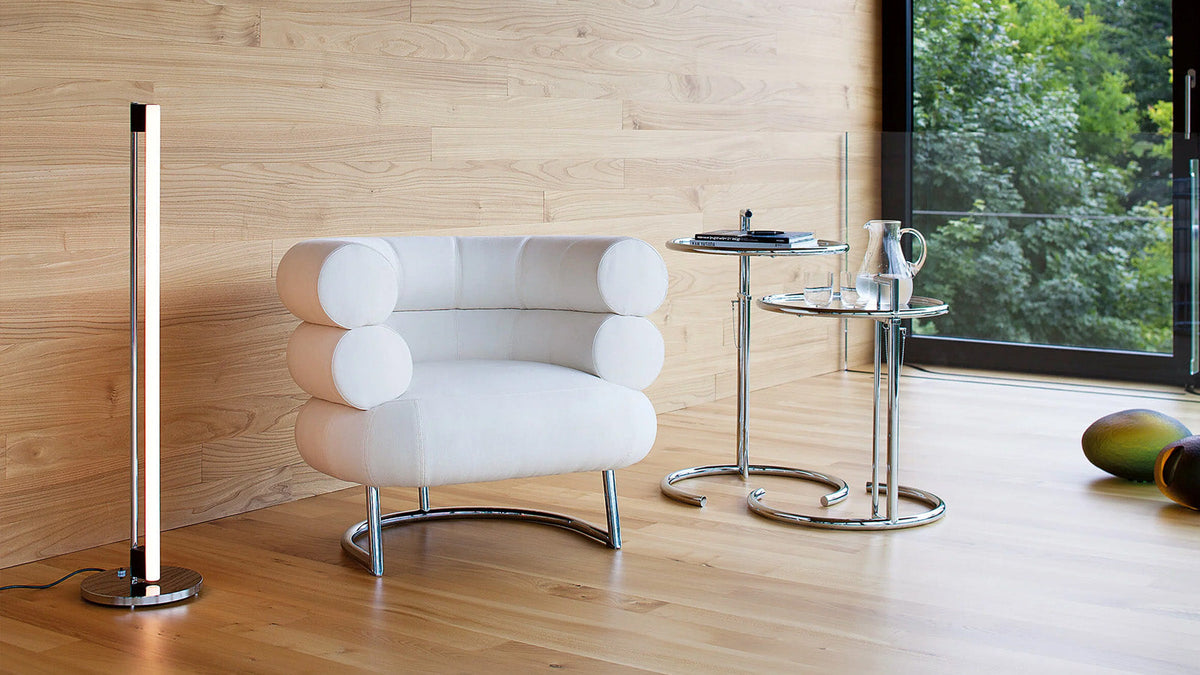
Eileen Gray's E 1027 Table: A Design Conceived for Living