
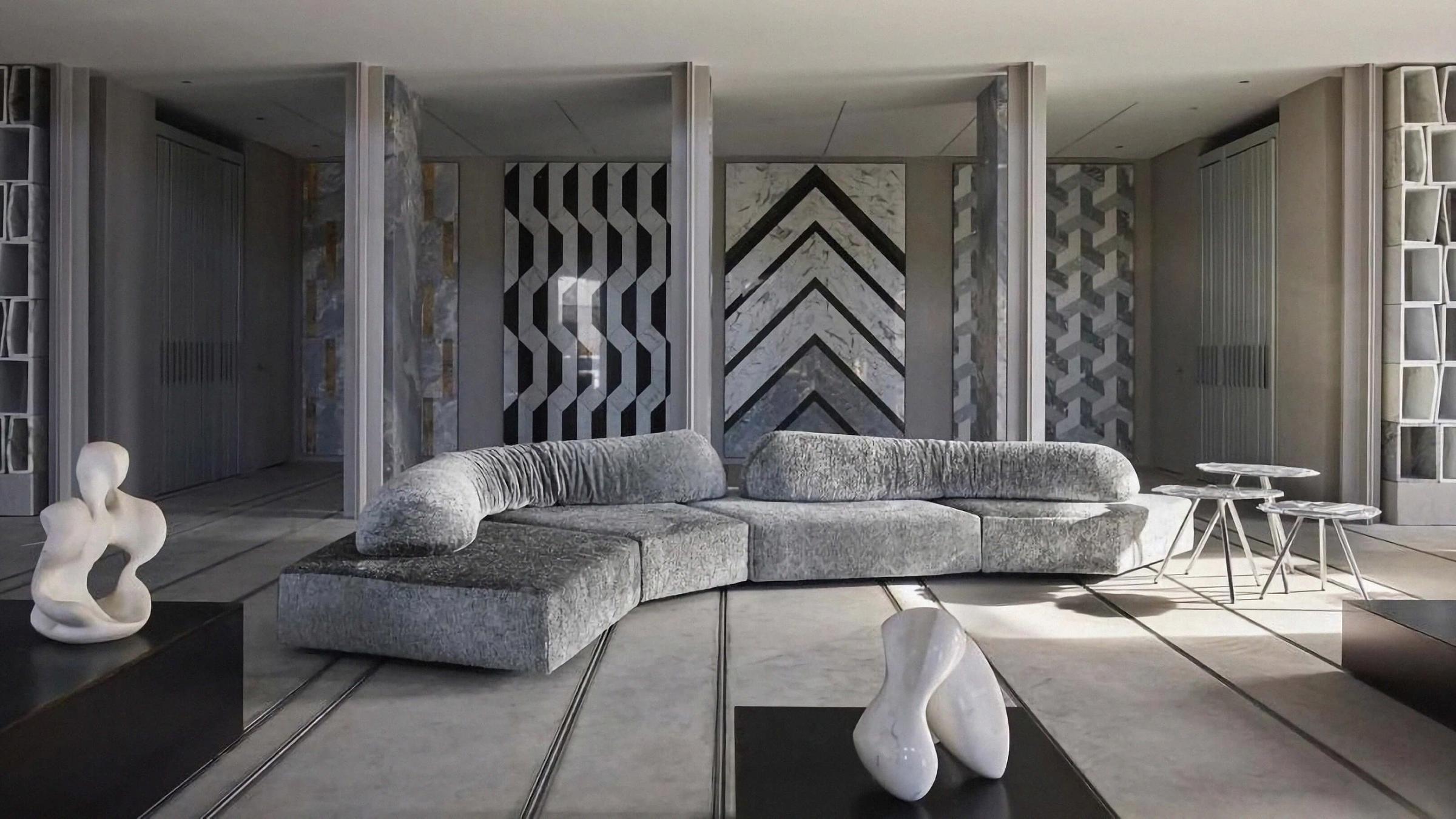
The On the Rocks sofa by Edra arrives in a room the way a geological event arrives in a landscape: slowly, definitively, and with an authority that reorganizes everything around it. Designed by Francesco Binfaré, the piece belongs to a tradition of Italian furniture that treats the sofa not as a neutral support but as a primary statement of space. Its forms are borrowed from erosion, from the rounded logic of water acting on stone over centuries. Nothing about it is incidental.

Binfaré's relationship with Edra spans several decades and a body of work defined by its willingness to look outside furniture history for its references. Where many designers of his generation drew from architecture or industrial design, Binfaré looked at bodies, at sleep, at the postures humans actually inhabit rather than the ones convention assumes they prefer. On the Rocks is an extension of that inquiry, but with a new source material: the earth itself.
The sofa's individual elements read as boulders. Not literally, not illustratively, but structurally. Each piece carries a weight in its silhouette that conventional upholstered furniture deliberately avoids. The profiles are swollen, asymmetric in elevation, finished with a kind of rounded completeness that suggests something shaped by force rather than intention. Against the clean lines that dominate most contemporary Italian seating, that choice is an argument.
Binfaré has spoken of the idea that furniture should hold within it a possible narrative, a suggestion of origin. On the Rocks encodes its origin in the form. You understand immediately that these pieces came from somewhere, that they carry a history. This is what separates furniture as design culture from furniture as product: the capacity to propose a world alongside a function.
The apparent contradiction at the center of On the Rocks is that something referencing stone should be among the most yielding pieces of seating Edra produces. The upholstery is generous to the point of invitation. Sit down and the piece accepts your weight with a completeness that more architecturally rigid sofas never quite achieve. The form says permanence. The material says surrender. That tension is where the design lives.

Edra's technical production underpins all of this. The Tuscan manufacturer, founded in 1987, has built its reputation on upholstery processes that most of the industry finds impractical to replicate. The compound curves of On the Rocks demand a precision in cutting and seaming that flat or gently curved forms simply do not. Every seam follows the topography of the piece. No element is forced flat. The result, across the full range of available fabrics and leathers, is a surface with the taut completeness of something cast rather than sewn.
The palette available for On the Rocks tends toward the elemental: ochres, slate greys, warm off-whites, deep terra cottas. These are colors borrowed from mineral and sediment, and they reinforce the geological proposition without becoming literal. In a darker leather, the piece reads as monolithic. In a warm boucle or textured woven, it becomes something closer to a nest, a formation to inhabit rather than admire from a distance.
On the Rocks is available as a series of individual elements that can be arranged independently or in combination, which is where its spatial intelligence fully emerges. Each boulder-form piece is complete on its own terms, a fully resolved object. But place two or three together and the system begins to suggest a shore, a scatter of forms that arrived together by some logic the room can only observe.
This is a different proposition from conventional modular seating. Most modular systems are designed for extension, for adding units to a growing grid. On the Rocks resists the grid entirely. The compositions that emerge are organic rather than additive, which means the arrangement process is genuinely curatorial. You are not configuring a sofa so much as placing elements in relation to each other and to the room. Scale, distance, orientation: these decisions shape the atmosphere of the space as decisively as any architectural intervention.
For interiors with strong architectural bones, the scatter arrangement gives the eye something to follow across the floor plane. For open-plan spaces, a tighter grouping creates a room within a room, defining territory without walls. The Design Concierge team regularly works with clients to determine which configurations suit the proportions and use of specific spaces, given that the arrangement question is not trivial.
Edra occupies an unusual position in Italian furniture. It is neither a heritage house built on decades of canonical pieces nor a young studio chasing novelty. Since its founding in Perignano, in the Pisan hills of Tuscany, the company has operated with a specific editorial identity: produce the pieces that other manufacturers would not commit to. The Campana Brothers' Favela chair, made from hundreds of interlocking strips of rough wood, is the most cited example. On the Rocks belongs to the same logic: a piece that required Edra's particular combination of technical ambition and editorial conviction to exist at all.
That lineage matters when understanding the sofa's place in the broader Italian sofa design conversation. The 1970s and 1980s produced several pieces that treated the sofa as sculptural territory, from the Maralunga to the Camaleonda, pieces that proposed new relationships between form and use. On the Rocks continues that inquiry in the twenty-first century, not by revisiting those precedents but by drawing from a different source entirely. Geology, rather than geometry. Erosion, rather than construction.

The Jenette Chair by the Campana Brothers illustrates the range within Edra's vision: a piece equally committed to form as proposition, equally demanding of the space it occupies. Together, these works reflect a house that treats each commission as a genuine design question rather than a market category to fill. Seen across the full Edra collection, the coherence of that ambition becomes clear.
There are pieces that photograph well and pieces that require physical presence. On the Rocks is emphatically the latter. The scale of each element, the depth of the cushioning, the way the boulder forms relate to each other and to the floor: these are spatial qualities that a photograph can suggest but not convey. The composition a room demands is also a question that resolves only in person, against actual dimensions and actual light.
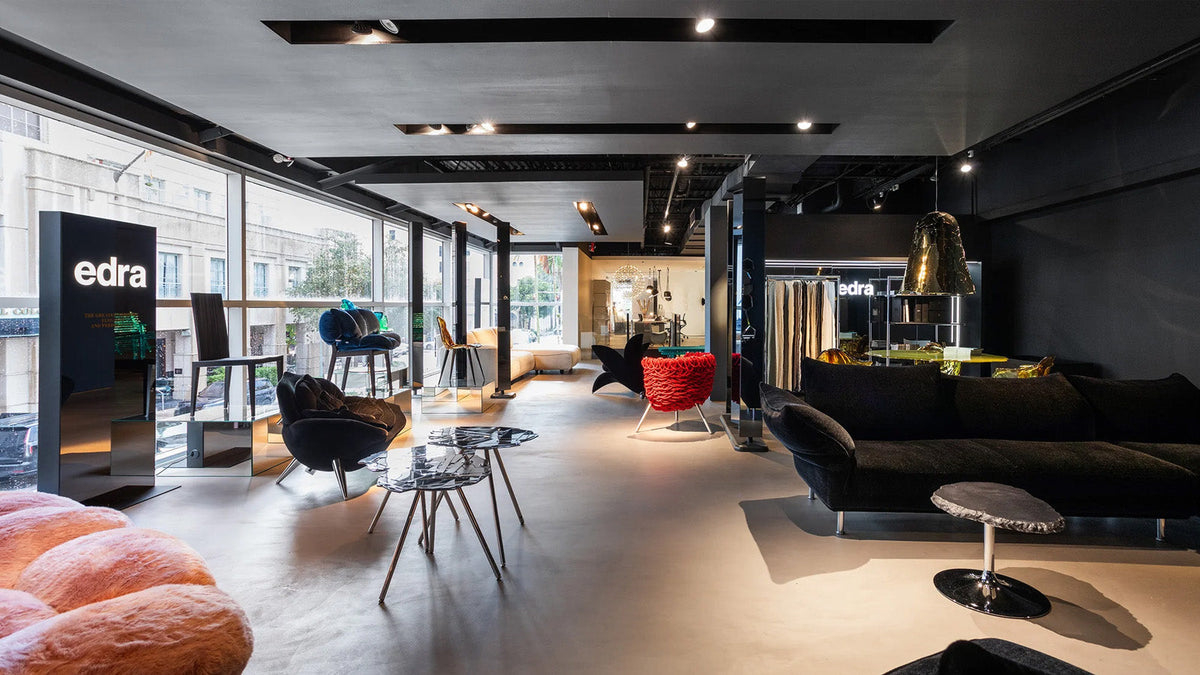
Our Coral Gables showroom carries the Edra collection with sufficient depth to understand the range of On the Rocks configurations. The Coral Gables location, designed to present furniture in the context of complete interiors rather than as isolated objects, offers the kind of environment where the scale and atmosphere of a piece like this can be properly read. For those working on a specific project, the Design Concierge can arrange a focused visit and work through arrangement and material options in detail. Trade professionals will find the full scope of our collaboration services through the Trade Program.
To find a showroom near you across our full network, the Showrooms Navigator has current locations and contact information. For a broader view of completed interiors where pieces like On the Rocks have been placed, the Projects Showcase documents the range of residential and commercial work our team has brought to completion.
On the Rocks asks something specific of the rooms it enters. It asks to be taken seriously as form, given space to breathe, and paired with interiors that can hold the weight of a genuine gesture. Rooms that meet it on those terms are rarely unchanged by the encounter.
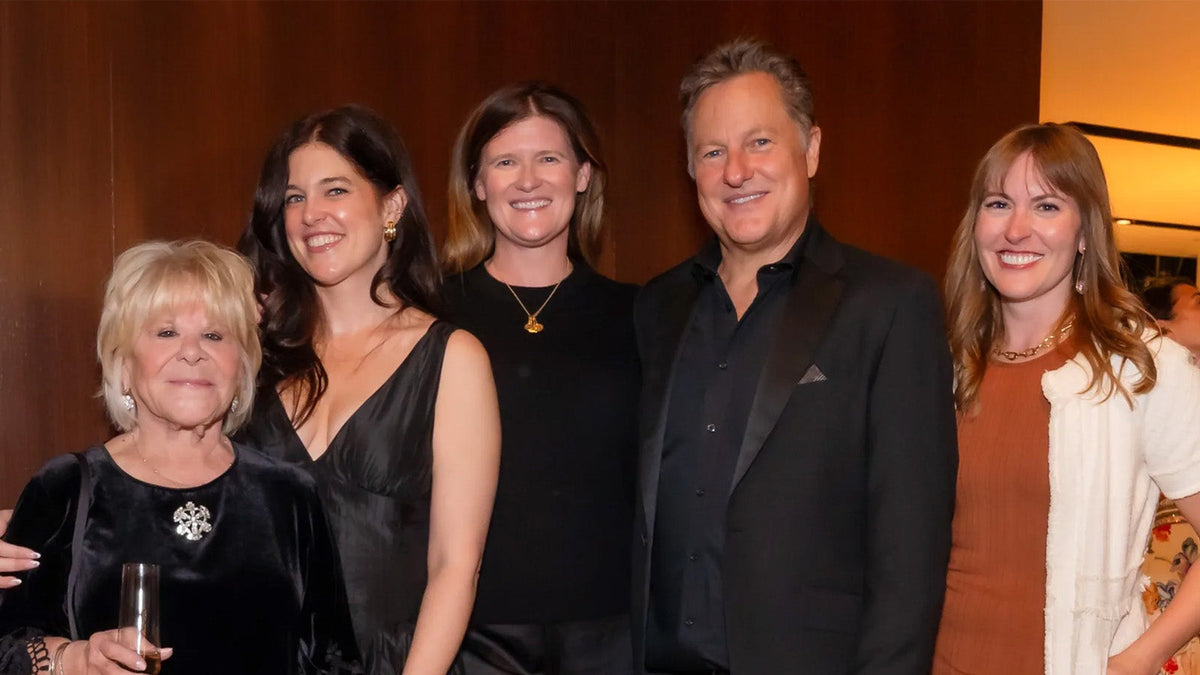
Luminaire at Design West Hollywood 2026
Design West Hollywood 2026 celebrated creativity, connection, and contemporary design, with Luminaire Los Angeles and Arclinea Los Angeles hosting memorable gatherings that brought the design community together.
In Conversation with Sophie Goineau
Interior architect Sophie Goineau designs across scales, from a single object to the architecture around it and the land beyond. She discusses composing interiors as one continuous experience, letting each place and its people shape a project's language, and her work on Selby Lane with the San Francisco team.
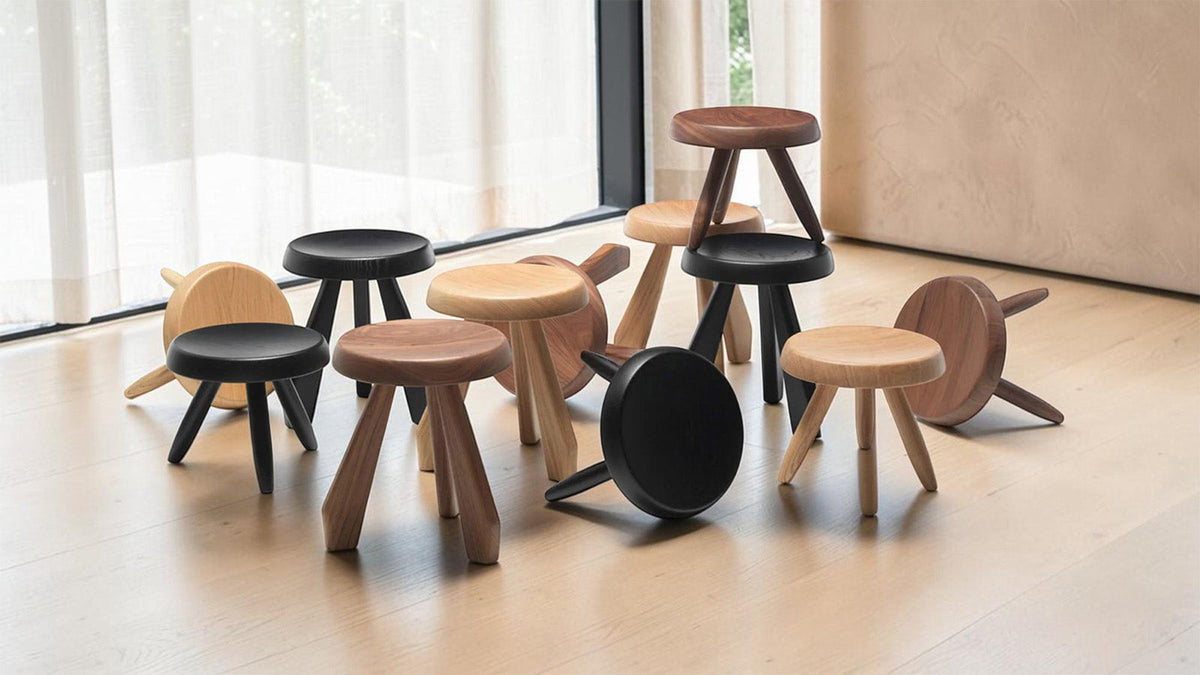
Charlotte Perriand's Tabouret Stools: Alpine Form, Modern Use
Read moreabout Charlotte Perriand's Tabouret Stools: Alpine Form, Modern Use
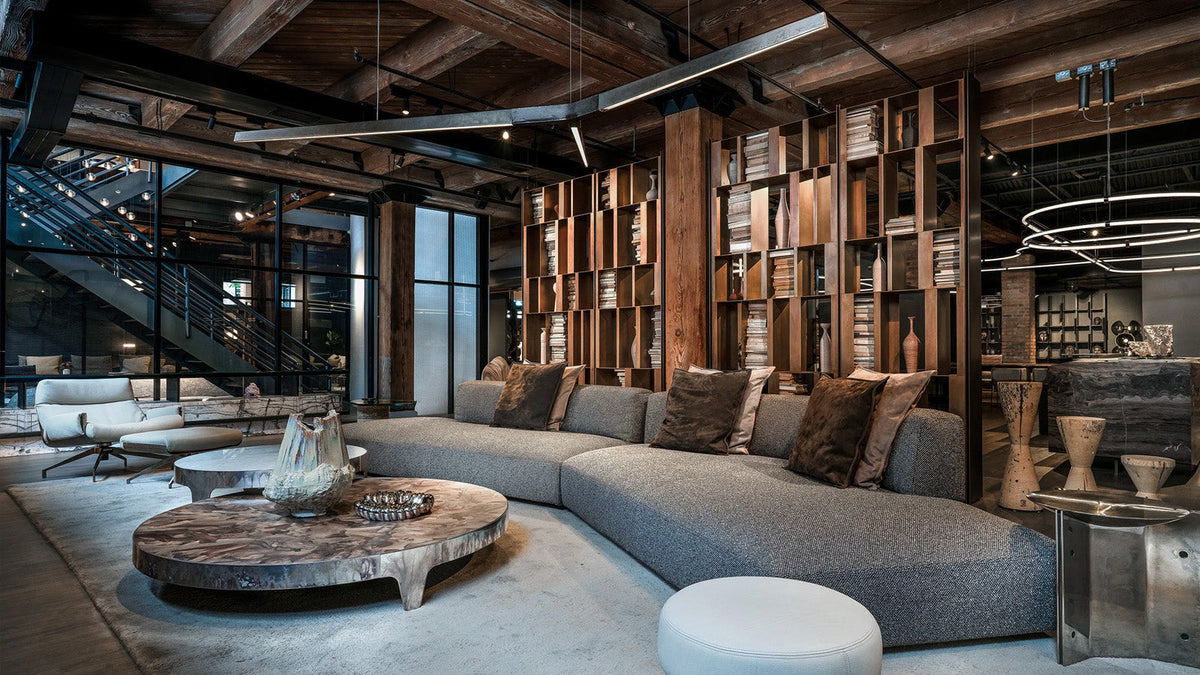
Inside Luminaire Chicago: Italian Design in River North Since 1989
Read moreabout Inside Luminaire Chicago: Italian Design in River North Since 1989
Eileen Gray's E 1027 Table: A Design Conceived for Living
Read moreabout Eileen Gray's E 1027 Table: A Design Conceived for Living
LC14 Tabouret Cabanon: Le Corbusier's Smallest Architecture
Read moreabout LC14 Tabouret Cabanon: Le Corbusier's Smallest Architecture
Sacco Chair by Zanotta: The 1968 Object That Refused to Be Furniture
Read moreabout Sacco Chair by Zanotta: The 1968 Object That Refused to Be Furniture
Inside Luminaire Coral Gables: The Showroom and Its Design Services
Read moreabout Inside Luminaire Coral Gables: The Showroom and Its Design Services
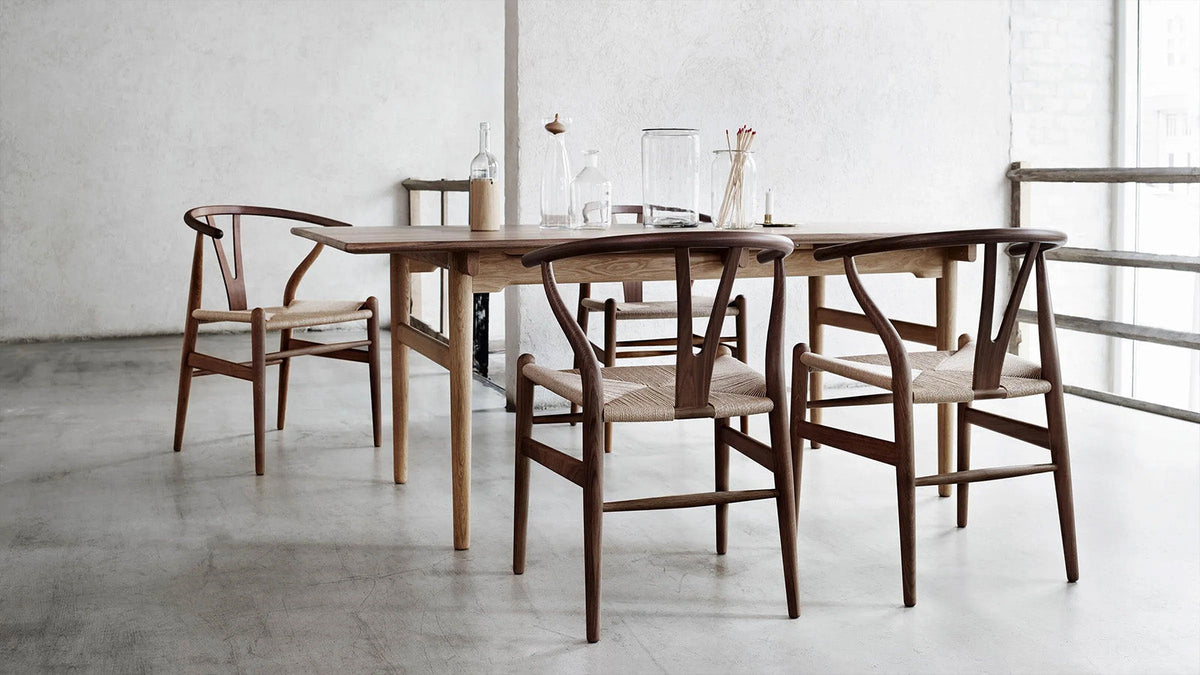
The Wishbone Chair: Hans Wegner's CH24 and the Art of Making
Read moreabout The Wishbone Chair: Hans Wegner's CH24 and the Art of Making
Cassina Chairs - The Collectors' Guide
Few furniture makers have shaped the chair as a cultural object the way Cassina has. From their earliest collaborations with the European avant-garde to their ongoing stewardship of the twentieth century's most consequential seating designs, the Meda-based manufacturer remains the standard against which Italian furniture brands are measured. This guide surveys the Cassina chairs we carry and the ideas embedded in each one.
On the Rocks by Edra: Francesco Binfaré's Geology of Rest
Read moreabout On the Rocks by Edra: Francesco Binfaré's Geology of Rest
The 14p Portable Lamp: Bocci's Cast-Glass Sphere, Untethered
Read moreabout The 14p Portable Lamp: Bocci's Cast-Glass Sphere, Untethered
Our design services cover everything from concept development to installation, including product guidance, material selection, custom configurations, pricing, and lead‑time coordination.
Speak with a Design Consultant
Call 855-341-3620 for assistance during business hours.
Enroll for privileged access to iconic design, emerging trends, exclusive events, and thoughtfully curated offers.



Share:
The 14p Portable Lamp: Bocci's Cast-Glass Sphere, Untethered
Cassina Chairs - The Collectors' Guide