
When design is expressed as atmosphere, space is composed to the rhythms of the soul.
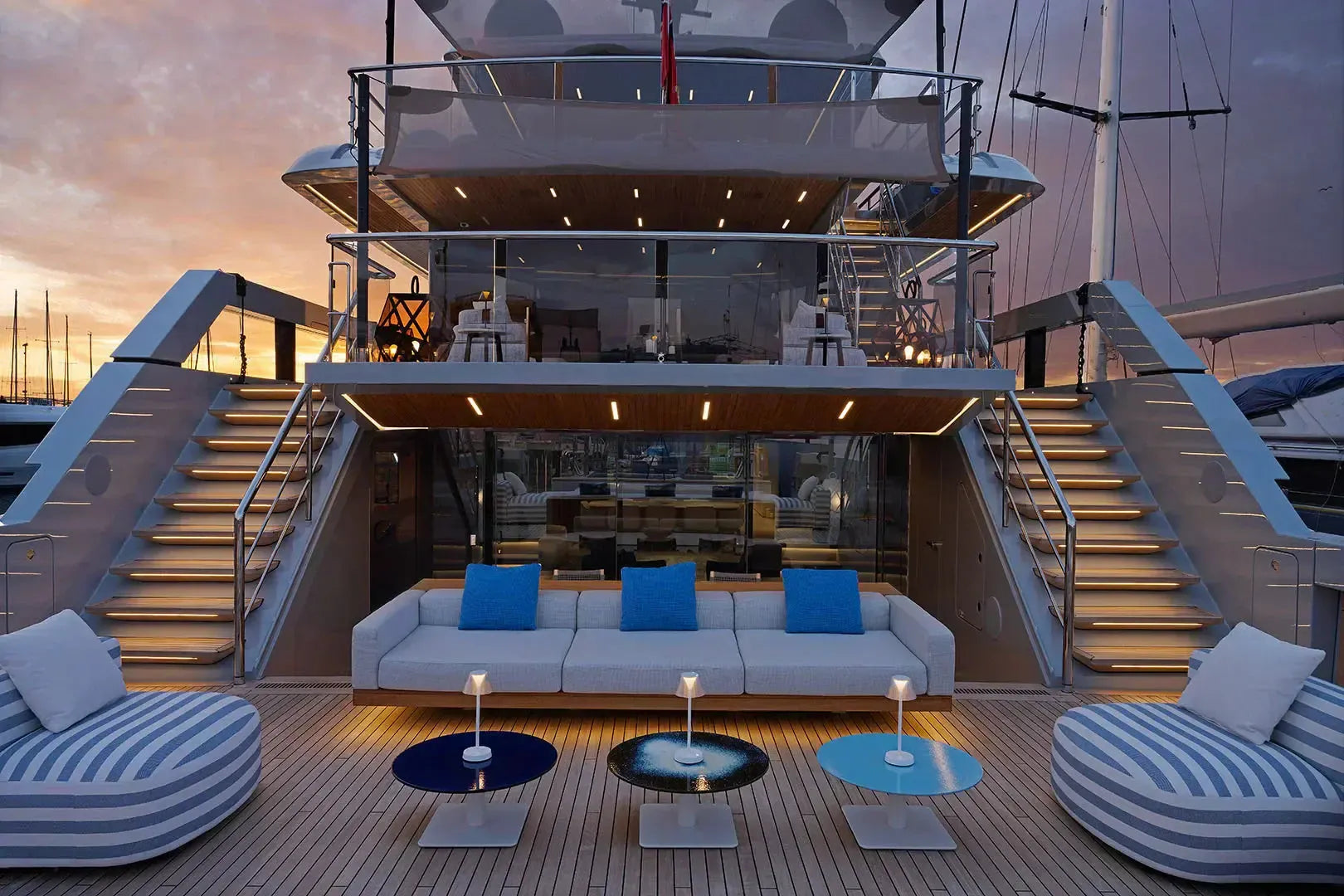
For Papa Bear, a 44-meter superyacht by Dori Hitti Architects, conceived in collaboration with Interni and built on Sanlorenzo’s pioneering 44X-Space platform, life at sea becomes its lifeforce and essence, replete with both openness and intimacy, movement and stillness, and social gathering and quiet retreat.
Imagined as a floating retreat, Papa Bear is an environment shaped less by formality and more by feeling. Across five decks, the yacht unfolds as a sequence of fluid, light-filled landscapes where interior comfort and outdoor living exist in constant conversation that does not begin with the sea but rather with the person moving through it.
This sensibility finds a natural parallel in the thinking of Piero Lissoni, renowned design luminary and close friend of Luminaire and Interni, whose role as artistic director of Sanlorenzo has quietly reshaped contemporary yacht design.
Lissoni speaks of yachts not as machines or trophies, but as floating architectures, homes untethered from land, designed around life itself. What he seeks is not simply minimalism, but clarity: a reduction to what matters, where proportion, light, and material create a quiet, lasting elegance.
On Papa Bear, that philosophy becomes tangible as spaces breathe, rooms dissolve into one another, and boundaries feel optional. The sea itself is invited into the yacht, framed by glass and softened by light, becoming part of daily life.

The expansive aft deck forms the emotional heart of the yacht: an open-air living room extending toward the sea through fold-down balconies that dissolve the vessel’s edge and invite the horizon inward. Natural materials and sculptural outdoor furnishings create a grounded elegance, balancing the vastness of the surrounding water with a sense of human scale.
Here, contemporary outdoor pieces introduce warmth and tactility through wood, stone, and refined upholstery. The result is a space that feels equally suited for daytime lounging, sunset conversations, or evenings spent beneath open skies.

Inside, Papa Bear resists rigidity.
Seating is relaxed, generous, and modular. Living areas transform fluidly, adapting to different moods and moments. Rather than fixed rooms, the interiors behave more as soft geometries, spaces that respond to light, movement, and presence.
This reflects a principle Lissoni often returns to, that interiors should be designed as one would design a home, arranged intuitively as spaces evolve throughout the day. The effect is immediate: comfort without heaviness, structure without formality.

Materiality becomes the project’s underlying language. Polished marble meets warm, light timbers. Softly textured fabrics absorb and diffuse light, while metallic accents reflect it. Each element exists in a dialogue of contrast and continuity, cool against warm, matte against luminous, solid against soft.
For Sanlorenzo and Interni, materials are not chosen for luxury alone, but for their character, their limits, and their voice. The role of design is to listen to depth and performance, where nothing is excessive and every surface contributes to a larger sensory balance.

As daylight fades, the yacht shifts into a more intimate register. Ambient lighting and table lamps introduce warmth, softening architectural lines and drawing spaces inward. Reflections deepen. Metallic finishes quietly capture movement, echoing the water beyond the glass.
Cabins become personal refuges where spaces are not announced but rather experienced. It is a gradual transformation, like the sea itself: never abrupt, always evolving.

Across all five decks, glass surfaces and open layouts dissolve the boundary between interior and exterior. Light moves freely. The sea remains constantly framed, reflected, and felt. This is luxury redefined, not as display but as emotional precision, where design supports daily rituals, meaningful connection, and a slower, more conscious way of inhabiting space.
Featured within this environment are pieces and influences from leading design houses such as Cappellini, Exteta, Vitra, B&B Italia, Poltrona Frau, Henge, Flexform, and Flos, brands that share a commitment to craftsmanship, material integrity, and quiet innovation.
As a whole, that sense of coherence, of calm, controlled elegance, is no accident. As artistic director, Lissoni brings a holistic vision to Sanlorenzo, aligning architecture, interiors, and identity into a singular design language. Across its platforms, including the 44X-Space, the goal is not excess, but harmony, yachts that feel unified, intentional, and deeply livable.
Papa Bear exists within this vision as a yacht that reflects not only a design brief but an entire philosophy of making.

Like many Luminaire Projects, Papa Bear is not a statement yacht, but a living environment. In its openness, its restraint, and its sensitivity to both people and place, it offers something increasingly rare: a space where architecture, nature, and life move in quiet alignment, where, as Lissoni suggests, life is not displayed but simply and beautifully lived.
Wishing to embrace a life transformed by refined, exhilarating design? At Luminaire and Interni, your own vision can take shape with the guidance of a personalized design consultation. We look forward to hearing from you.
Photo Credit: Wael Khoury
Luminaire at Design West Hollywood 2026
Design West Hollywood 2026 celebrated creativity, connection, and contemporary design, with Luminaire Los Angeles and Arclinea Los Angeles hosting memorable gatherings that brought the design community together.
In Conversation with Sophie Goineau
Interior architect Sophie Goineau designs across scales, from a single object to the architecture around it and the land beyond. She discusses composing interiors as one continuous experience, letting each place and its people shape a project's language, and her work on Selby Lane with the San Francisco team.
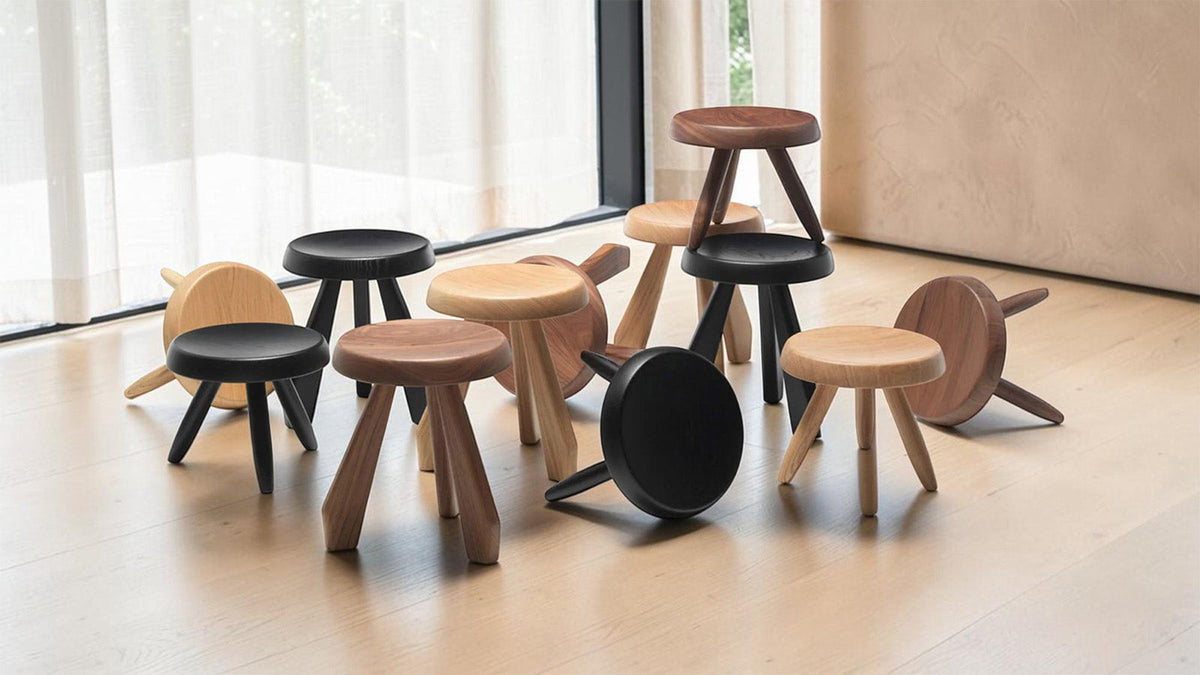
Charlotte Perriand's Tabouret Stools: Alpine Form, Modern Use
Read moreabout Charlotte Perriand's Tabouret Stools: Alpine Form, Modern Use
Inside Luminaire Chicago: Italian Design in River North Since 1989
Read moreabout Inside Luminaire Chicago: Italian Design in River North Since 1989
Eileen Gray's E 1027 Table: A Design Conceived for Living
Read moreabout Eileen Gray's E 1027 Table: A Design Conceived for Living
LC14 Tabouret Cabanon: Le Corbusier's Smallest Architecture
Read moreabout LC14 Tabouret Cabanon: Le Corbusier's Smallest Architecture
Sacco Chair by Zanotta: The 1968 Object That Refused to Be Furniture
Read moreabout Sacco Chair by Zanotta: The 1968 Object That Refused to Be Furniture
Inside Luminaire Coral Gables: The Showroom and Its Design Services
Read moreabout Inside Luminaire Coral Gables: The Showroom and Its Design Services
The Wishbone Chair: Hans Wegner's CH24 and the Art of Making
Read moreabout The Wishbone Chair: Hans Wegner's CH24 and the Art of Making
Cassina Chairs - The Collectors' Guide
Few furniture makers have shaped the chair as a cultural object the way Cassina has. From their earliest collaborations with the European avant-garde to their ongoing stewardship of the twentieth century's most consequential seating designs, the Meda-based manufacturer remains the standard against which Italian furniture brands are measured. This guide surveys the Cassina chairs we carry and the ideas embedded in each one.
On the Rocks by Edra: Francesco Binfaré's Geology of Rest
Read moreabout On the Rocks by Edra: Francesco Binfaré's Geology of Rest
The 14p Portable Lamp: Bocci's Cast-Glass Sphere, Untethered
Read moreabout The 14p Portable Lamp: Bocci's Cast-Glass Sphere, Untethered
Our design services cover everything from concept development to installation, including product guidance, material selection, custom configurations, pricing, and lead‑time coordination.
Speak with a Design Consultant
Call 855-341-3620 for assistance during business hours.
Enroll for privileged access to iconic design, emerging trends, exclusive events, and thoughtfully curated offers.

Share:
Design Miami 2025 at Luminaire: A Celebration of Vision, Craft, and Contemporary Culture
A New Destination for Italian Design: B&B Italia opens at Luminaire Los Angeles