
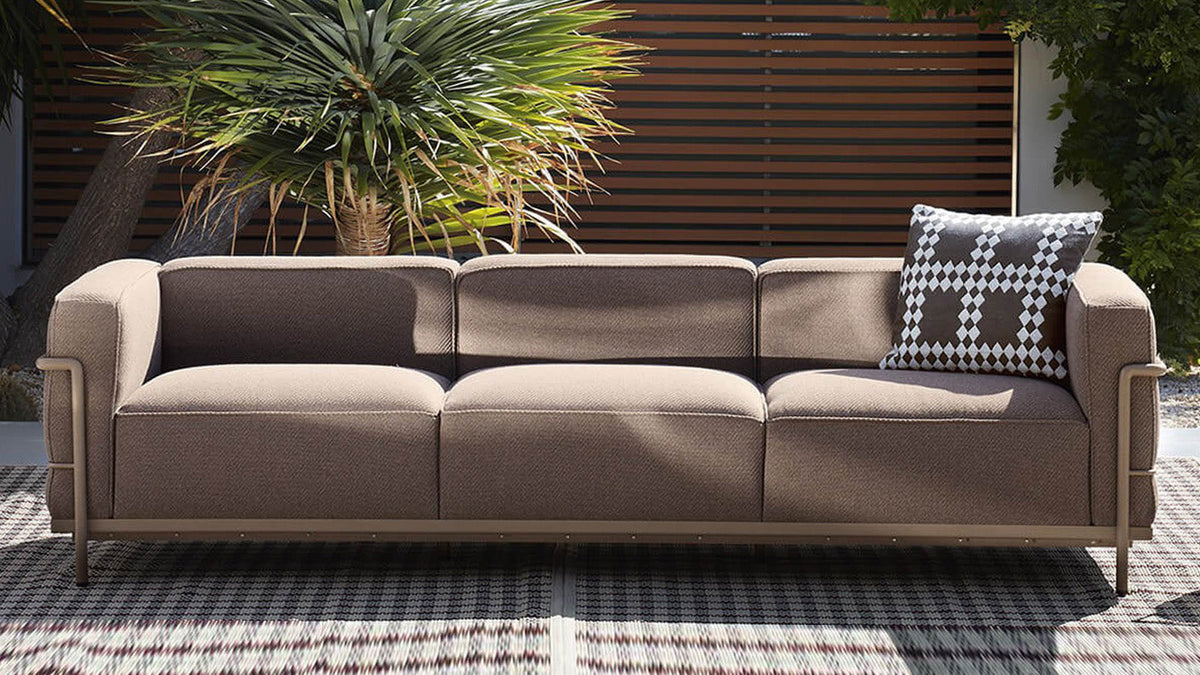
The LC3 sofa arrived in 1928 with a proposition that most furniture design still has not absorbed: that the structural frame and the seated body require fundamentally different materials, and that there is no reason to hide the fact. Le Corbusier, Pierre Jeanneret, and Charlotte Perriand placed deep, loose cushions inside a cage of bent tubular steel and called it the Grand Confort, grand modèle. The steel holds. The cushions yield. Neither pretends to be the other.
That clarity of argument is why the LC3 has never been subject to nostalgia. It is not admired for what it once meant. It is studied because its logic still holds.
The design's decisive move is the inversion of convention. In virtually every upholstered piece before 1928, the frame was the secret the fabric kept. Webbing, springs, and lumber were internal, the cushion was stretched and tufted over them, and the whole assembly performed a kind of soft fiction. The LC3 refused that fiction. The tubular steel frame sits on the outside, fully exposed, and the cushions rest inside it, visibly contained rather than stretched over their support.
The effect is architectural rather than sculptural. You read the object as a building section: load-bearing members on the perimeter, inhabited volume at the center. The cushions are generous, almost absurdly so, which is precisely the point. The word "confort" was chosen without irony. This is not minimalism of experience; it is minimalism of pretense.
The frame itself began as chrome-plated steel, which suited the Salon d'Automne in Paris where the piece debuted alongside the LC2 armchair and the LC4 chaise longue. But the form's real ambition was spatial. The exposed structure meant the LC3 could be placed anywhere in a room without the piece dissolving against the wall. The frame gives it a perimeter, a presence. You see it from across the room as a geometric event before you read it as a seat.
The confusion between the LC3 and LC2 is among the most common in modernist furniture, and it matters because the two pieces ask different things of the body and the room. The LC2 is the petit modèle: tighter in plan, higher in seat height, more upright in posture. Its cushion proportions are firmer and its grid of steel divisions more visually active. It rewards alert, forward sitting and works naturally as a side chair or accent piece at a desk or reading table.
The LC3 is wider, lower, and deeper in every dimension. The seat cushion extends further from front to back, the armrests broaden, and the overall silhouette reads as a horizontal mass rather than a contained grid. Seated in it, the body reclines slightly and settles. The LC3 is the primary living room piece; the LC2 the secondary. Both can coexist in the same arrangement, and period photographs of early modernist interiors frequently show exactly that pairing, LC3 sofas anchoring the center of a room with LC2 armchairs pulled to the corners or around a low table.
The Cassina LC3 is produced in three formats: armchair, two-seater, and three-seater. Each scales the frame proportionally, preserving the cushion-to-steel ratio that defines the silhouette. The two-seater is particularly useful in rooms where a full three-seater would read as dominant; the cushion mass remains sufficient to hold the horizontal emphasis without overwhelming the plan.
Cassina has held the authorized production rights to the Le Corbusier, Jeanneret, and Perriand portfolio since 1964, an arrangement formalized with the designers and their estates and maintained through the I Maestri program. The designation is not ceremonial. It carries with it a responsibility to the original technical drawings and material specifications, and the production standards are correspondingly exacting.
The frame is available in two primary finishes. Polished chrome is the canonical choice, closest to what appeared in 1928, and it reads as a pure material statement: the steel is exactly what it is, reflective and precise. The matte enamel option, offered in a range of colors, reads differently in a room. The frame recedes slightly, and the cushions become the dominant visual element. Neither is incorrect; they produce genuinely different spatial readings, and the choice should be made by observing both in the light conditions of the intended room.
Cushion construction distinguishes the standard fill from the down option. The standard specification uses a polyurethane foam core with specific density and rebound characteristics calibrated to hold the cushion's geometric profile over years of use. The down option wraps that core in a layer of feather and down, softening the hand without sacrificing the proportion. Both maintain the flat, architecturally correct face that the design requires. A cushion that sags or billows breaks the argument.
The leather and fabric programs are extensive. Among the leathers, the full-grain hides offered by Cassina develop a patina over decades that becomes part of the piece's identity; this is not incidental but structural to the proposition. The cushion is meant to age with use. Fabric options extend into wool, bouclé, and technical textiles, with some clients choosing a deliberately neutral tone so that the chrome frame carries the visual work. The piece is robust enough, formally, to accept both approaches.
Each Cassina I Maestri piece carries a signature and a serial number. The Cassina LC3, specifically, bears this identification as a condition of the licensed production, confirming both the authorized manufacture and the production sequence. This is the starting point for authentication.

The secondary market for the LC3 is active, and not all pieces in circulation are authorized productions. Authentication begins at the frame. On a genuine Cassina piece, the welds are continuous and ground smooth, with no visible porosity or surface irregularity. The chrome, where present, is even in depth and does not show blistering or pitting at the bend radii. The tube diameter is specified to the original drawings; pieces that appear slightly too thin or too heavy in section are worth examining closely.
Cushion proportions are equally diagnostic. The seat and back cushions on the LC3 are cut to specific dimensions and the cover seams fall at prescribed positions. A cushion that has been re-covered in incorrect fabric, or cut to a slightly different dimension, disrupts the proportion in a way that is immediately readable when you set the piece beside an authorized example. The fit of the cushion within the frame should be close without being compressed; the cushion rests in the basket, it does not fill it forcibly.
The serial number and signature panel, typically found on the underside or rear of the frame, confirms Cassina manufacture. Pieces produced before Cassina's 1964 licensing agreement, or produced without authorization, will not carry this marking.
The LC3 has a natural relationship to the floor plane. Its low seat height and horizontal emphasis mean it reads as part of the room's ground plane rather than as an object sitting on it. This is not universal among sofas, and it should govern placement decisions.
The period arrangement, drawn directly from the design's own history, places LC3 pieces at right angles to each other, one sofa facing another or a sofa and two armchairs forming a U around a low table. This configuration has a spatial quality that is unmistakably of the early twentieth century, which can be a virtue or a limitation depending on what surrounds it. Against white plaster, raw concrete, or polished stone, the arrangement reinforces the architectural reading. Against softer materials, woven textiles, warm plaster, or timber, the steel frame is held in productive tension with its surroundings, and the contrast often produces the more interesting room.
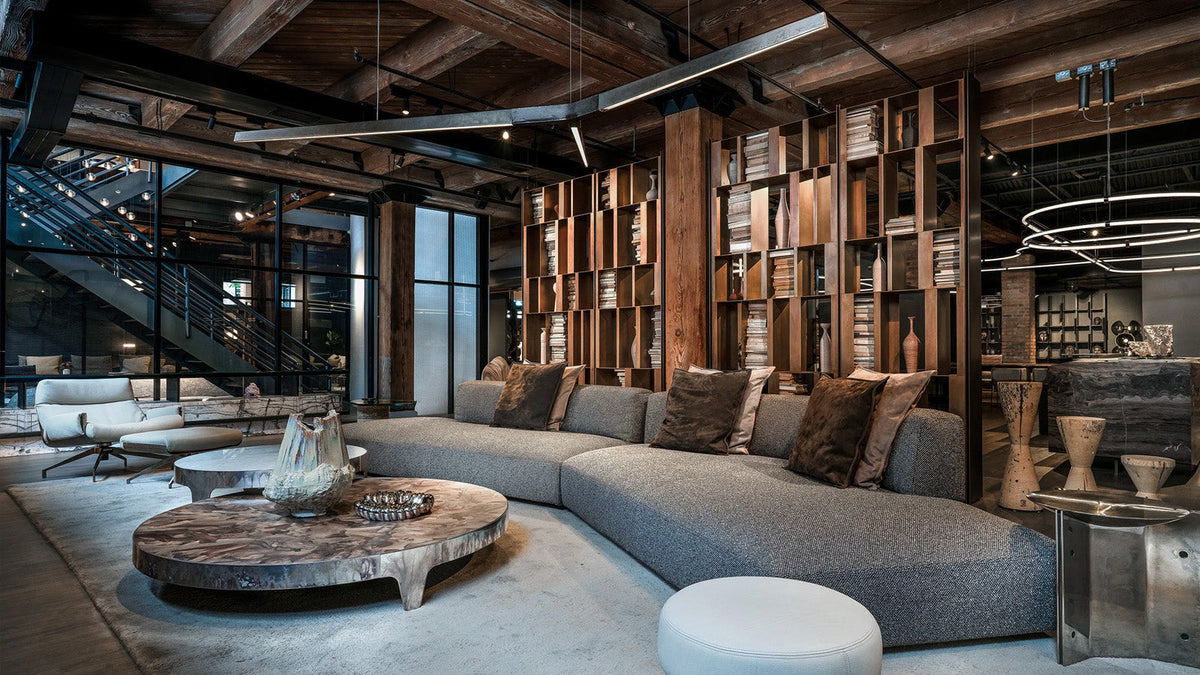
A single LC3 three-seater placed against a soft, textile-upholstered wall or a built-in bookshelf reads quite differently from the canonical arrangement. The frame still asserts itself, but the piece becomes a singular object in a field of warmth rather than the anchor of a geometric composition. Both readings are valid; they are, in fact, different arguments about what modernism means inside a lived-in room.
The LC3 Outdoor edition applies the same discipline in a stainless steel frame with a textured paint finish and water-repellent cushion covers, extending the design's presence into garden and terrace conditions without altering its geometry. The piece works outdoors because its form was always about reading light across rectilinear surfaces, and exterior light simply does that more directly.
The full range of pieces from this collaboration, including the LC3 in all its formats, is held within the Cassina collection. Individual pieces in the Le Corbusier portfolio can be explored through the dedicated Le Corbusier collection pages, alongside the work of Jeanneret and Perriand whose hands are equally present in every dimension of the Grand Confort.
Luminaire at Design West Hollywood 2026
Design West Hollywood 2026 celebrated creativity, connection, and contemporary design, with Luminaire Los Angeles and Arclinea Los Angeles hosting memorable gatherings that brought the design community together.
Continua a leggeresu Luminaire at Design West Hollywood 2026
In Conversation with Sophie Goineau
Interior architect Sophie Goineau designs across scales, from a single object to the architecture around it and the land beyond. She discusses composing interiors as one continuous experience, letting each place and its people shape a project's language, and her work on Selby Lane with the San Francisco team.
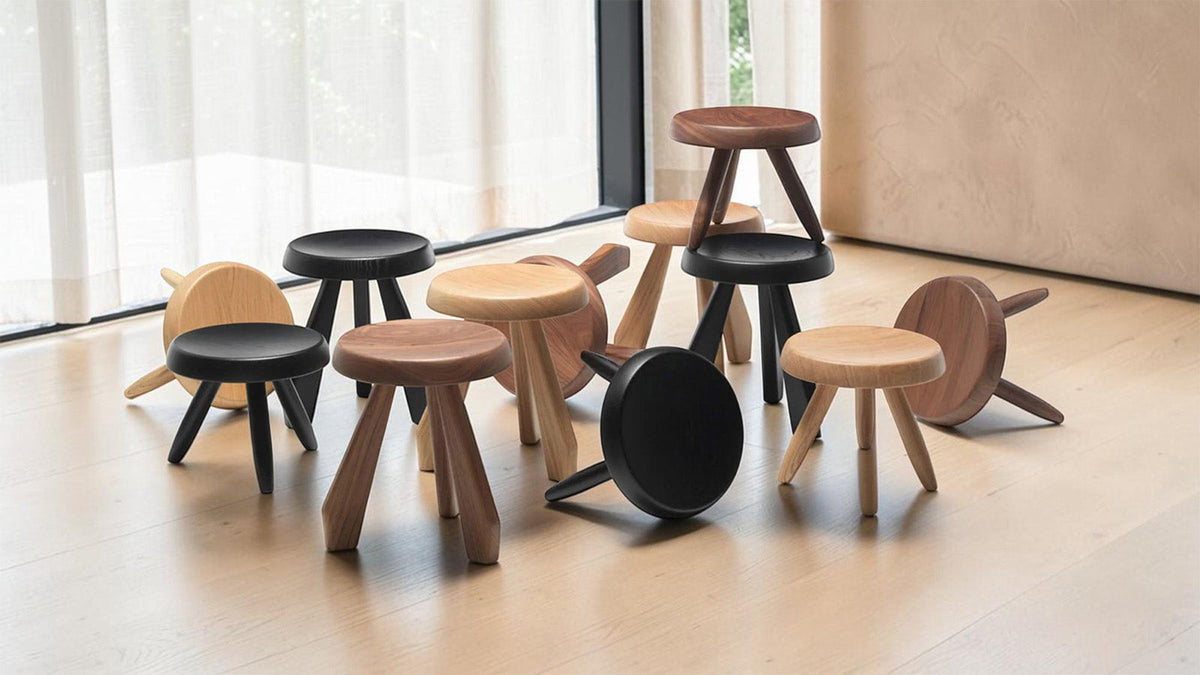
Charlotte Perriand's Tabouret Stools: Alpine Form, Modern Use
Continua a leggeresu Charlotte Perriand's Tabouret Stools: Alpine Form, Modern Use
Inside Luminaire Chicago: Italian Design in River North Since 1989
Continua a leggeresu Inside Luminaire Chicago: Italian Design in River North Since 1989
Eileen Gray's E 1027 Table: A Design Conceived for Living
Continua a leggeresu Eileen Gray's E 1027 Table: A Design Conceived for Living
LC14 Tabouret Cabanon: Le Corbusier's Smallest Architecture
Continua a leggeresu LC14 Tabouret Cabanon: Le Corbusier's Smallest Architecture
Sacco Chair by Zanotta: The 1968 Object That Refused to Be Furniture
Continua a leggeresu Sacco Chair by Zanotta: The 1968 Object That Refused to Be Furniture
Inside Luminaire Coral Gables: The Showroom and Its Design Services
Continua a leggeresu Inside Luminaire Coral Gables: The Showroom and Its Design Services
The Wishbone Chair: Hans Wegner's CH24 and the Art of Making
Continua a leggeresu The Wishbone Chair: Hans Wegner's CH24 and the Art of Making
Cassina Chairs - The Collectors' Guide
Few furniture makers have shaped the chair as a cultural object the way Cassina has. From their earliest collaborations with the European avant-garde to their ongoing stewardship of the twentieth century's most consequential seating designs, the Meda-based manufacturer remains the standard against which Italian furniture brands are measured. This guide surveys the Cassina chairs we carry and the ideas embedded in each one.
On the Rocks di Edra: la geologia del riposo di Francesco Binfaré
Continua a leggeresu On the Rocks di Edra: la geologia del riposo di Francesco Binfaré
The 14p Portable Lamp: Bocci's Cast-Glass Sphere, Untethered
Continua a leggeresu The 14p Portable Lamp: Bocci's Cast-Glass Sphere, Untethered
I nostri specialisti vi assisteranno con informazioni sui prodotti, selezione dei materiali, configurazioni personalizzate, prezzi e tempi di consegna.
Parla con un consulente di design
Assistenza in tempo reale durante l'orario d'ufficio. Chiama il numero 855-341-3620
Ricevi una risposta entro un giorno lavorativo.
We've received your inquiry!
We appreciate your interest. One of our staff members will be in touch with you soon.
In the meantime, feel free to explore more of what Luminaire has to offer.
If you require immediate assistance, please call (855) 341-3620
To ensure that you receive communications from us to your Inbox, please add Luminaire to your contacts.
Have a great day!
Iscriviti per accedere a privilegi esclusivi in termini di design iconico, nuove tendenze, eventi esclusivi e offerte accuratamente selezionate.



Condividi:
The Panton Chair: Form, Material, and Six Decades of an S-Curve
Henge trova una nuova casa a Chicago presso Luminaire