
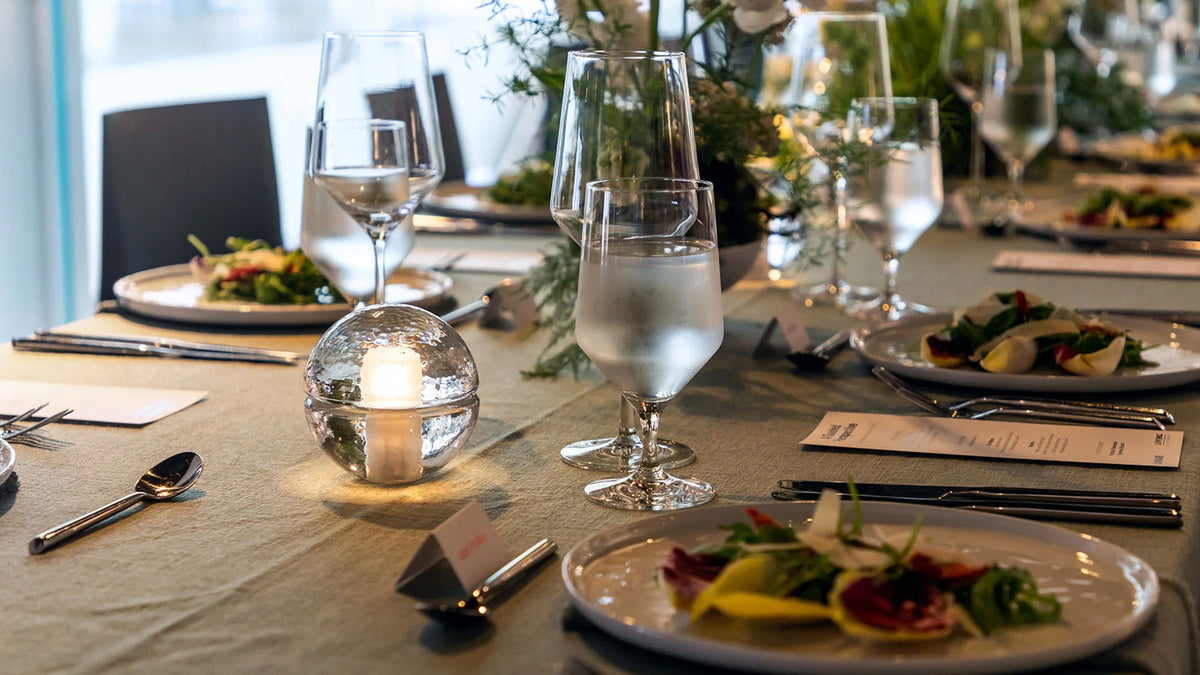
Most cordless table lamps make a visible compromise. The glass thins to save weight. The diffusion flattens. The base grows a seam that reveals the battery compartment like a confession. The category, as a whole, has been shaped by manufacturing logic rather than material ambition, which is why the mass-retail results for "cordless table lamp" look the way they do: interchangeable profiles in polypropylene or pressed metal, lit by LEDs tuned for spec sheets rather than atmosphere.
The 14p Portable Lamp by Omer Arbel for Bocci occupies a different position entirely. It begins not with portability as a feature but with a glass-blowing tradition that predates the rechargeable lamp category by nearly two decades.
Bocci's 14 Series began in 2005 as a sustained inquiry into what cast glass can do that no other material replicates: trap air, hold light, and record the hand that made it. Each sphere is formed from two hand-cast hemispheres joined at the equator. The seam is deliberate and imperfect, a visible record of the making rather than something to be hidden. The interior surface carries the natural variation of molten glass meeting a mold at the precise moment the glassblower judges right, and the seeded air bubbles distributed through the body are not defects, they are the diffusion mechanism.
When light passes through that density of small trapped bubbles, it scatters in the same way it scatters through fog over water: softened, directionless, without the hard center of a standard globe lamp. The result reads as warmth rather than brightness, which is a meaningful distinction when you are placing a lamp on a dinner table or a terrace at dusk.

No two spheres produced under the 14 Series are identical. The hand-casting process makes that impossible, and Bocci has never sought to resolve the variation. Across a production run spanning nearly twenty years, that consistency of inconsistency has become the series' defining characteristic: a corpus of objects that are recognizably the same and never precisely repeated.
The 14p carries the same cast-glass language into a cordless body. The sphere's geometry, its diffusion quality, and its surface behavior are unchanged. What the portable version introduces is a base that conceals a USB-C rechargeable battery, three brightness levels controlled by press-and-hold dimming, and the practical freedom to place the lamp wherever the occasion requires.
That freedom is more consequential than it first appears. A dining table set for the evening rarely has a power outlet at its center. A terrace does not. A shelf or sill rearranged on impulse is not a place where you want to negotiate a cord. The 14p resolves all of these situations without asking you to accept a different lamp. The glass sphere above the base is the same object it has always been.

The dimming range matters here in a specific way. A candle-like diffusion at full brightness is pleasant. At a lower setting, the seeded glass becomes something closer to a glowing mineral, an object you read as sculpture until you notice it is also providing light. The press-and-hold interface is deliberately simple, suited to outdoor use or candlelit conditions where precision is neither possible nor necessary.
The category of portable and rechargeable lamps has expanded rapidly, and most of what fills it has been designed around a constraint: the battery. Battery weight drives form toward lightness, battery capacity drives cost toward compromise, and battery replacement drives construction toward the disposable. The typical cordless table lamp is an engineering brief with a shade attached.
The 14p inverts that logic. The glass sphere was designed in 2005 with no thought of portability. Its weight, its thickness, its double-hemisphere construction, none of these were decisions made to accommodate a battery. The portable version inherits a form that was arrived at through entirely different means, which gives it a material density that the category rarely sees.
That density has consequences for light quality. Thin-walled glass or polycarbonate diffusers, which dominate the cordless lamp market, produce a bright point at the LED source surrounded by a dimmer glow. Cast glass with seeded air bubbles distributes the source across the entire sphere, so there is no hot spot, no visible LED, no gradient from center to edge. The light behaves more like a material than a source.
This is, admittedly, a distinction that costs more to achieve. The 14p is not priced like a cordless lamp from a general-market retailer, and it should not be evaluated against one. The comparison is with other objects in the same room: a bronze vessel, a piece of studio ceramics, a work on paper. The question is not whether a cordless lamp can look like this, but whether an object of this material quality can also function untethered. The answer, here, is yes.
Omer Arbel founded his Vancouver-based practice on a principle that has remained consistent across his body of work: the material process should determine the form, not the other way around. His series for Bocci are numbered rather than named, a deliberate decision that frames each as a research project rather than a product. The 14 is a study in cast glass. The 28 is a study in pulled glass threads. The numbering system is also a record of sequence, an argument that the work accumulates and evolves rather than launches and concludes.
Within that framework, the 14p is a logical development rather than a commercial pivot. The sphere had already proven its material logic over fifteen years of production. Making it portable extends the inquiry: can the same form function without infrastructure? The answer required solving for battery integration and dimming control without altering the glass. That constraint, the refusal to change the sphere, is the decisive editorial decision in the lamp's design.

This is a different approach to portability than, for example, the strategies that govern the broader Italian lighting tradition, where corded forms like the Arco or the Snoopy were conceived around a fixed position and a deliberate relationship to architectural space. Those lamps anchor a room. The 14p floats through one. Neither approach is superior; they address different questions.
The most useful framing for the 14p is practical. Where does a design-led cordless lamp earn its place over a wired one?
In each of these situations, the question is not whether a cordless lamp is good enough. The question is whether the cordless lamp you choose reads as an object worth looking at when it is not lit. The 14p is a cast-glass sphere from a production line that has been running since 2005. It reads as itself whether or not it is on.
For design professionals working on residential or hospitality projects where this kind of flexibility matters, the Trade Program and Design Services are available for consultation on specifications and project quantities.
In Conversation with Sophie Goineau
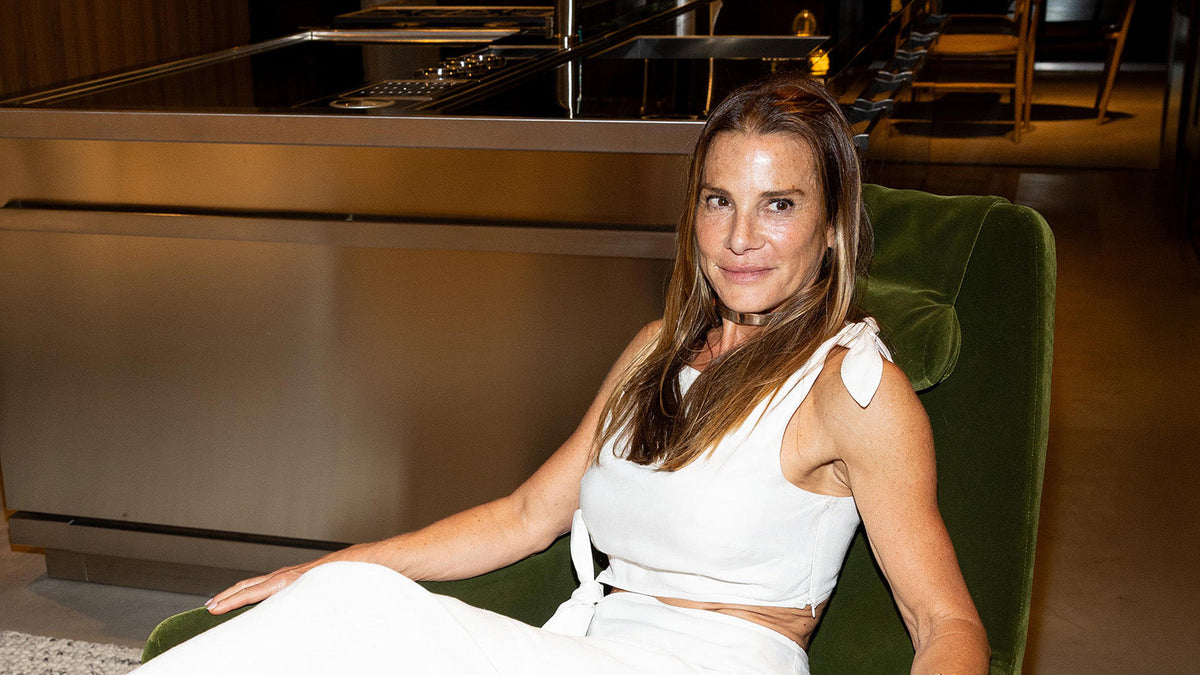
Interior architect Sophie Goineau designs across scales, from a single object to the architecture around it and the land beyond. She discusses composing interiors as one continuous experience, letting each place and its people shape a project's language, and her work on Selby Lane with the San Francisco team.
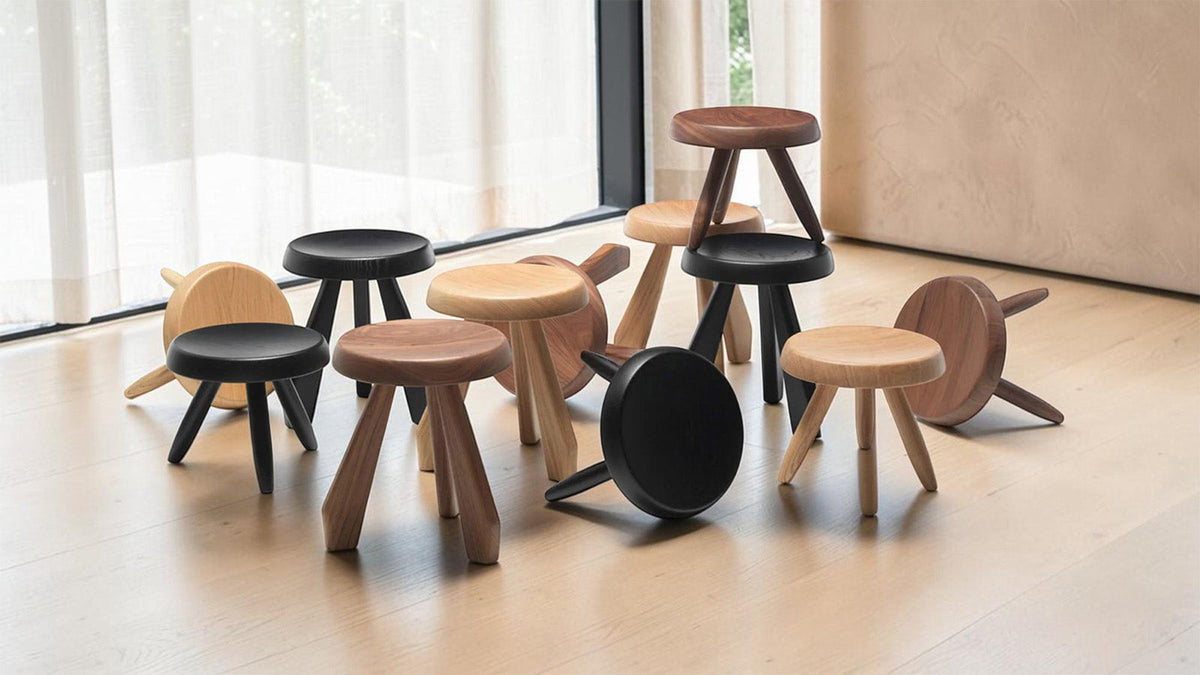
Charlotte Perriand's Tabouret Stools: Alpine Form, Modern Use
Continua a leggeresu Charlotte Perriand's Tabouret Stools: Alpine Form, Modern Use
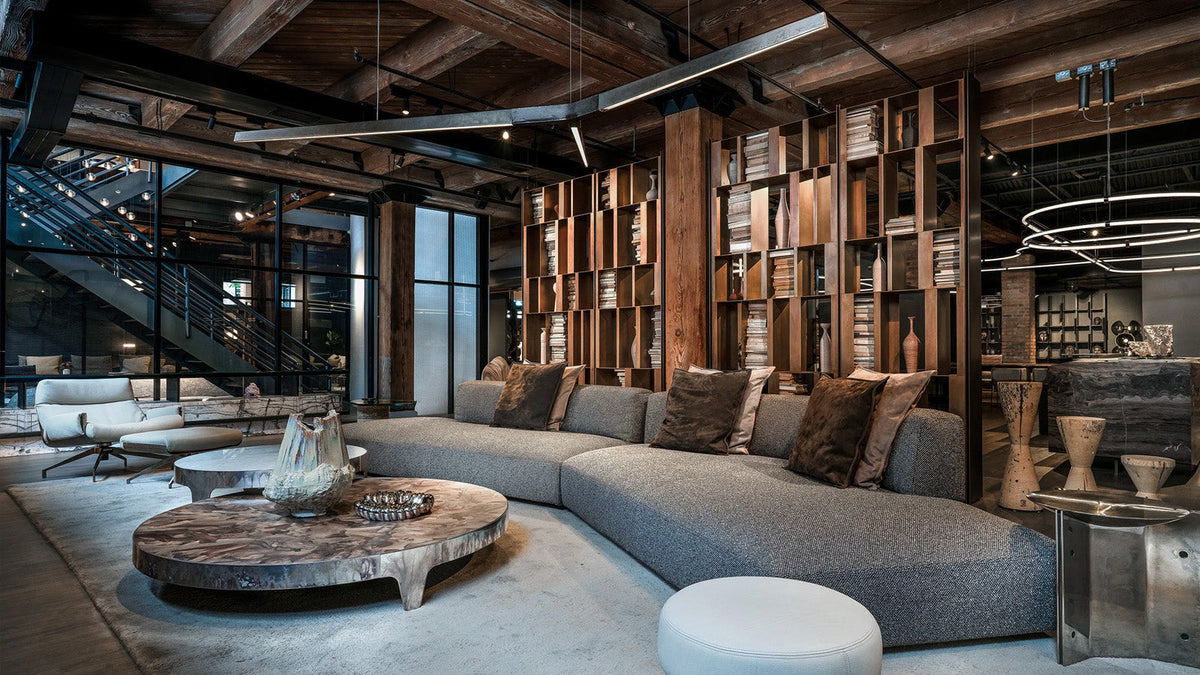
Inside Luminaire Chicago: Italian Design in River North Since 1989
Continua a leggeresu Inside Luminaire Chicago: Italian Design in River North Since 1989
Eileen Gray's E 1027 Table: A Design Conceived for Living
Continua a leggeresu Eileen Gray's E 1027 Table: A Design Conceived for Living
LC14 Tabouret Cabanon: Le Corbusier's Smallest Architecture
Continua a leggeresu LC14 Tabouret Cabanon: Le Corbusier's Smallest Architecture
Sacco Chair by Zanotta: The 1968 Object That Refused to Be Furniture
Continua a leggeresu Sacco Chair by Zanotta: The 1968 Object That Refused to Be Furniture
Inside Luminaire Coral Gables: The Showroom and Its Design Services
Continua a leggeresu Inside Luminaire Coral Gables: The Showroom and Its Design Services
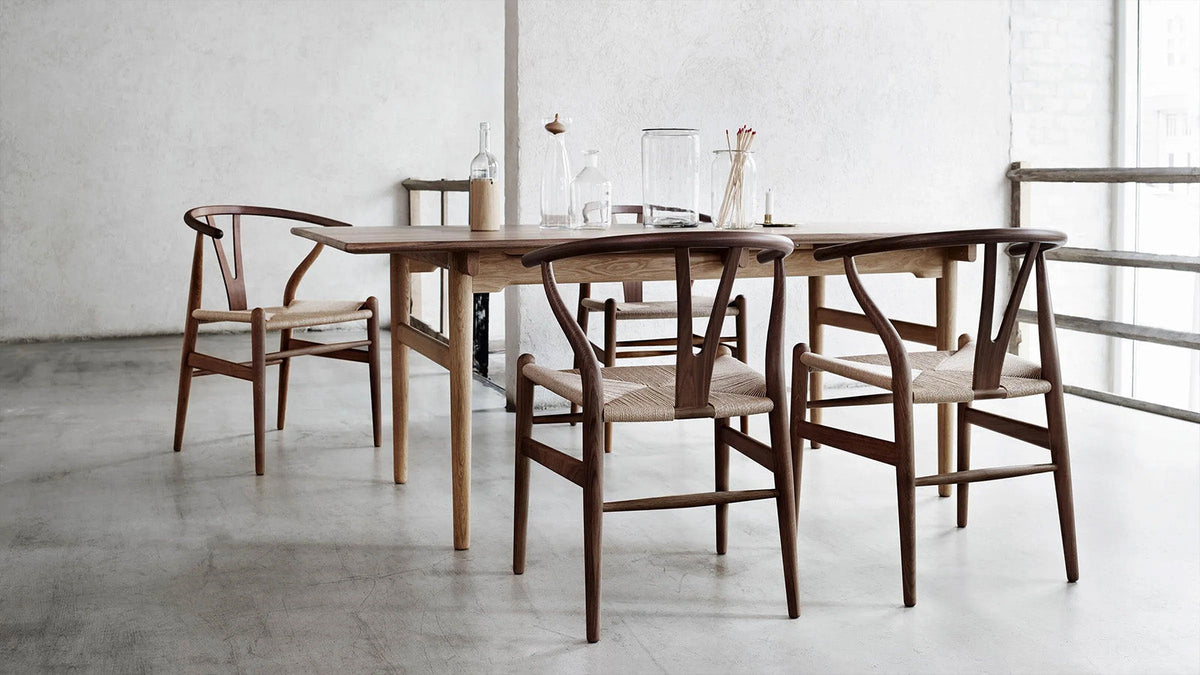
The Wishbone Chair: Hans Wegner's CH24 and the Art of Making
Continua a leggeresu The Wishbone Chair: Hans Wegner's CH24 and the Art of Making
Cassina Chairs - The Collectors' Guide
Few furniture makers have shaped the chair as a cultural object the way Cassina has. From their earliest collaborations with the European avant-garde to their ongoing stewardship of the twentieth century's most consequential seating designs, the Meda-based manufacturer remains the standard against which Italian furniture brands are measured. This guide surveys the Cassina chairs we carry and the ideas embedded in each one.
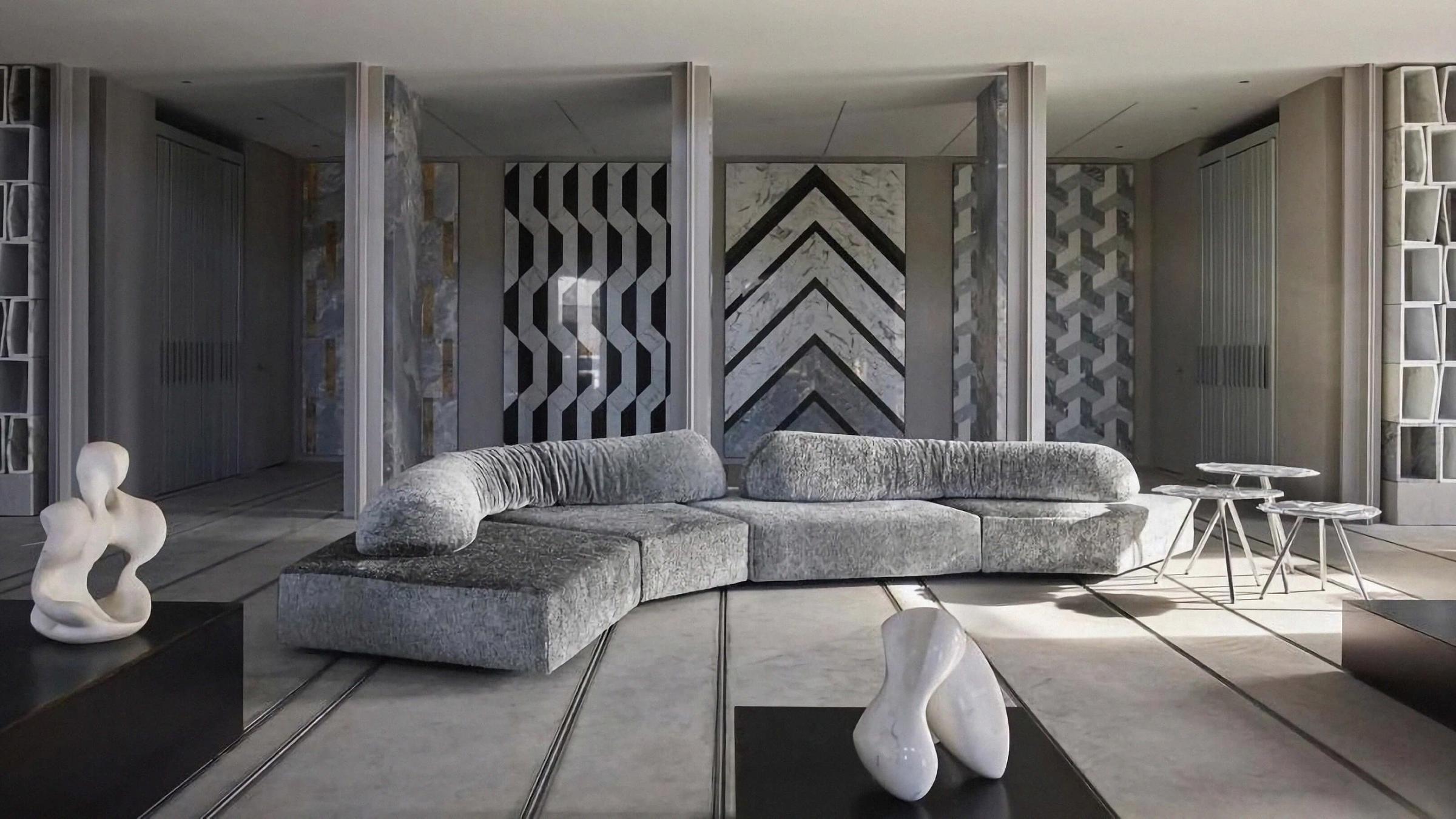
On the Rocks di Edra: la geologia del riposo di Francesco Binfaré
Continua a leggeresu On the Rocks di Edra: la geologia del riposo di Francesco Binfaré
The 14p Portable Lamp: Bocci's Cast-Glass Sphere, Untethered
Continua a leggeresu The 14p Portable Lamp: Bocci's Cast-Glass Sphere, Untethered
The Arco Lamp: Achille Castiglioni's Arc Over Sixty Years
Continua a leggeresu The Arco Lamp: Achille Castiglioni's Arc Over Sixty Years
I nostri specialisti vi assisteranno con informazioni sui prodotti, selezione dei materiali, configurazioni personalizzate, prezzi e tempi di consegna.
Parla con un consulente di design
Assistenza in tempo reale durante l'orario d'ufficio. Chiama il numero 855-341-3620
Ricevi una risposta entro un giorno lavorativo.
We've received your inquiry!
We appreciate your interest. One of our staff members will be in touch with you soon.
In the meantime, feel free to explore more of what Luminaire has to offer.
If you require immediate assistance, please call (855) 341-3620
To ensure that you receive communications from us to your Inbox, please add Luminaire to your contacts.
Have a great day!
Iscriviti per accedere a privilegi esclusivi in termini di design iconico, nuove tendenze, eventi esclusivi e offerte accuratamente selezionate.



Condividi:
The Arco Lamp: Achille Castiglioni's Arc Over Sixty Years
On the Rocks di Edra: la geologia del riposo di Francesco Binfaré