PostKrisi 21-40 Wall Lamp
Made by Catellani & Smith
Designed by Enzo Catellani
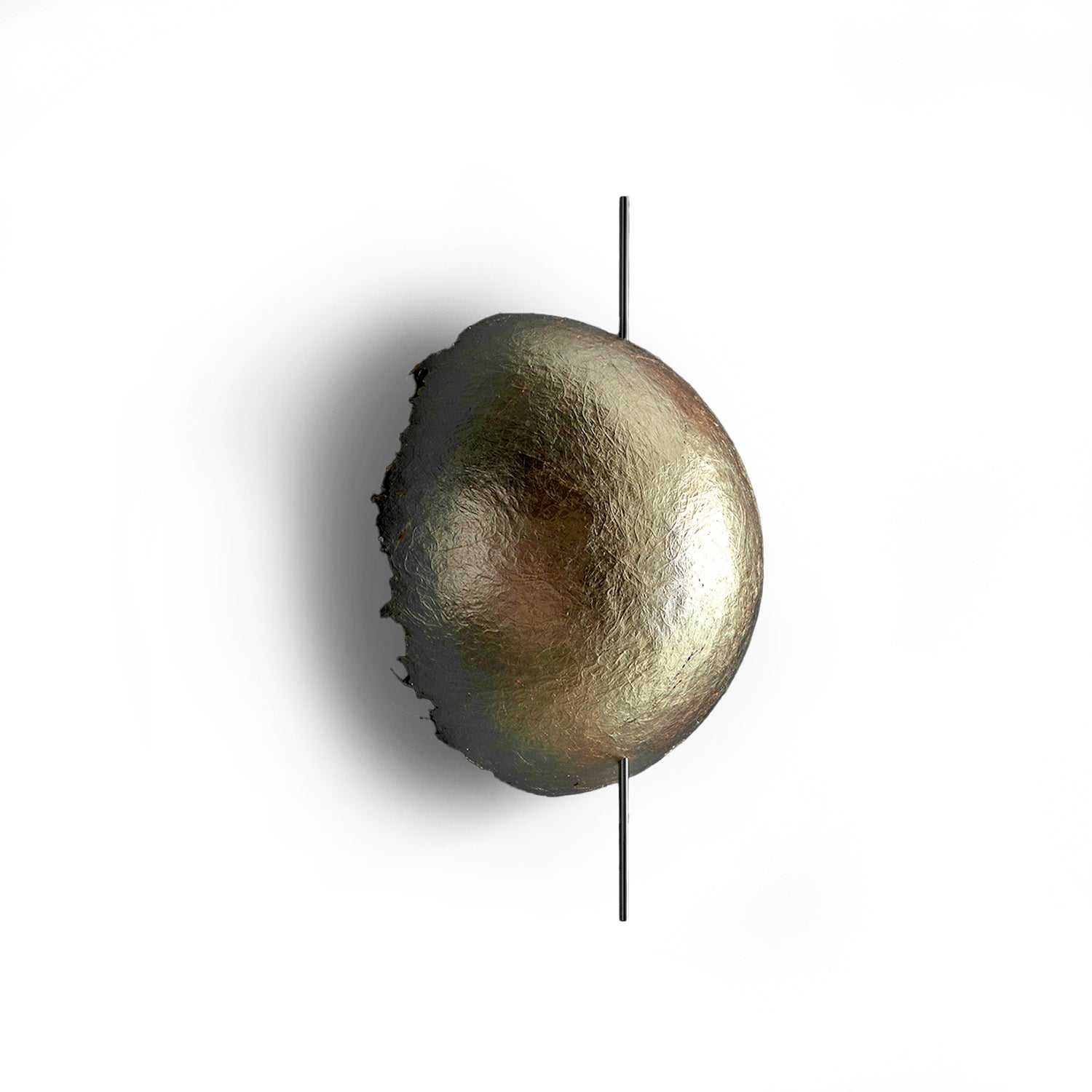
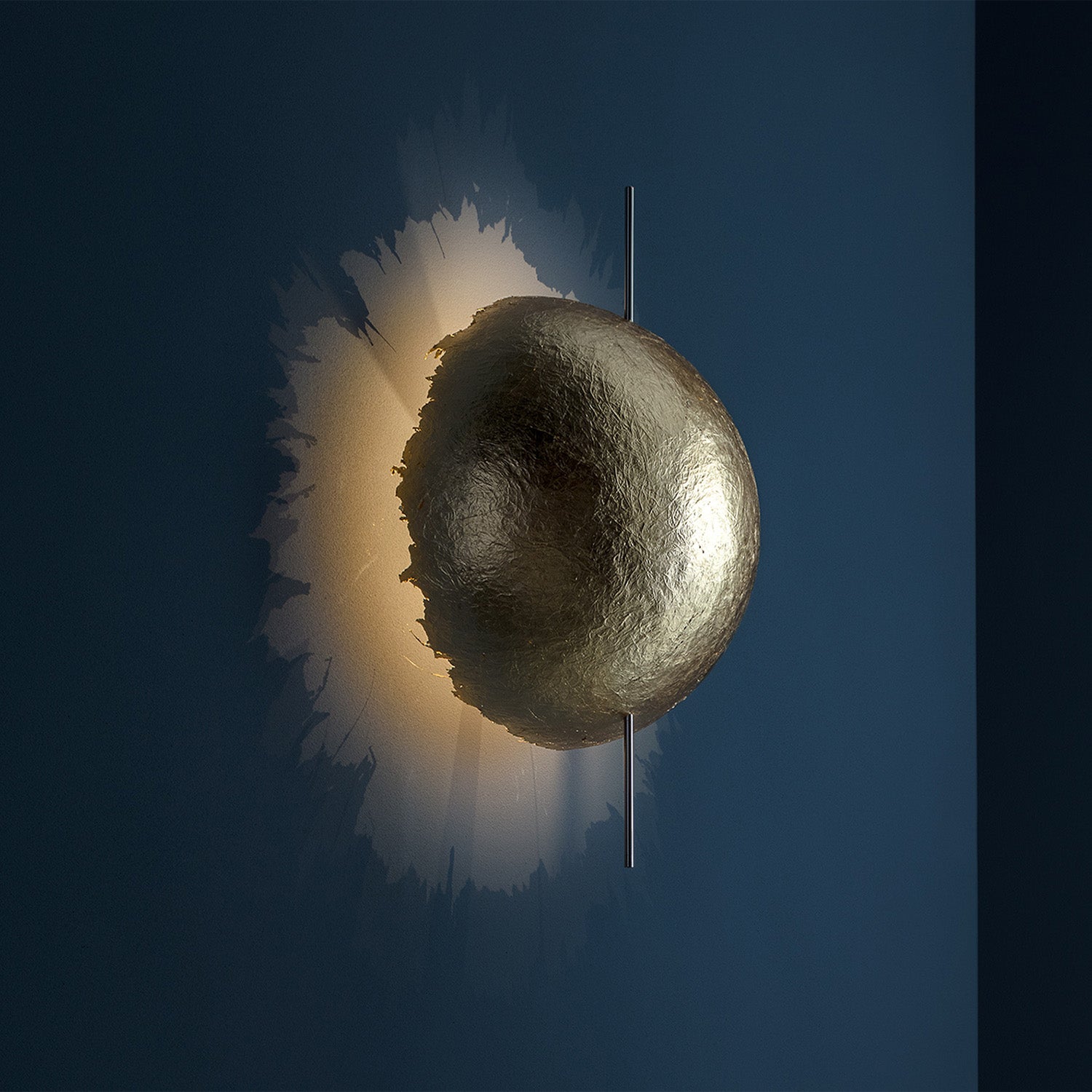
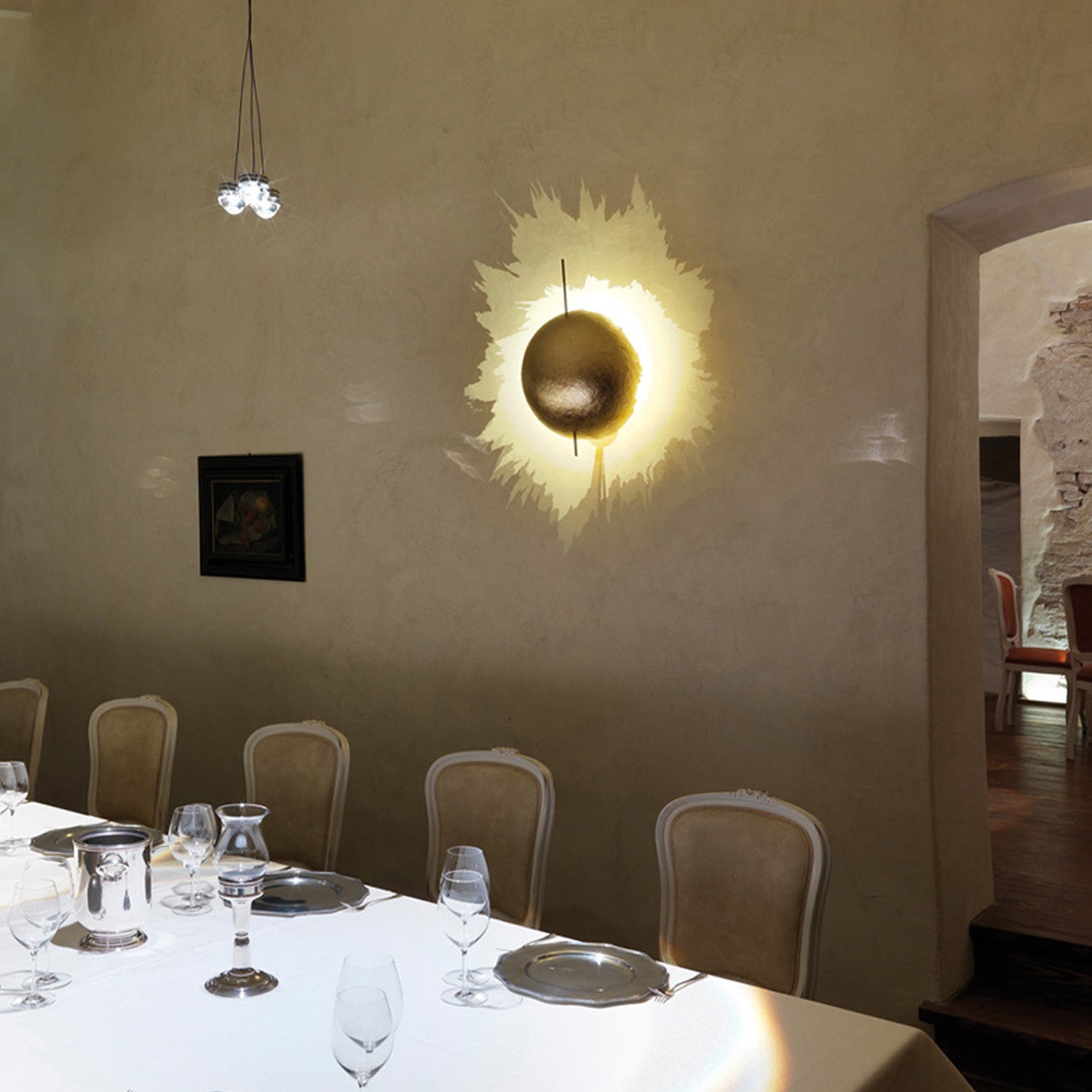
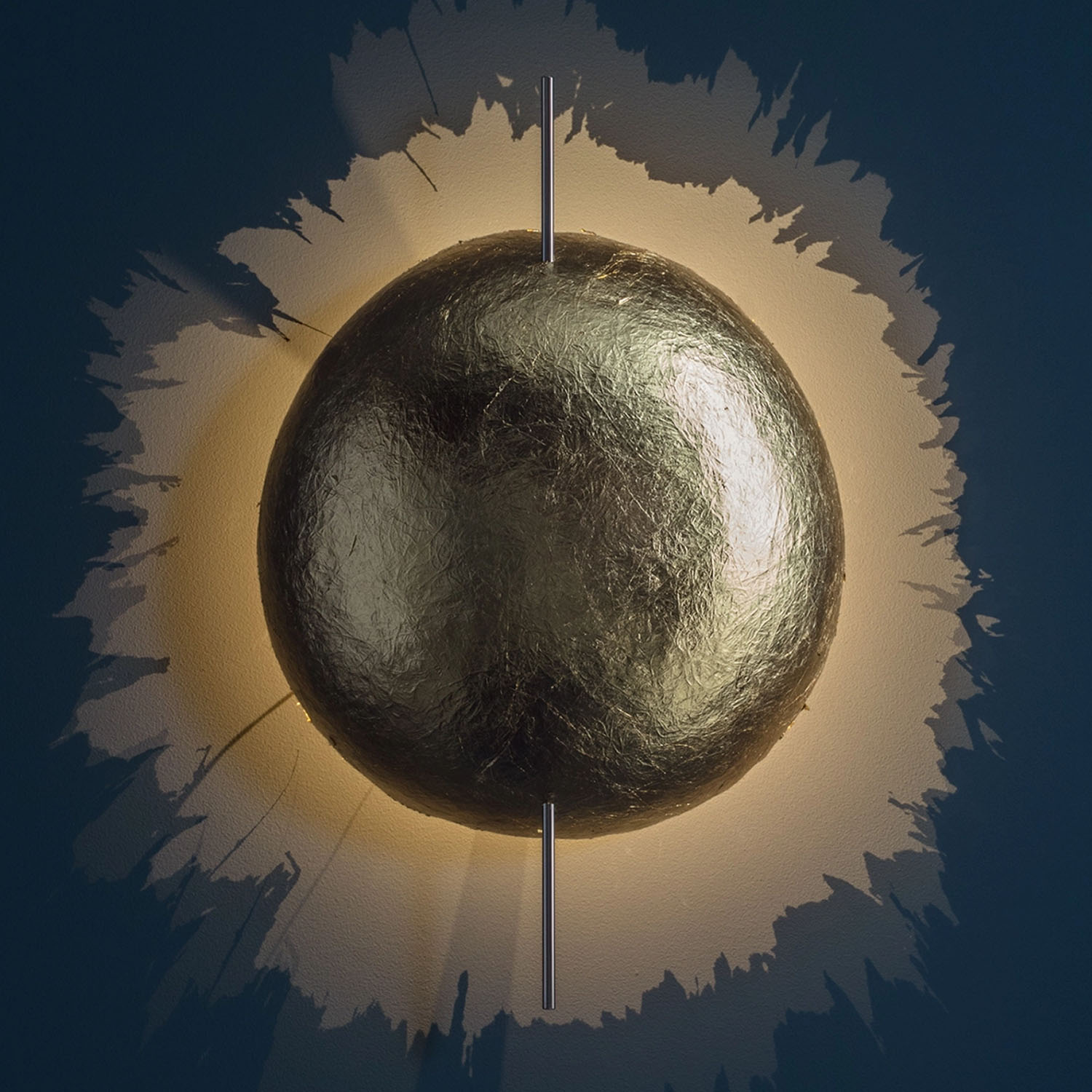
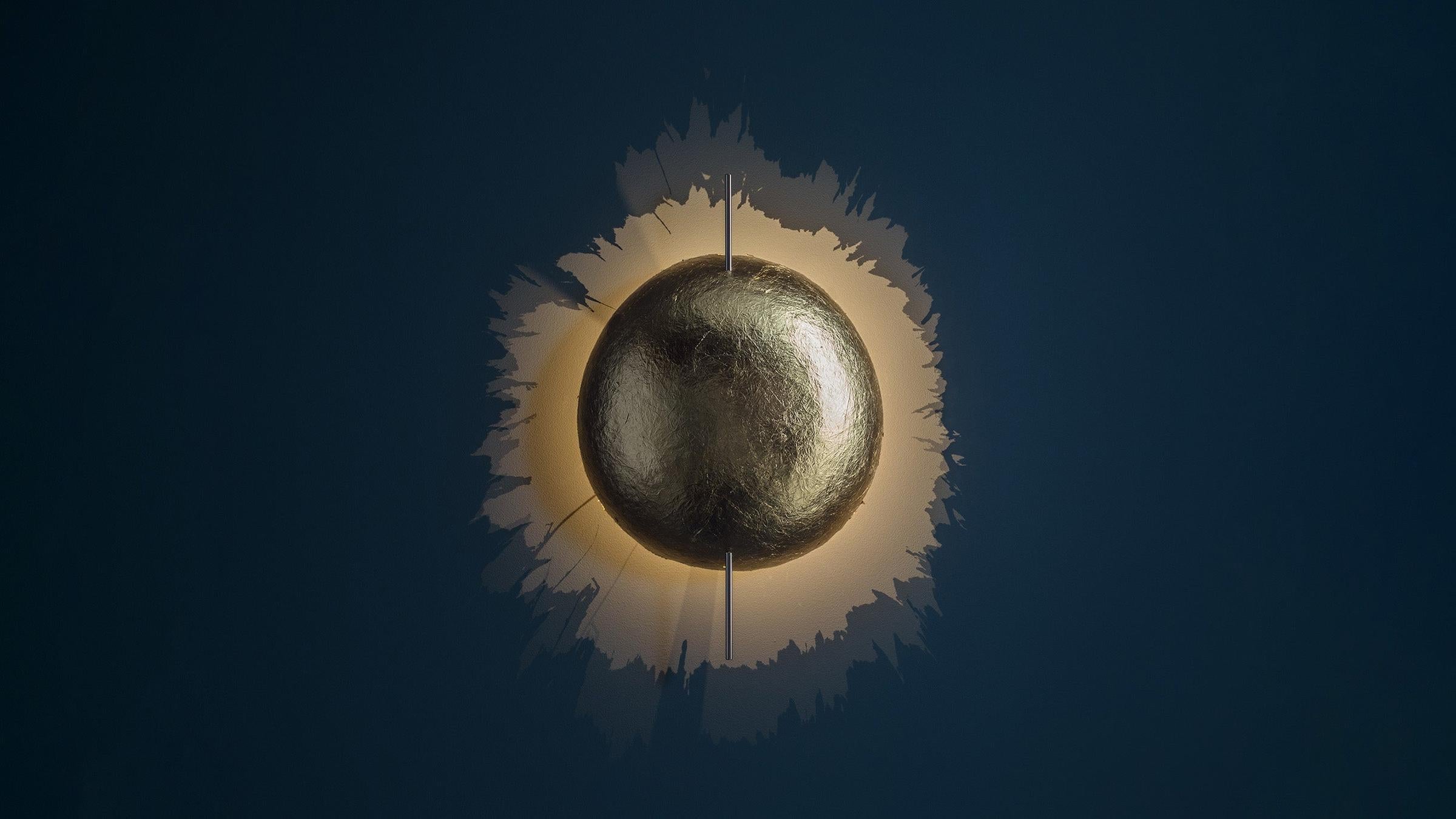
Enzo Catellani approaches light as a material in its own right. The PostKrisi wall lamp is shaped by that conviction: its hand-painted fiberglass shade, finished with jagged, fringed edges, catches and disperses warm illumination into soft atmospheric shadows that shift with the surface beneath.
The collection is available in two sizes, PostKrisi 21 and PostKrisi 40, allowing the form to read as an intimate accent or a more pronounced sculptural presence depending on the scale of the room. Shade finishes include hand-painted white fiberglass, fiberglass lined with silver-colored leaf, and fiberglass lined with gold-colored leaf, each responding differently to the integrated LED source at 2700K.
- Hand-painted fiberglass shade with distinctive fringed, jagged edge
- Nickel-plated metal structure
- Integrated LED board, 2700K, 280 lumens, CRI 80
- Non-dimmable constant current driver standard; DALI dimmable version available on request
- Made in Italy
Catellani & Smith has produced lighting in Grassobbio, near Bergamo, since 1989. Each piece is made to order, reflecting the atelier's commitment to craft over volume.
Made to order by Catellani & Smith, tailored to you.
Get customization options, swatch samples and pricing for your project.
Pairs Well With
PostKrisi 21-40 Wall Lamp
Product Details
Tear Sheet
Pricing & Warranty
Pricing for made-to-order items varies based on configuration, finishes, and customization options. Please contact one of our design consultants or visit a showroom near you for current pricing and personalized assistance.
Luminaire is an authorized retailer of Catellani & Smith. The product comes with a full manufacturer warranty.
Authenticity guaranteed. Genuine product, authenticated and sourced directly from the manufacturer.
Frequently Asked Questions
What shade finishes are available for the PostKrisi wall lamp?
The PostKrisi is offered with a hand-painted white fiberglass shade or fiberglass lined with silver-colored or gold-colored leaf. Each finish interacts differently with the 2700K LED source, producing distinct atmospheric effects on surrounding surfaces.
What is the difference between PostKrisi 21 and PostKrisi 40?
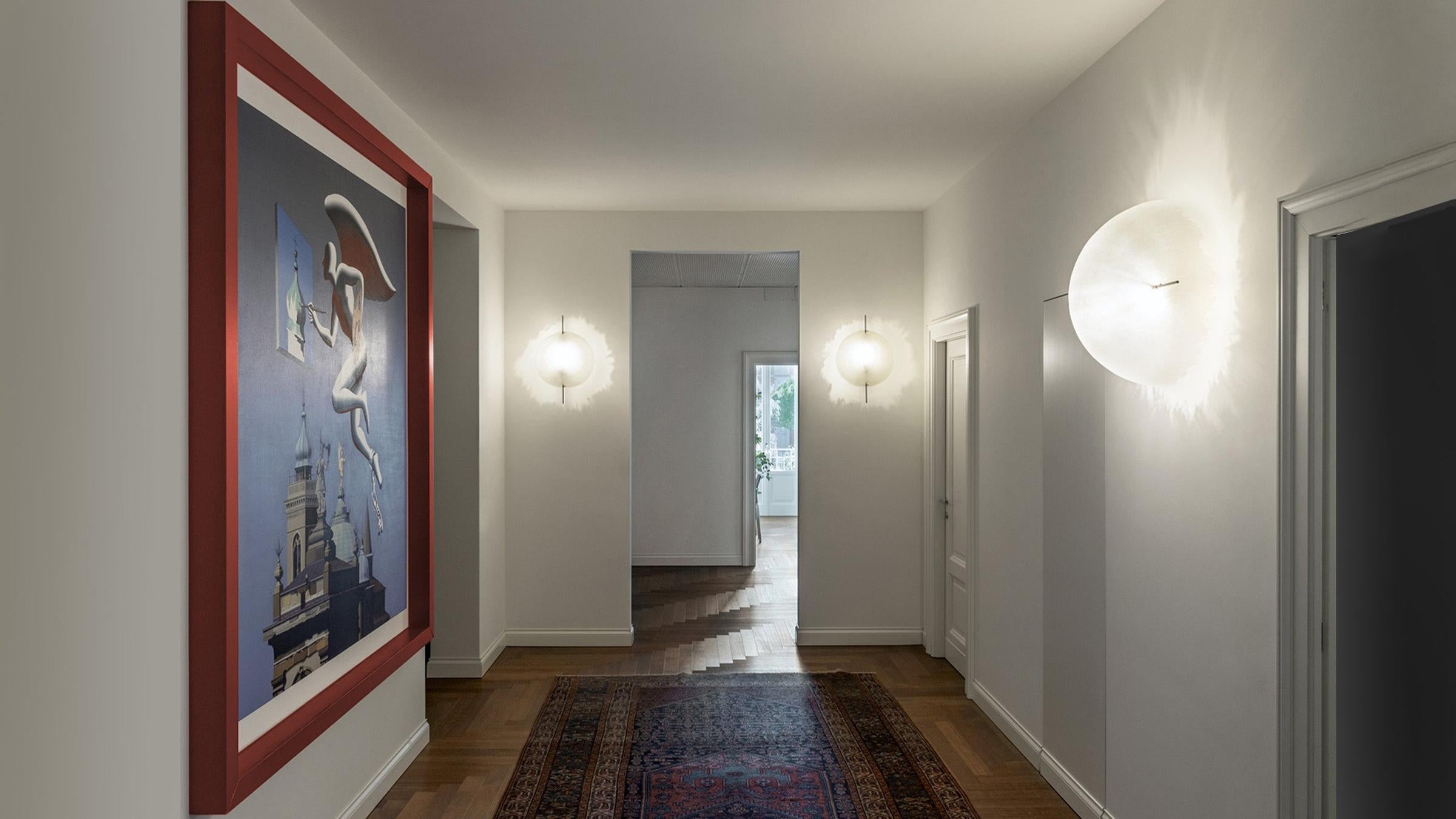
The numbers refer to the diameter of the shade in centimeters. PostKrisi 21 is suited to more intimate settings such as corridors or beside tables, while PostKrisi 40 reads as a stronger sculptural statement in living spaces or larger rooms.
Is the PostKrisi wall lamp dimmable?
The standard version ships with a non-dimmable constant current driver. A DALI dimmable version is available on request, making it compatible with professional lighting control systems used in architectural and hospitality projects.
Who is Enzo Catellani and where is his work produced?
Enzo Catellani founded Catellani & Smith in Grassobbio, near Bergamo, in 1989. The atelier produces each piece in Italy, with Catellani personally overseeing design and craft processes that often involve hand-applied finishes and made-to-order production.
What wall applications suit the PostKrisi best?
Its directional form and warm color temperature make it well suited to bedrooms, corridor walls, and living spaces where diffused, atmospheric light is preferred over broad ambient coverage. The fringed edge casts shadow patterns that animate adjacent wall surfaces.