
LC6 Table
Made by Cassina
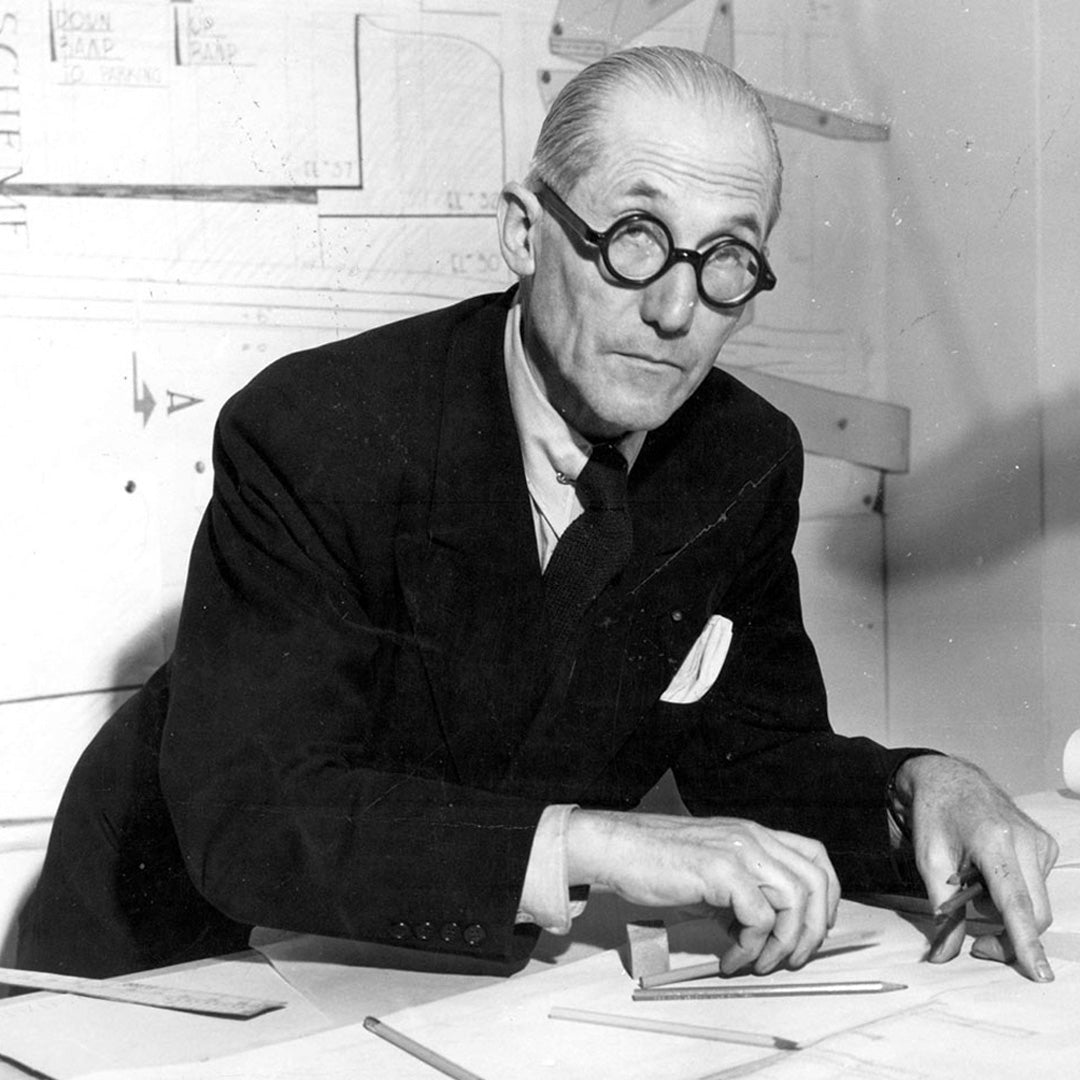
Designed by Le Corbusier
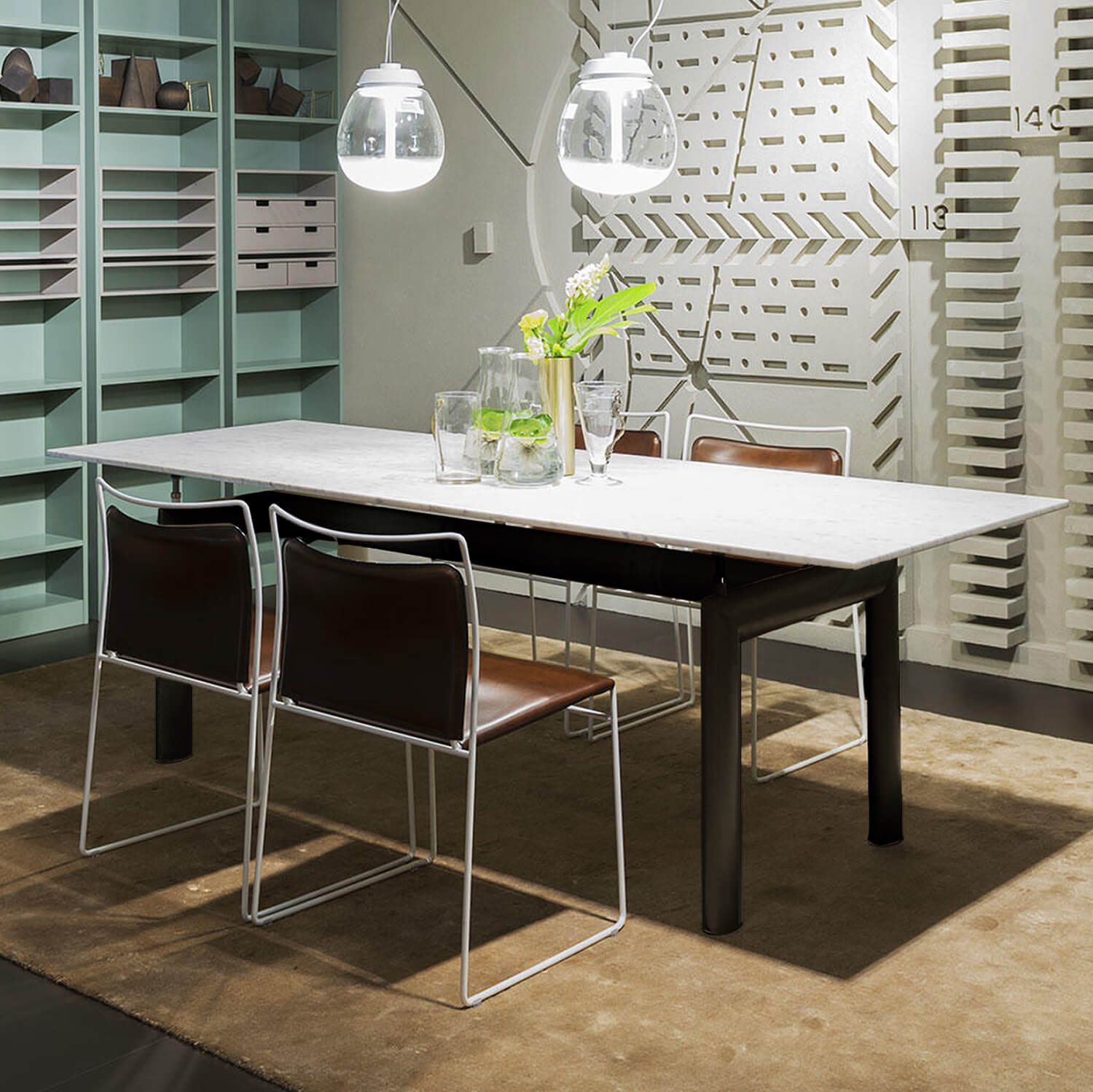
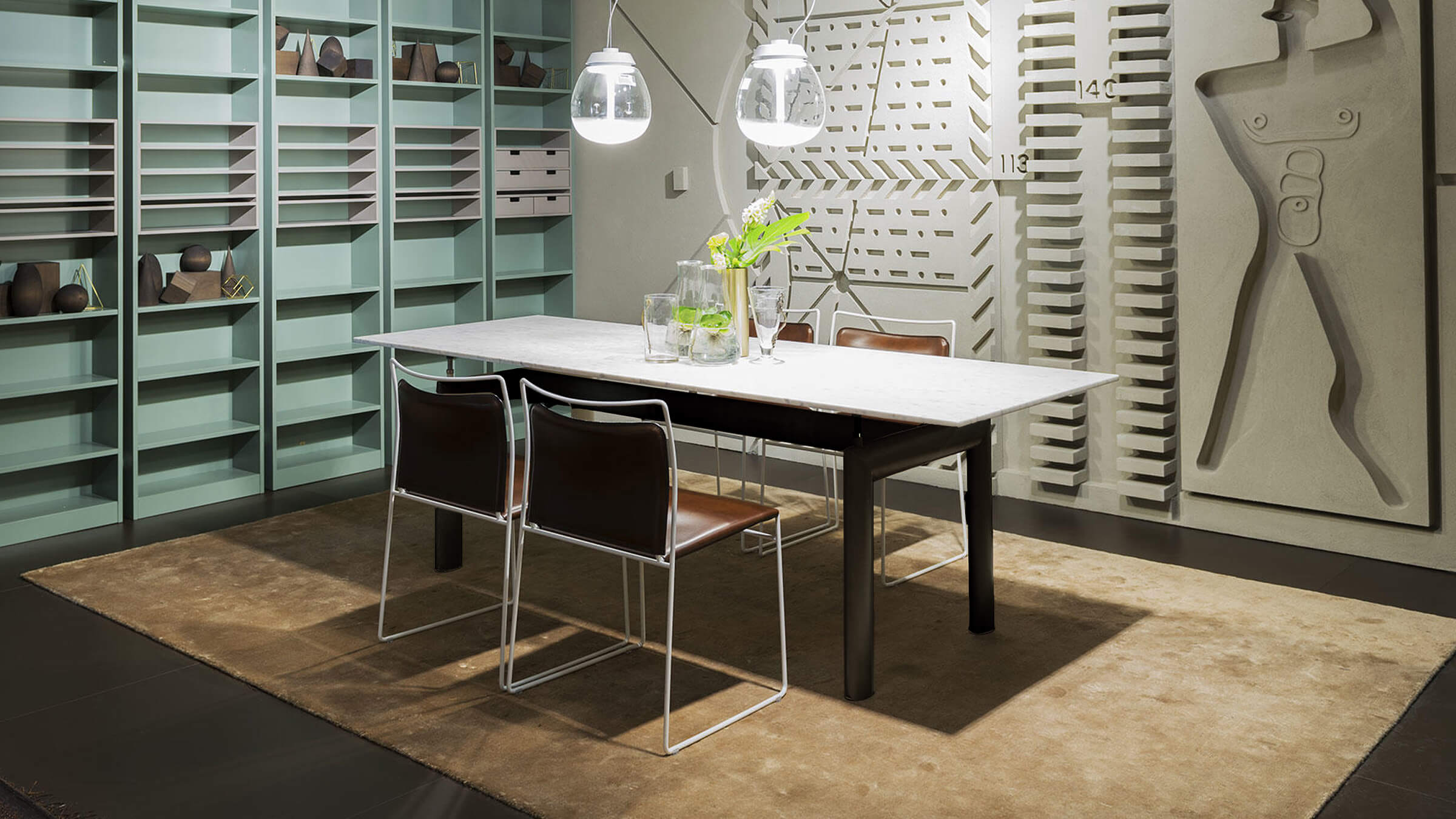
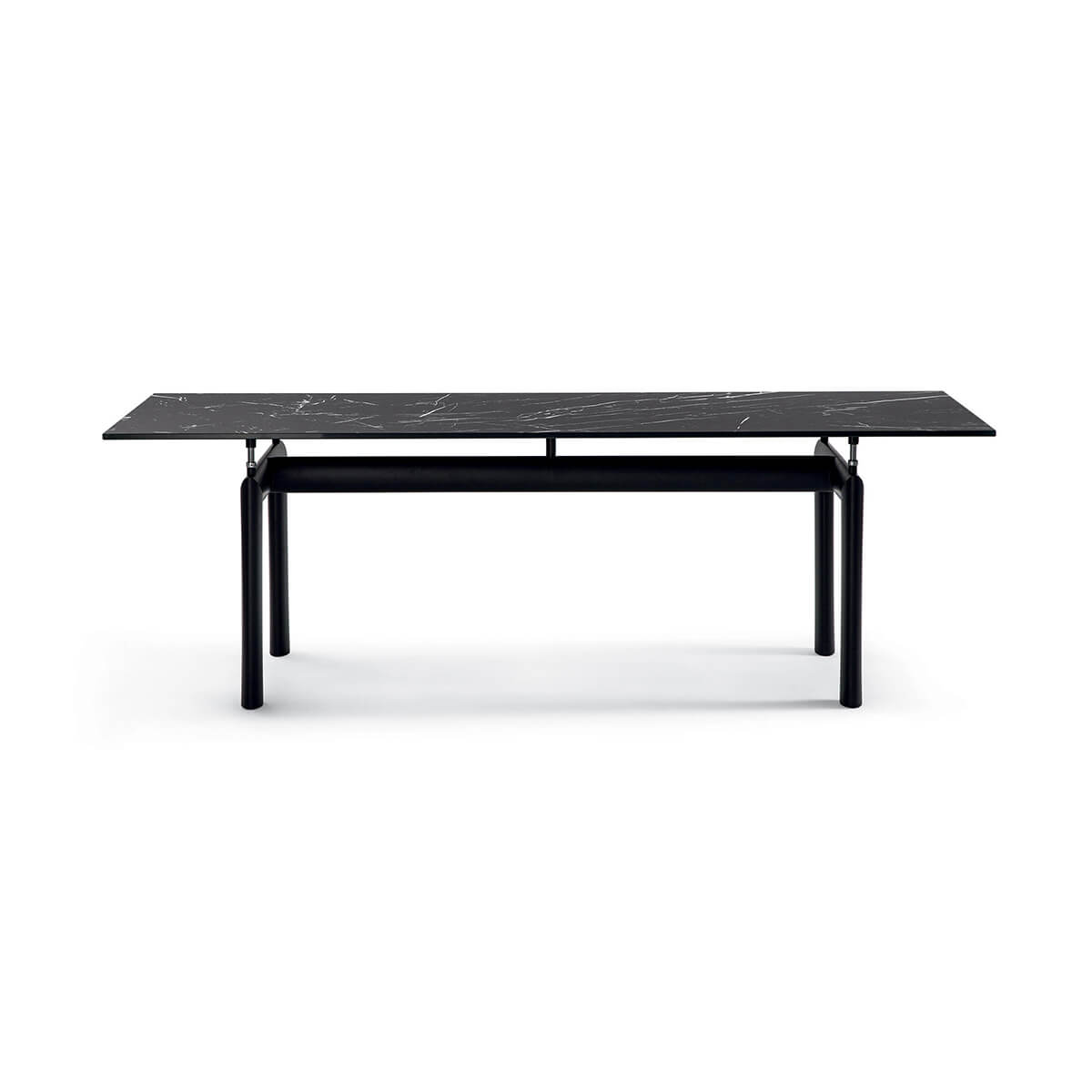
Designed by Le Corbusier and produced by Cassina, the LC6 is one of the defining objects of twentieth-century modernism. Its central proposition is architectural: a deliberate, visible separation between the load-bearing base and the surface it supports, structure and plane rendered as two autonomous elements in considered dialogue.
The heavy tubular steel base is enameled in Le Corbusier's own color palette, each hue drawn from his broader chromatic theory. Four adjustable middle supports mediate the relationship between base and top, holding the slim rectangular surface in precise tension above its frame.
- Base in enameled tubular steel, available in six colors: black, light blue, grey, green, mud, and ivory
- Top options include crystal glass, textured glass, natural marble, or veneered wood
- Adjustable supports allow fine calibration between base and surface plane
- Produced by Cassina under license from the Le Corbusier Foundation
First conceived in 1928 as part of Le Corbusier's furnishing program for Villa Church, the LC6 continues to anchor dining rooms and workspaces where architecture and interior are held to the same standard.
Contact us for availability and lead time.
Save 20% for a limited time.
Pairs well with
LC6 Table
Product Details
Details
Measurements
Tear Sheet
Shipping, Returns, & Warranty
Please refer to our shipping and return & exchange policy.
The product comes with a full manufacturer warranty. Luminaire is an authorized retailer of Cassina.
Authenticity guaranteed. LC6 Table is a genuine product, sourced directly from Cassina.
Frequently Asked Questions
What materials are available for the LC6 table top?
The LC6 top is offered in several options: crystal glass, textured glass, natural marble, and veneered wood. Each surface reads differently against the enameled steel base, allowing the table to shift in character from austere to warm.
What colors is the LC6 base available in?
The tubular steel base is enameled in six colors drawn directly from Le Corbusier's chromatic theory: black, light blue, grey, green, mud, and ivory. These are not decorative choices but architectural ones, consistent with Le Corbusier's broader color philosophy.
Who designed the LC6 and when was it originally created?
The LC6 was designed by Le Corbusier in 1928 as part of the furniture program developed for Villa Church in Paris. It is produced today by Cassina under an official license from the Fondation Le Corbusier.
Is the LC6 suitable for use as a dining table or a work table?
The LC6 was conceived as a multi-purpose table, and its proportions support both dining and working configurations. Its architectural presence makes it equally at home in a formal dining room, a studio, or a meeting space.
What makes the LC6 structurally distinctive compared to conventional tables?
Le Corbusier designed the LC6 so that the base and the top read as entirely separate elements, joined only by four adjustable intermediate supports. This deliberate separation expresses his principle that structure should be visible and legible, never concealed.

We love Cassina too!
Have any questions about this product or any other product by Cassina, get in touch! We are here to help.
-
Speak with a design consultant
We can help answer any questions you have. Give us a call.
-
Send us a message
Prefer to get an answer to your question via email? Drop us a line.