
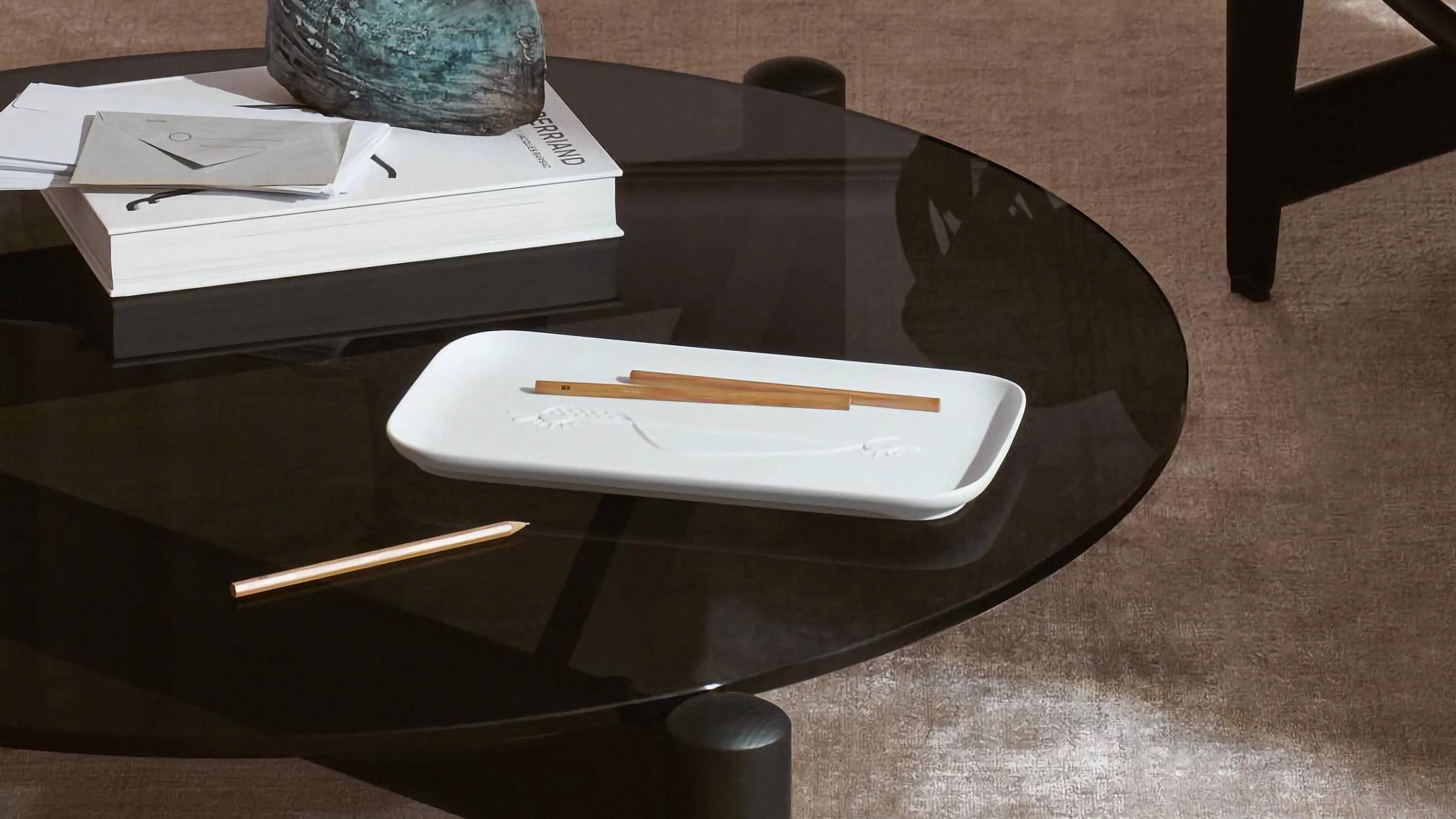
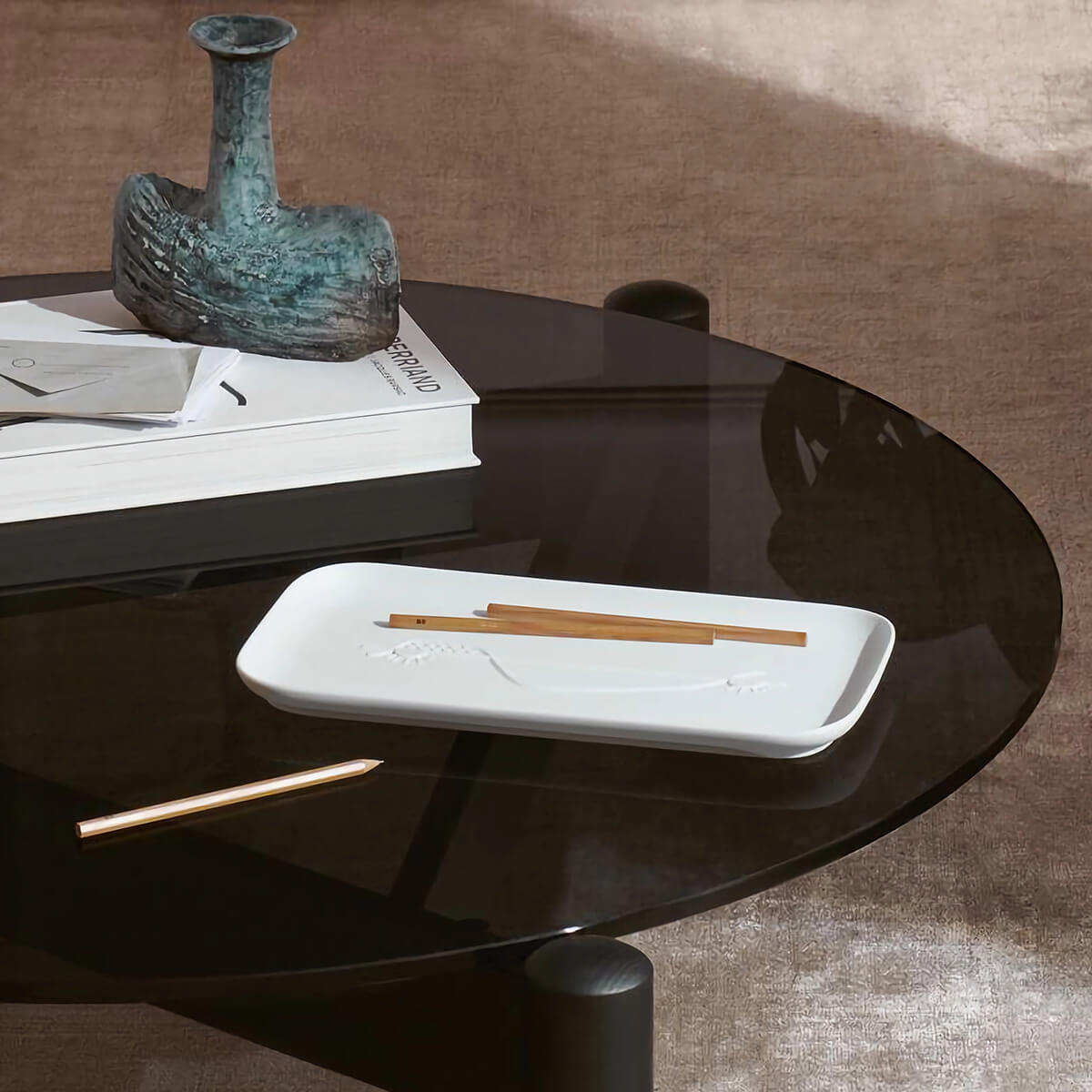
Chandigarh Tray Collection
Made by Cassina
Designed by Le Corbusier
In the 1950s, Le Corbusier pressed symbolic bas-reliefs into the concrete walls of Chandigarh, the city he designed in northern India and now a UNESCO World Heritage Site. Three of those symbols, each sketched by the architect in 1956, now exist in a new form: pure, unglazed porcelain, handcrafted by Richard Ginori.
The open hand, an emblem of peace, appears on the square tray with rounded corners. The fish inhabits the round tray. The arc of the sun defines the rectangular form. The same iconographic vocabulary appears at Marseille's Unité d'Habitation, pressed into béton brut as sculptures moulées, figurative marks drawn from Le Corbusier's deeply personal symbolic language.
Produced in collaboration with the Le Corbusier Foundation, each tray carries the weight of that architectural archive. The unglazed porcelain surface holds the relief with an almost geological quality, closer to cast concrete than conventional ceramics.
- Square tray with rounded corners: the open hand
- Round tray: the fish
- Rectangular tray: the movement of the sun
- Handcrafted by Richard Ginori in unglazed porcelain
- Produced under license from the Le Corbusier Foundation
More than 10 available. In stock, ready to ship.
Save 15% for a limited time.
Pairs well with
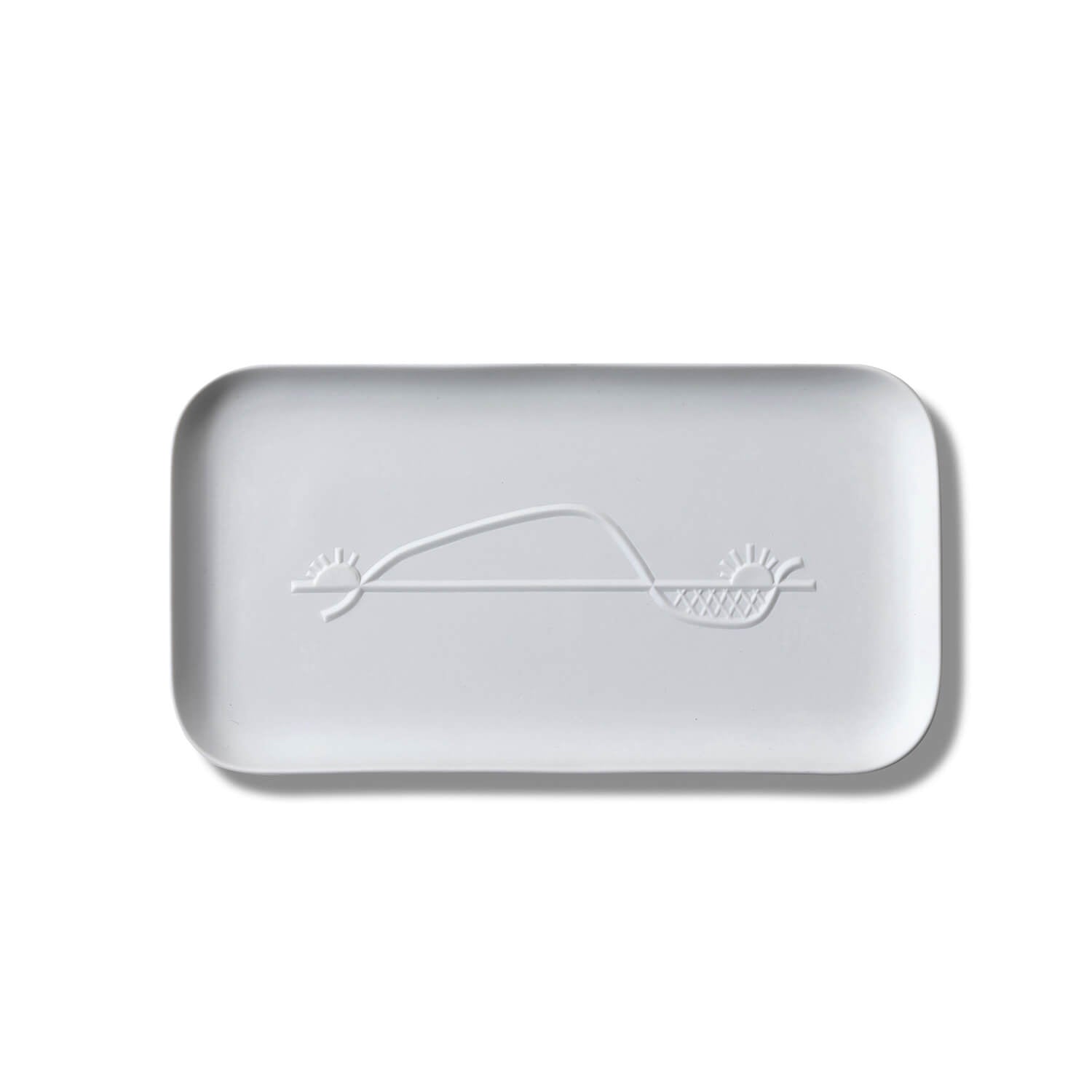
Chandigarh Tray Collection
Product Details
Tear Sheet
Shipping, Returns, & Warranty
Please refer to our shipping and return & exchange policy.
The product comes with a full manufacturer warranty. Luminaire is an authorized retailer of Cassina.
Authenticity guaranteed. Chandigarh Tray Collection is a genuine product, sourced directly from Cassina.
Frequently Asked Questions
What do the symbols on the Chandigarh trays represent?
The three symbols, the open hand, the fish, and the arc of the sun, were sketched by Le Corbusier in 1956 as part of a personal iconographic language he developed over decades. The open hand in particular became one of his most enduring emblems, representing peace and the act of giving and receiving. The same symbols appear as bas-reliefs in the concrete walls of Chandigarh and at the Unité d'Habitation in Marseille.
Who is Richard Ginori and why were they chosen for this collaboration?
Richard Ginori is one of Italy's oldest and most distinguished porcelain manufacturers, founded in 1735 near Florence. Their mastery of ceramic craft and their history of working with significant design and architectural commissions made them a natural partner for translating Le Corbusier's architectural reliefs into the precision of unglazed porcelain.
Why is the porcelain unglazed on these trays?
The unglazed finish is a deliberate material choice that echoes the raw, tactile quality of béton brut, the exposed concrete Le Corbusier used at Chandigarh and the Unité d'Habitation. Left without glaze, the porcelain surface reads as closer to cast stone than conventional ceramics, preserving the architectural character of the original bas-reliefs.
Is this collection officially authorized by the Le Corbusier Foundation?
Yes. The Chandigarh Tray Collection is produced by Cassina in direct collaboration with the Fondation Le Corbusier, which oversees the licensing and integrity of all objects bearing Le Corbusier's designs and iconography.
What is the significance of Chandigarh as a UNESCO World Heritage Site?
Chandigarh, the planned city Le Corbusier designed for the Indian state of Punjab in the early 1950s, was inscribed as a UNESCO World Heritage Site in 2016 as part of a transnational listing of seventeen Le Corbusier works. The Capitol Complex at its center is considered one of the most complete expressions of his urban and architectural vision, and the symbolic bas-reliefs embedded in its walls are integral to that legacy.

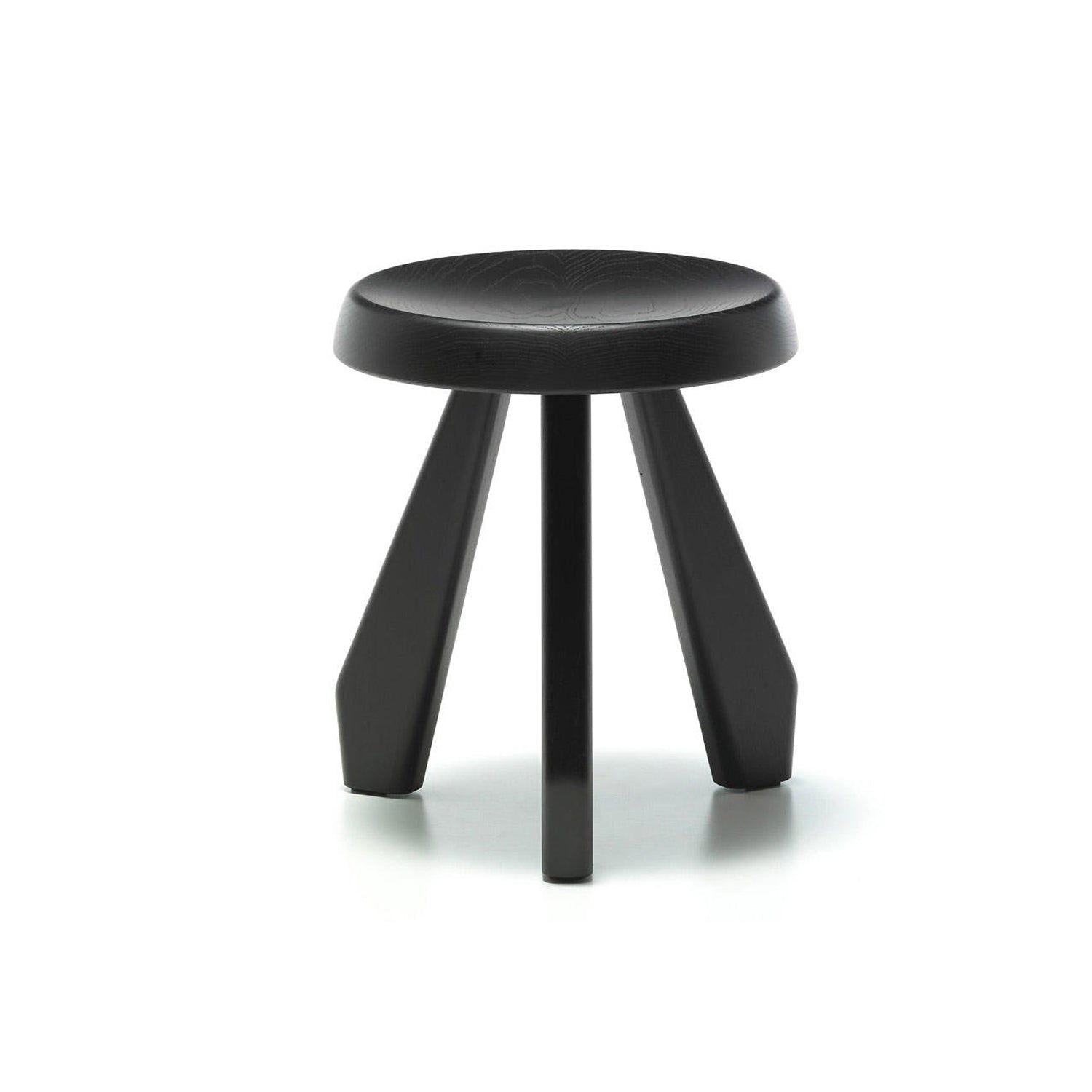
We love Cassina too!
Have any questions about this product or any other product by Cassina, get in touch! We are here to help.
-
Speak with a design consultant
We can help answer any questions you have. Give us a call.
-
Send us a message
Prefer to get an answer to your question via email? Drop us a line.