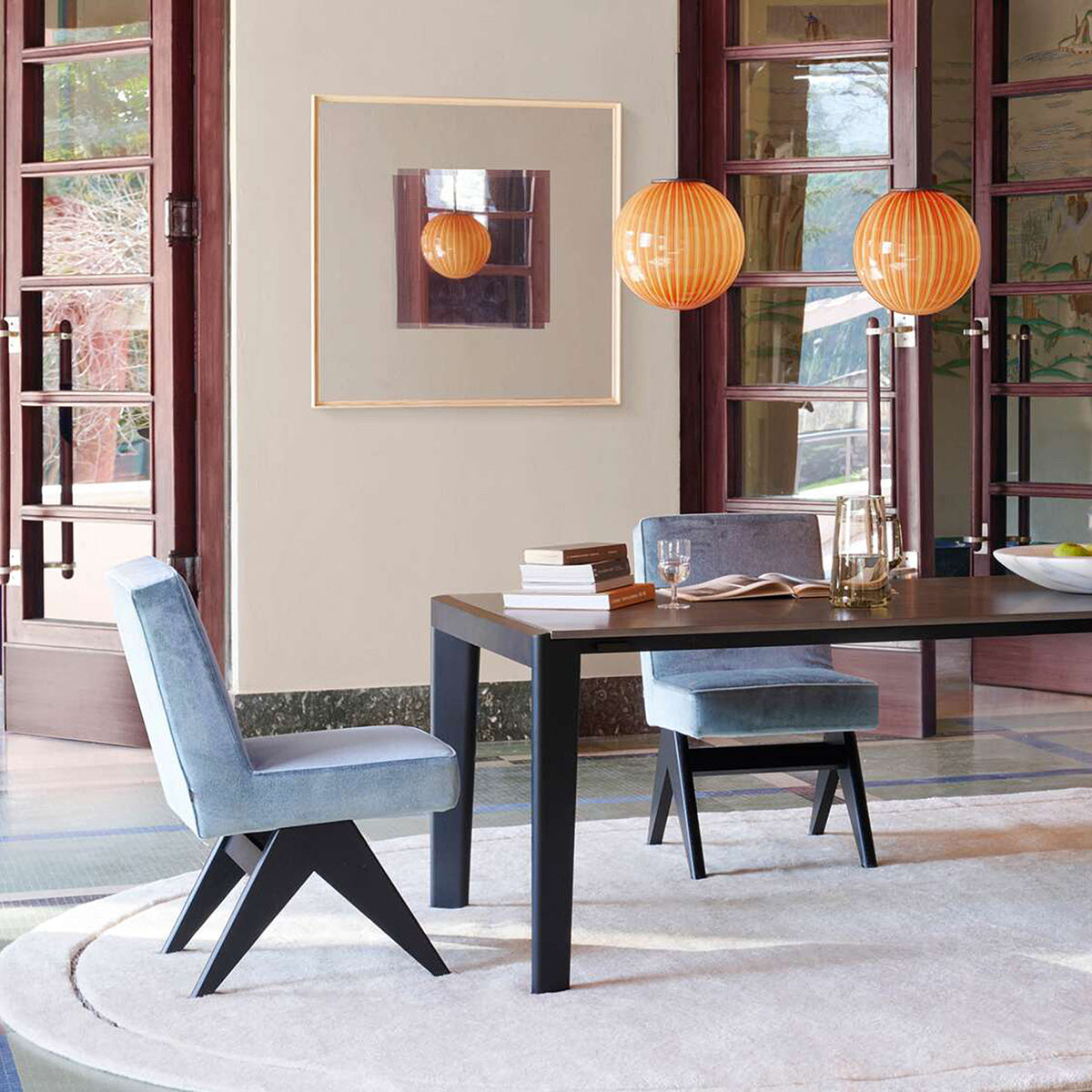
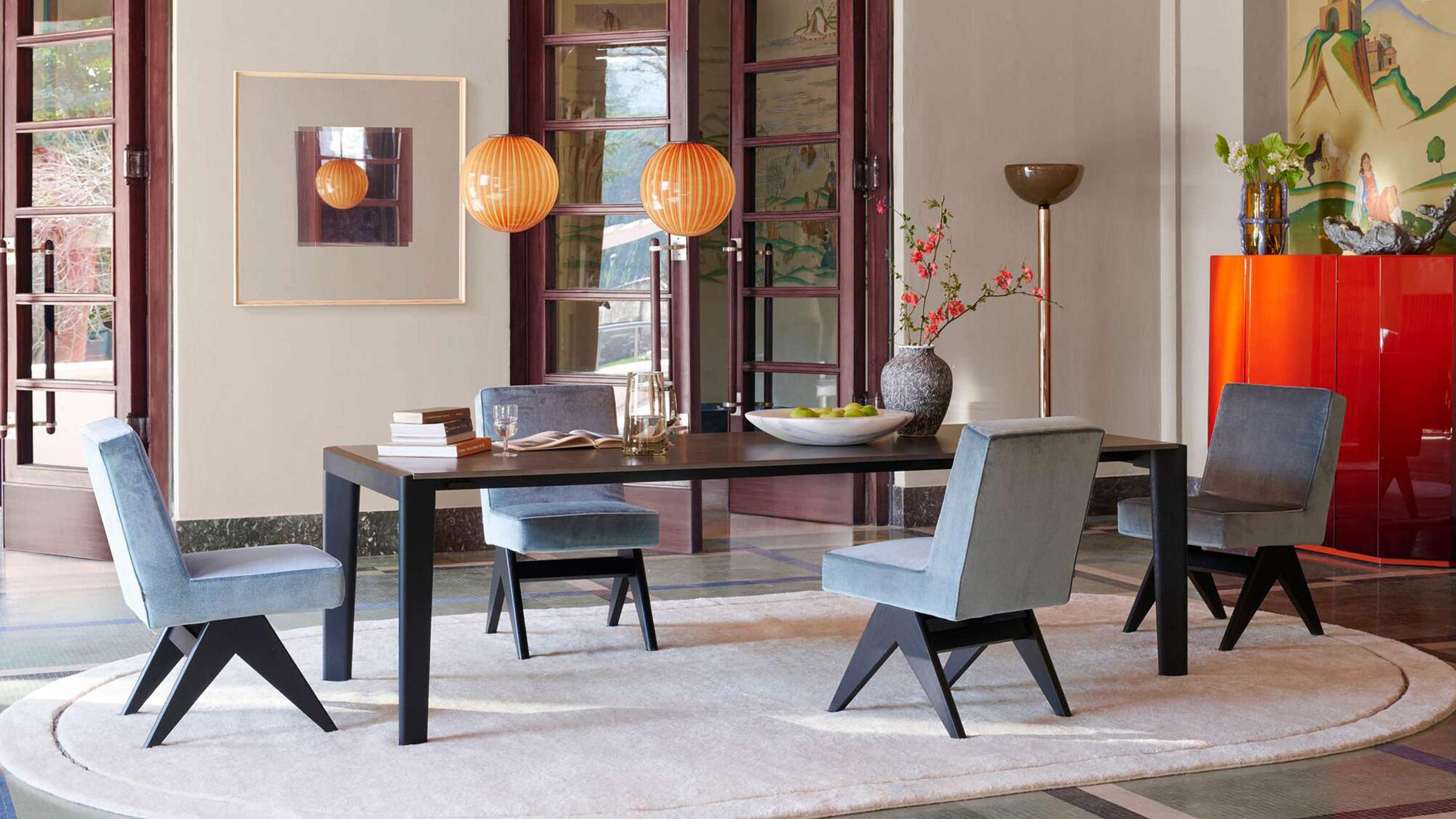
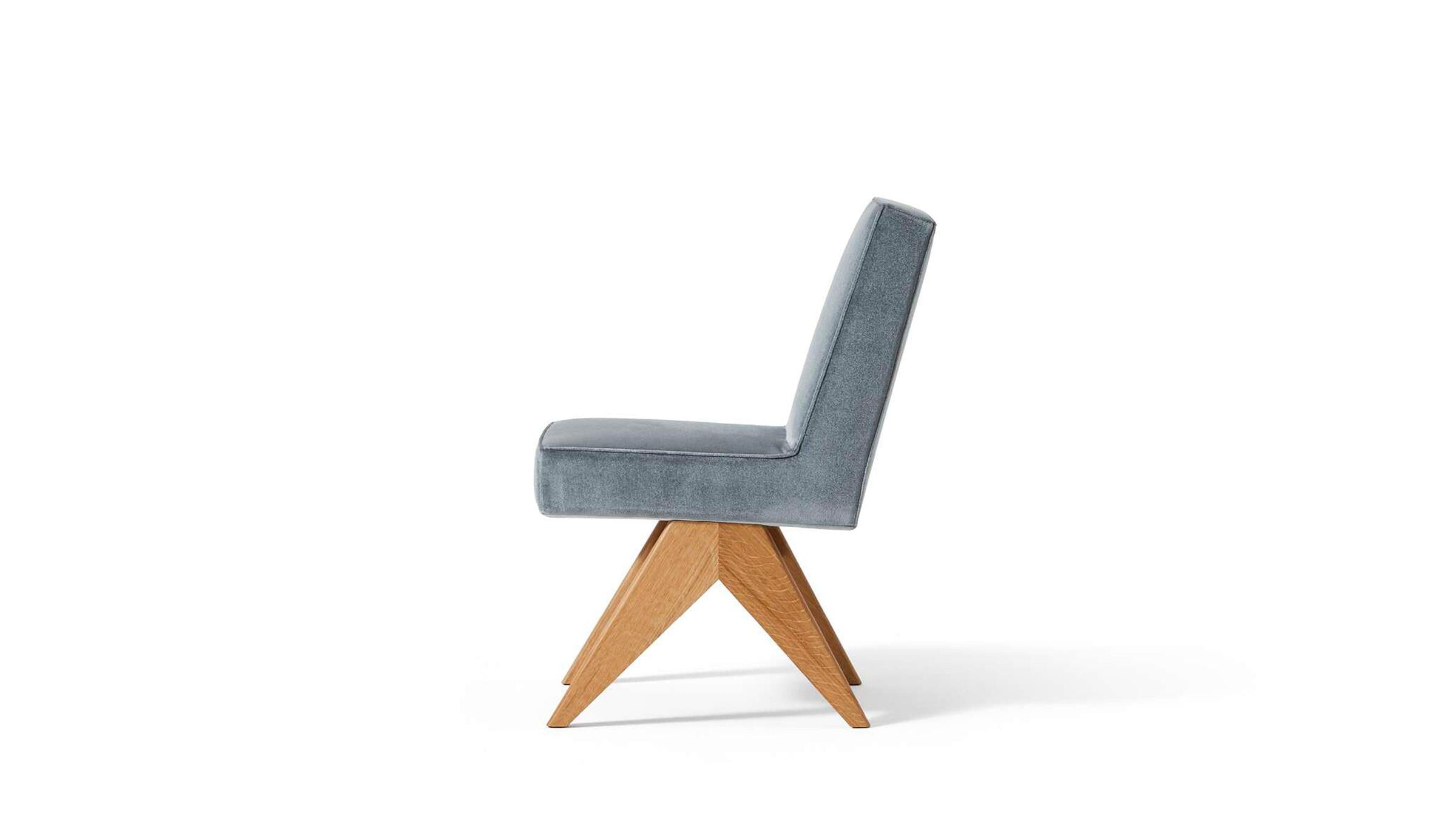


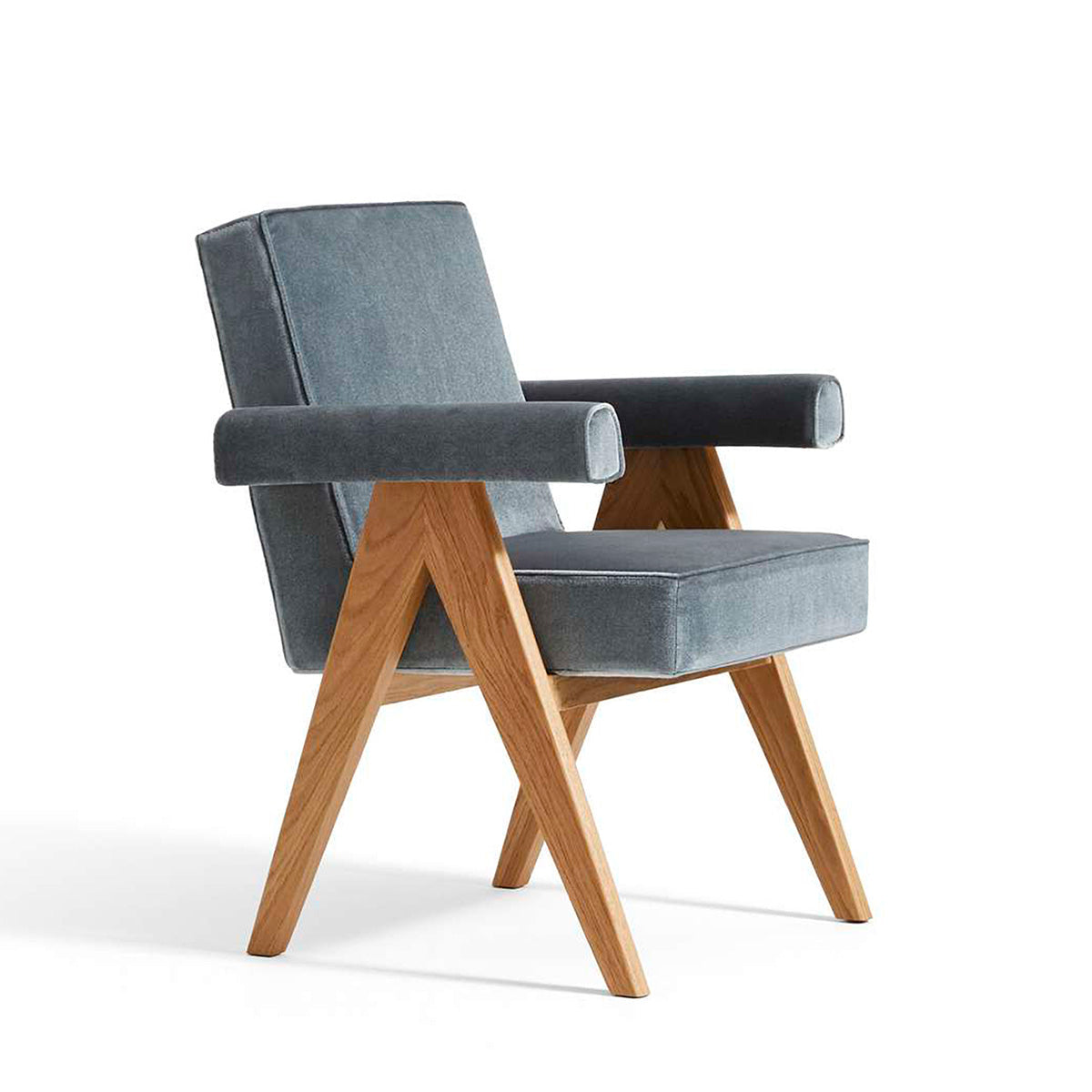
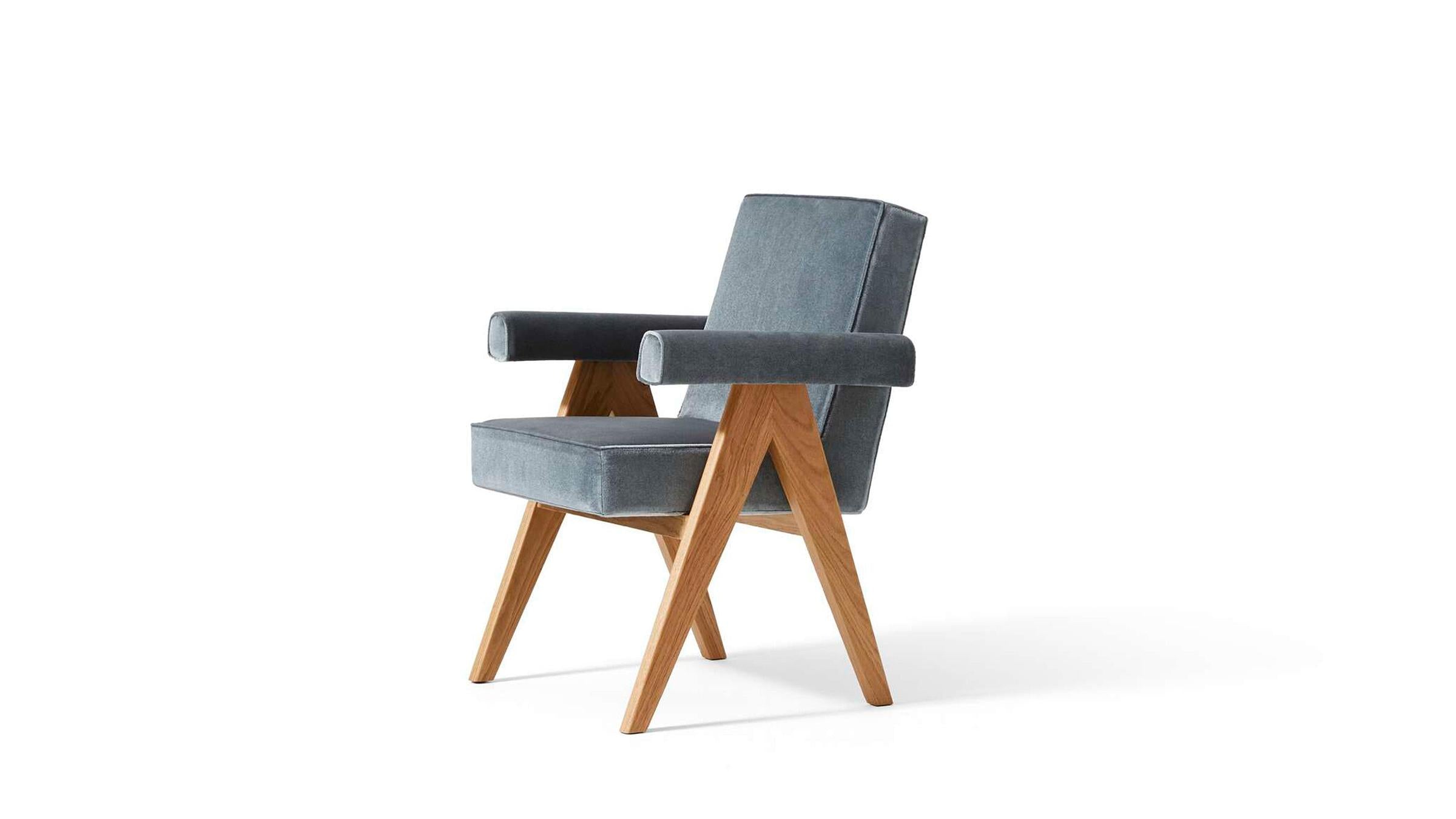
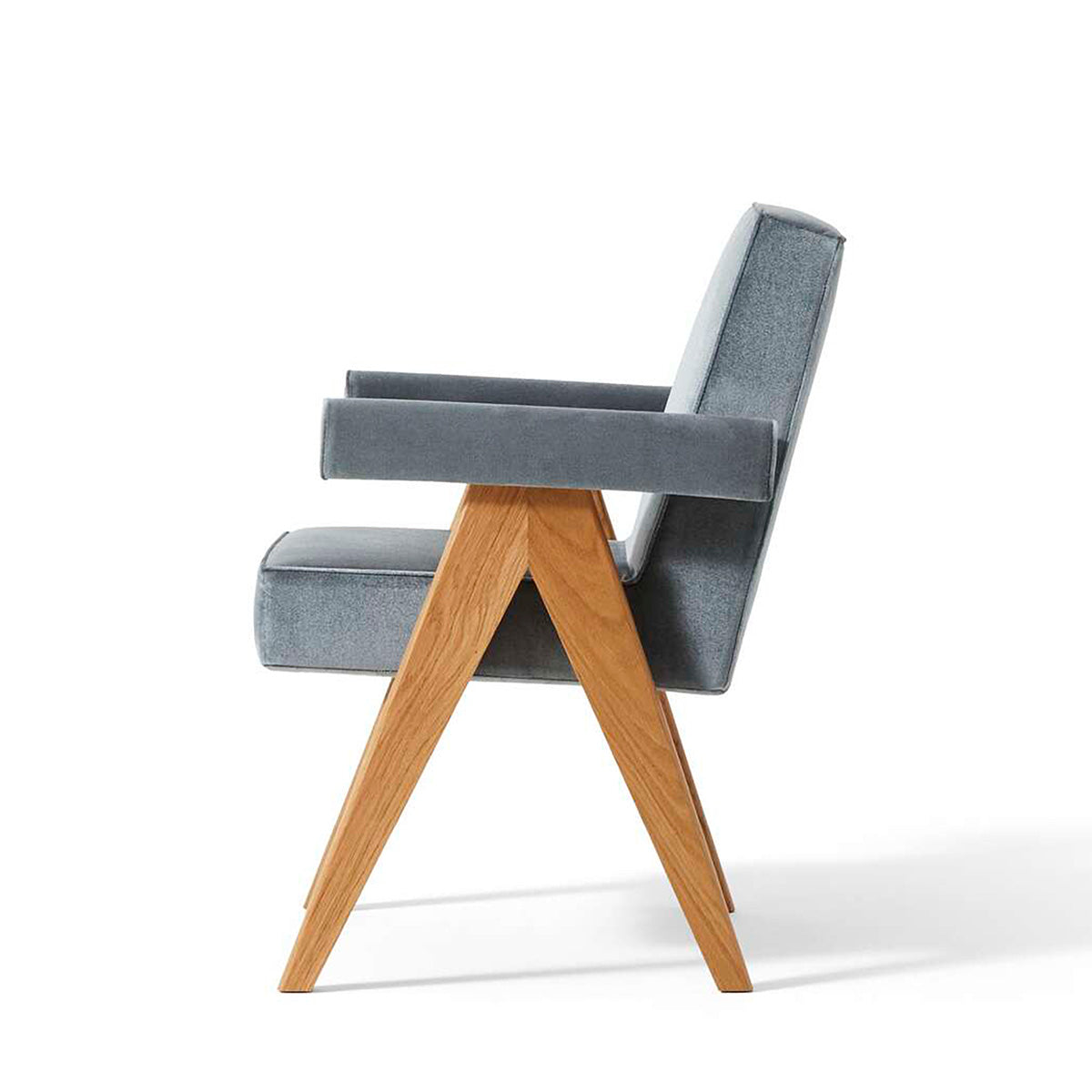
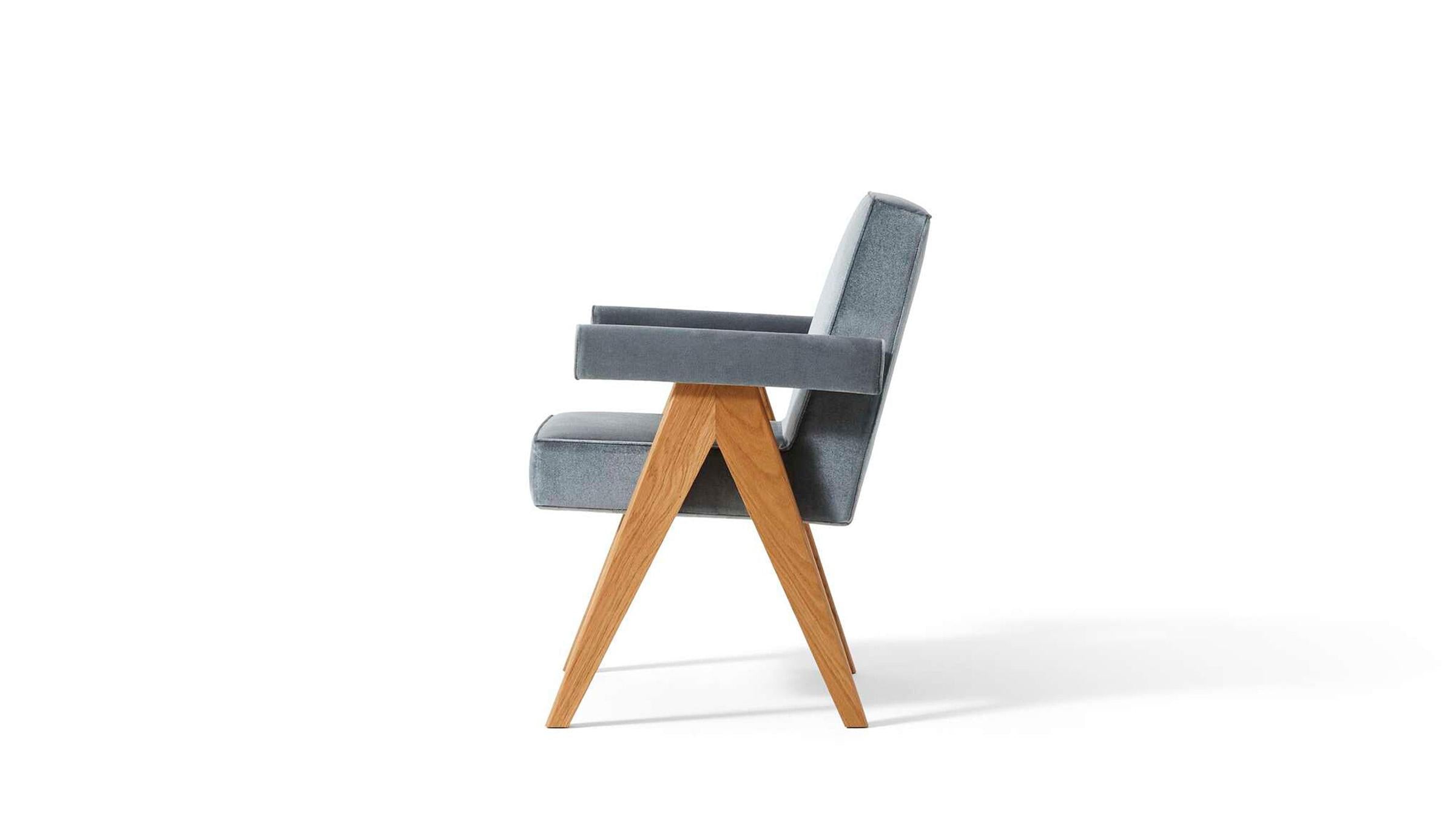
Committee Chair
Made by Cassina
Designed by Pierre Jeanneret
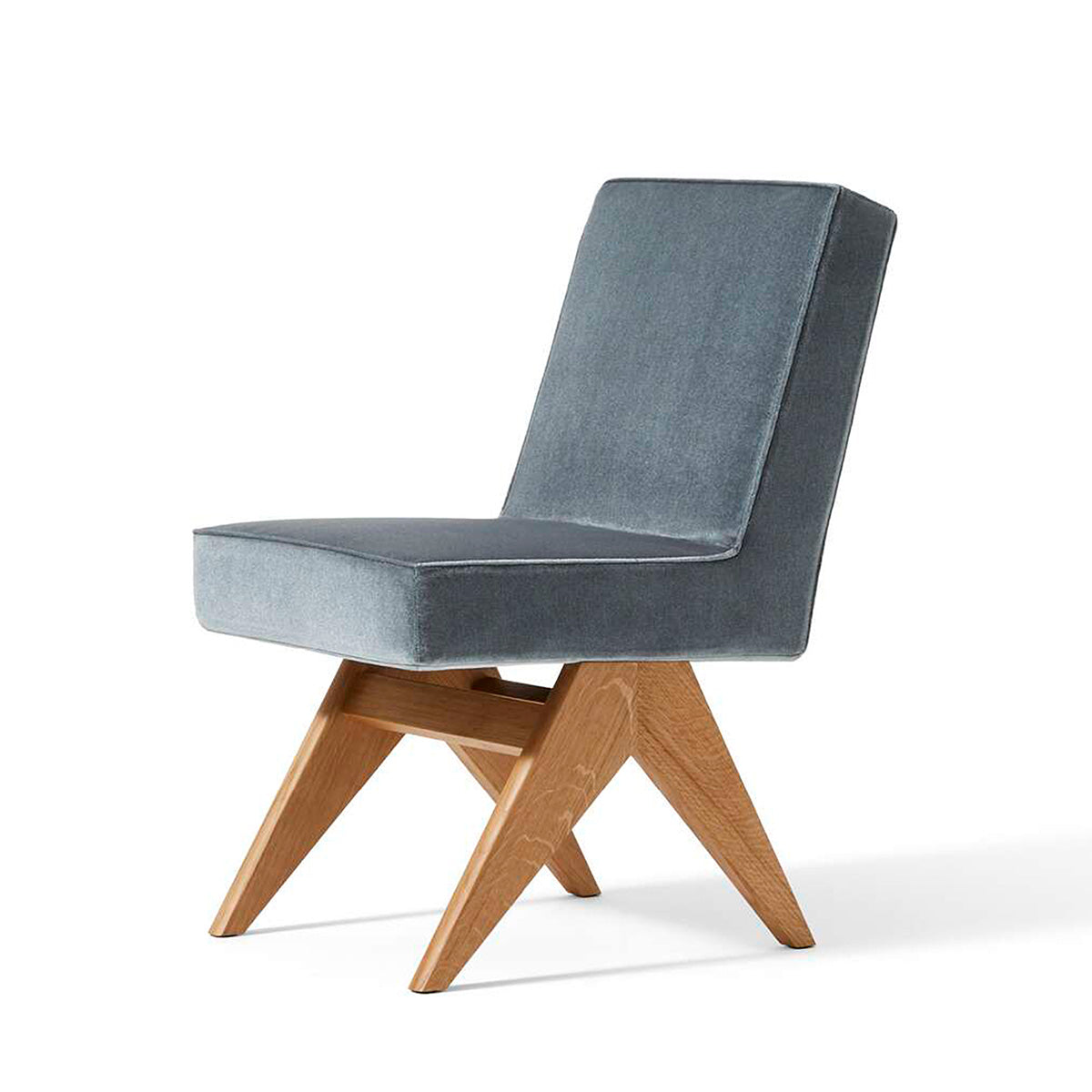
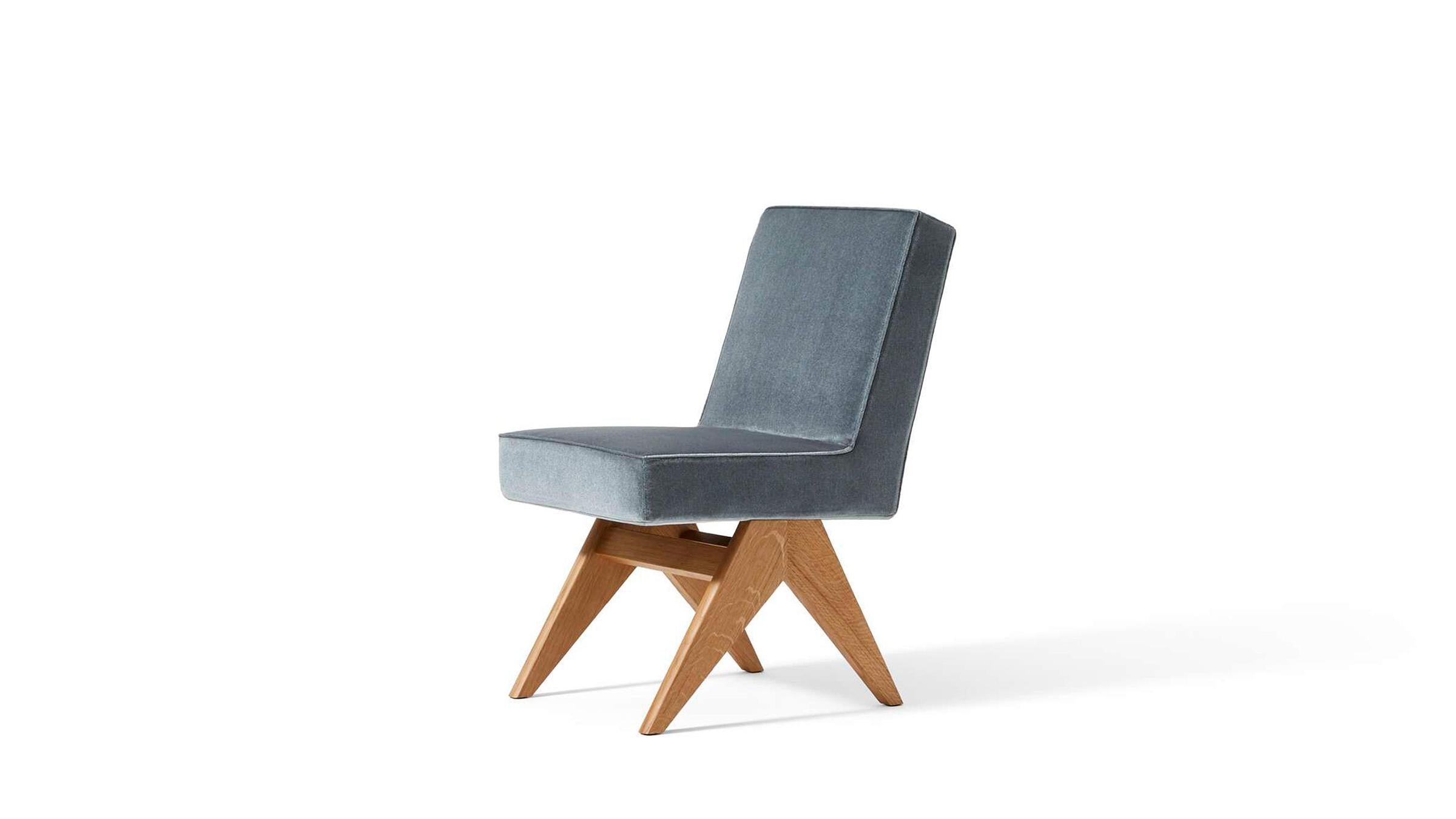
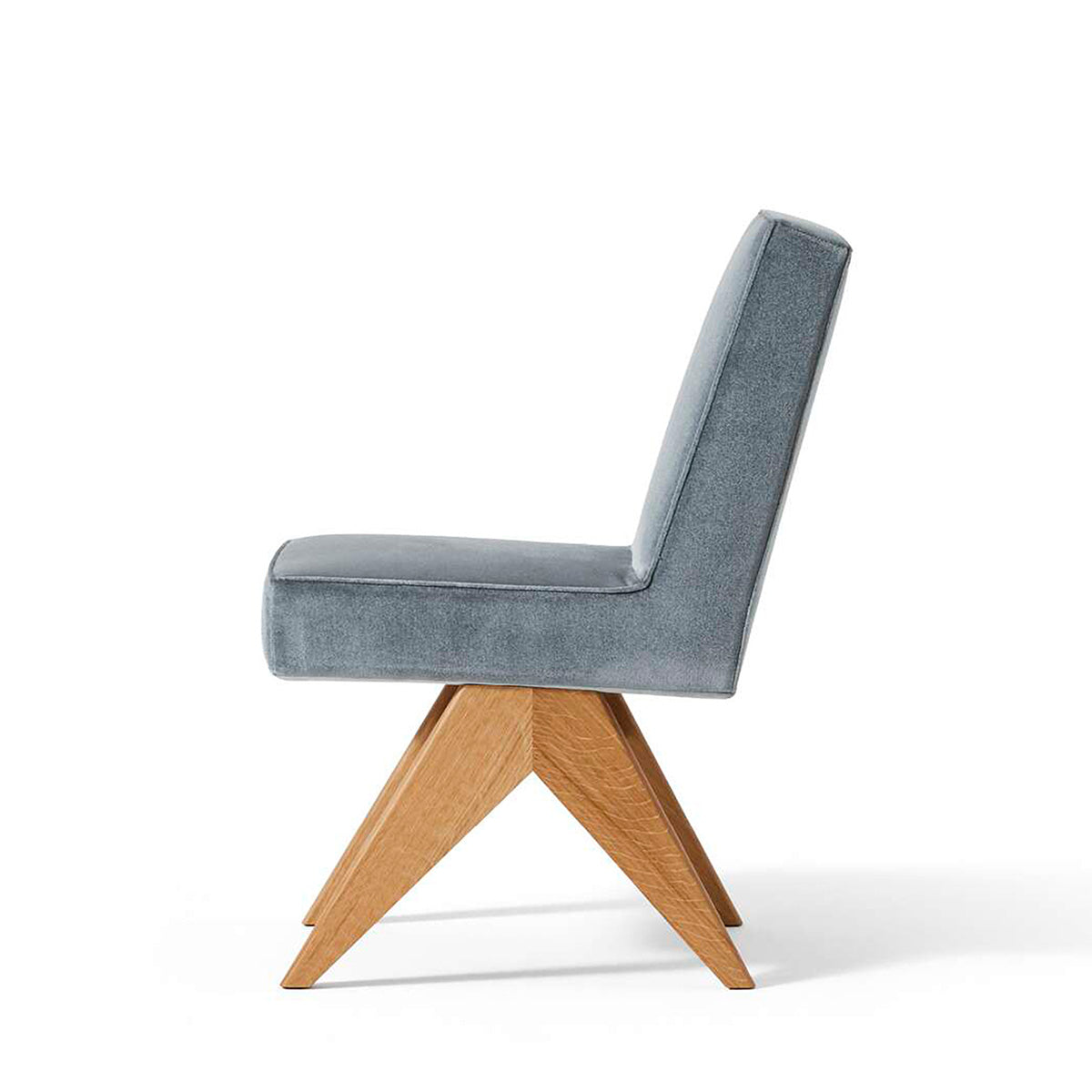
Designed by Pierre Jeanneret for the administrative buildings of Chandigarh, the planned city Le Corbusier conceived for post-independence India, the Committee Chair carries the full weight of modernism's most ambitious civic undertaking. Its signature V-shaped legs and solid teak frame were not aesthetic gestures alone. They answered a precise brief: durability, local production, and a democratic dignity appropriate to the institutions these chairs would serve.
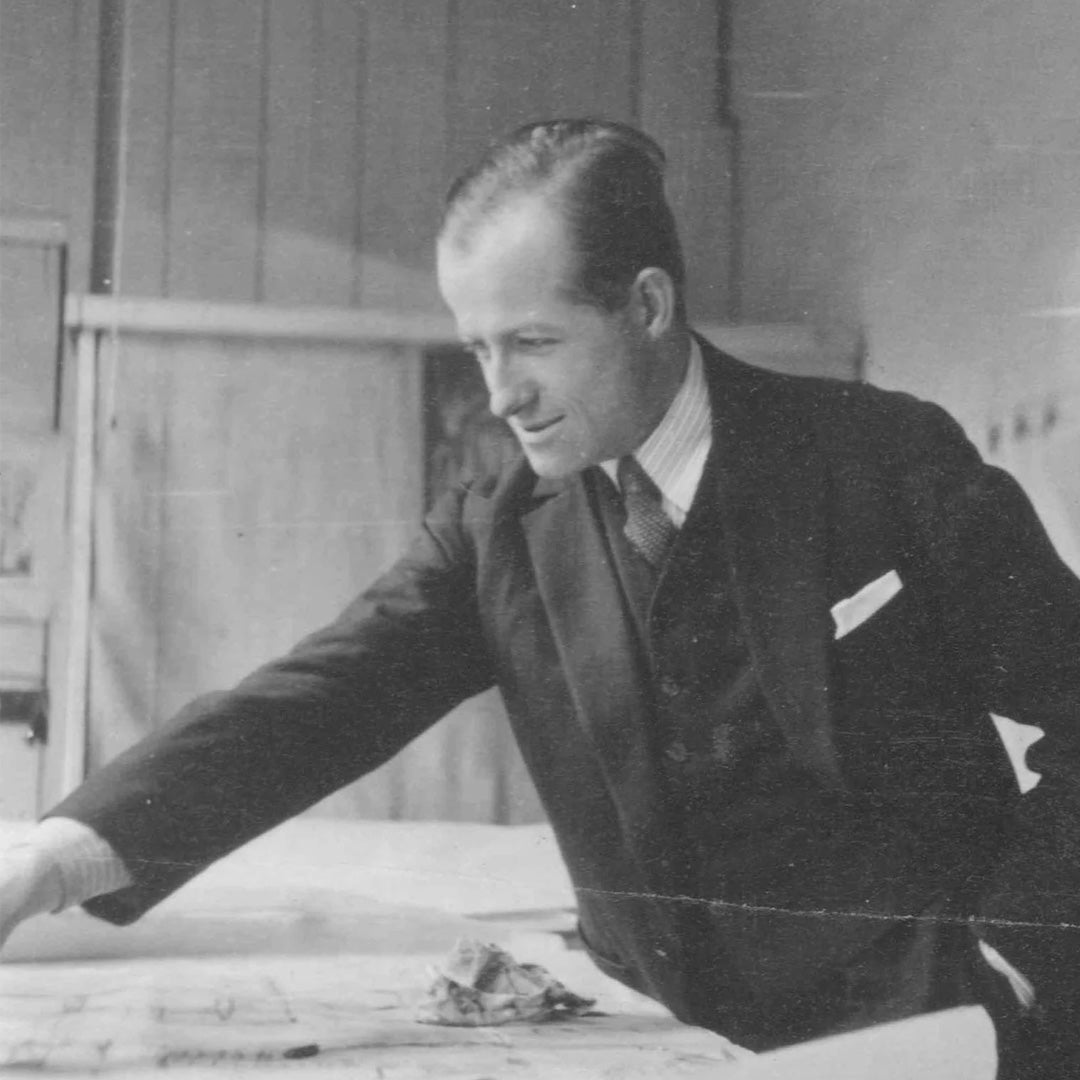
Jeanneret, cousin and longtime collaborator of Le Corbusier, lived and worked in Chandigarh for over a decade, overseeing the project on the ground and designing the furniture that would inhabit its government offices, courts, and assembly halls. That proximity shaped everything. The forms are spare and direct, resolved through use rather than theory.
- Solid teak frame with V-shaped leg construction
- Originally produced for Chandigarh's government and institutional offices
- Reissued by Cassina with fidelity to Jeanneret's original specifications
- A foundational work within the Chandigarh Design corpus
Cassina's reissue restores the Committee Chair to authoritative production, preserving the proportions and materiality that made the originals objects of enduring architectural significance.
Made to order by Cassina, tailored to you.
Get customization options, swatch samples and pricing for your project.
Pairs Well With
Committee Chair
Product Details
Tear Sheet
Pricing & Warranty
Pricing for made-to-order items varies based on configuration, finishes, and customization options. Please contact one of our design consultants or visit a showroom near you for current pricing and personalized assistance.
Luminaire is an authorized retailer of Cassina. The product comes with a full manufacturer warranty.
Authenticity guaranteed. Genuine product, authenticated and sourced directly from the manufacturer.
Frequently Asked Questions
What is the history behind the Chandigarh furniture?
Pierre Jeanneret designed an extensive range of furniture for the government buildings, universities, and civic institutions of Chandigarh, India, beginning in the early 1950s. The pieces were conceived to be produced locally using regional materials and to embody the democratic ideals of the newly independent nation.
How does the Cassina reissue differ from vintage originals?
Cassina produces the Committee Chair under official license, adhering closely to Jeanneret's original drawings and specifications. Vintage originals, many of which have entered the auction market, vary significantly in condition and material integrity, whereas the Cassina reissue offers consistent quality and documented provenance.
What materials are used in the Committee Chair?
The original chairs were constructed from solid teak, chosen for its availability and durability in the Indian climate. Cassina's reissue maintains a solid wood frame in keeping with Jeanneret's structural and material intent.
Is the Committee Chair suitable for dining use?
Yes - the chair's proportions and upright posture make it well suited to a dining context, though its architectural presence has also made it a favored accent piece in studies, offices, and living rooms designed around a modernist sensibility.
Who was Pierre Jeanneret?
Pierre Jeanneret (1896-1967) was a Swiss architect and designer, and the cousin and partner of Le Corbusier. He was a central figure in the design and construction of Chandigarh, living and working in the city for more than a decade and producing furniture and architecture that now occupy a distinct place in the modernist canon.