
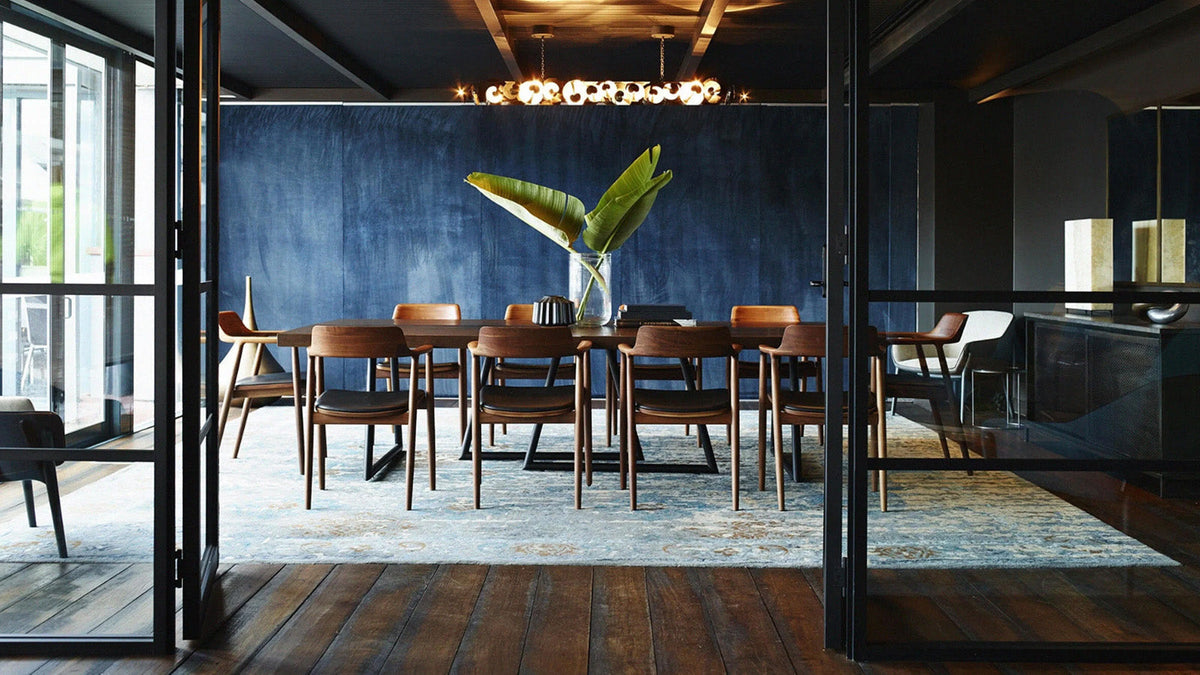
- by Luminaire
The Hiroshima Chair: Naoto Fukasawa's Continuous Gesture in Wood
- by Luminaire
The hiroshima chair does not announce itself. It sits at a table, pulls to a desk, or turns slightly toward a window, and it asks for nothing more than that. Naoto Fukasawa designed it for Maruni in 2008, and in the years since, it has become one of the clearest arguments in contemporary furniture for a design philosophy Fukasawa has spent his career refining: that the best objects are the ones that dissolve into the act of using them.
Maruni was founded in Hiroshima in 1928, and the company's identity has always turned on a particular tension: the industrialization of Japanese woodworking traditions without their erasure. The chair takes its name from that city. That is not incidental. The Hiroshima armchair is, in a precise sense, a product of place.
Maruni's production begins with computer-controlled milling. The arm-and-back sweep that gives the hiroshima armchair its defining silhouette is cut from solid wood with a precision that hand tools alone could never reproduce at this scale of consistency. But the milling is only the first half of the process. Each piece then passes through hand sanding, a stage that reintroduces the maker's judgment at every curve and junction.

The result is a chair whose surfaces are neither purely mechanical nor purely artisanal. They carry a smoothness that could only come from both. Under raking light, you can read the grain of the wood without interruption across the arm, over the crest rail, and down the opposite side, because the joinery is resolved with enough precision that the junctions nearly disappear. The chair appears, as the design has often been described, carved from a single block.
Maruni offers the Hiroshima in solid beech and solid oak. These are meaningfully different materials, not interchangeable options. Beech is finer and more uniform in figure, and in its soaped or oiled finish it reads quietly, almost self-effacing in pale interiors. Oak is more expressive, its ray flecks catching differently across the surfaces of the seat frame and the arm sweep. The available finishes extend to urethane lacquer for durability in contract settings, though the soaped and oiled options age in ways the lacquer cannot: they deepen and shift over years of handling, the wood taking on the particular warmth of a patina that is entirely a record of use.
The Hiroshima armchair has a low, wide stance relative to many dining chairs, and this is where the design either works for a given table or does not. The armrests are positioned to pass under many standard table aprons, which is an advantage at a dining table where the chair needs to tuck in fully without interference. At a writing desk, the same geometry allows the forearm to rest on the wood rather than forcing the shoulder upward, which is a common failure of chairs repurposed for desk use.

The seat itself is available with or without an upholstered pad. The all-wood version reads as more architecturally resolved: the seat plane is continuous with the rest of the form, and the chair holds its proportion when pulled away from a table. The upholstered pad introduces softness and a second material, which changes the character of the piece in ways that depend heavily on the fabric chosen. For longer dining sessions or desk use through a working day, the pad is the more practical decision, and Maruni's fabric options are calibrated to remain visually subordinate to the wood rather than competing with it.
Against pale woods like soaped beech, rooms tend to feel less decorated. This is the Hiroshima's natural territory: interiors that prioritize proportion and restraint over ornament. It reads well alongside stone surfaces, linen, and concrete, and less naturally against high-gloss lacquers or heavily patterned textiles, where its quietness can be swallowed by the surrounding noise.
Naoto Fukasawa has said that he wants his objects to disappear into behavior. The chair you pull out, settle into, and forget about while you are thinking about something else is, for him, the higher achievement. This is a precise philosophical position, not a modest one. It places the measure of a design's success entirely outside the object itself, in the quality of the life lived around it.
The Hiroshima armchair is a rare case where the production process actually serves that ambition. Because the joinery dissolves, because the arm-and-back reads as a single gesture rather than assembled components, there is less to look at and more to inhabit. The chair offers no moment of obvious design decision, no detail that announces itself as the designer's signature. And yet the silhouette is unmistakable once you know it.
This puts the maruni hiroshima in an interesting position relative to other chairs that occupy similar cultural territory. The Wishbone Chair, Hans Wegner's 1949 construction for Carl Hansen, is the natural comparison: also a wooden armchair with Scandinavian and Japanese formal debts, also a piece that rewards long acquaintance. The Wishbone's woven seat and Y-back make it immediately legible as a designed object in a way the Hiroshima resists. Neither is the better chair in any absolute sense. They answer different questions about what a wooden chair should do with itself.
Pale woods age. This is not a flaw but a commitment. A soaped beech Hiroshima armchair will be a different object in ten years than it is on the day it arrives: warmer, slightly darker at the points of contact, the soap finish requiring occasional refreshing to maintain its protection. Oiled oak moves more slowly but in a similar direction, deepening rather than changing. Neither finish is maintenance-free, and choosing either means accepting an ongoing relationship with the material.

Urethane lacquer is the answer for environments where that maintenance is not practical: hospitality settings, contract installations, high-traffic dining rooms with children. The lacquer holds the wood at a fixed moment, resisting both staining and the slow evolution of an oiled or soaped surface. The trade-off is that the chair will look more or less the same in fifteen years as it does today, which is either a strength or a limitation depending on what the space demands.
Design professionals working on residential projects often specify the soaped beech precisely because of how it ages. The chair becomes, over time, a record of the household. Contract specifiers tend to prefer the lacquered oak for its predictability across large installations. Both decisions are defensible. The chair accommodates them without protest.
Maruni has built a family around the Hiroshima, extending the gesture of the armchair into lounge configurations, wider proportions, and an ottoman. The formal language remains consistent across the range: the same resolution of the arm sweep, the same hand-sanded surface, the same commitment to wood as the primary expressive material. This kind of coherence across a product family is rarer than it sounds. It allows a dining room and an adjacent sitting area to share vocabulary without being identical, which is precisely the condition most interiors need.
For those working across larger projects, the Design Concierge offers consultation across material selections, finish combinations, and spatial planning that extends well beyond a single piece. The Trade Program gives design professionals access to the full Maruni range alongside the broader collection, with dedicated support for custom configurations and contract volumes.
The hiroshima armchair has been in continuous production since 2008 for a simple reason. It solved a genuine problem, and it did so without calling attention to the solution. That is, in the end, exactly what Fukasawa set out to do. Consult the Design Concierge to work through finish and configuration options for your specific setting.
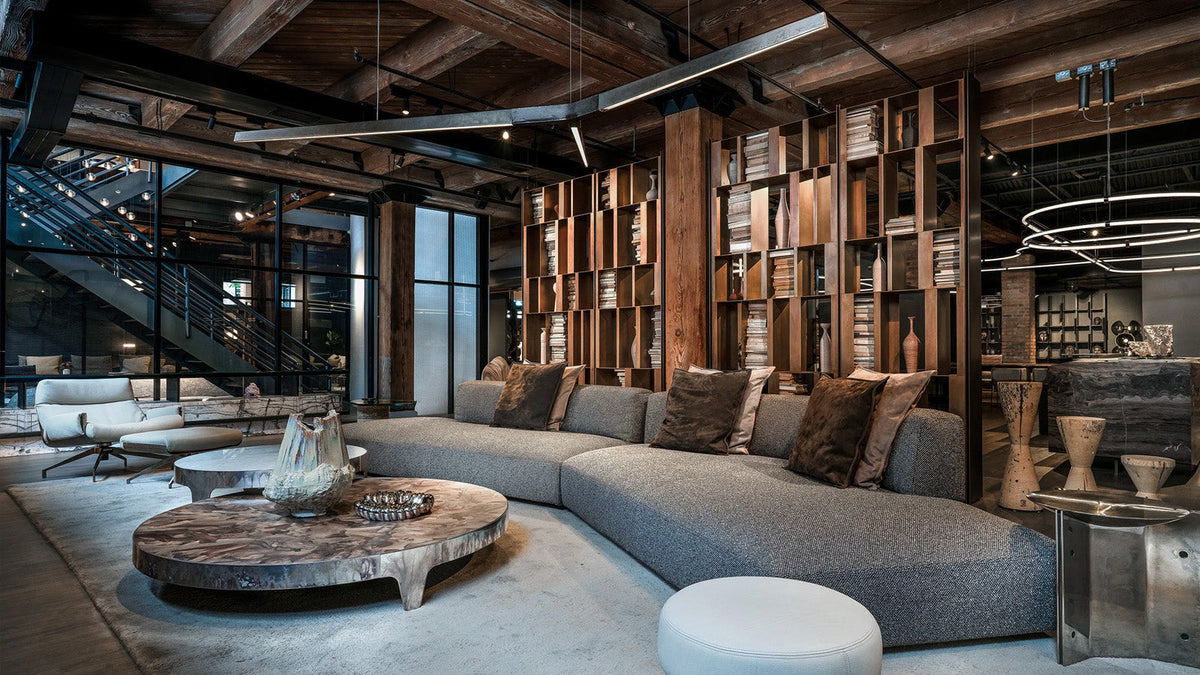
Inside Luminaire Chicago: Italian Design in River North Since 1989
Read moreabout Inside Luminaire Chicago: Italian Design in River North Since 1989
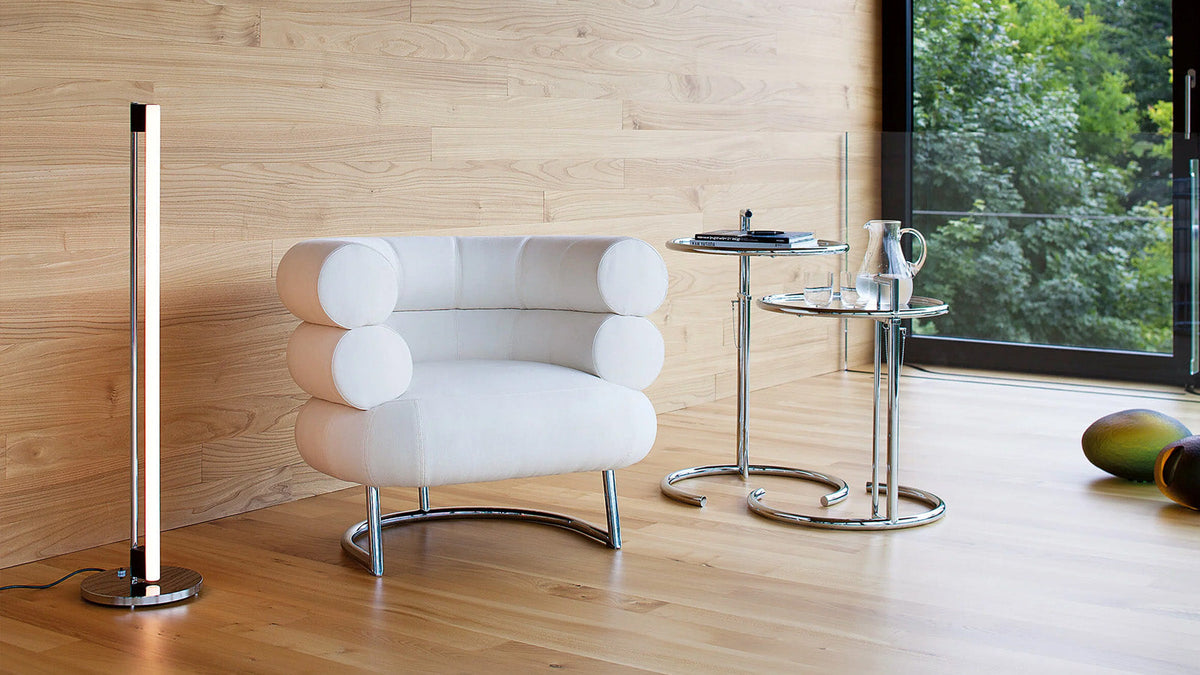
Eileen Gray's E 1027 Table: A Design Conceived for Living
Read moreabout Eileen Gray's E 1027 Table: A Design Conceived for Living
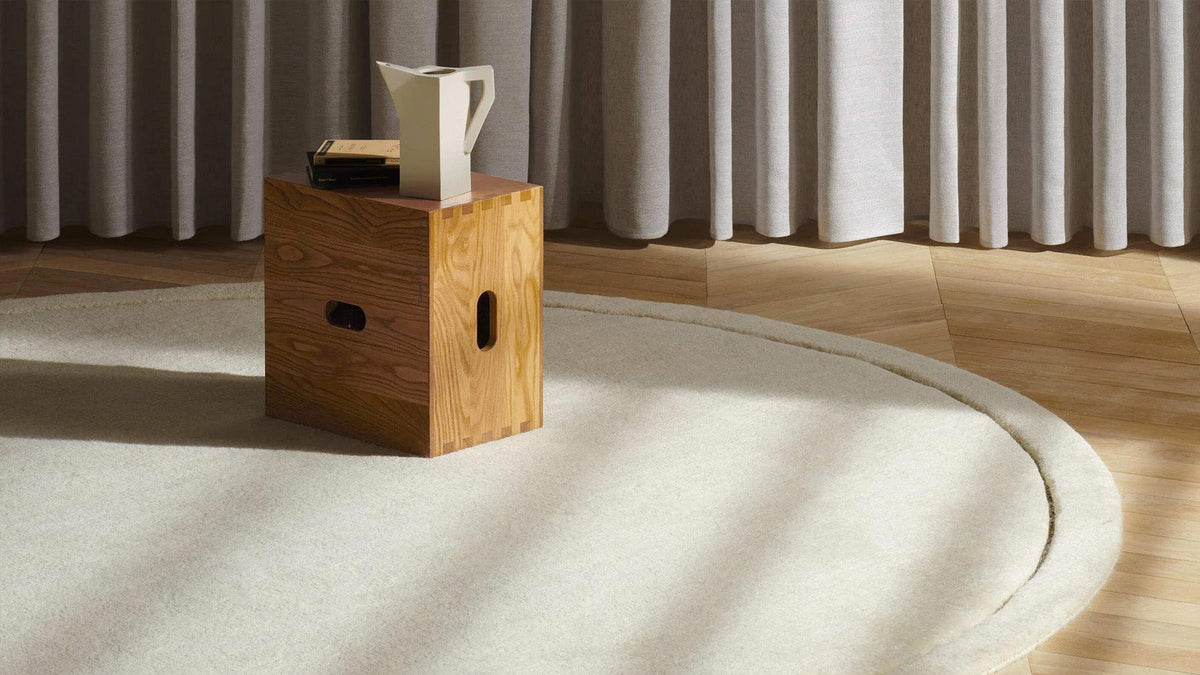
LC14 Tabouret Cabanon: Le Corbusier's Smallest Architecture
Read moreabout LC14 Tabouret Cabanon: Le Corbusier's Smallest Architecture
Our design services cover everything from concept development to installation, including product guidance, material selection, custom configurations, pricing, and lead‑time coordination.
Speak with a Design Consultant
Call 855-341-3620 for assistance during business hours.
Enroll for privileged access to iconic design, emerging trends, exclusive events, and thoughtfully curated offers.

Share:
A New Destination for Italian Design: B&B Italia opens at Luminaire Los Angeles
The Cassina Cab Armchair: When Leather Becomes Structure