Shelving (R1)
Made by USM Haller
Designed by Fritz Haller
The Shelving R1 belongs to one of the most disciplined modular systems in the history of furniture design. Conceived by Swiss architect Fritz Haller and his business partner Paul Schärer in the 1960s, the USM Haller system was first designed for the company's own headquarters, a commission that demanded furniture as rigorous and adaptable as the architecture surrounding it.
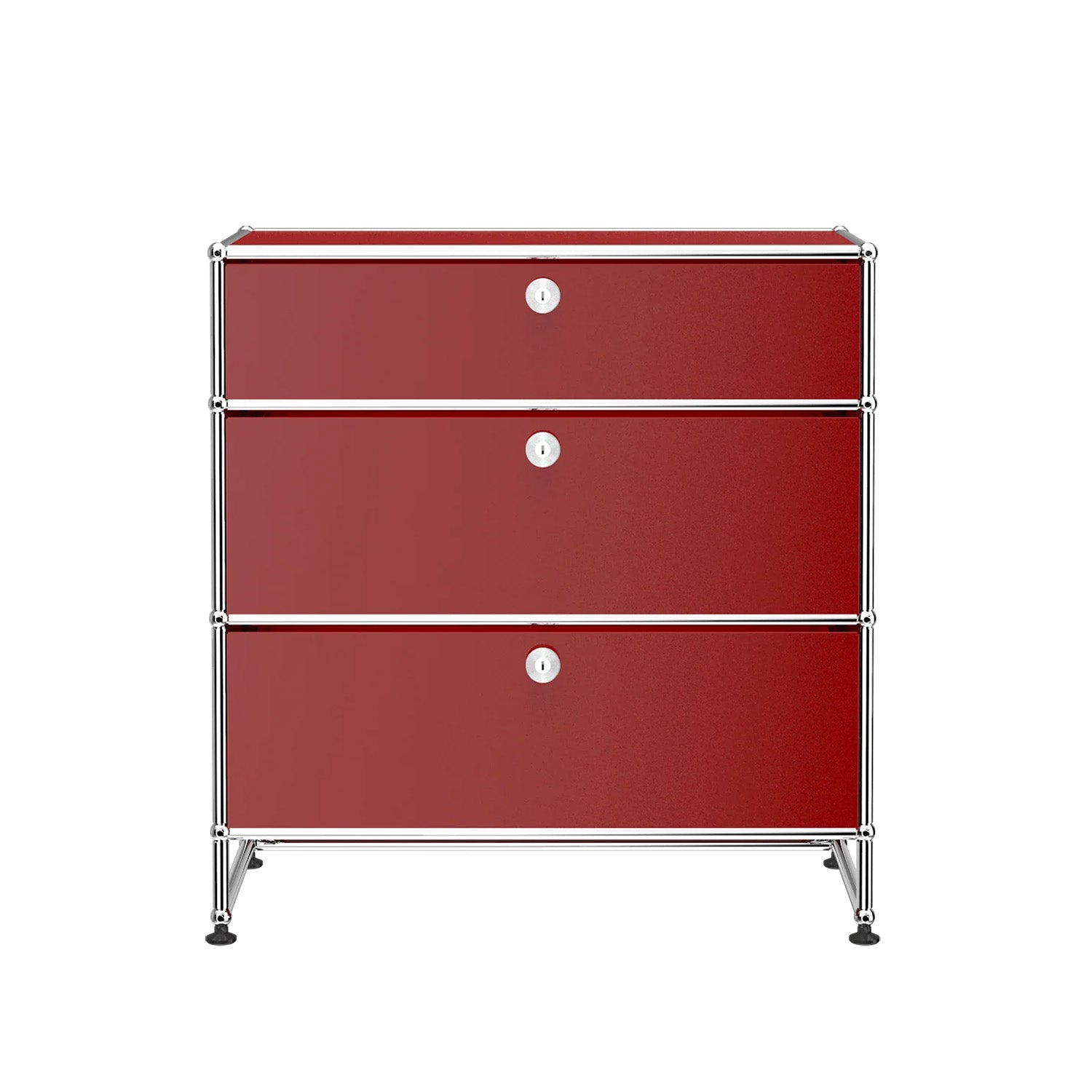
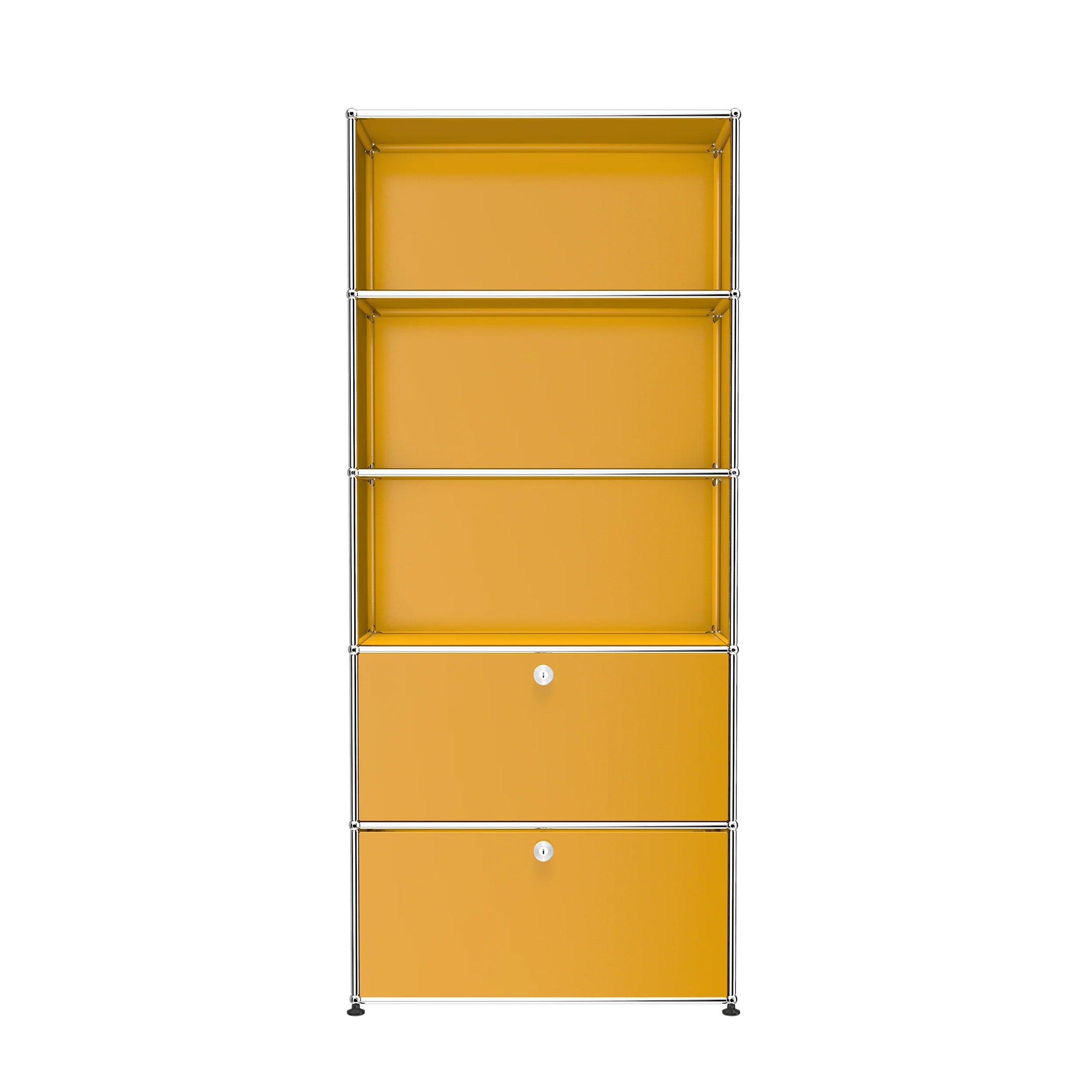
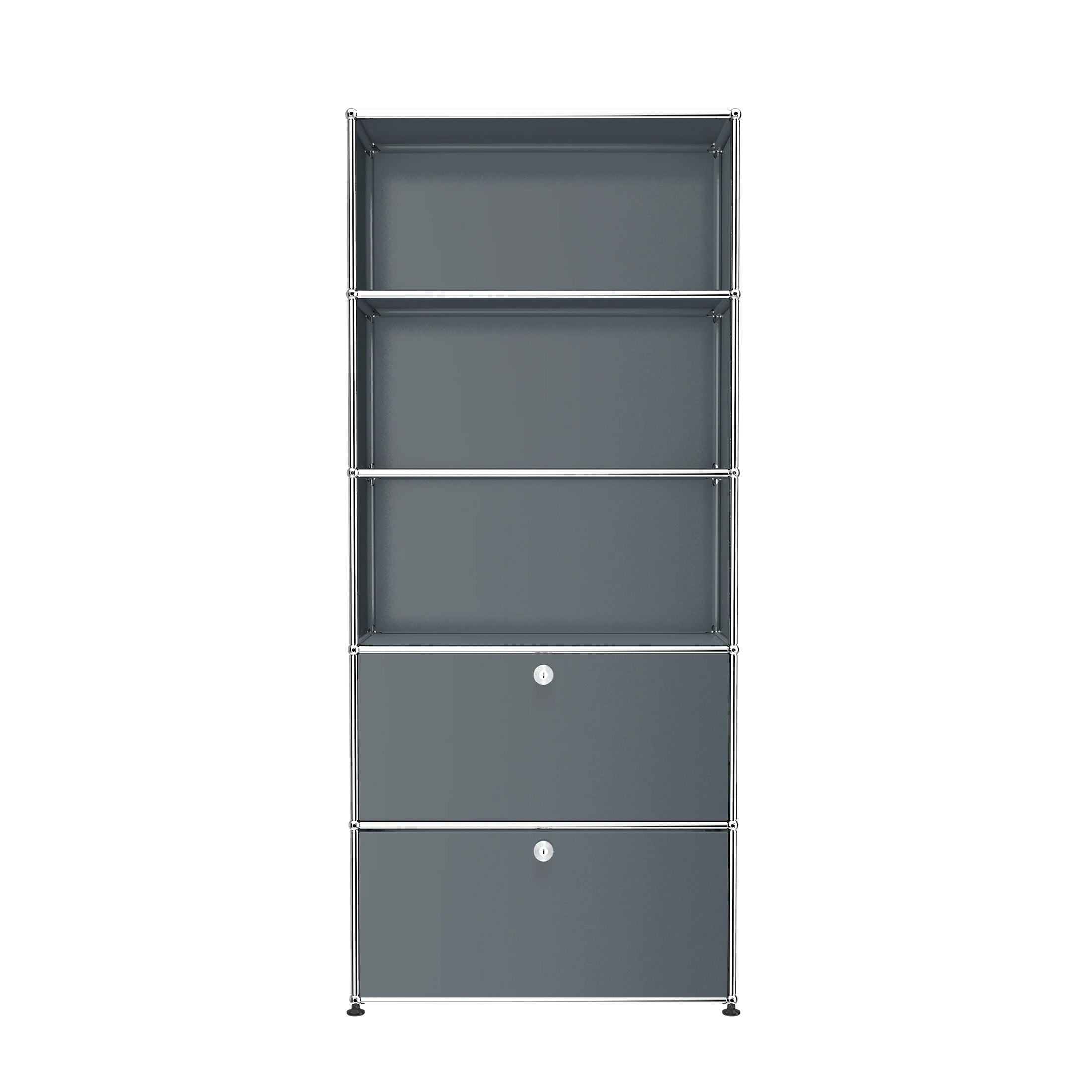
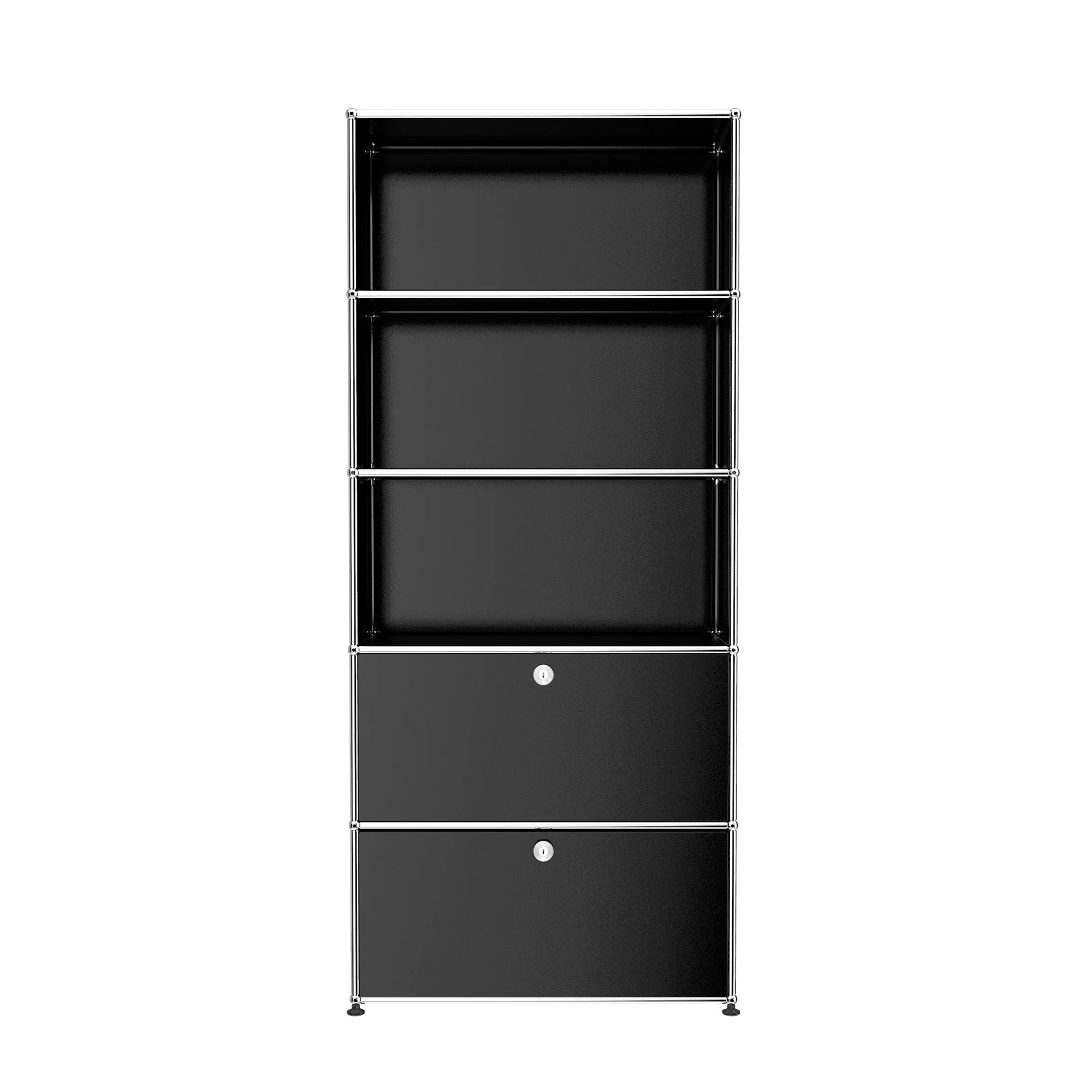
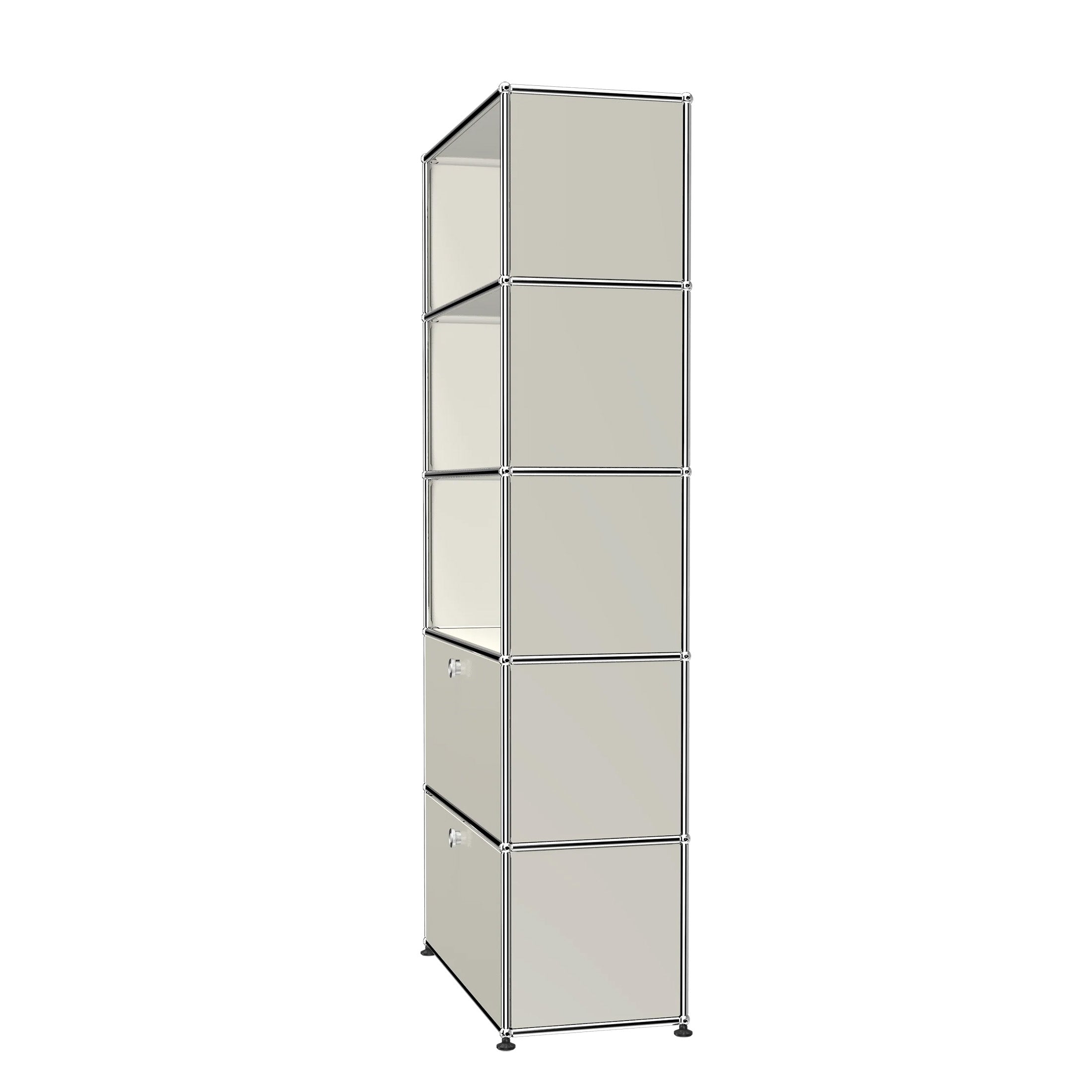
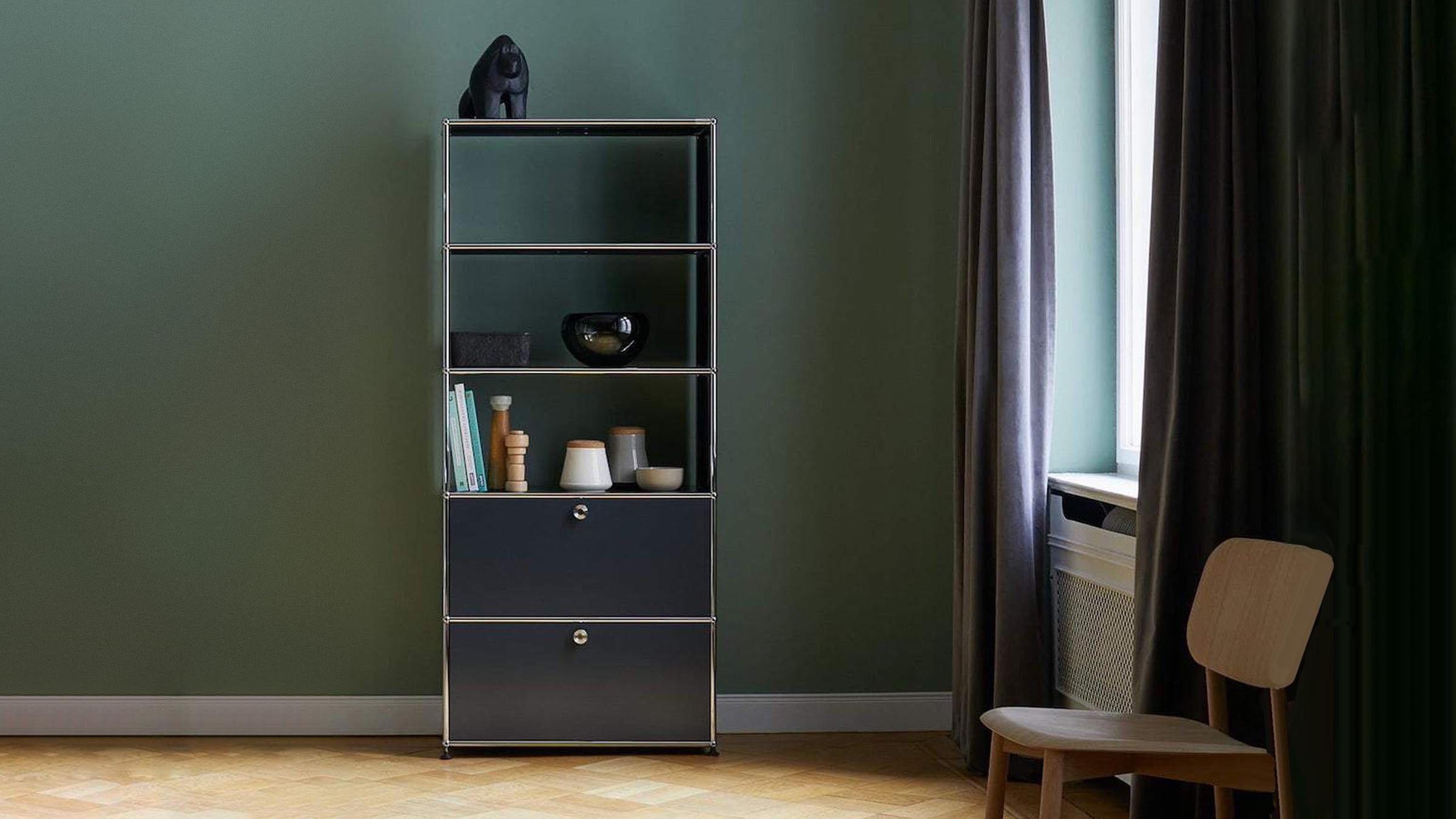
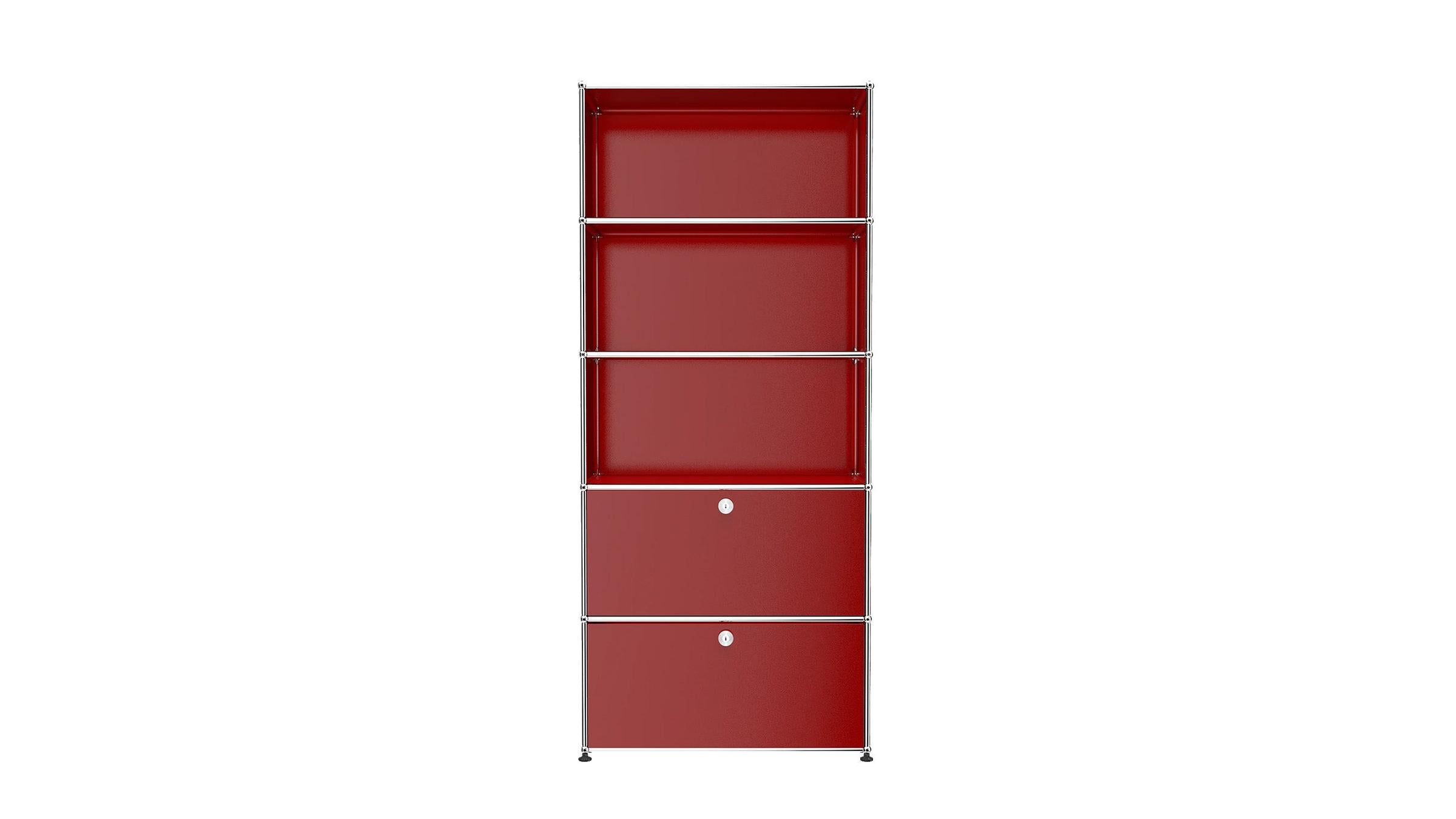
The R1 configuration addresses a specific spatial condition: doing more within a narrow vertical footprint. A drop-down door at the upper section provides concealed storage without interrupting the composition's visual lightness. A drawer at the base keeps everyday essentials close at hand. Open shelving occupies the middle, establishing a quiet rhythm of revealed and concealed that gives the piece its particular character.
- Chromed steel ball joints and tubular frame construction
- Powder-coated steel panels in a range of finishes
- Modular and expandable within the broader USM Haller system
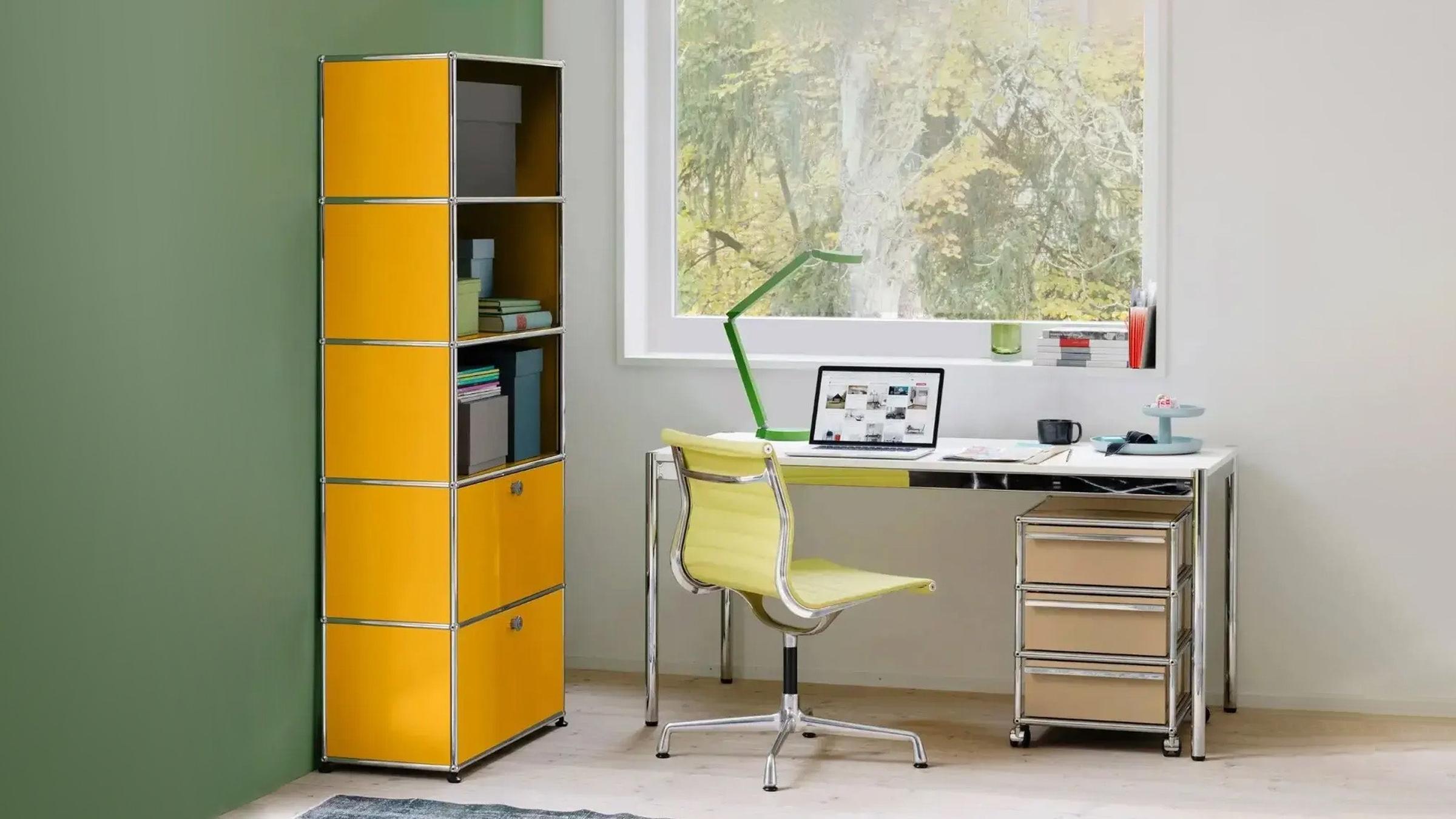
- Suitable for residential and professional environments
Made to order and configurable to individual spatial and functional requirements, the R1 reflects a design philosophy rooted in the idea that flexibility and formal restraint are not opposites.
Made to order by USM Haller, tailored to you.
Get customization options, swatch samples and pricing for your project.
Pairs Well With
Shelving (R1)
Product Details
Tear Sheet
Pricing & Warranty
Pricing for made-to-order items varies based on configuration, finishes, and customization options. Please contact one of our design consultants or visit a showroom near you for current pricing and personalized assistance.
Luminaire is an authorized retailer of USM Haller. The product comes with a full manufacturer warranty.
Authenticity guaranteed. Genuine product, authenticated and sourced directly from the manufacturer.
Frequently Asked Questions
Who designed the USM Haller system?
The system was designed by Swiss architect Fritz Haller in collaboration with Paul Schärer, who led USM at the time. Originally conceived in the late 1960s for USM's own corporate headquarters in Münsingen, Switzerland, the system has remained in continuous production largely unchanged, a reflection of how fully resolved the original design was.
Can USM Haller pieces be reconfigured or expanded later?
Yes. The system's core premise is modularity. Individual units can be added, repositioned, or combined with other USM Haller configurations over time, since the chrome ball joint connectors and tubular frame components are standardized across the entire product family.
What surface color options are available for the Shelving R1?
The Shelving R1 is available in seven standard surface colors, spanning neutral and architectural tones. Because the piece is made to order, color selection allows it to align with a specific interior palette without custom fabrication lead times typical of bespoke furniture.
What materials make up the USM Haller Shelving R1?
The structural frame is built from tubular steel connected by chrome-plated solid steel ball joints, the defining element of the Haller system. Panel surfaces are finished in powder-coated steel, which accounts for the system's durability and the consistency of its color across decades of production.
Is USM Haller furniture appropriate for both residential and contract use?
The system was originally developed for a commercial context and carries the structural integrity that entails. It is equally at home in residential studies, home offices, and living spaces, and is frequently specified by architects and interior designers for both settings precisely because the design reads the same way in either context.