Shelving (Q118)
Made by USM Haller
Designed by Fritz Haller
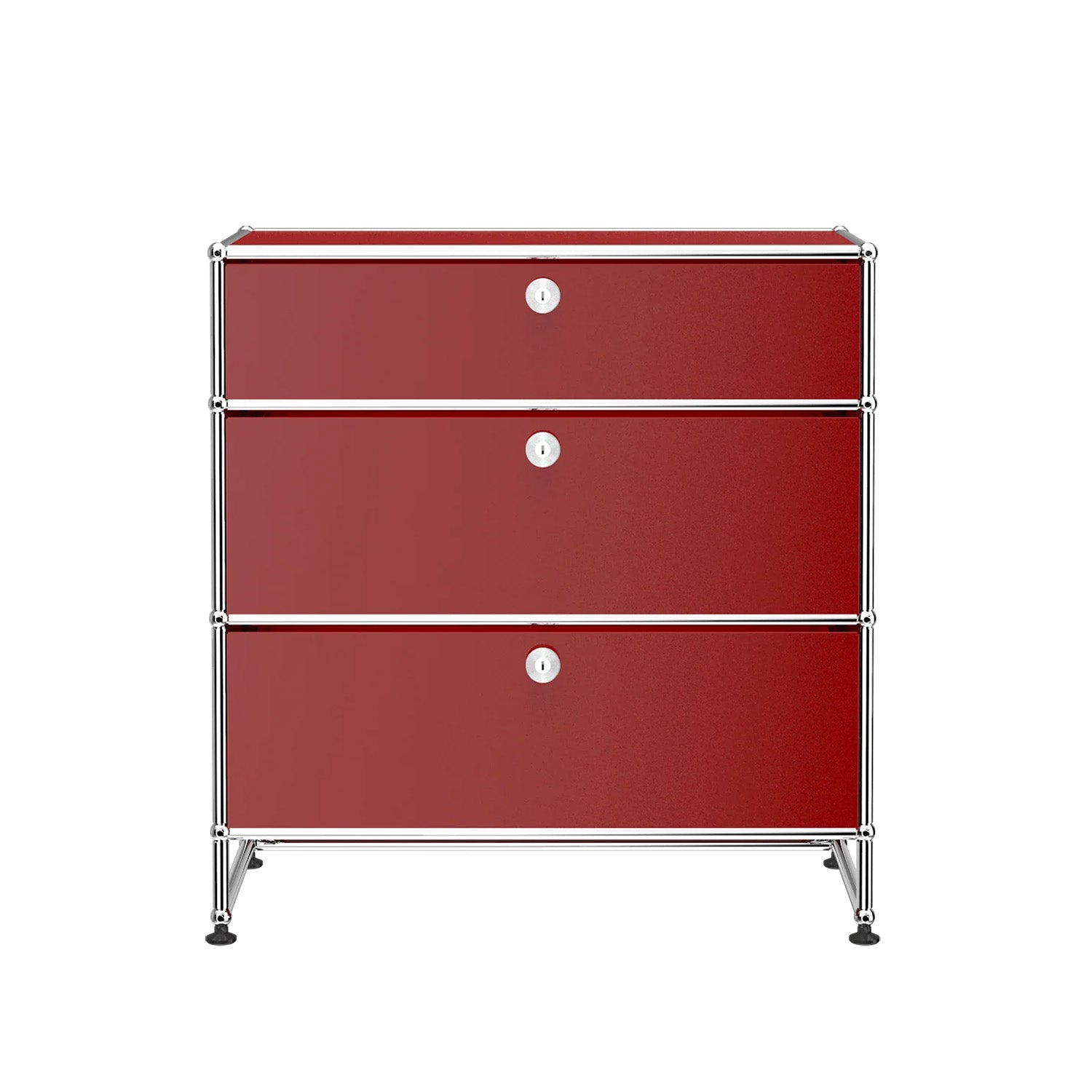
In 1969, Swiss architect Fritz Haller and entrepreneur Paul Schärer conceived a modular system to furnish the USM factory in Münsingen, Switzerland. What emerged was far more considered than industrial utility. The chrome-plated steel ball-and-tube connector and powder-coated steel panels form a grammar of proportion that has earned the system a place in the permanent collections of MoMA and the Vitra Design Museum.
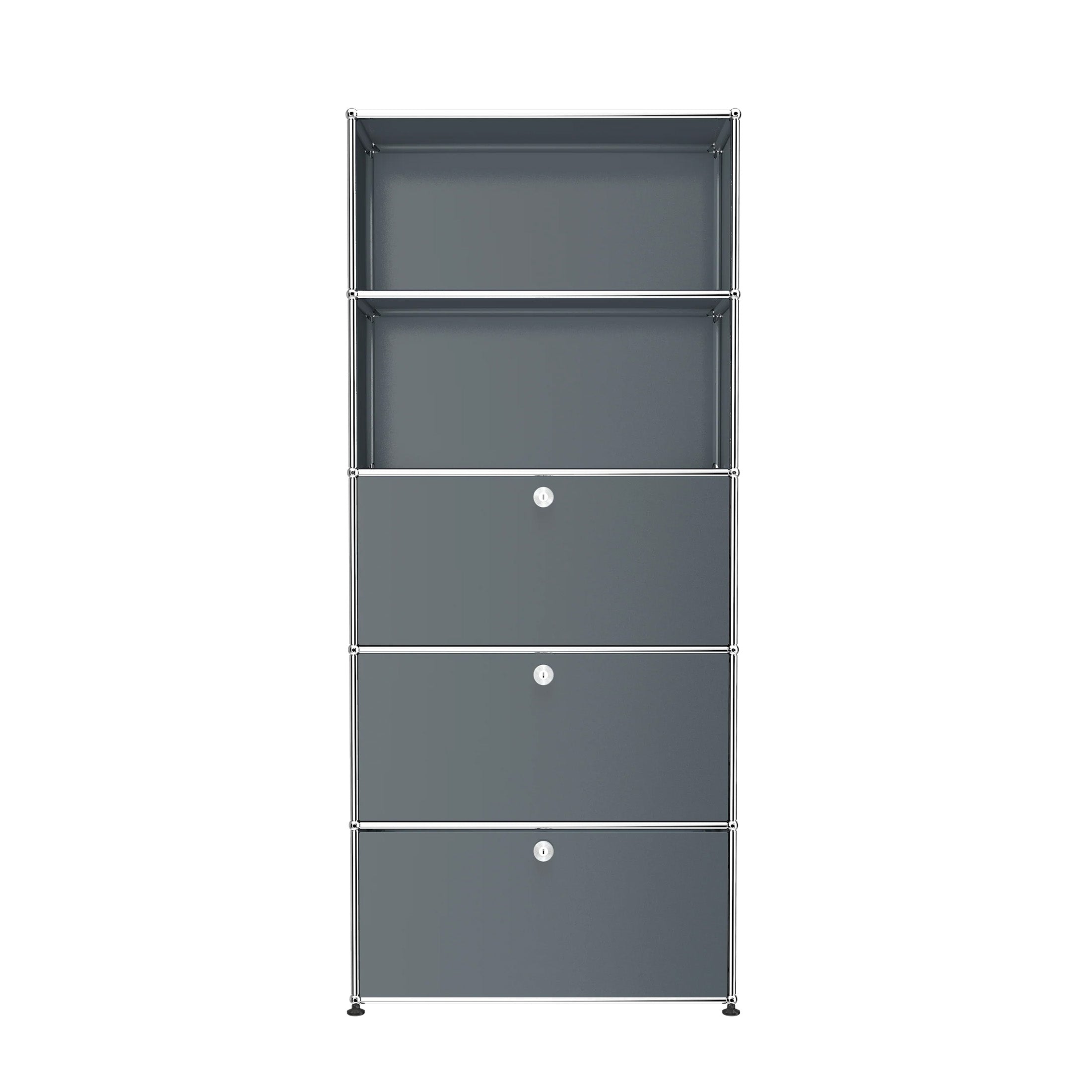
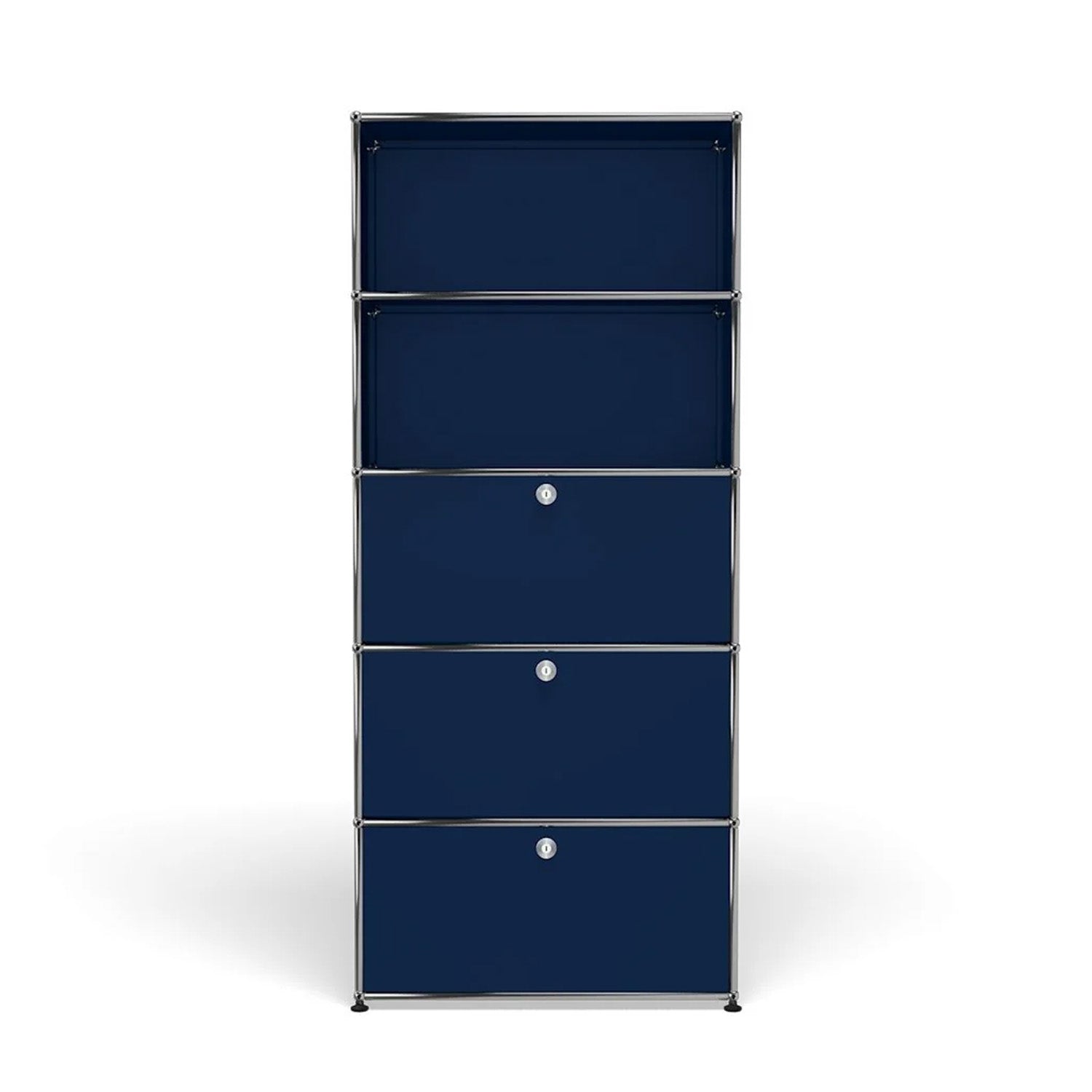
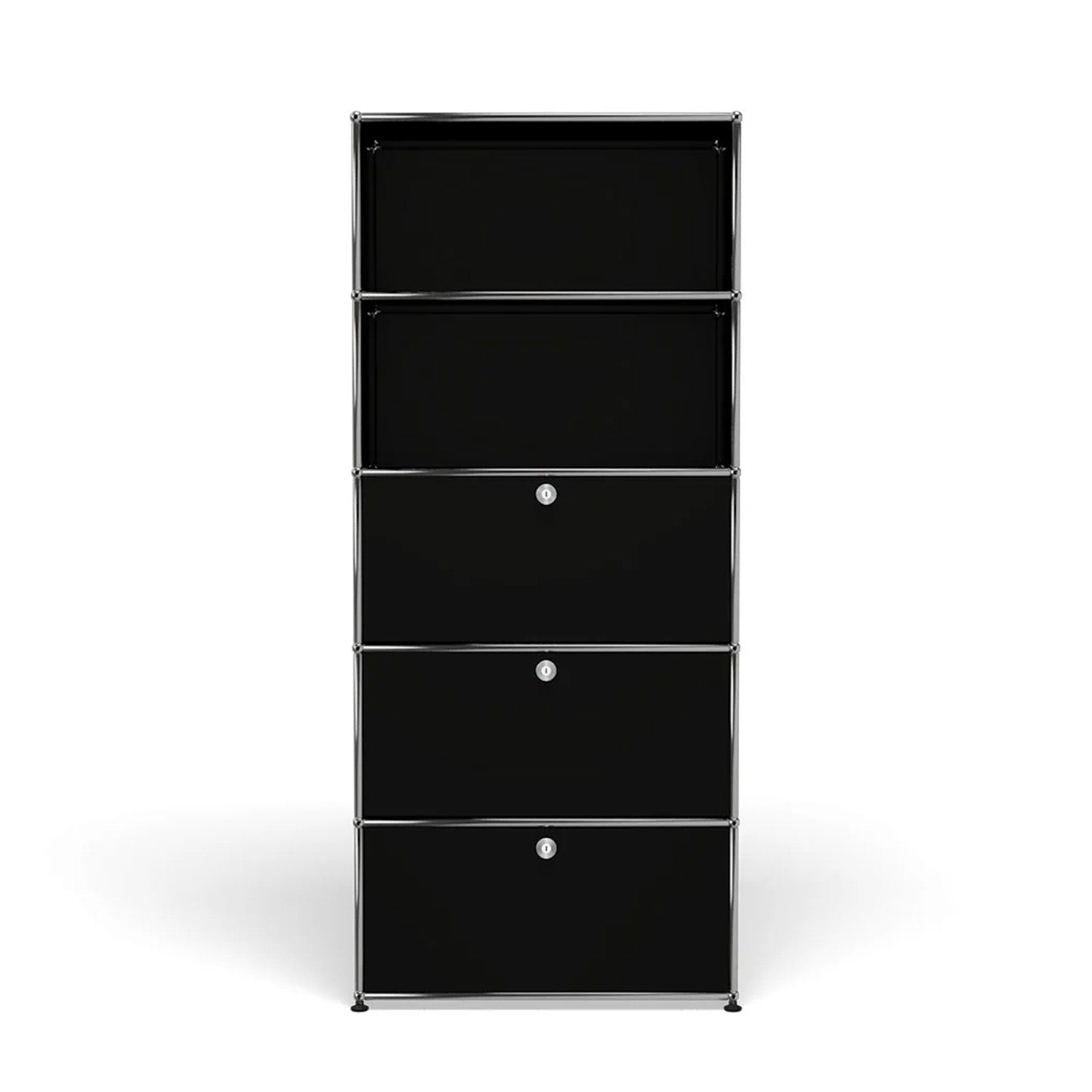
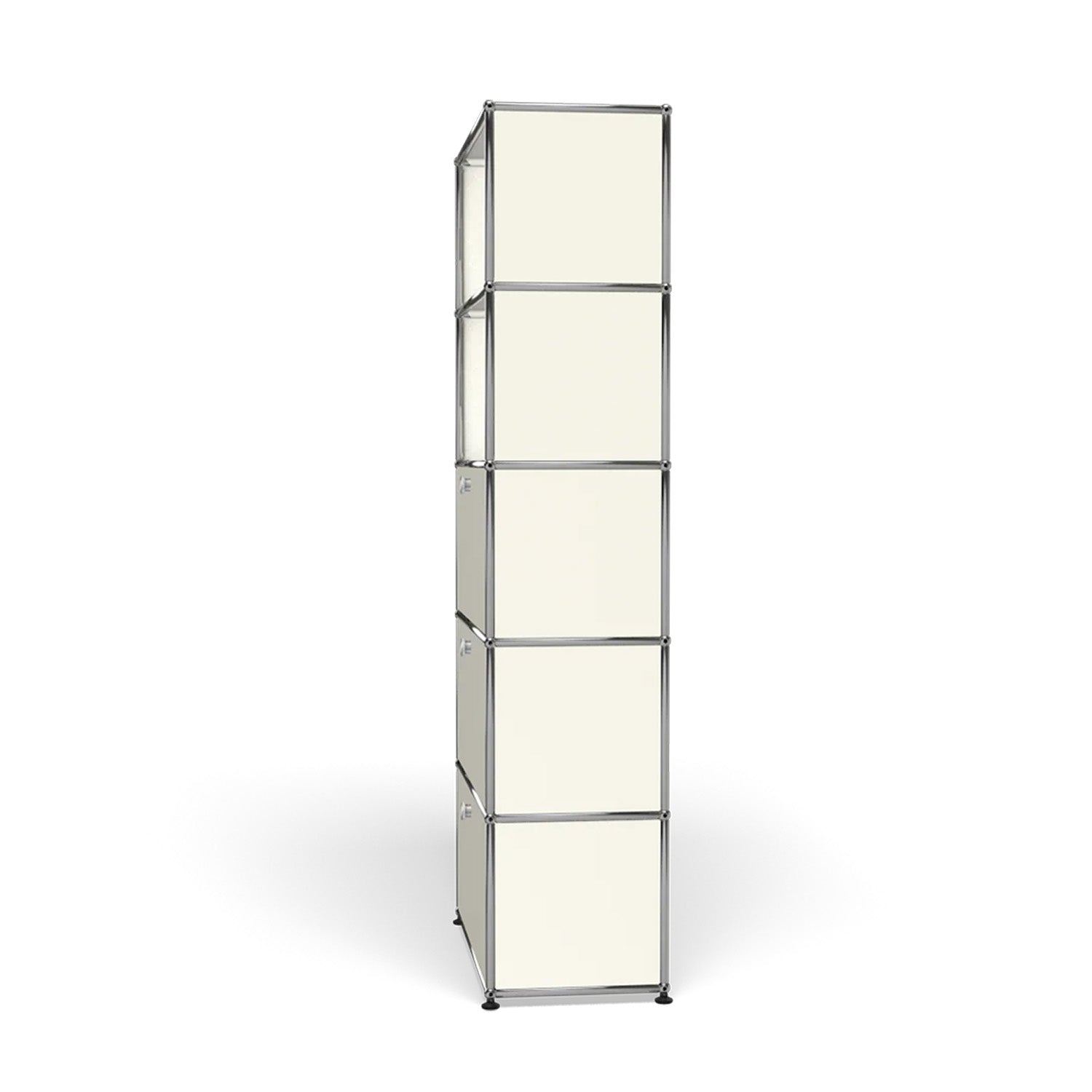
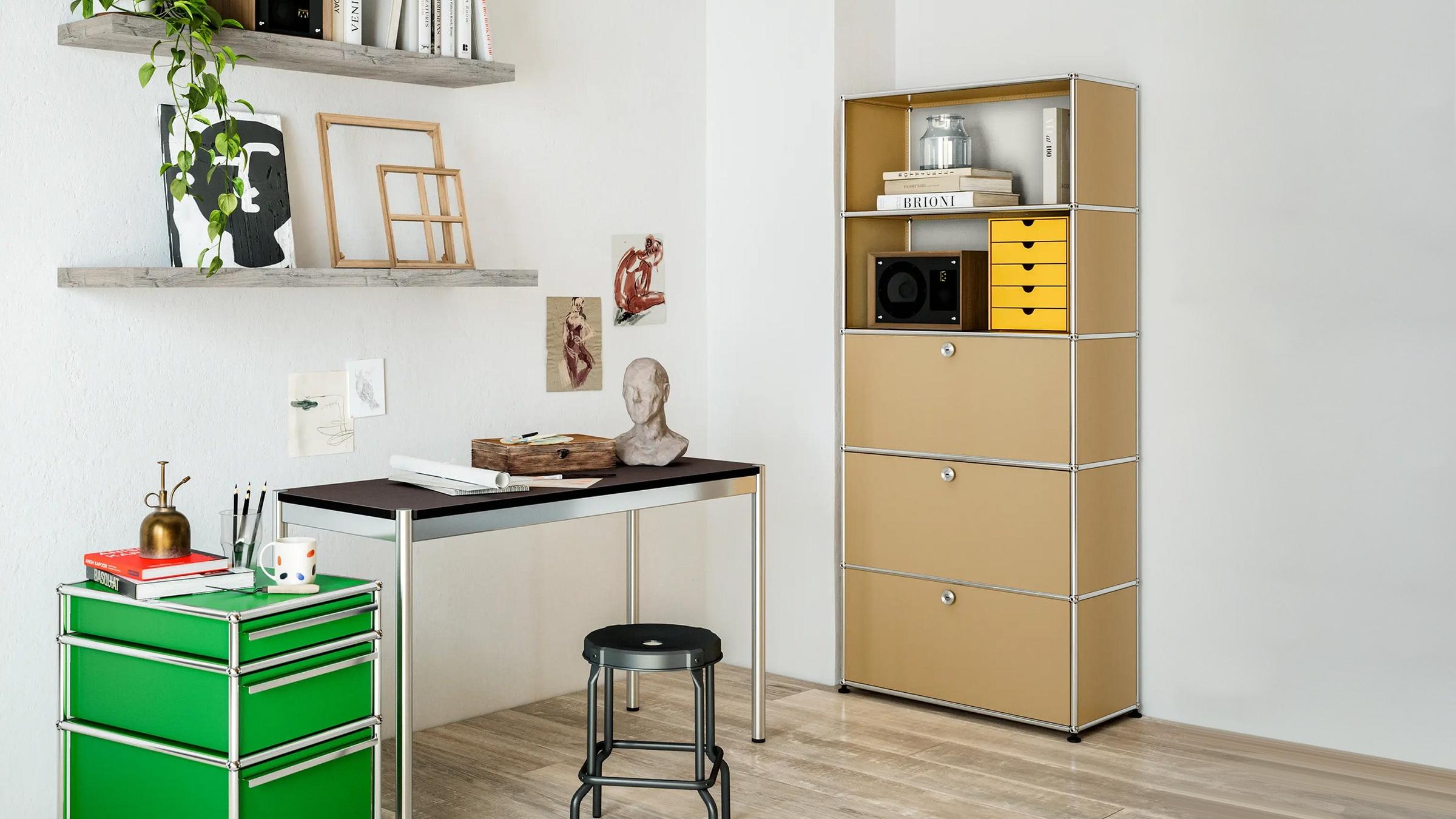
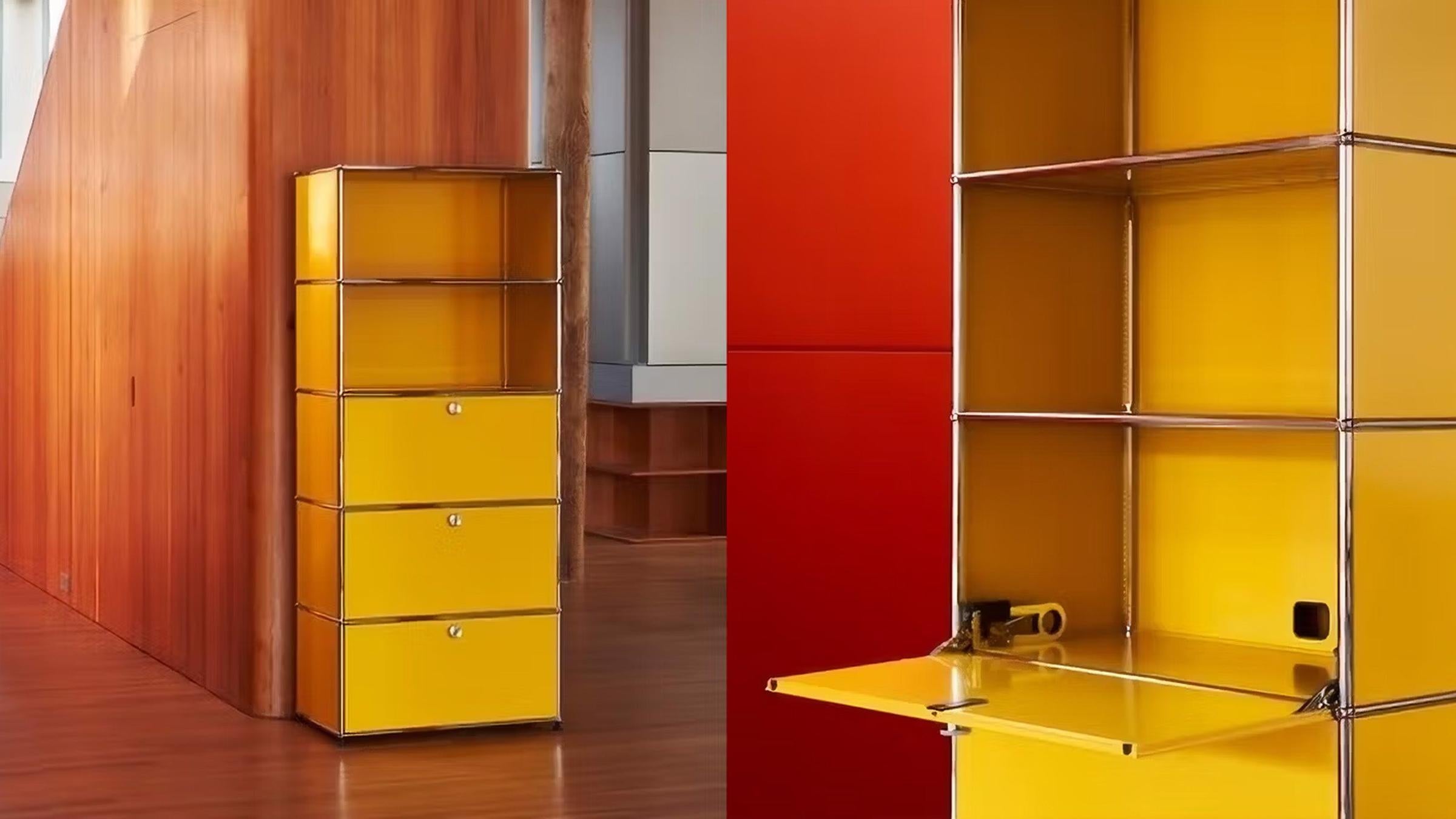
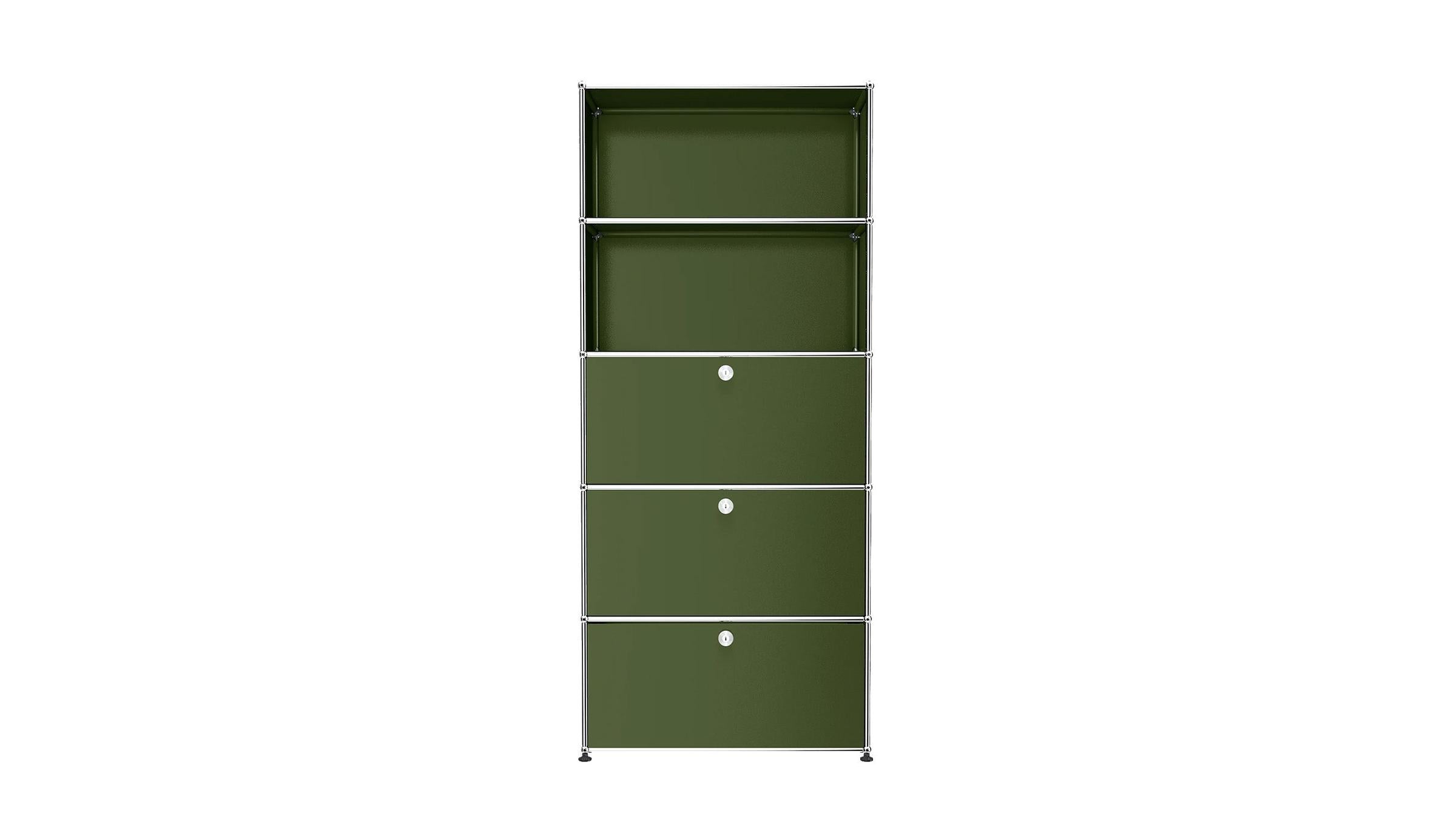
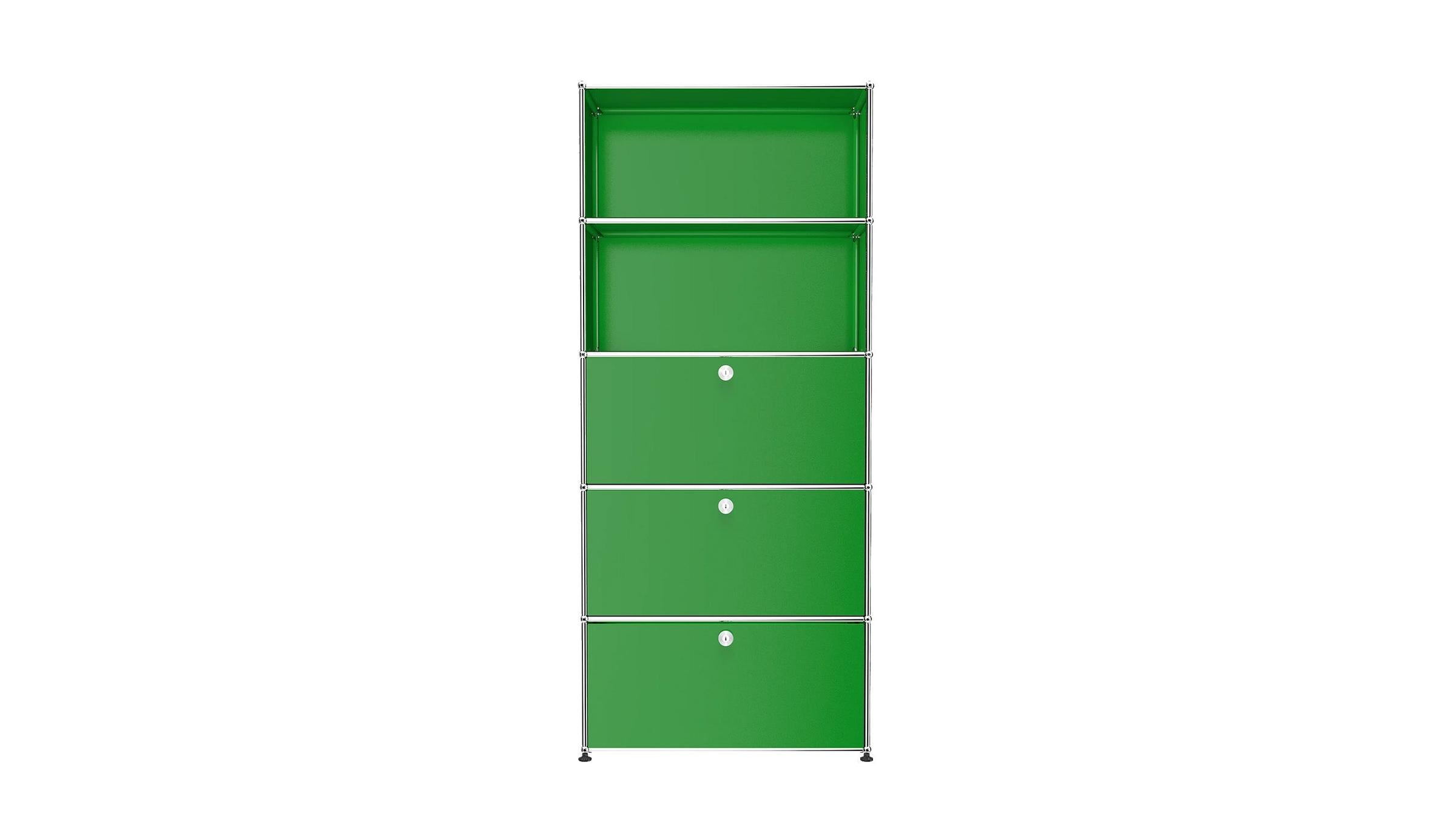
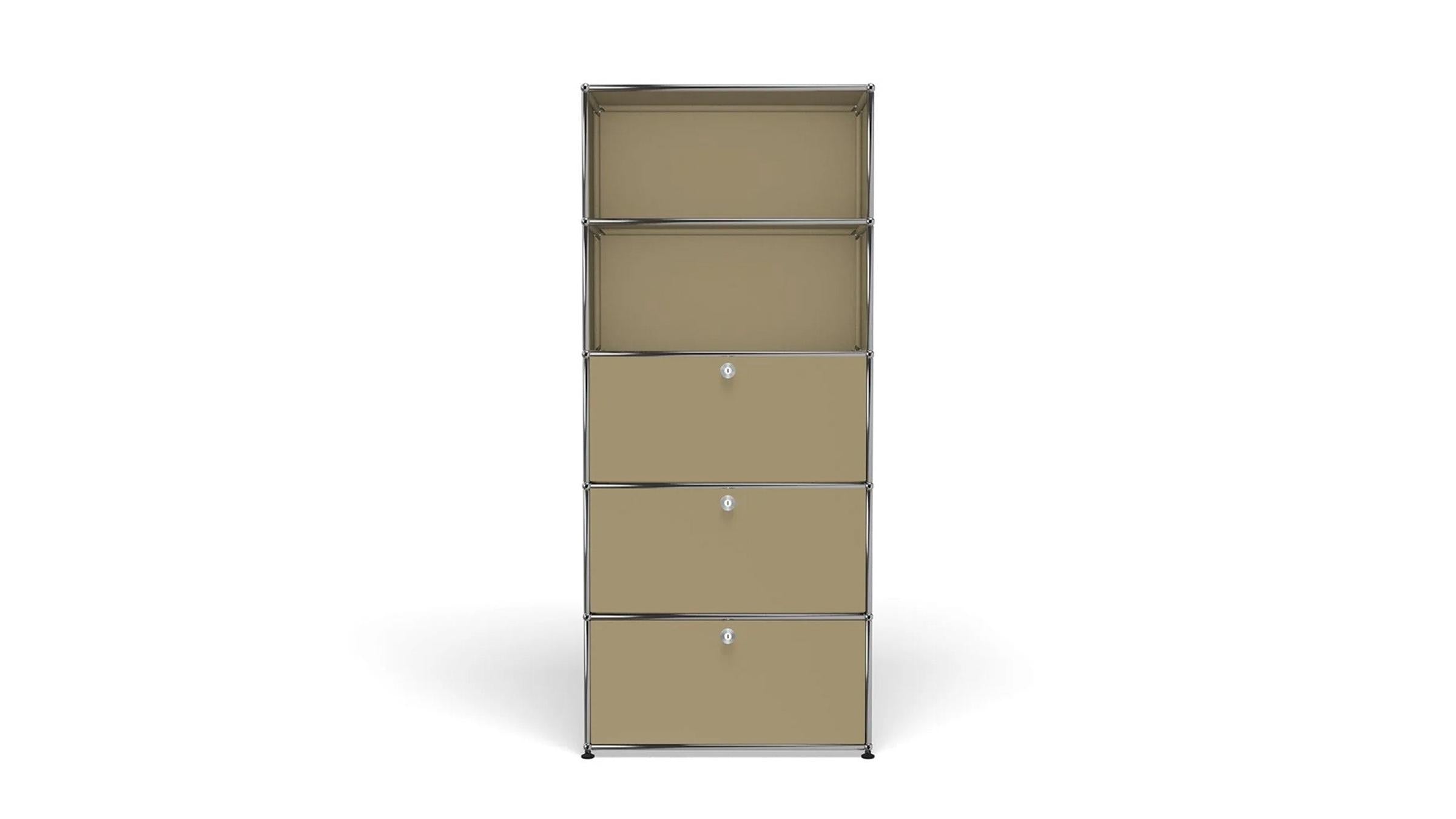
The Shelving Q118 translates that grammar into a unit calibrated for both display and discretion. Two drop-down doors conceal storage at mid-height, and a lower drawer keeps everyday essentials out of sight. A cable cutout in the uppermost compartment allows the piece to quietly accommodate a compact workstation or media configuration, without compromising the clean geometry that defines the system.
- Chrome-plated steel ball-and-tube frame
- Powder-coated steel panels in a range of USM Haller signature colors
- Two drop-down doors for concealed mid-height storage
- Lower drawer for discreet everyday organization
- Cable cutout in upper compartment for workstation integration
- Made to order, configurable within the broader USM Haller modular system
Made to order by USM Haller, tailored to you.
Get customization options, swatch samples and pricing for your project.
Pairs Well With
Shelving (Q118)
Product Details
Tear Sheet
Pricing & Warranty
Pricing for made-to-order items varies based on configuration, finishes, and customization options. Please contact one of our design consultants or visit a showroom near you for current pricing and personalized assistance.
Luminaire is an authorized retailer of USM Haller. The product comes with a full manufacturer warranty.
Authenticity guaranteed. Genuine product, authenticated and sourced directly from the manufacturer.
Frequently Asked Questions
What materials make up the USM Haller system?
USM Haller furniture is constructed from chrome-plated steel tubular frames joined by precision ball connectors, with panels finished in a baked powder-coat lacquer. The steel components are produced to exacting tolerances at USM's facility in Münsingen, Switzerland.
Can the Q118 shelving unit be reconfigured or expanded later?
Yes. The USM Haller system is inherently modular, meaning individual panels, drawers, and door elements can be added, removed, or repositioned over time. Expansion modules are fully compatible across the system's history, so a unit purchased today can integrate with components acquired years later.
What colors are available for the USM Haller panels?
USM Haller panels are offered in seven standard powder-coat colors, including the iconic USM Beige, as well as Anthracite, Pure White, Black, Burgundy, Yellow, and Matte Silver. Custom color options may be available through special order.
Is USM Haller furniture made to order?
USM Haller pieces are configured to order, which means each unit is assembled to the buyer's specified combination of panels, doors, drawers, and color. Lead times vary depending on configuration and are confirmed at the time of purchase.
Why is USM Haller considered a design icon?
Fritz Haller's modular system, developed in collaboration with Paul Schärer in the late 1960s, reduced furniture to its structural logic: a universal connector, a standard tube diameter, and interchangeable panels. Its inclusion in the permanent collections of MoMA and the Vitra Design Museum reflects its status as a work of design that transcends utility.