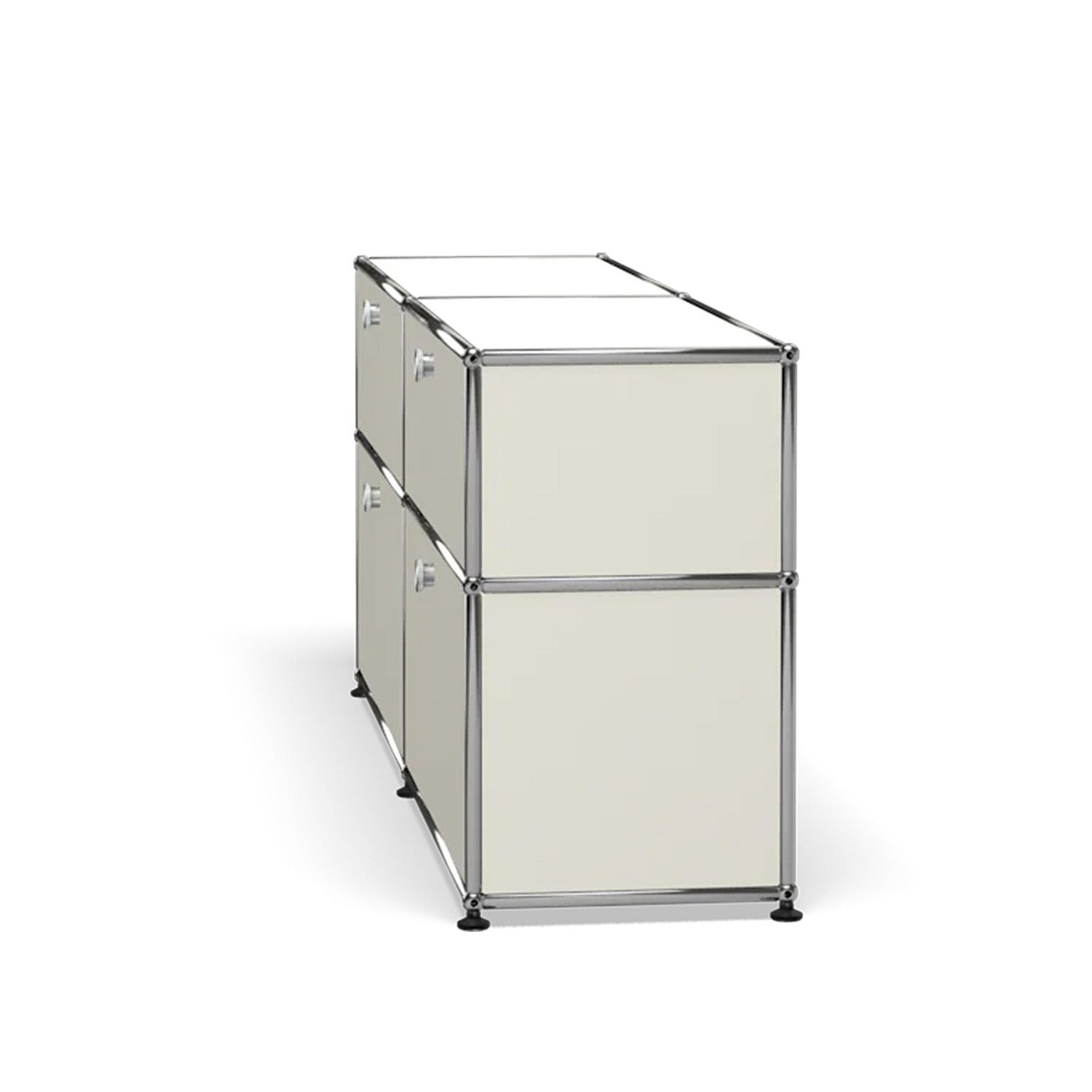
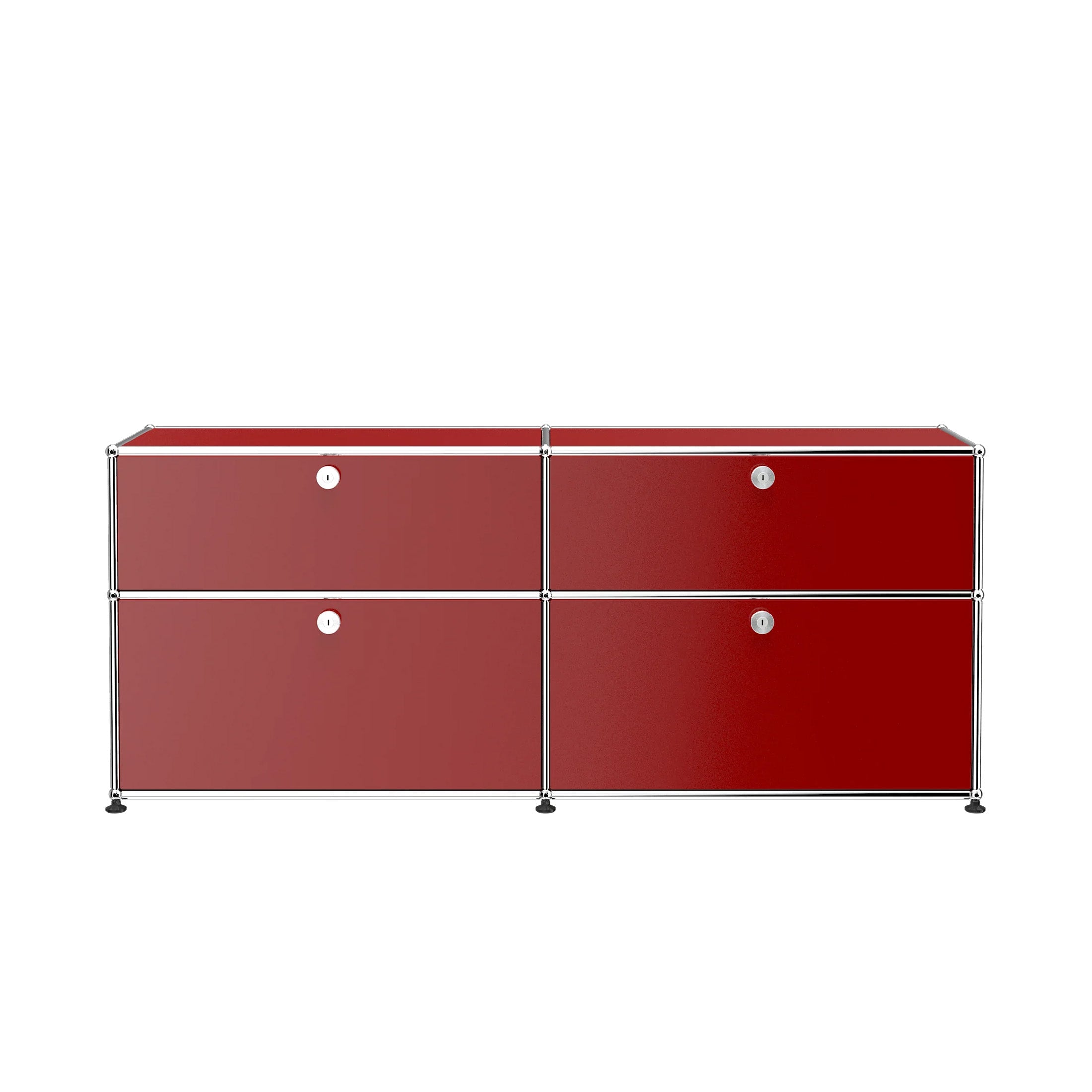
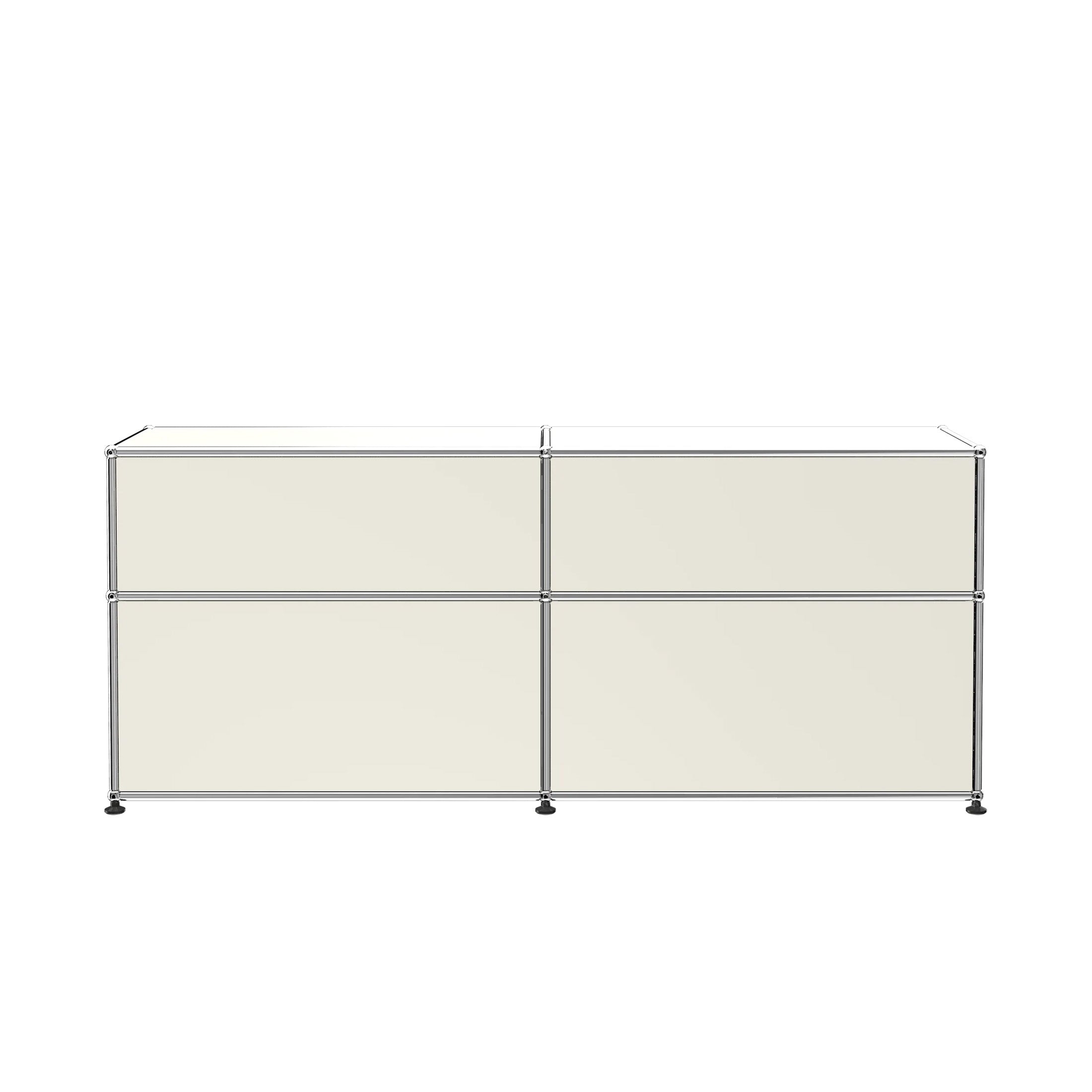
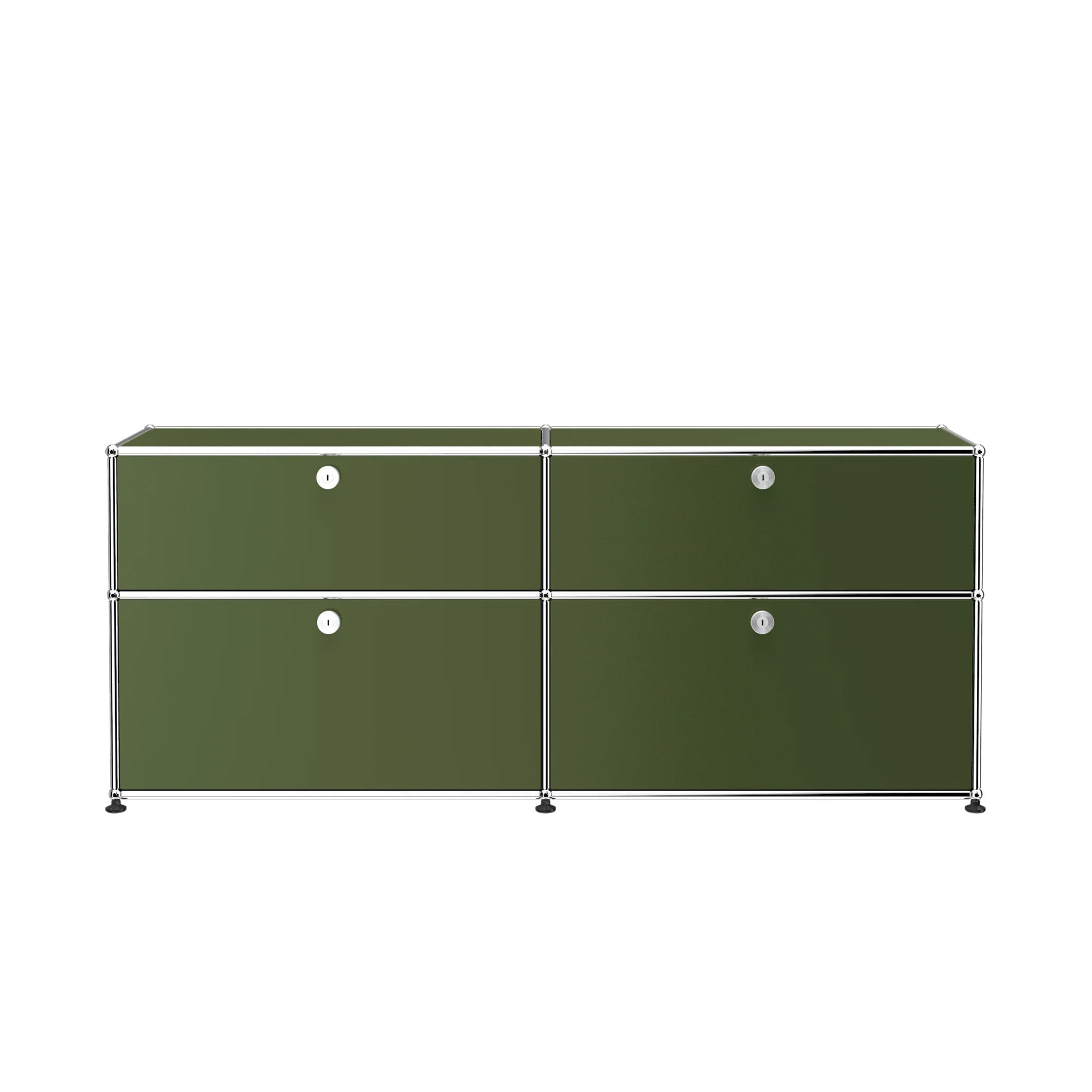
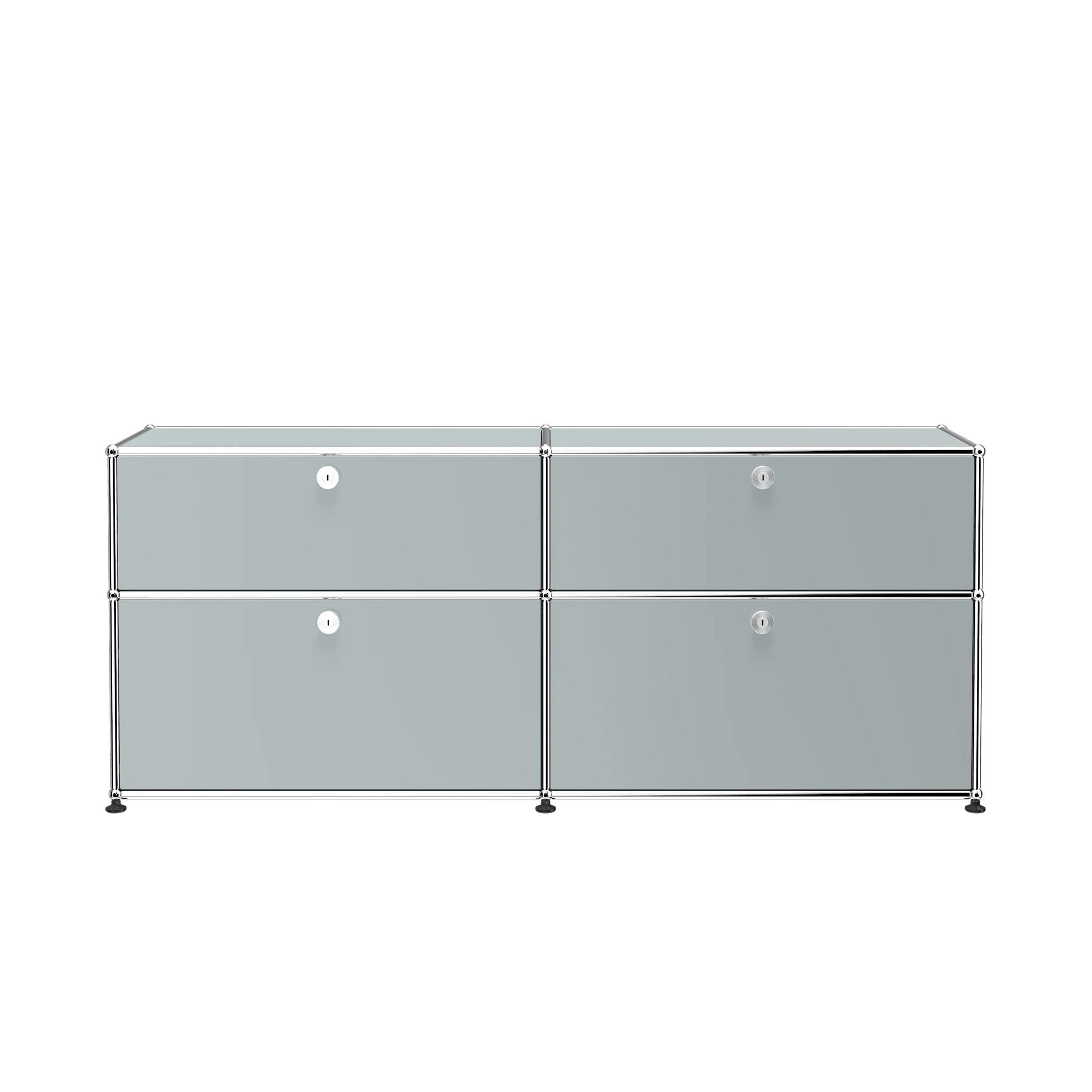
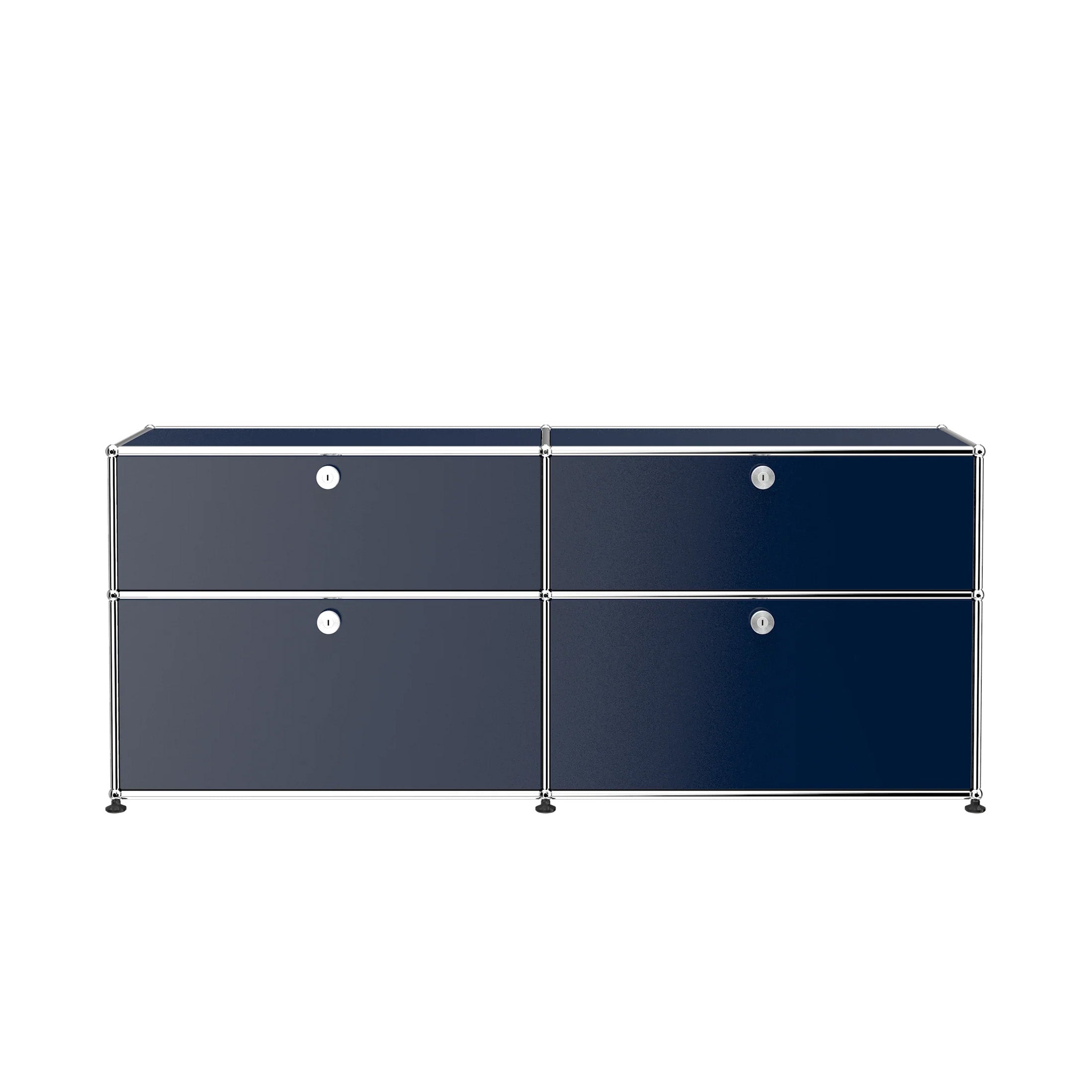
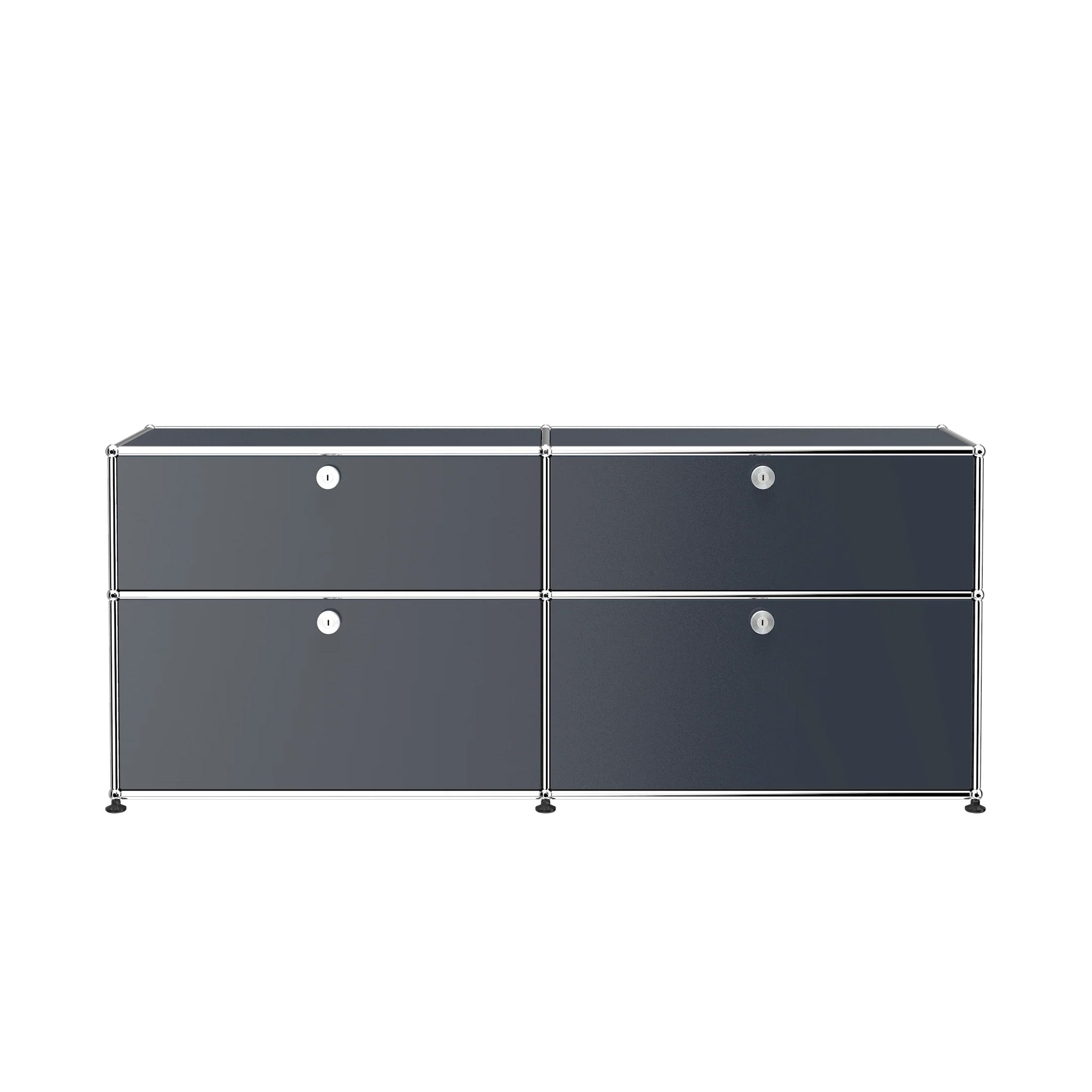
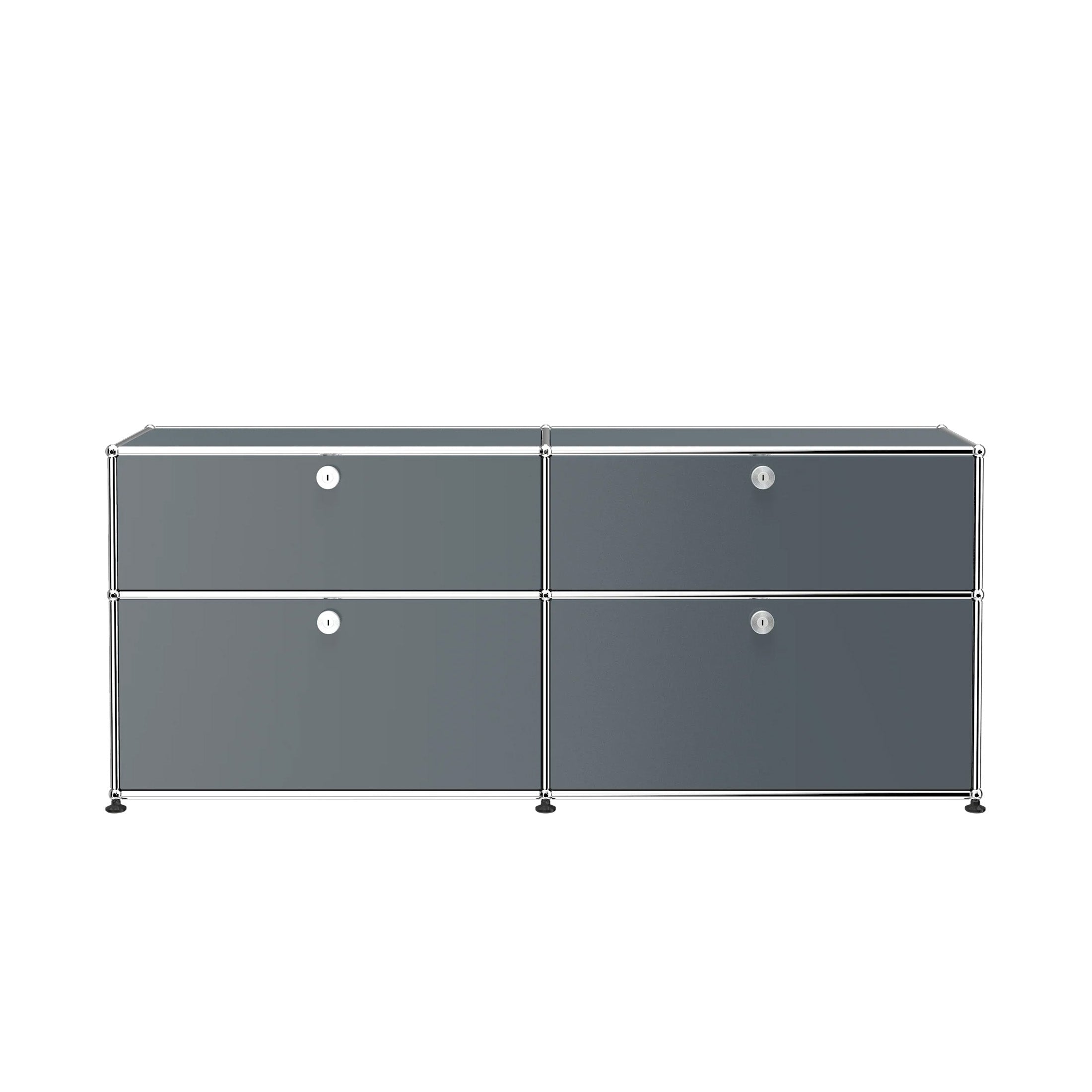
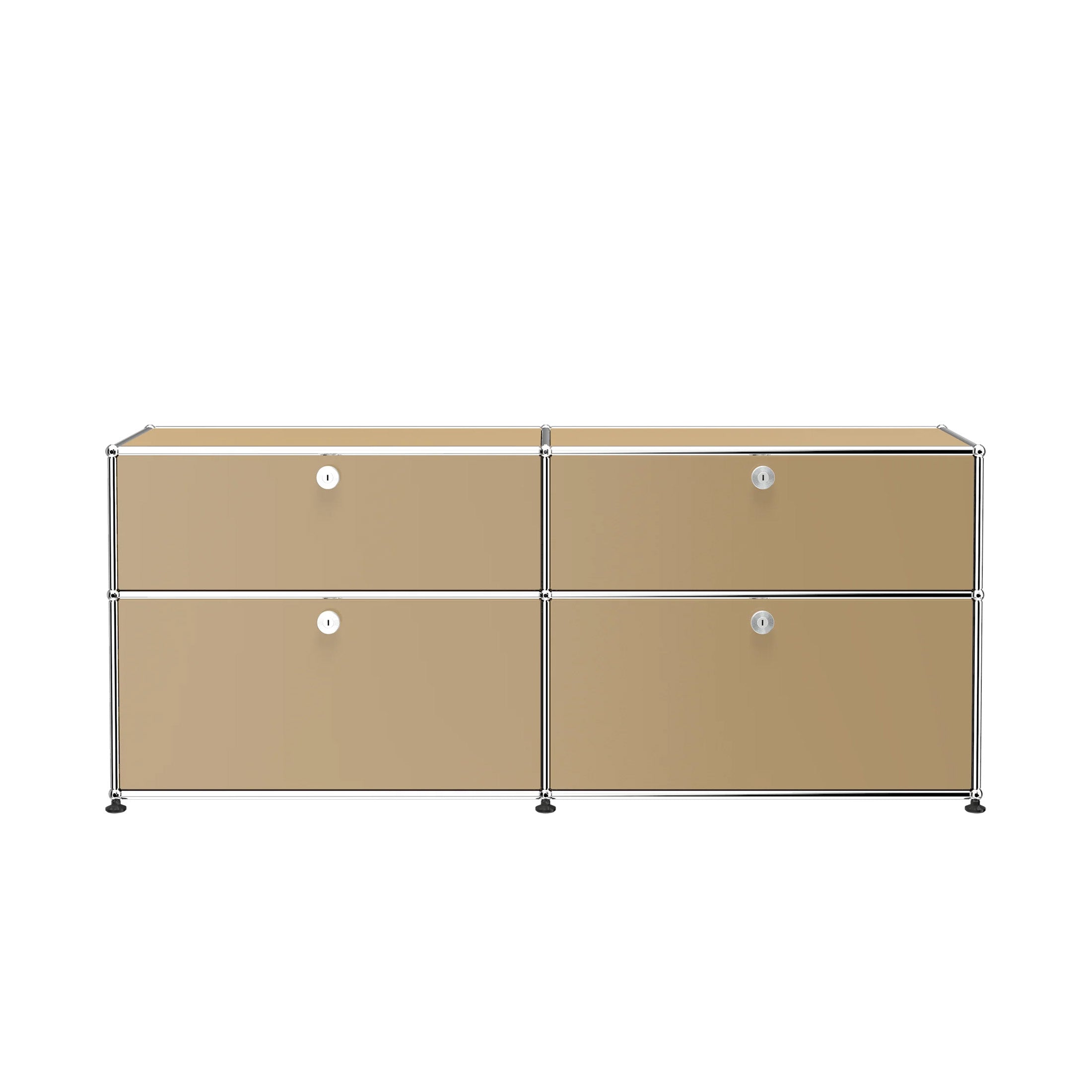
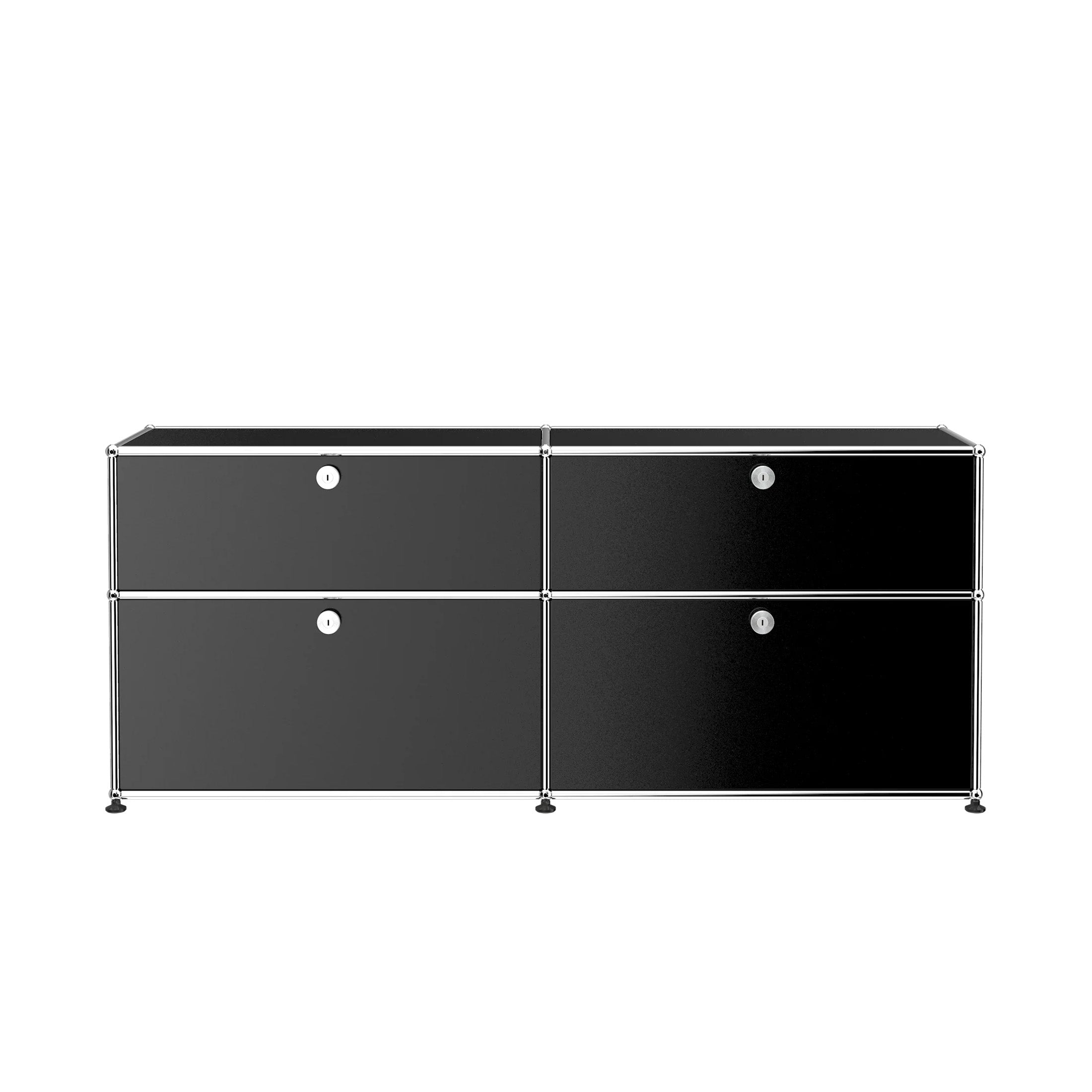
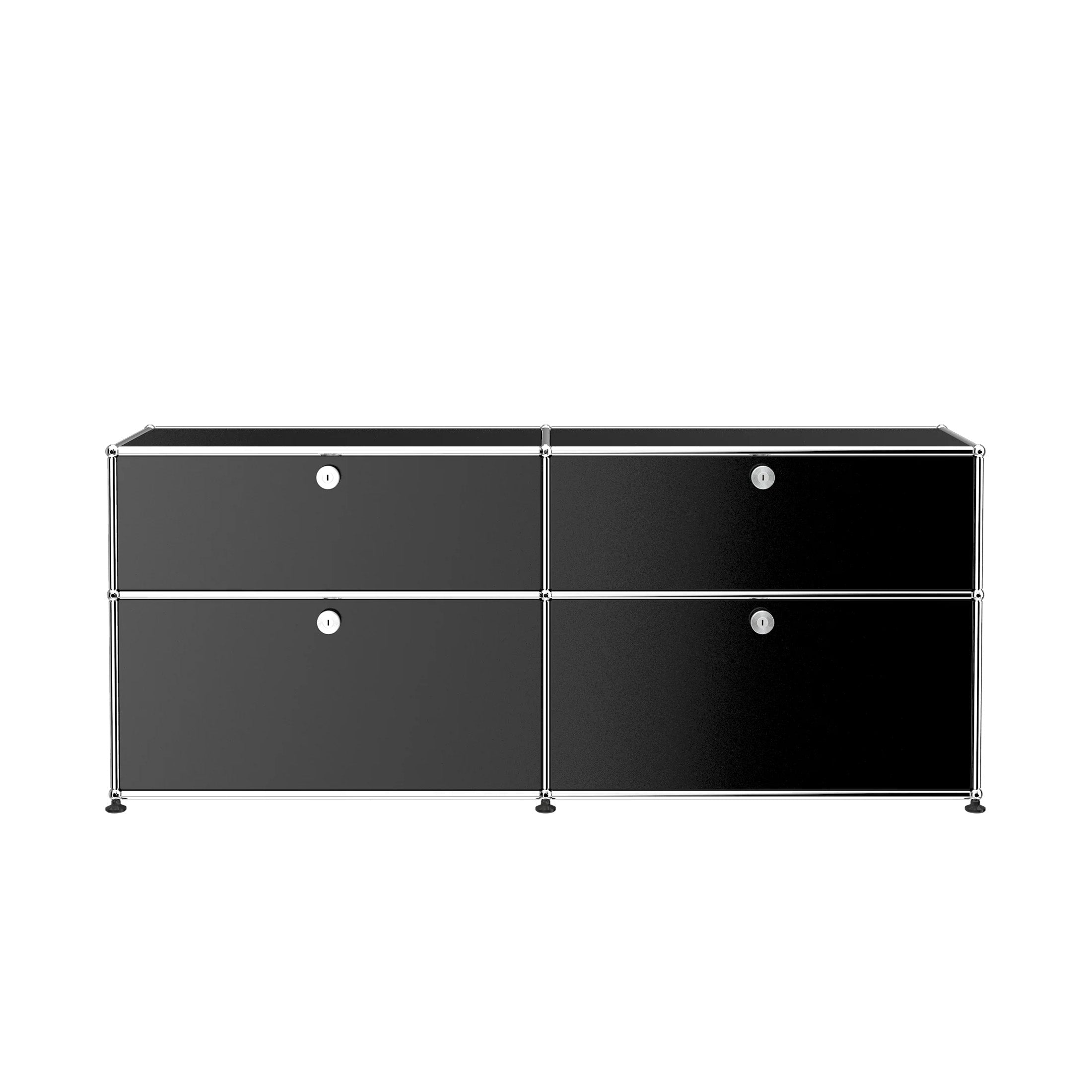
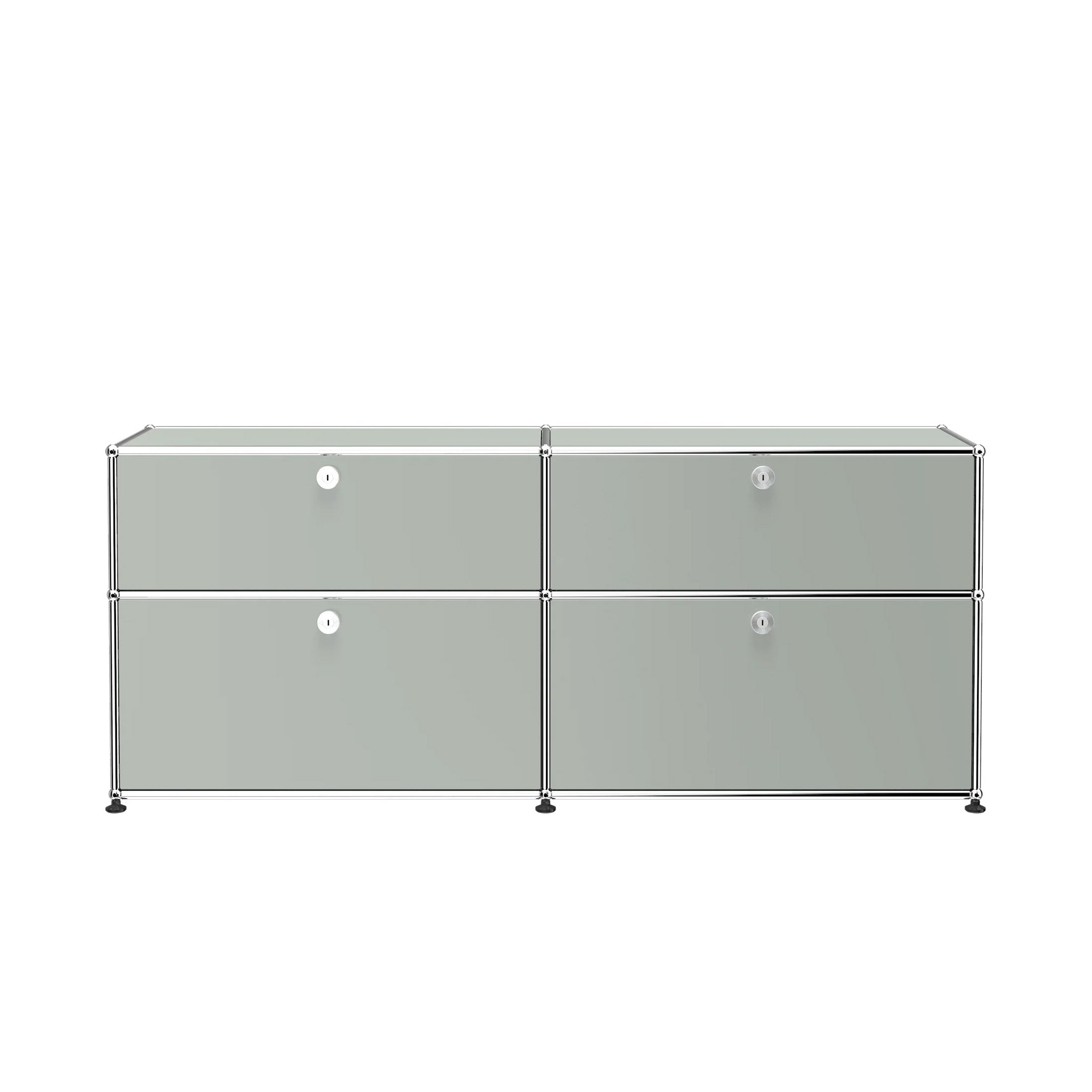
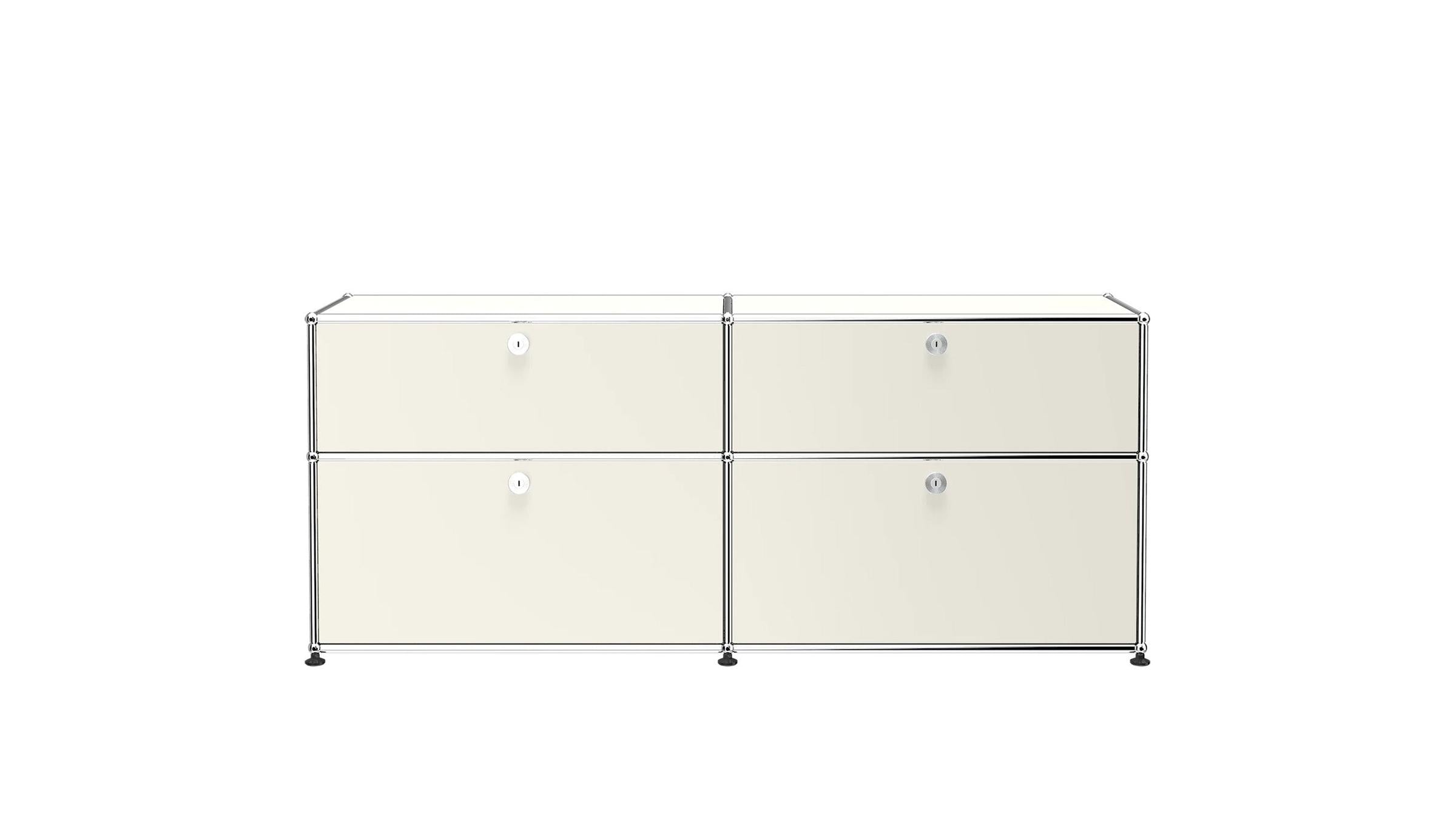
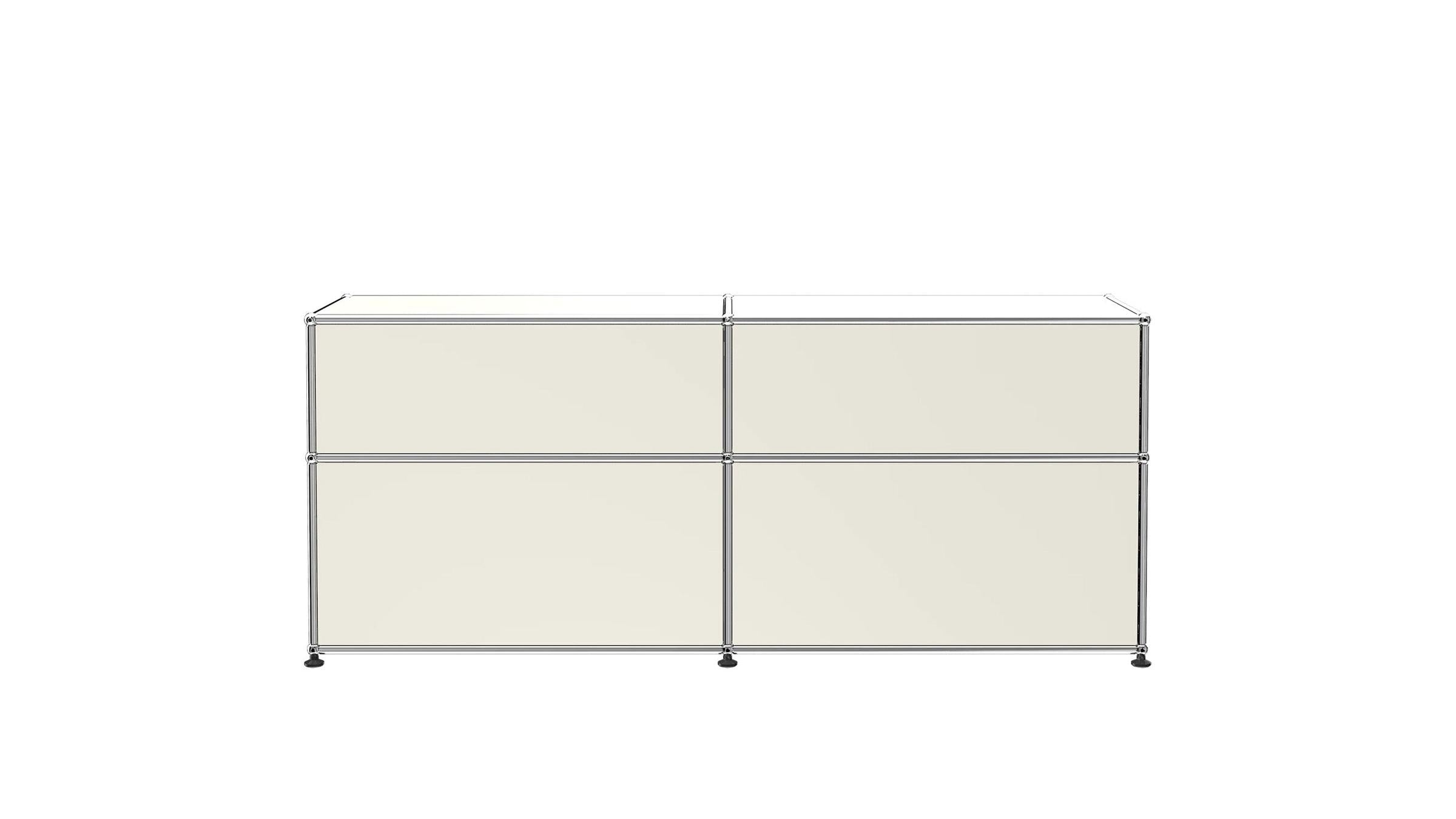
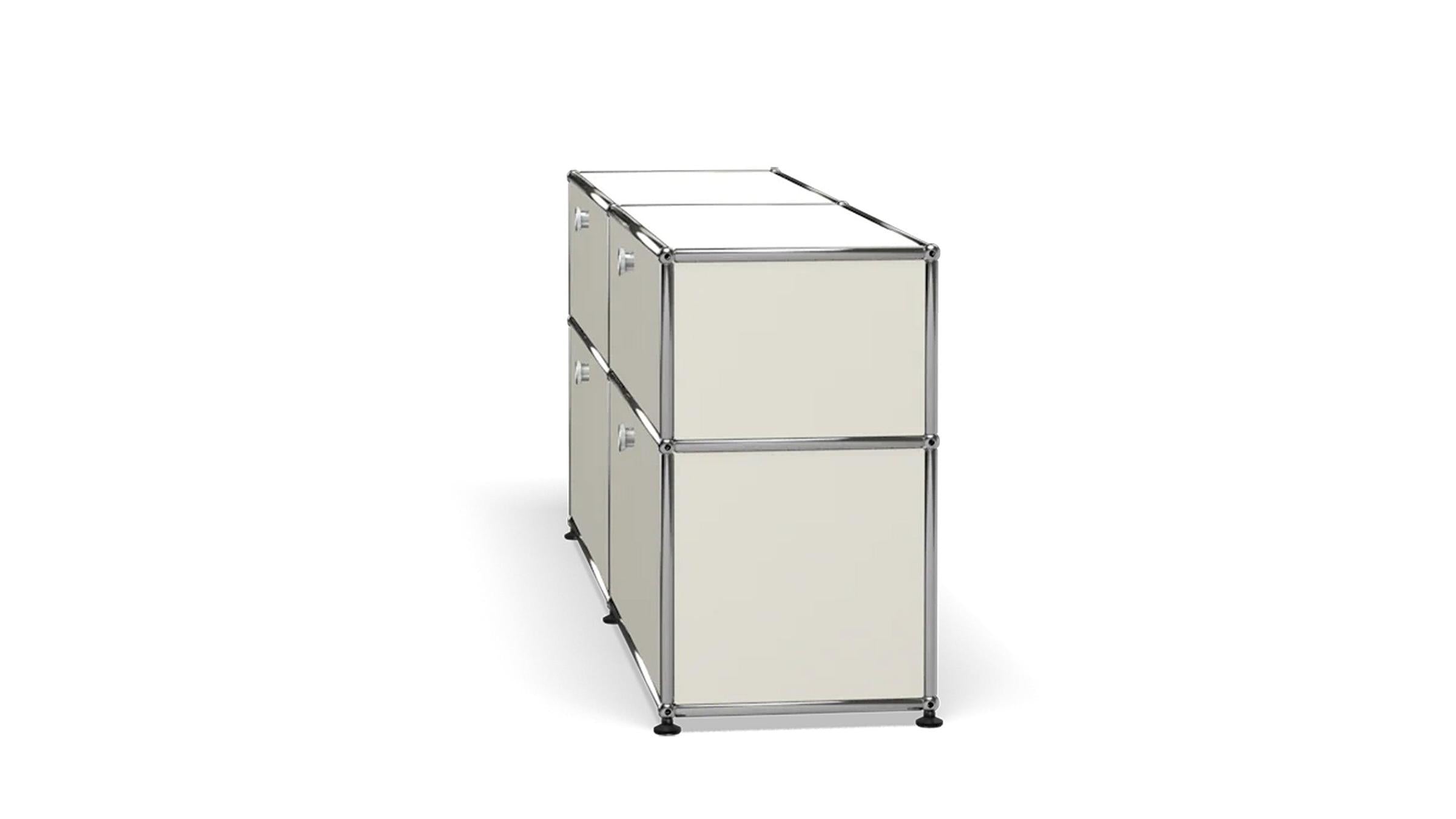
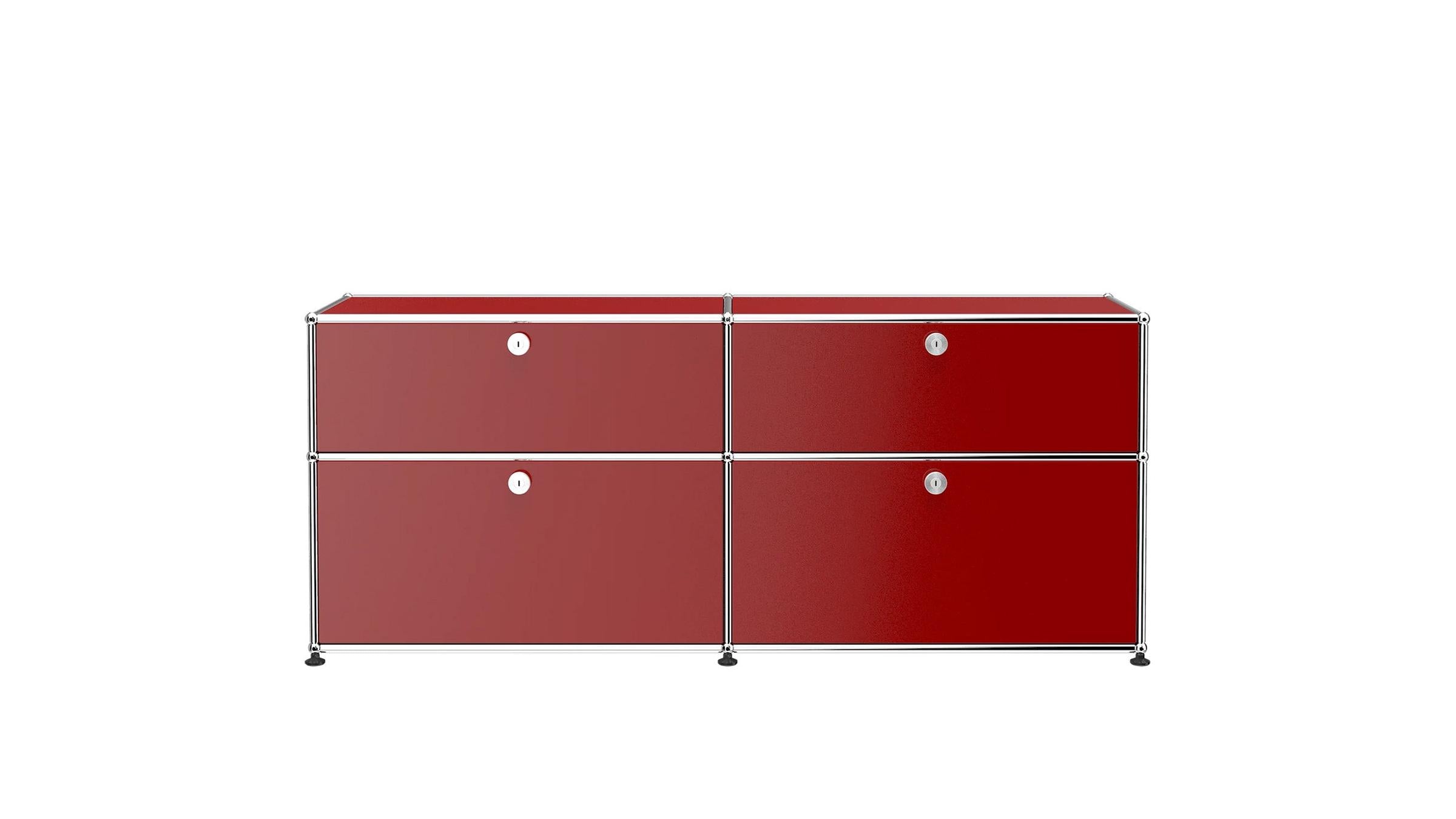
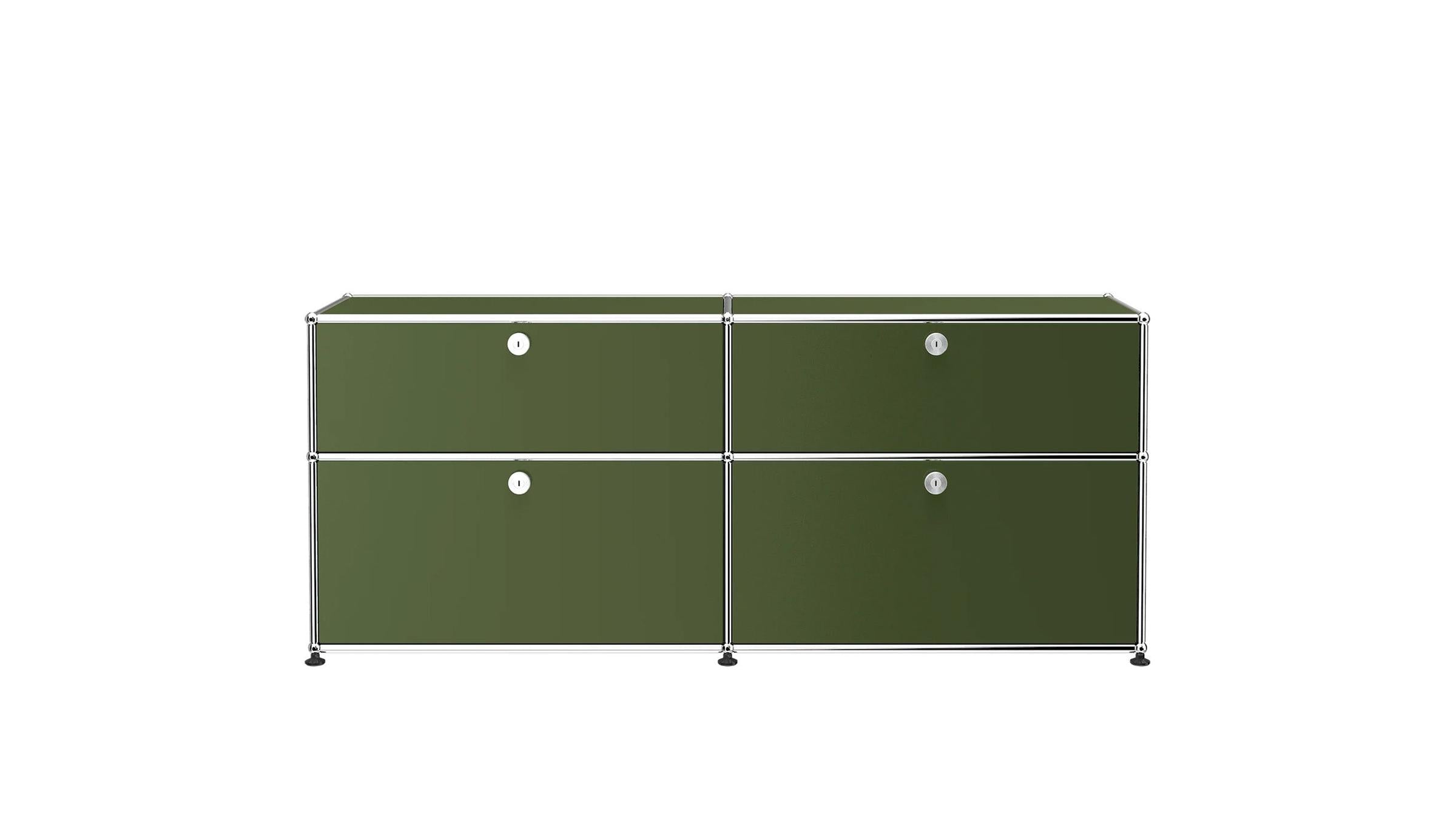
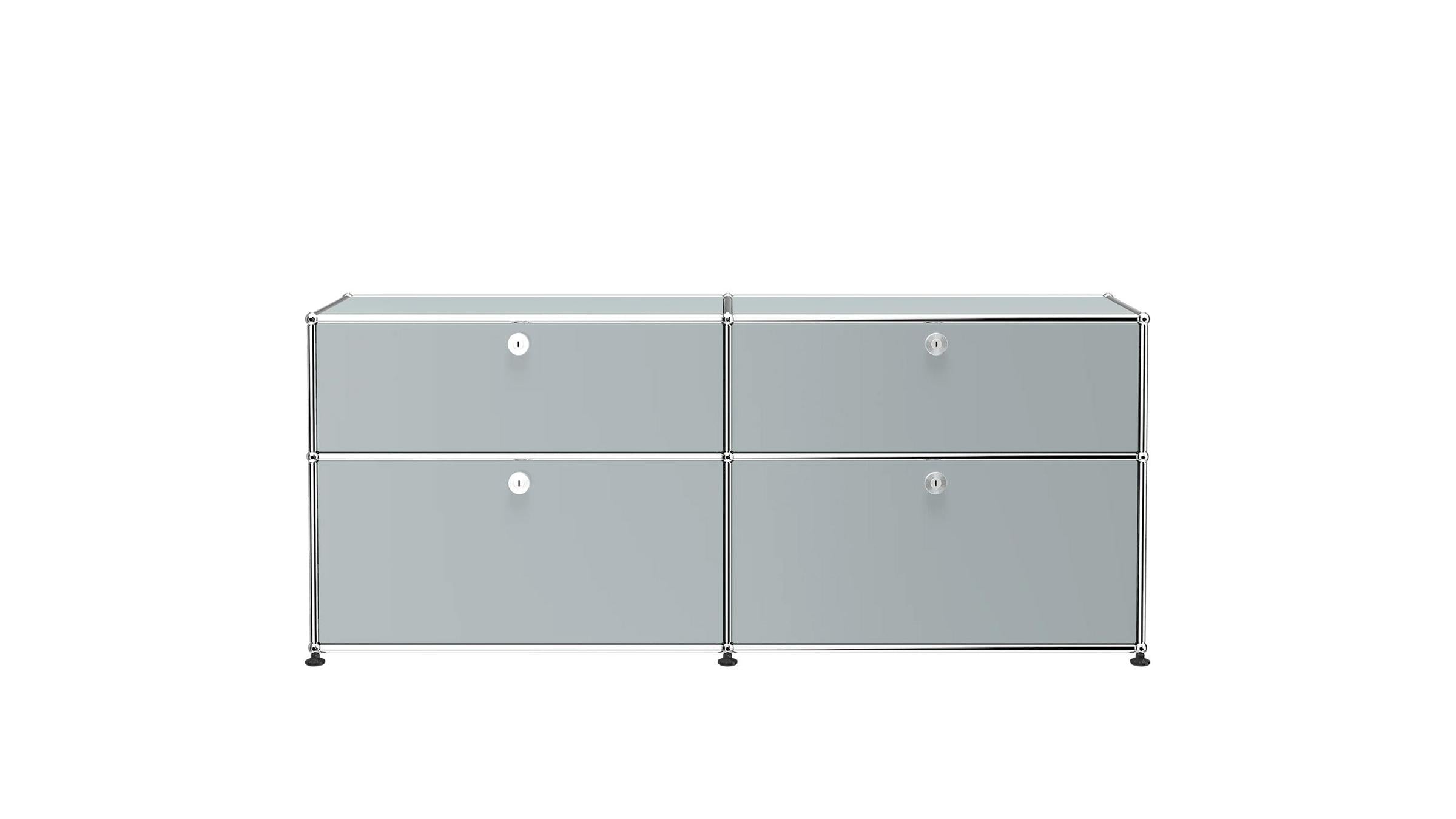
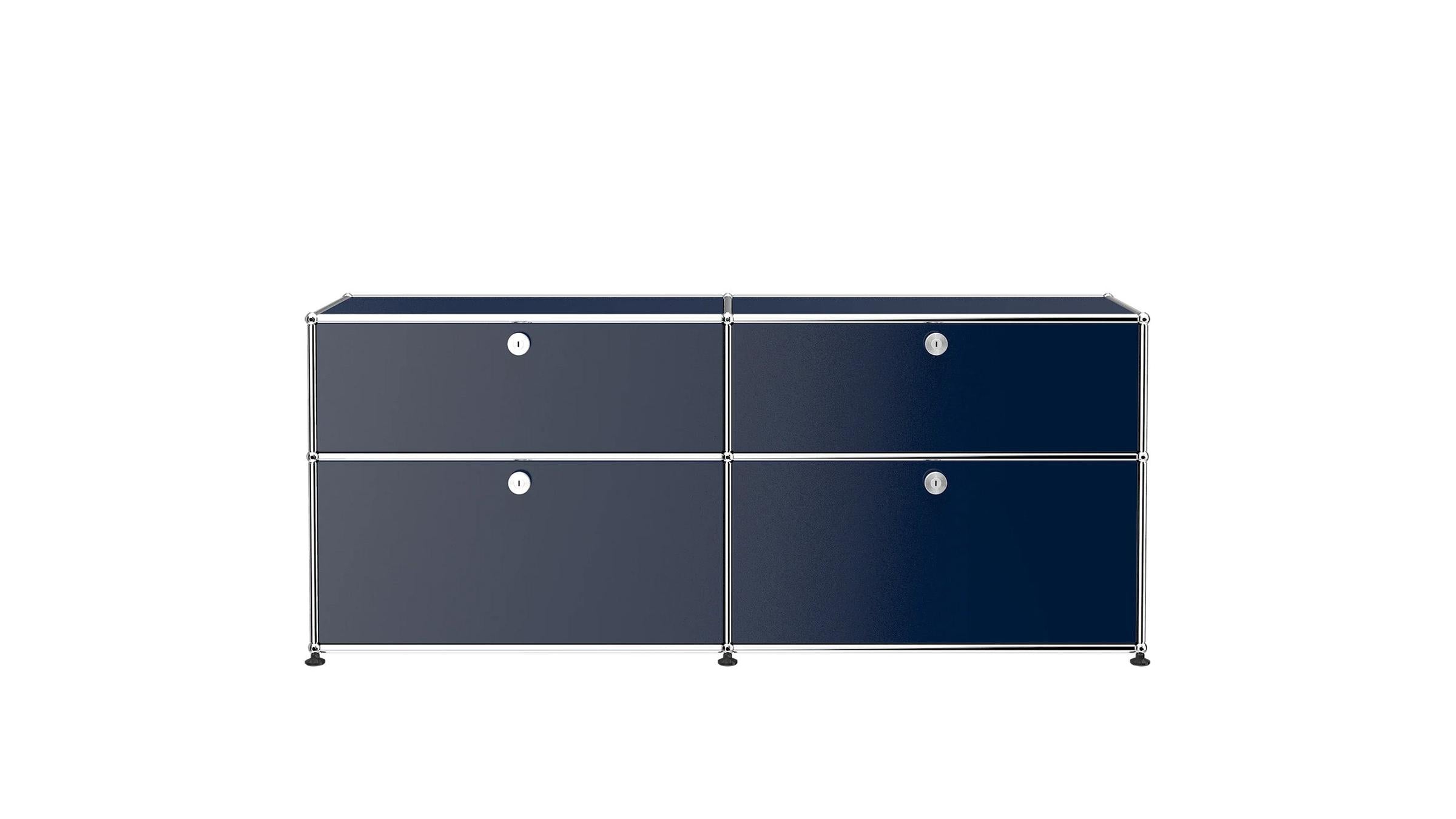
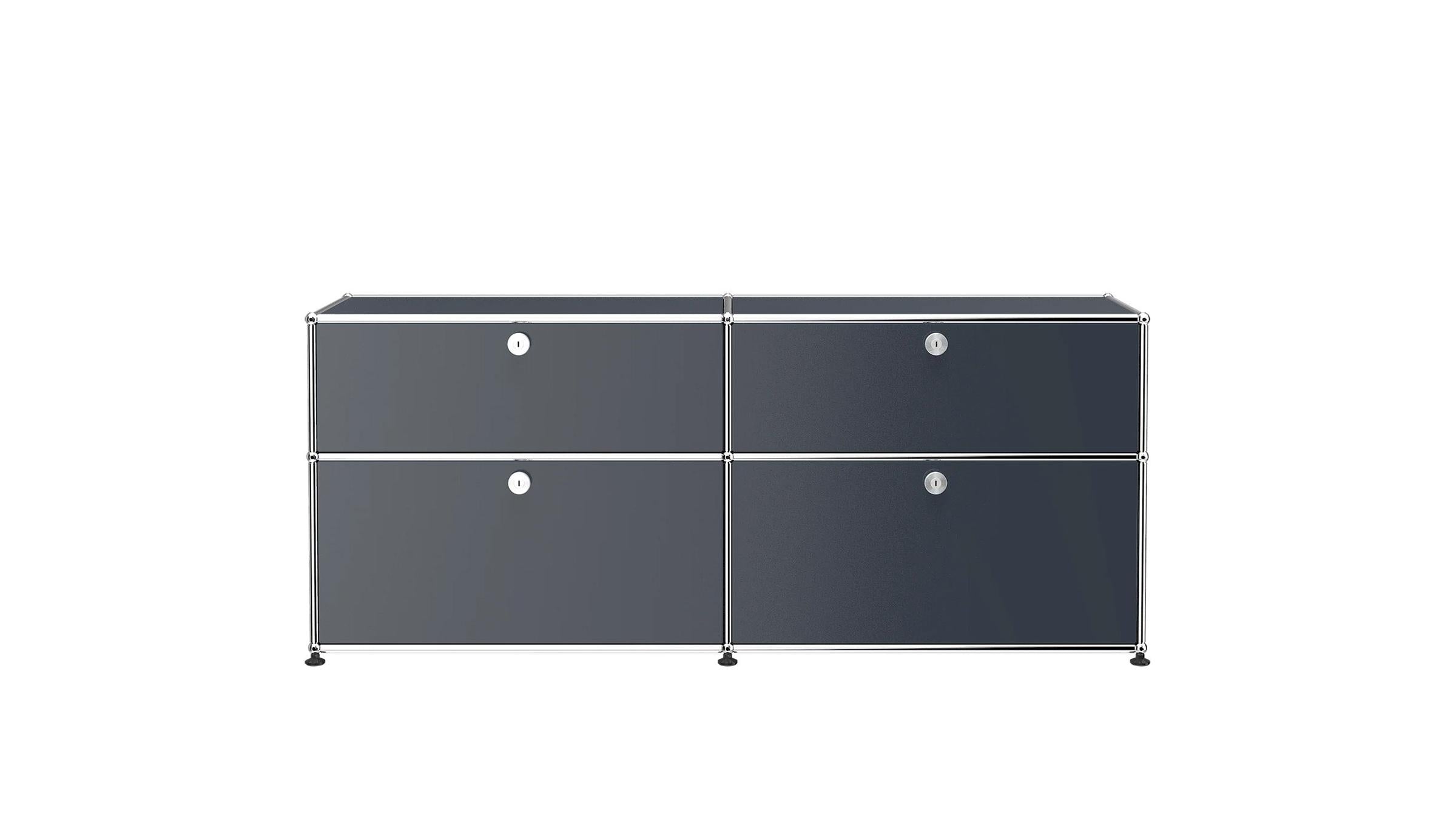
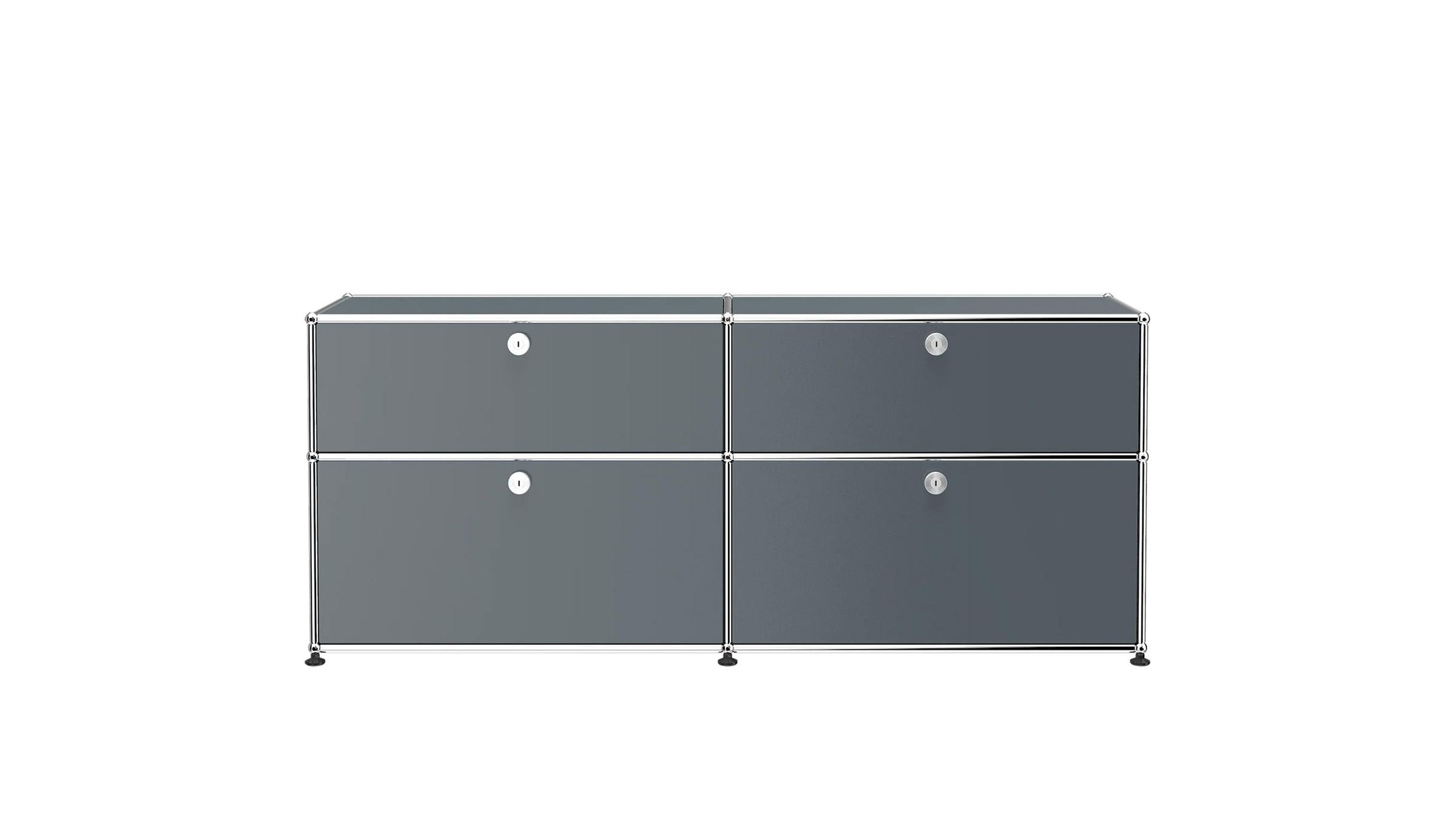
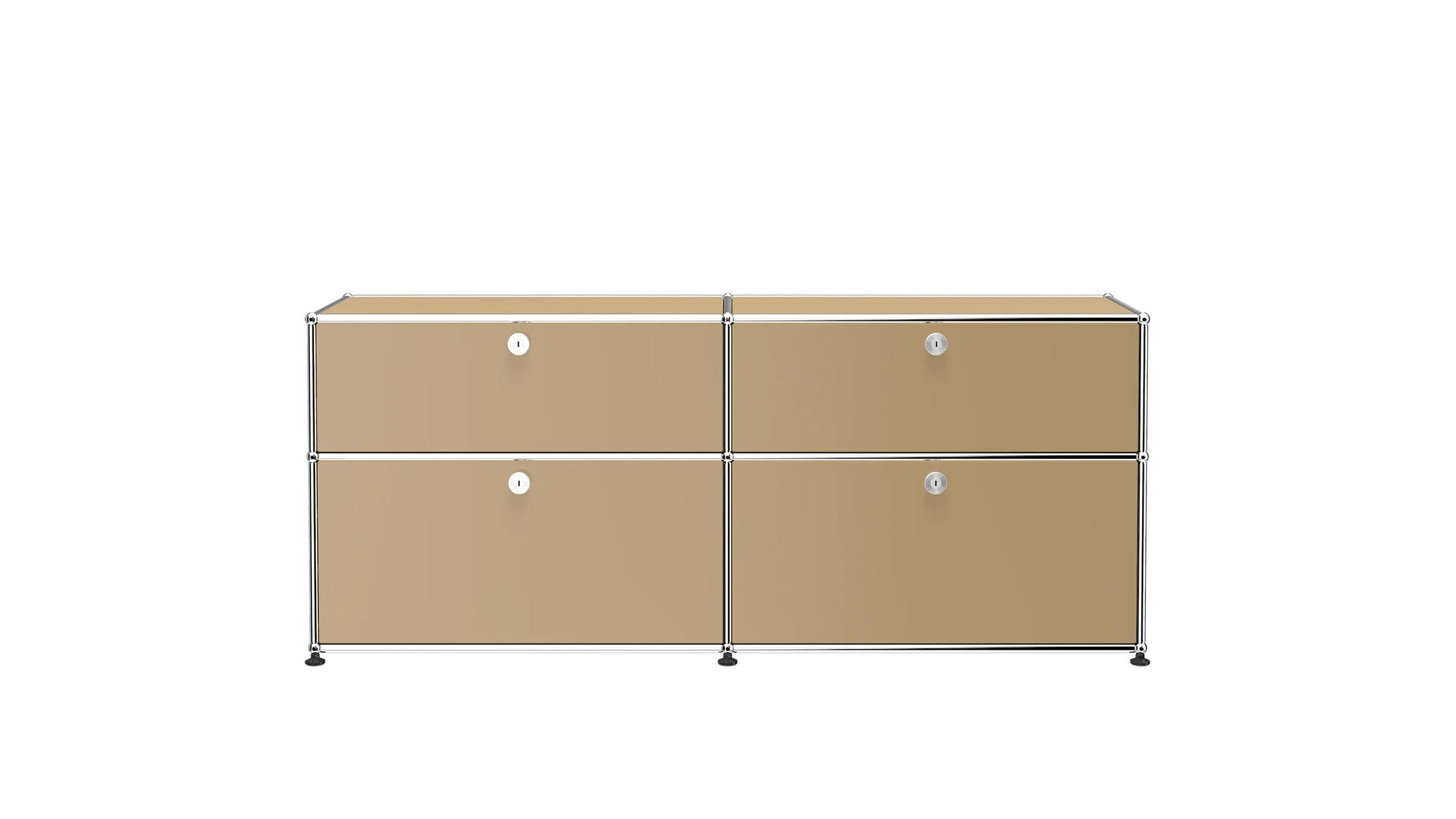
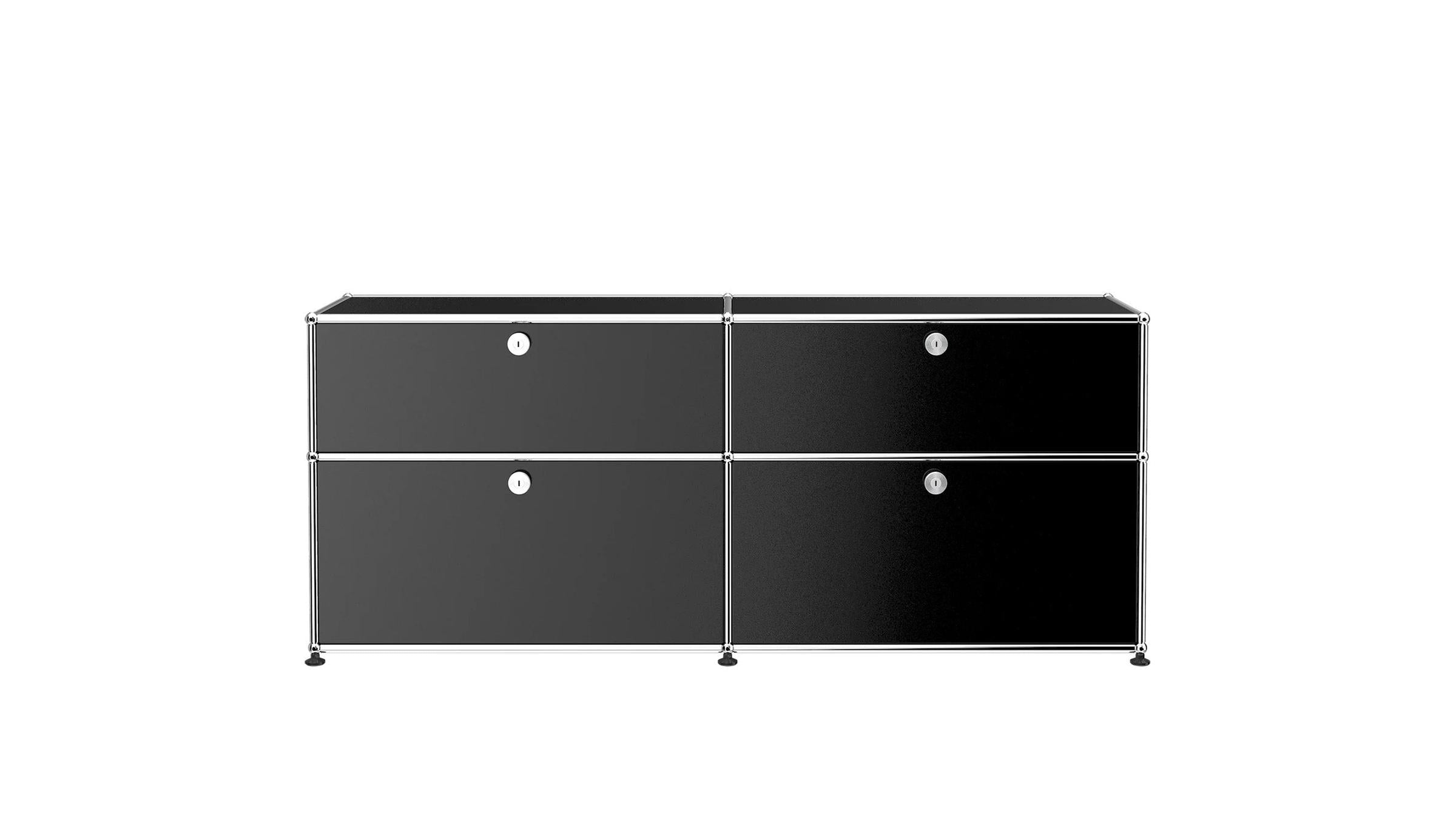
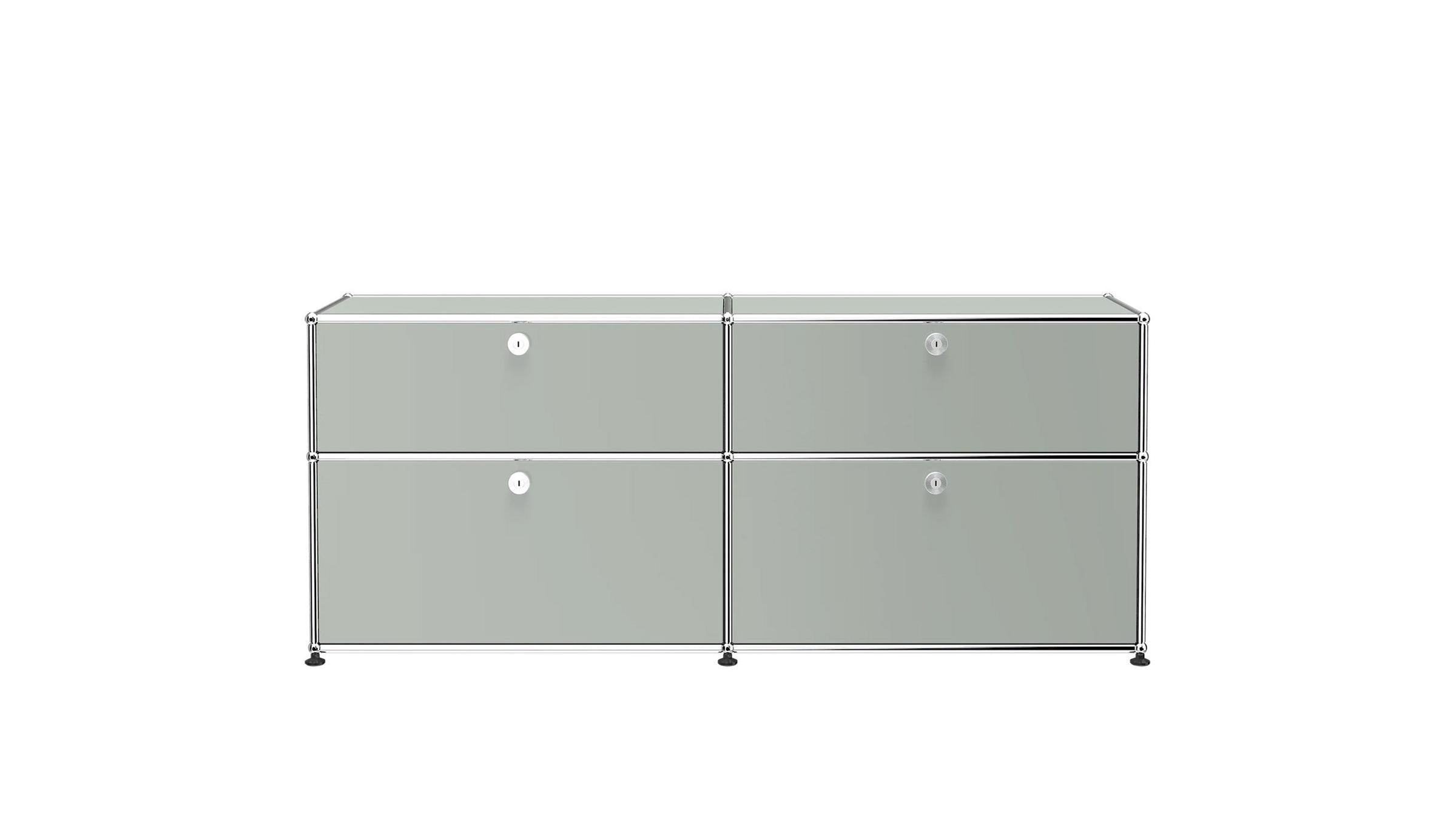
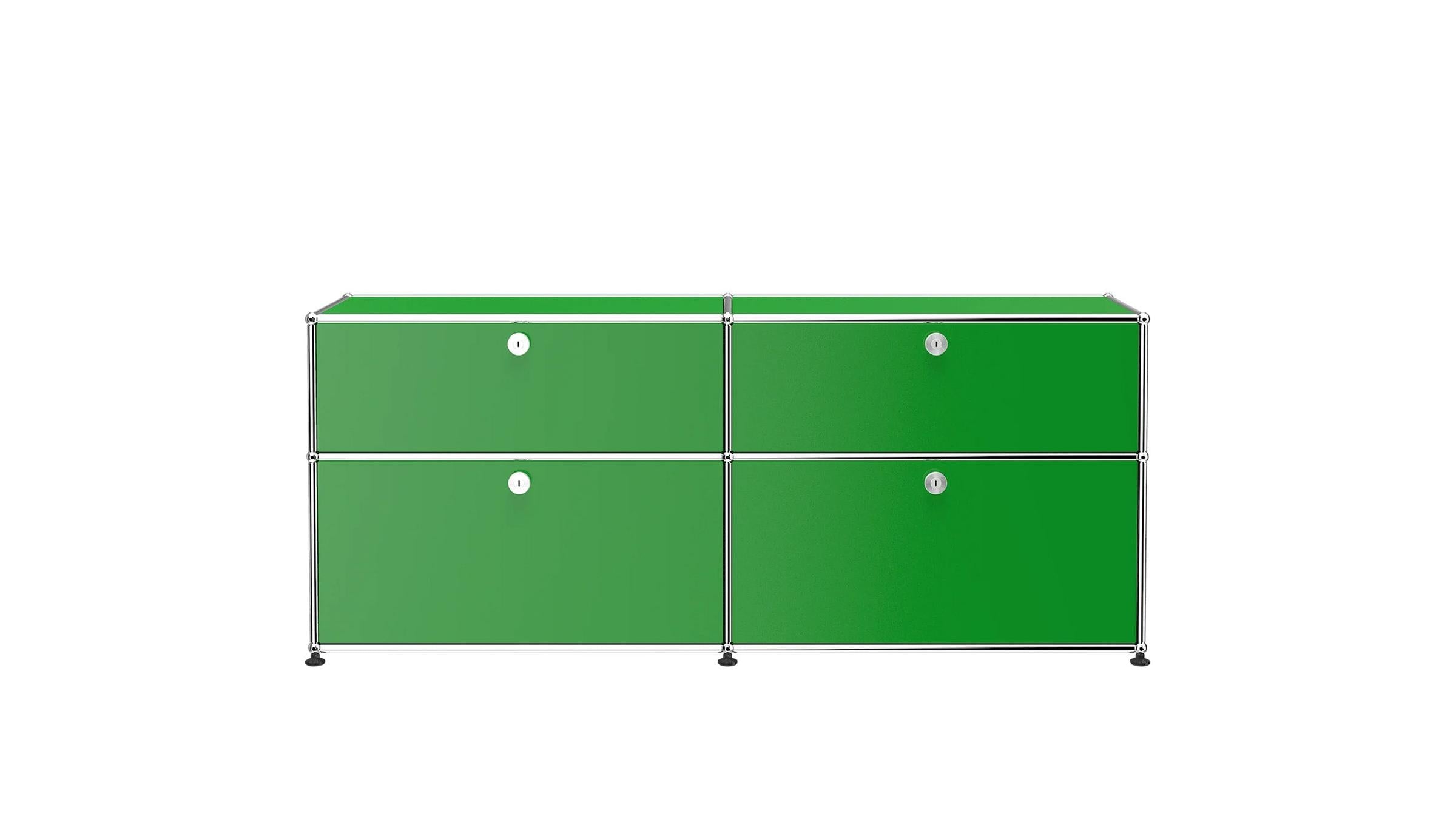
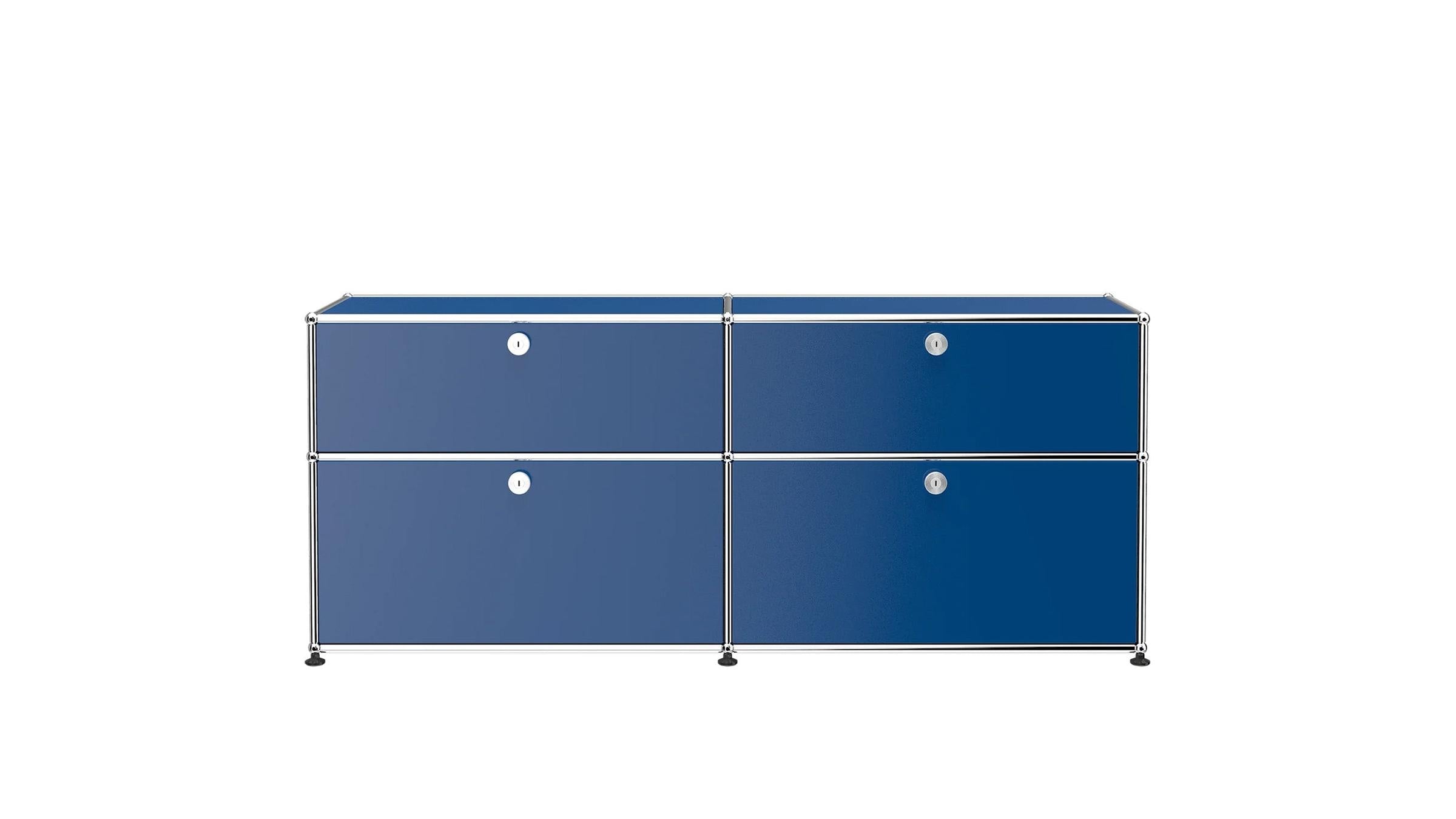
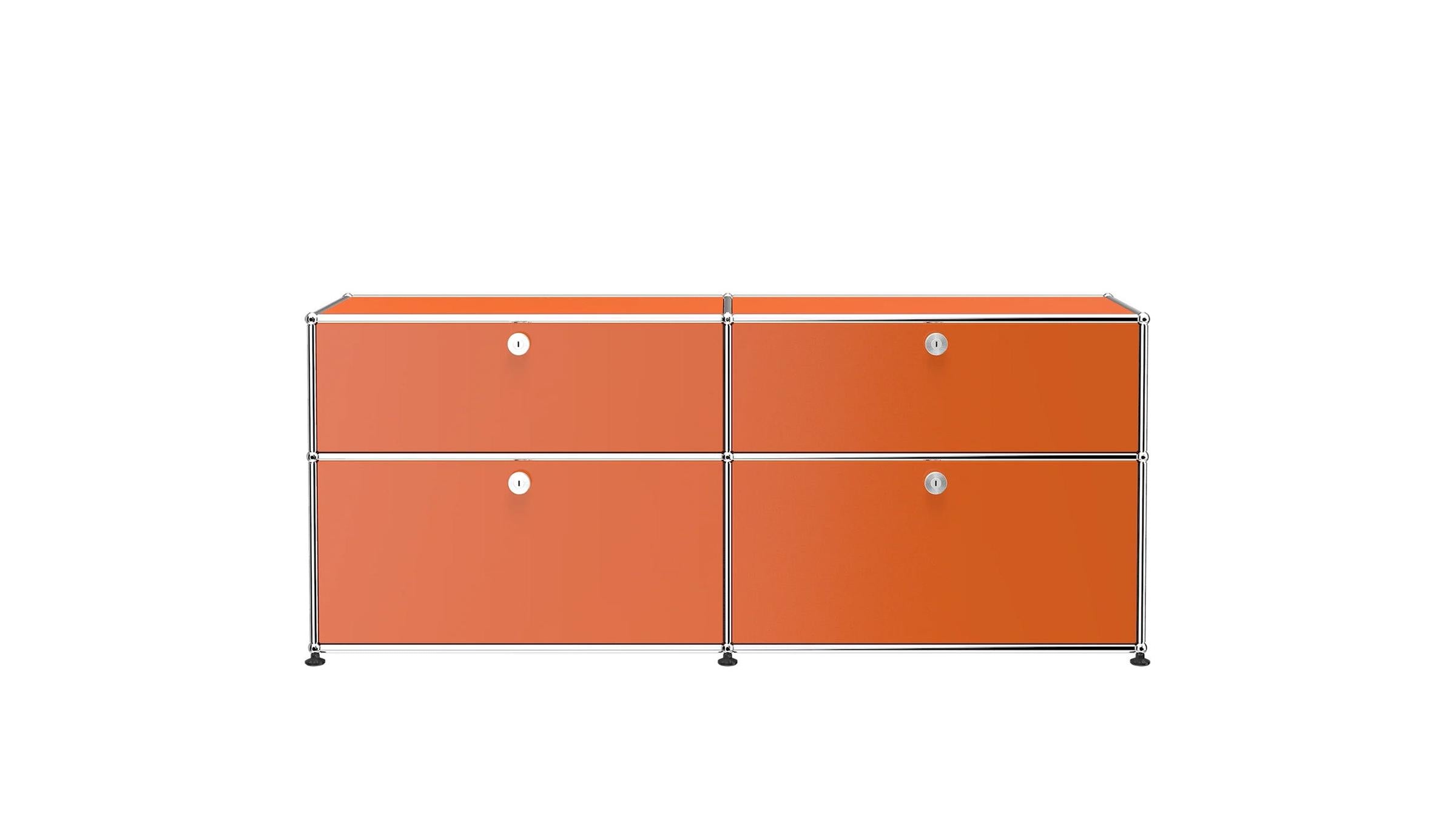
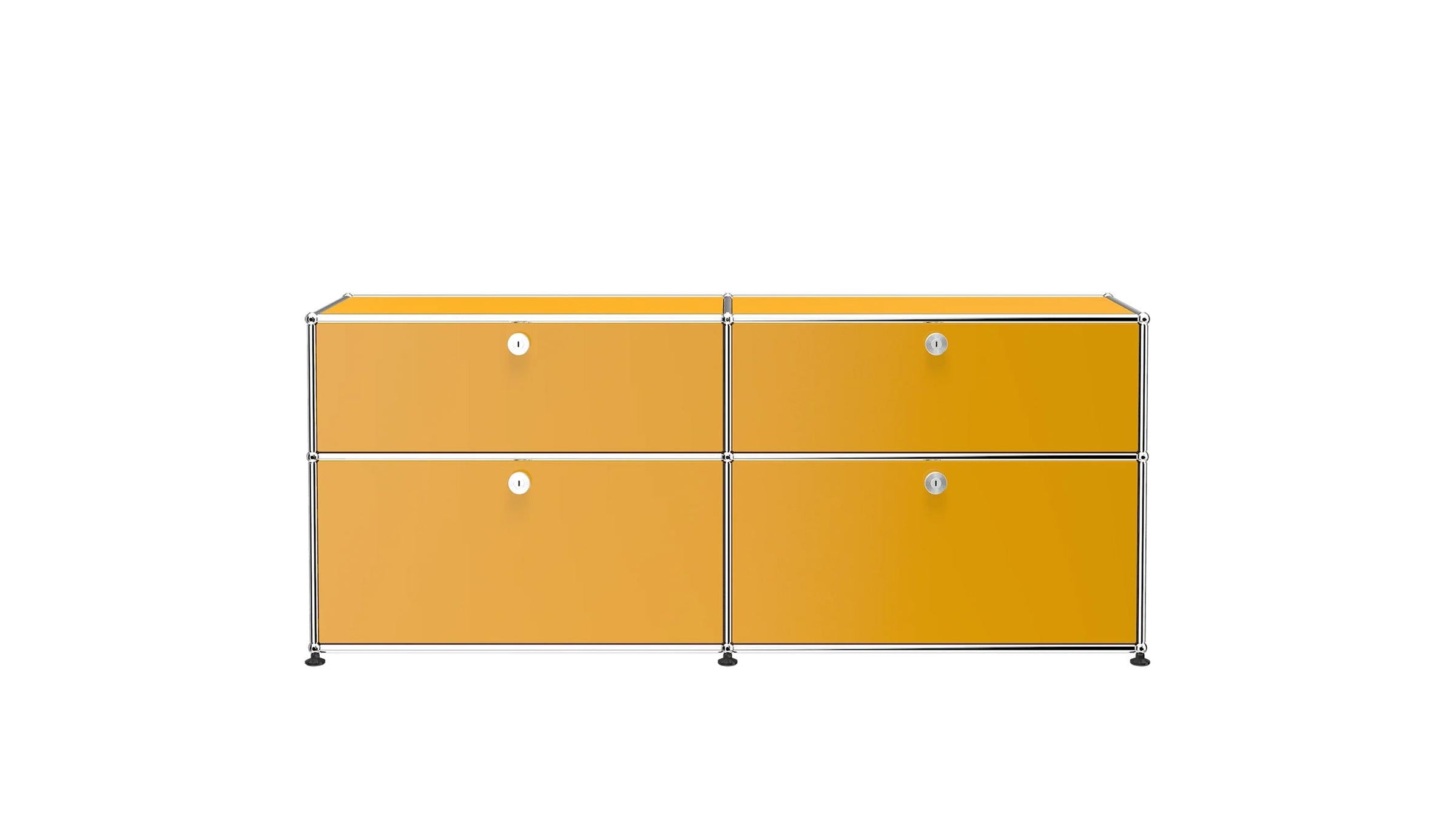
Mid-Credenza (D)
Made by USM Haller
Designed by Fritz Haller
Conceived in the 1960s by Swiss architect Fritz Haller and businessman Paul Schärer, the USM Haller system began as a structural language for industry before becoming one of the most enduring modular furniture systems of the twentieth century. Its principle is honest and exact: chromium-plated steel spheres join tubular frames into configurations that can grow, contract, and be entirely remade over a lifetime.
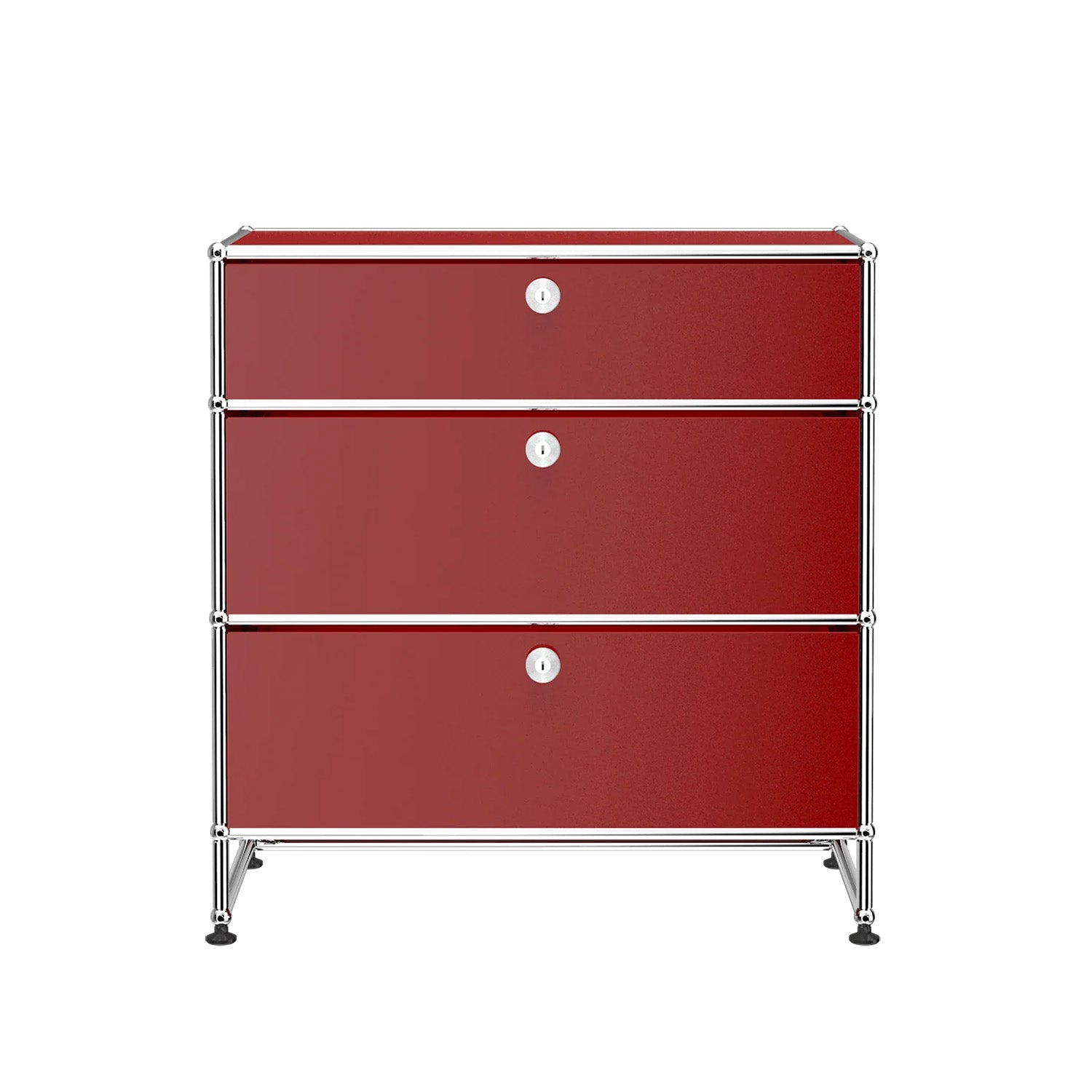
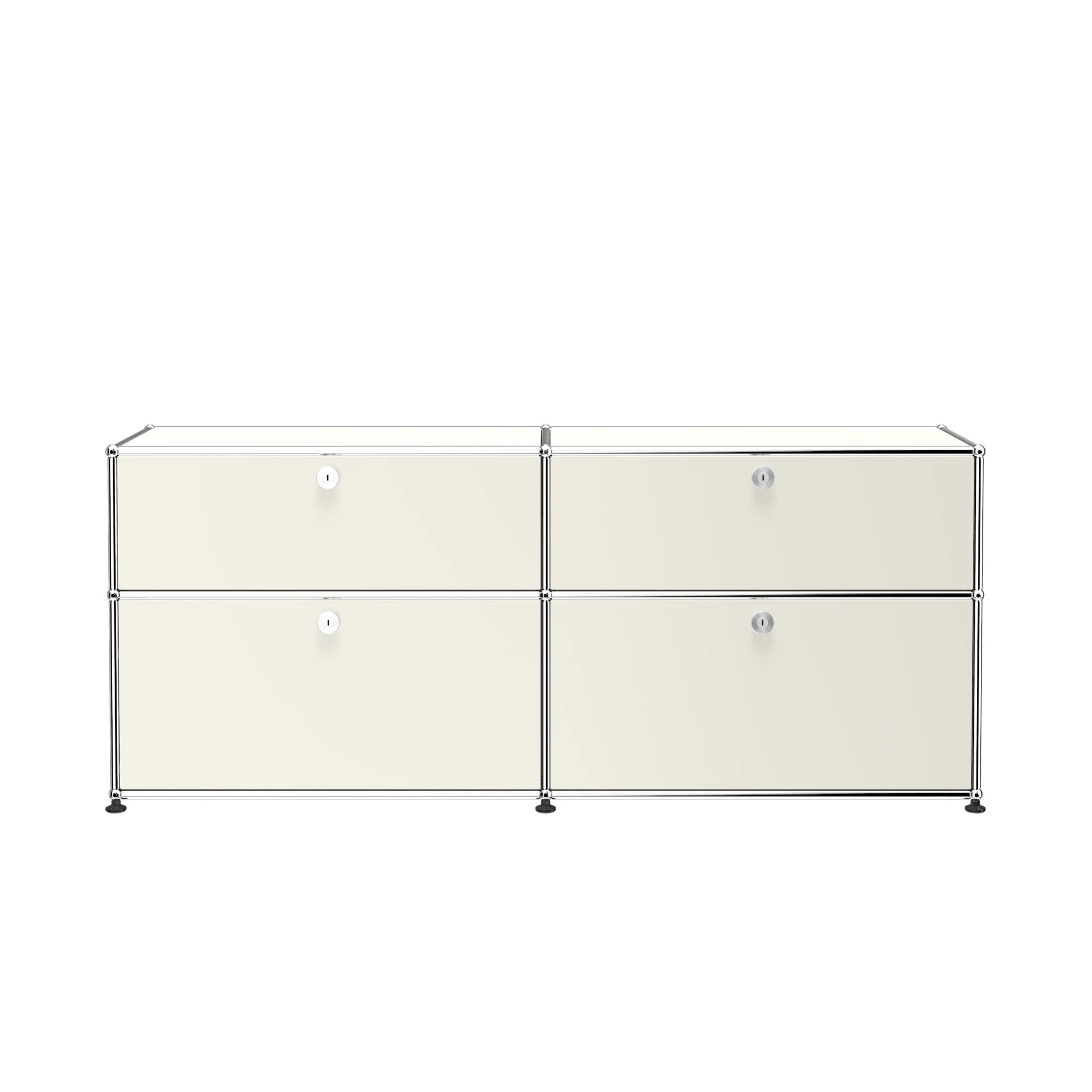
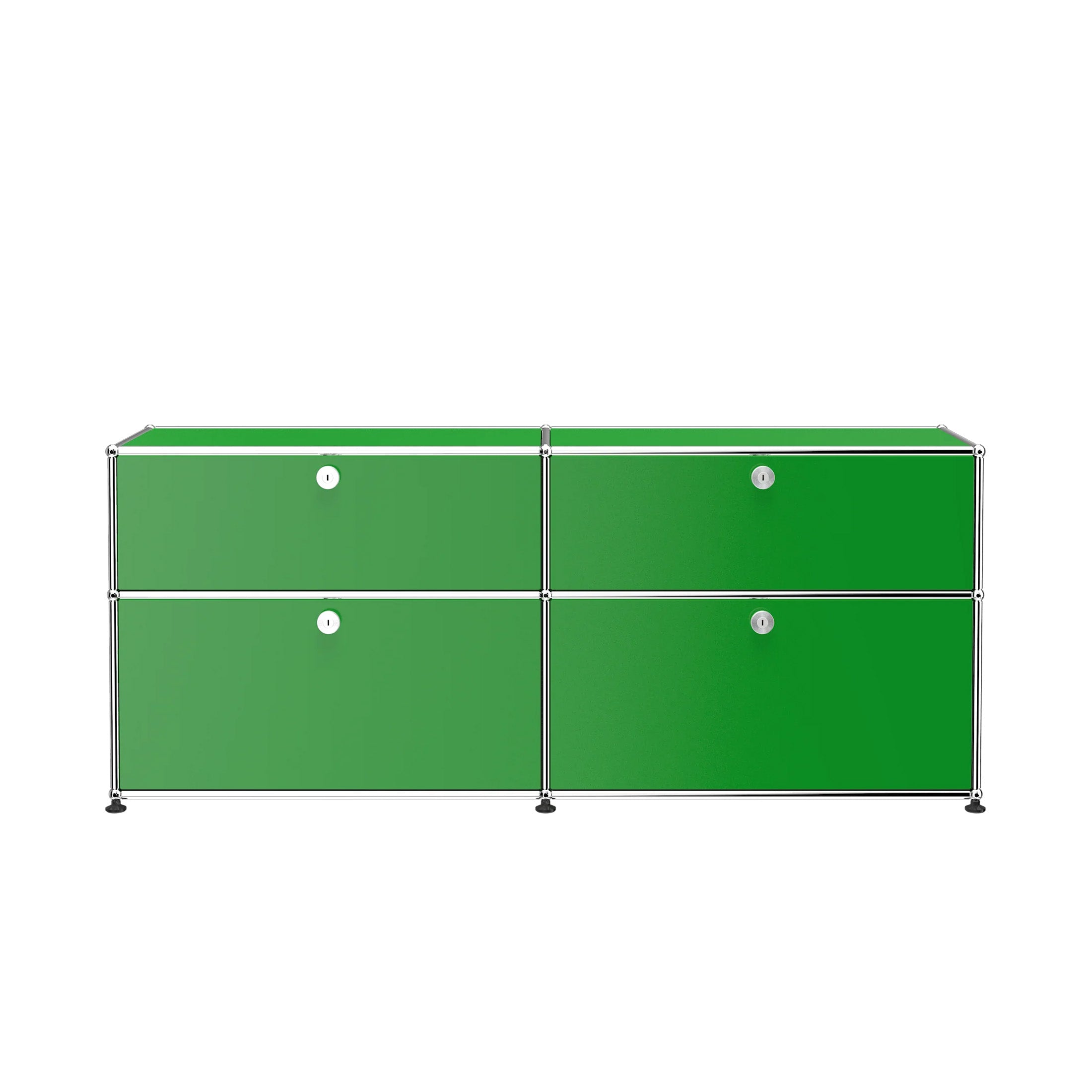
The Mid-Credenza (D) translates that discipline into the credenza form. Four lockable drop-down doors conceal generous, well-proportioned storage behind a facade of deliberate geometry. The silhouette reads as a graphic object within a room, as composed in a considered home office as in a dining or media setting.
- Chromium-plated steel ball-and-tube construction
- Four lockable drop-down doors with concealed storage
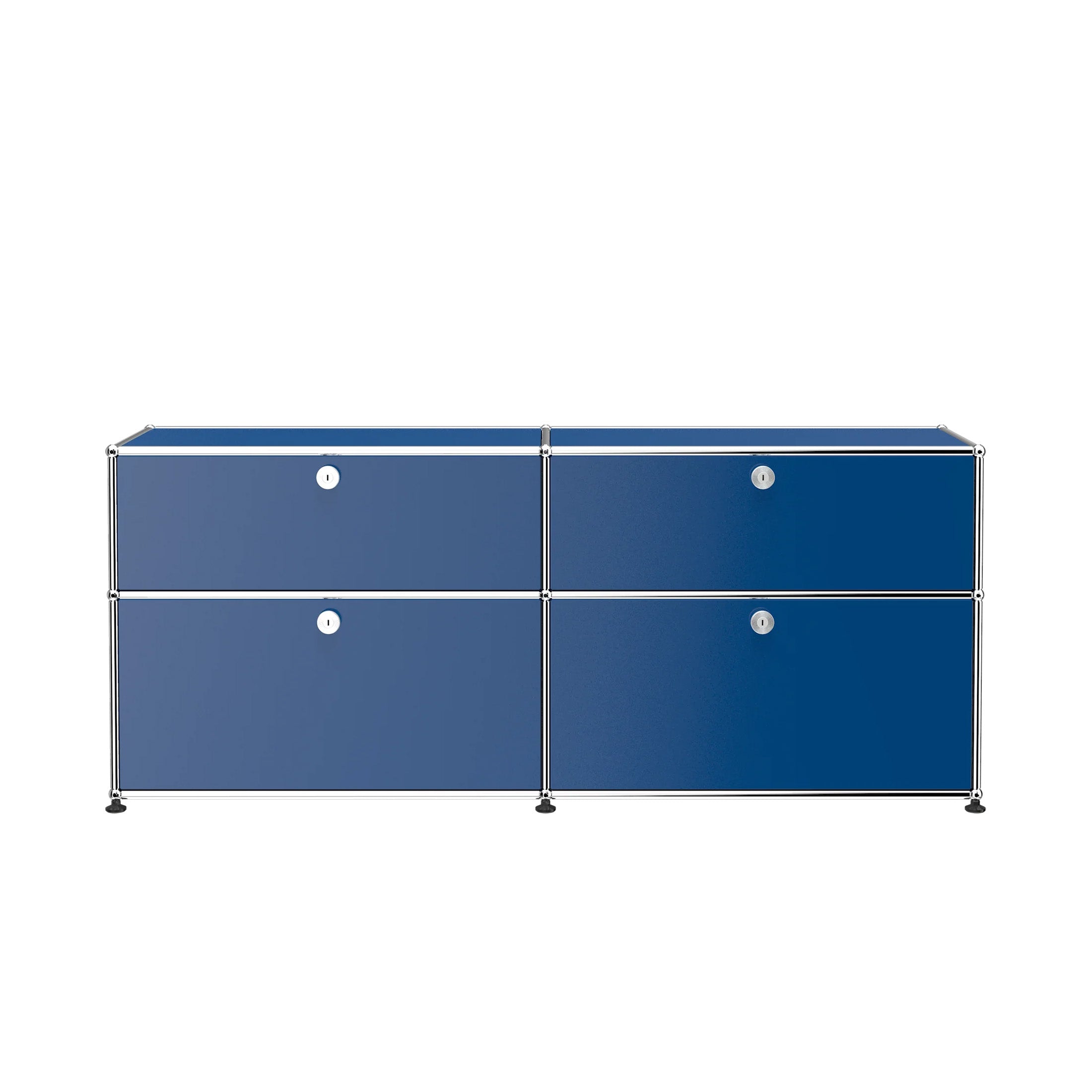
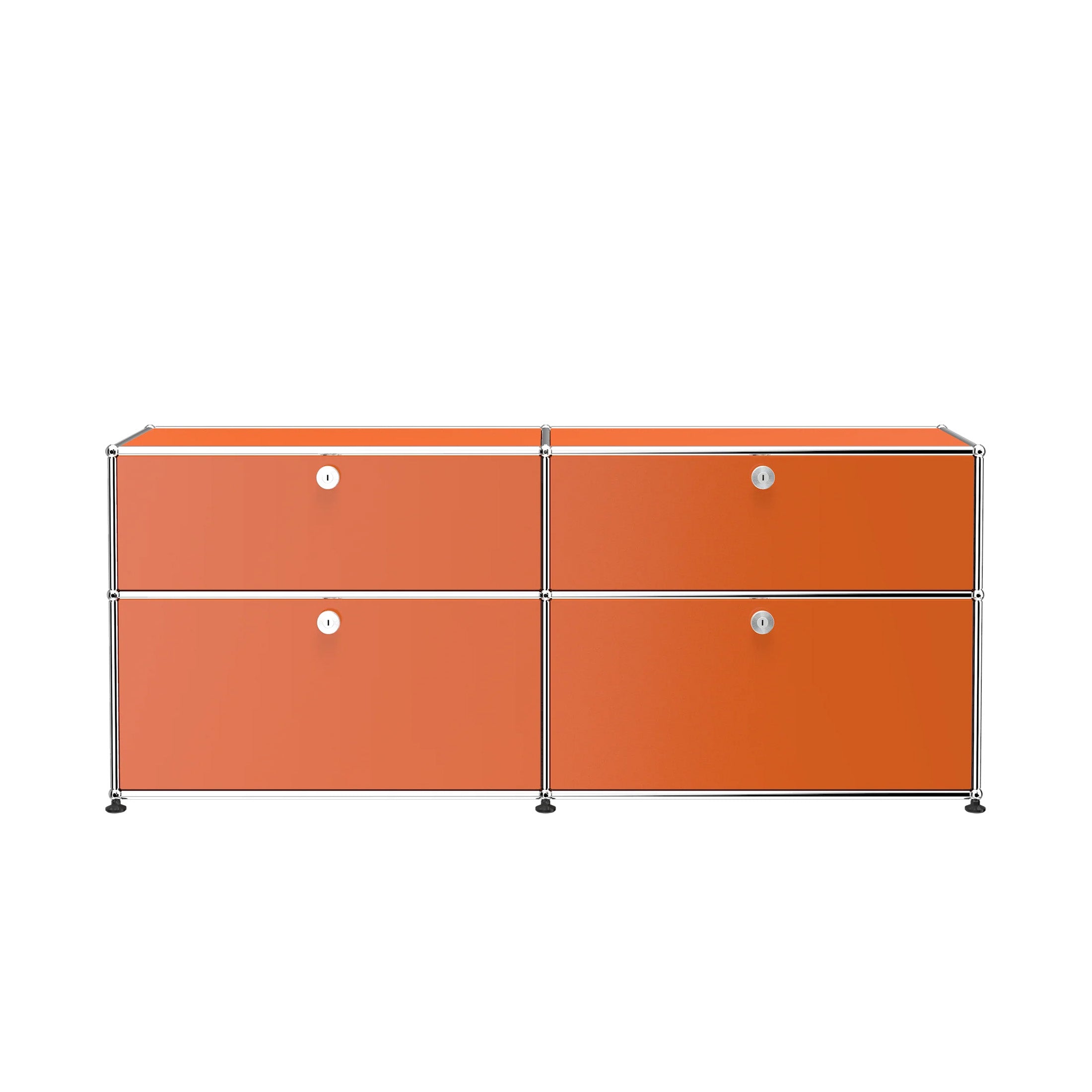
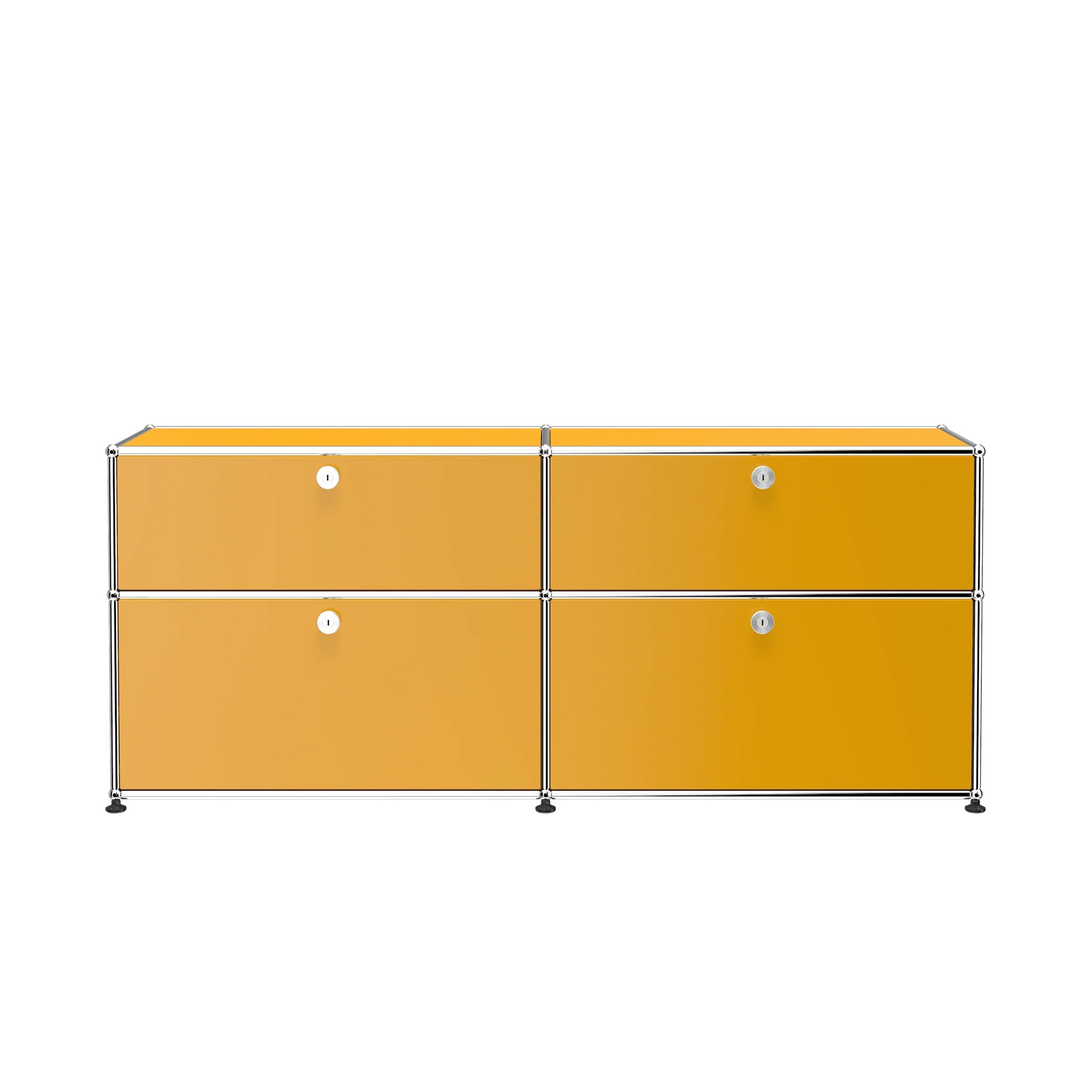
- Available in 14 standard surface colors
- Made to order, configurable over time
USM Haller pieces carry no expiration date. The system's openness to reconfiguration means this credenza can be expanded or repurposed as needs change, a quality that separates it from nearly every other storage object of comparable stature.
Made to order by USM Haller, tailored to you.
Get customization options, swatch samples and pricing for your project.
Pairs Well With
Mid-Credenza (D)
Product Details
Resources
Pricing & Warranty
Pricing for made-to-order items varies based on configuration, finishes, and customization options. Please contact one of our design consultants or visit a showroom near you for current pricing and personalized assistance.
Luminaire is an authorized retailer of USM Haller. The product comes with a full manufacturer warranty.
Authenticity guaranteed. Genuine product, authenticated and sourced directly from the manufacturer.
Frequently Asked Questions
Who designed the USM Haller system?
The USM Haller system was designed in the 1960s by Swiss architect Fritz Haller in collaboration with Paul Schärer, then head of the USM company. Haller developed the ball-and-tube connector system originally to design USM's own factory and office buildings, and the furniture system evolved directly from that architectural thinking.
Can USM Haller pieces be reconfigured after purchase?
Yes. One of the defining qualities of the USM Haller system is that individual components, panels, doors, and frames can be added, removed, or rearranged over time. This modularity means a credenza can be expanded into a shelving unit or altered to suit a new space.
What colors are available for the USM Haller Mid-Credenza (D)?
The Mid-Credenza (D) is available in 14 standard surface colors, ranging from neutral tones to bolder hues. USM Haller's color palette has been carefully developed over decades to work across both residential and professional interiors.
Is the USM Haller system considered an icon of modern design?
The USM Haller system is held in the permanent collections of major design museums, including the Museum of Modern Art in New York. Its ball-and-tube connector has become a recognized symbol of Swiss modernism and systems thinking in furniture design.
What is the difference between USM Haller credenza configurations?
USM Haller credenzas are offered in several widths and door configurations, each designated by a letter suffix. The (D) variant features four lockable drop-down doors, offering a wider footprint and greater hidden storage capacity than narrower configurations.