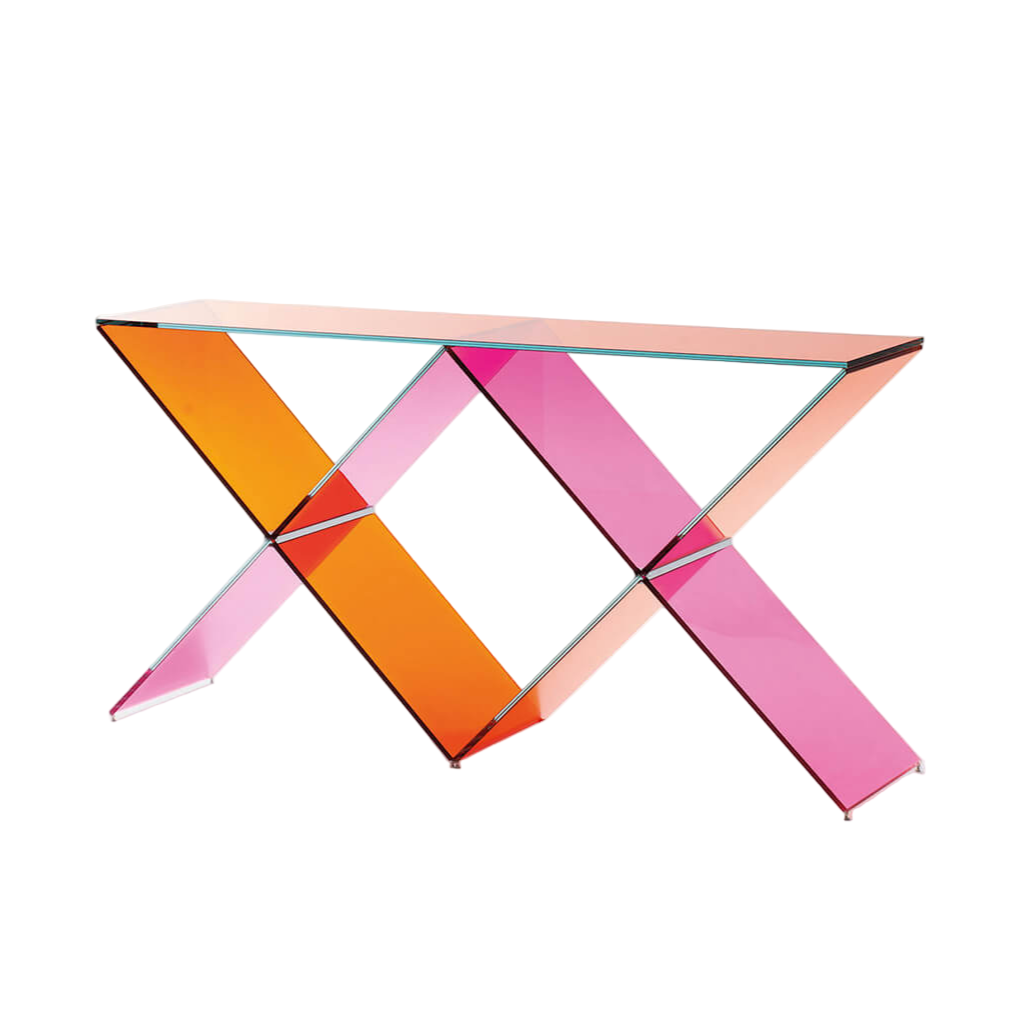


Tavolo Consolle XX
Made by Glas Italia
Designed by Johanna Grawunder
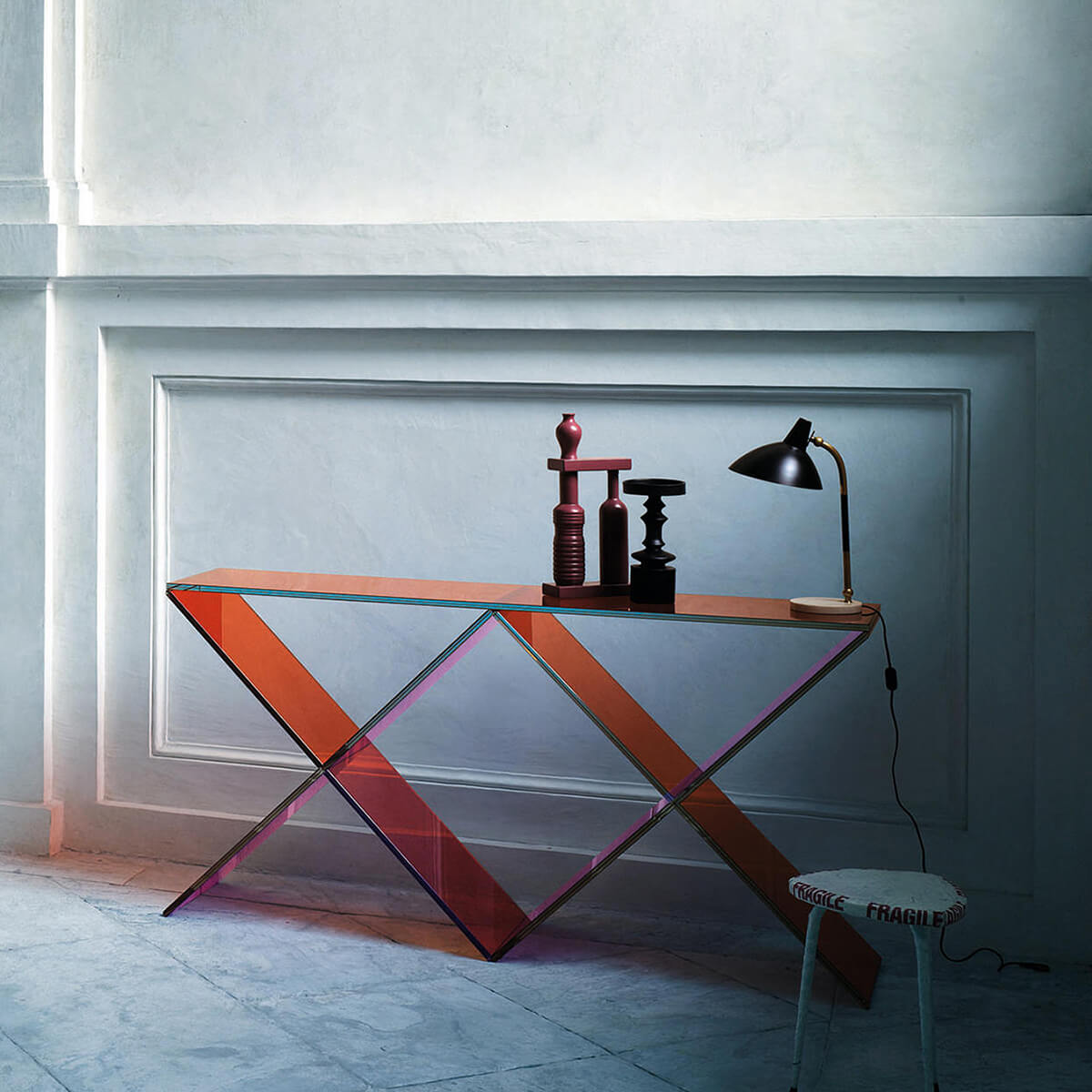
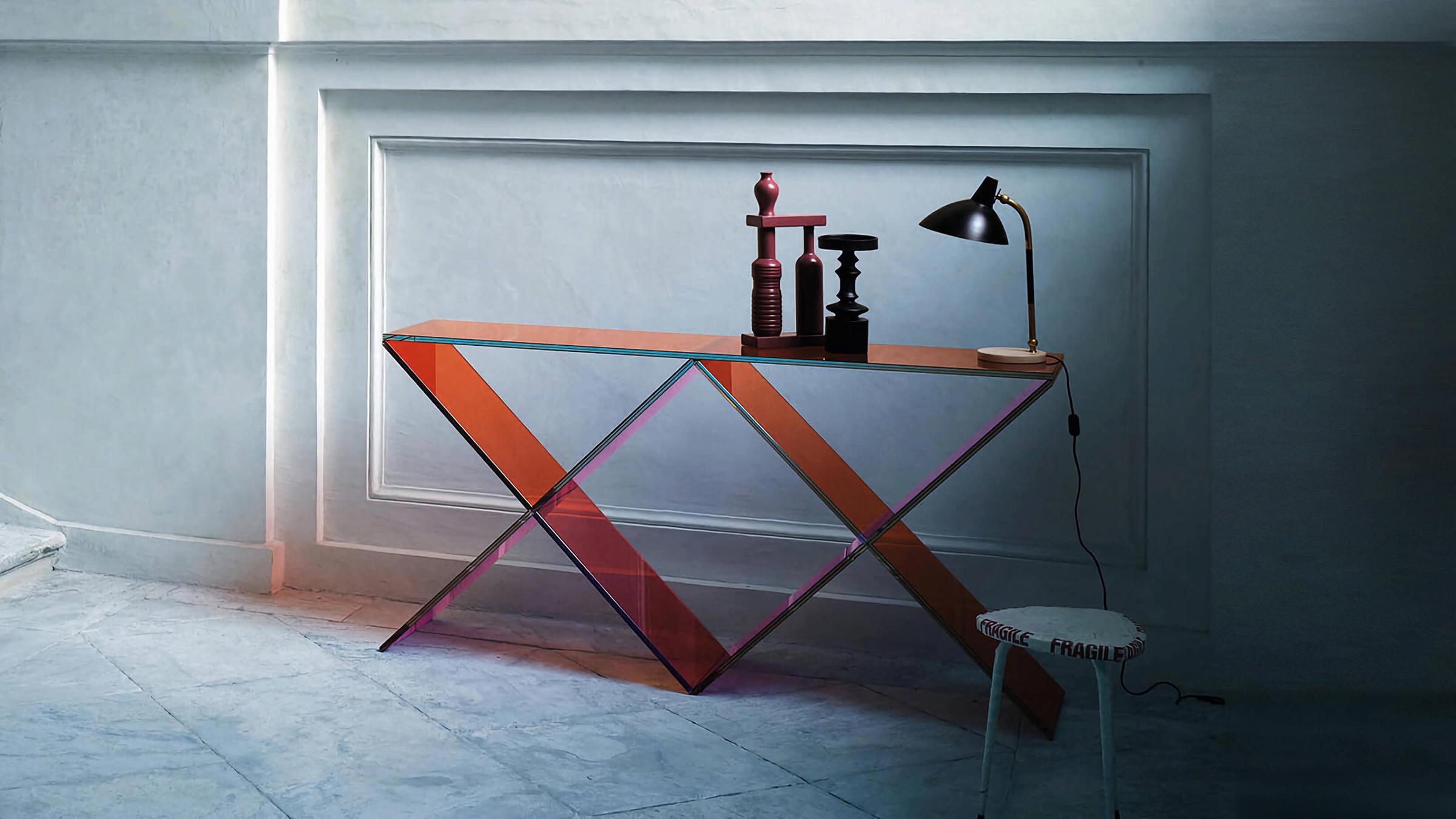
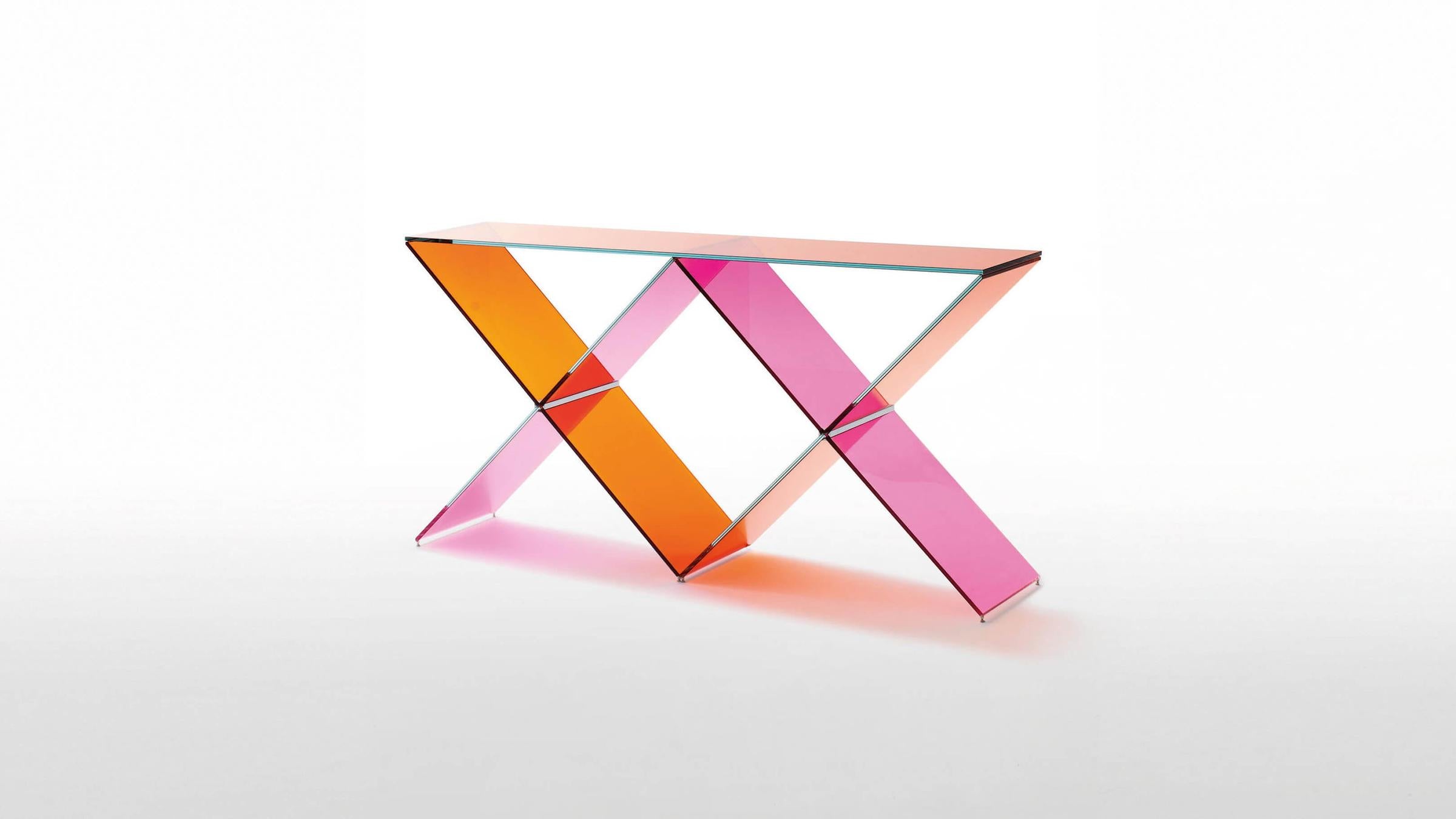
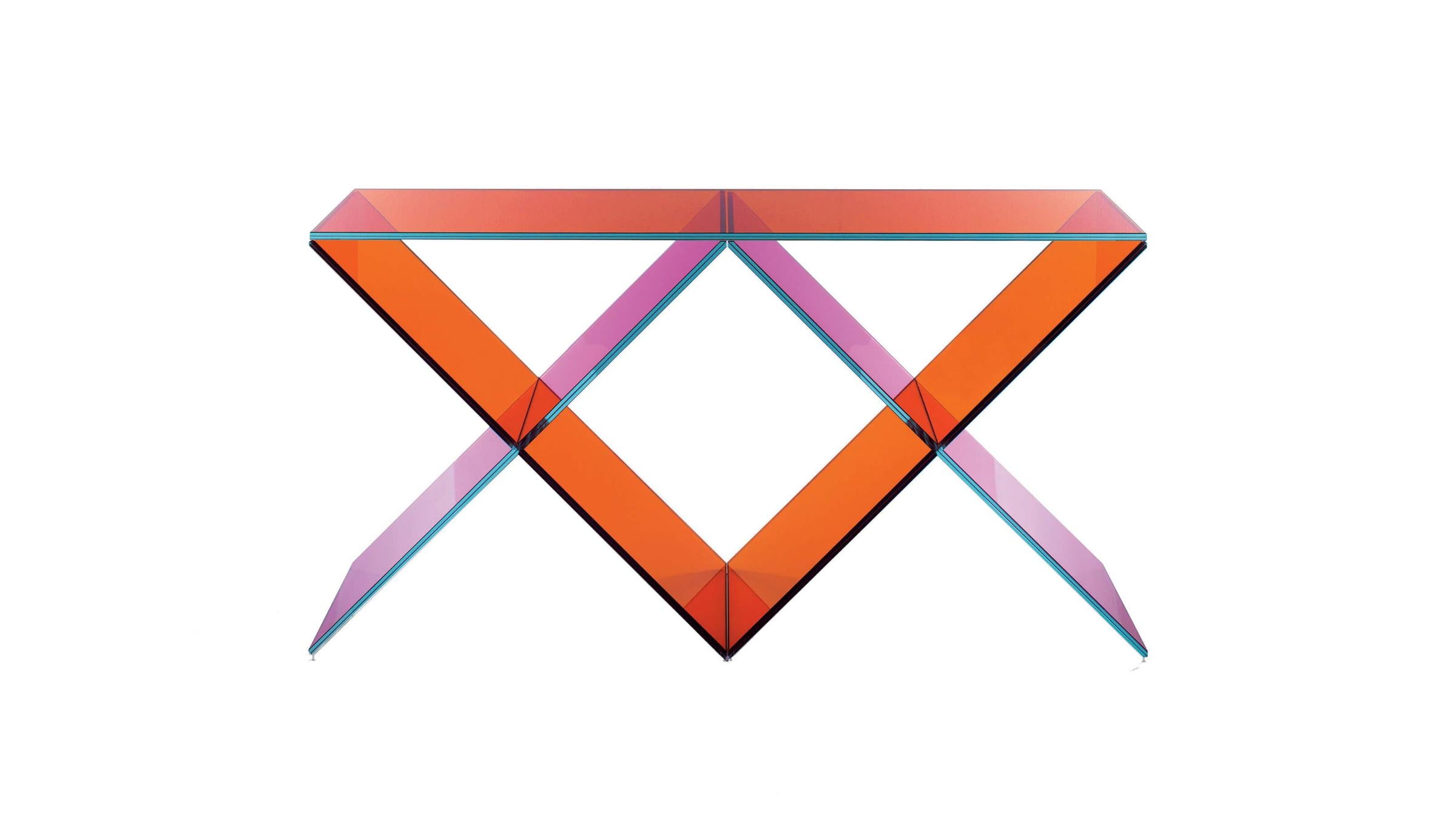
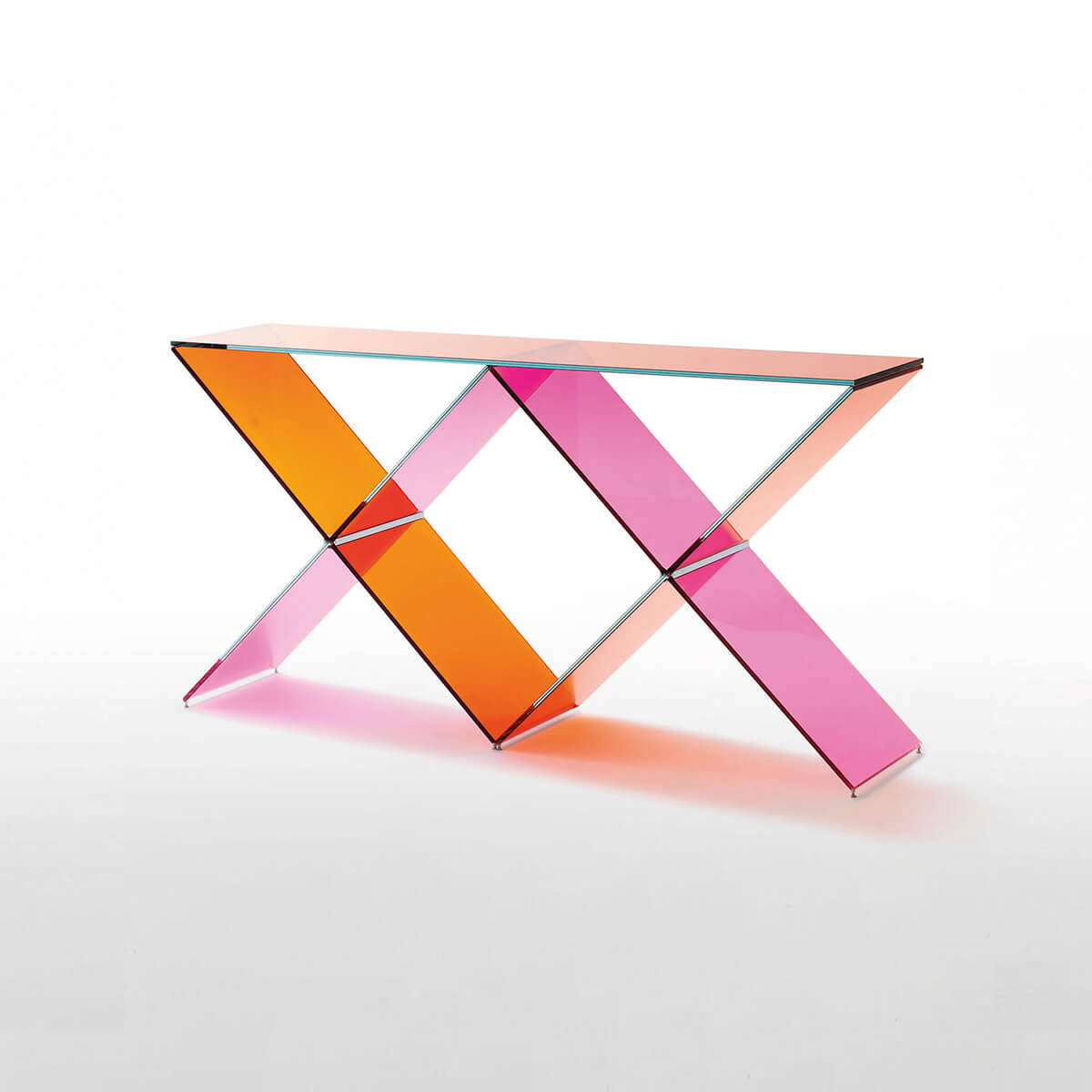
Johanna Grawunder si approccia ai mobili come si approccia alla luce: con la convinzione che il colore non sia decorazione ma struttura. La consolle XX dà forma a questa convinzione attraverso due basi a forma di X che si intersecano, ciascuna tagliata e laminata in vetro temperato spesso 3/10 di pollice, nei colori rosa trasparente e arancione. La geometria è voluta. La X è sia modulo che motivo, un'unità ripetuta che da un'angolazione si presenta come un pattern e da un'altra come puro volume.
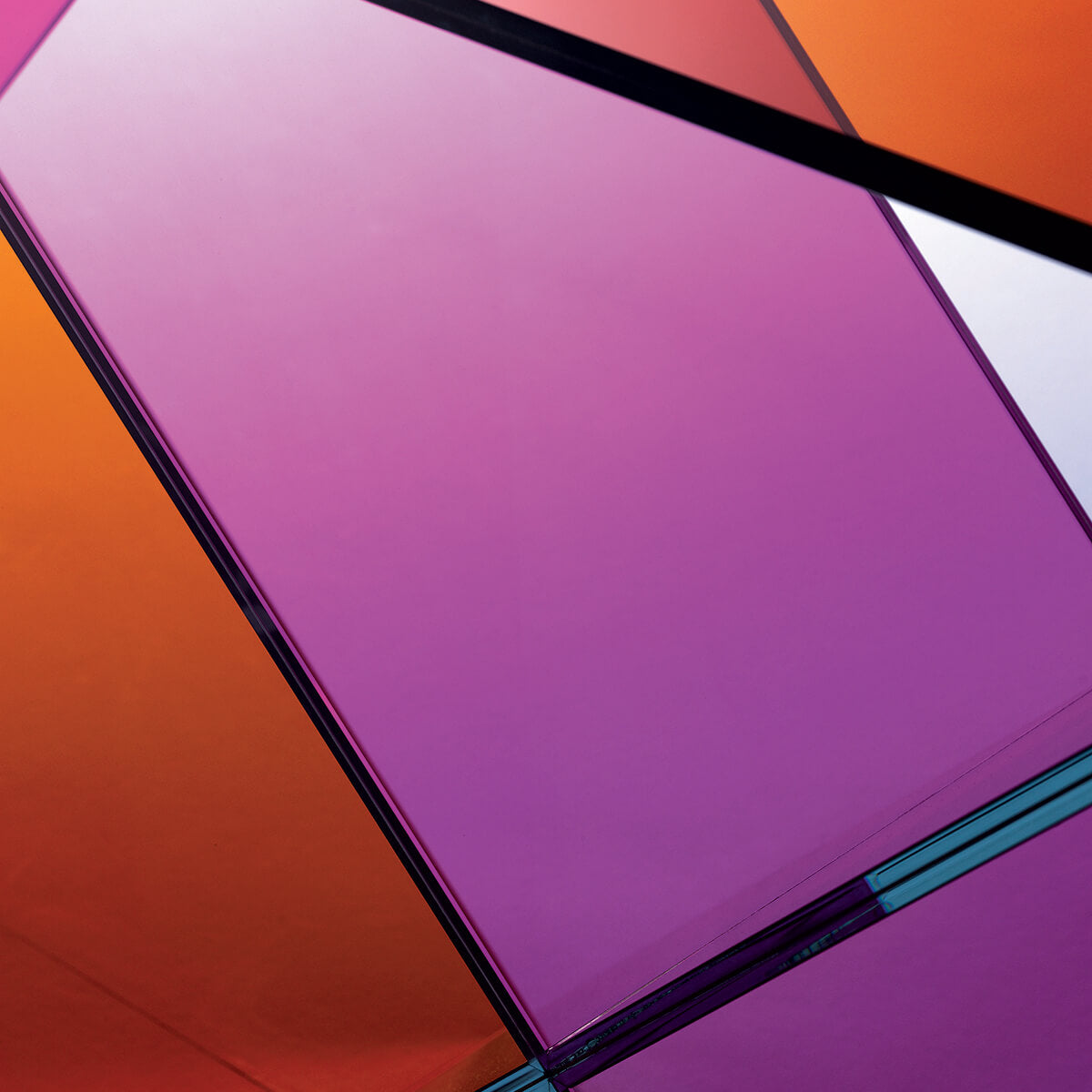
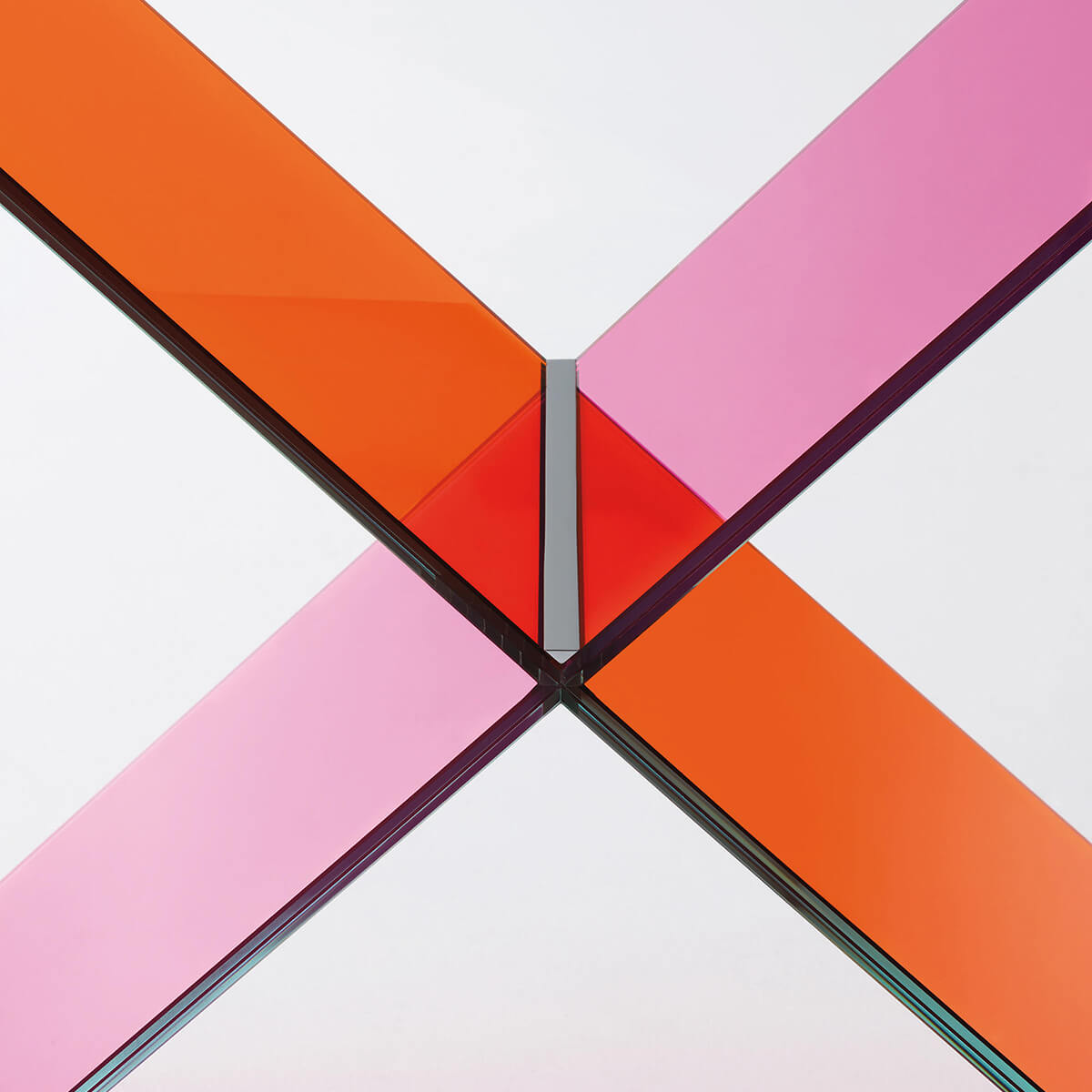
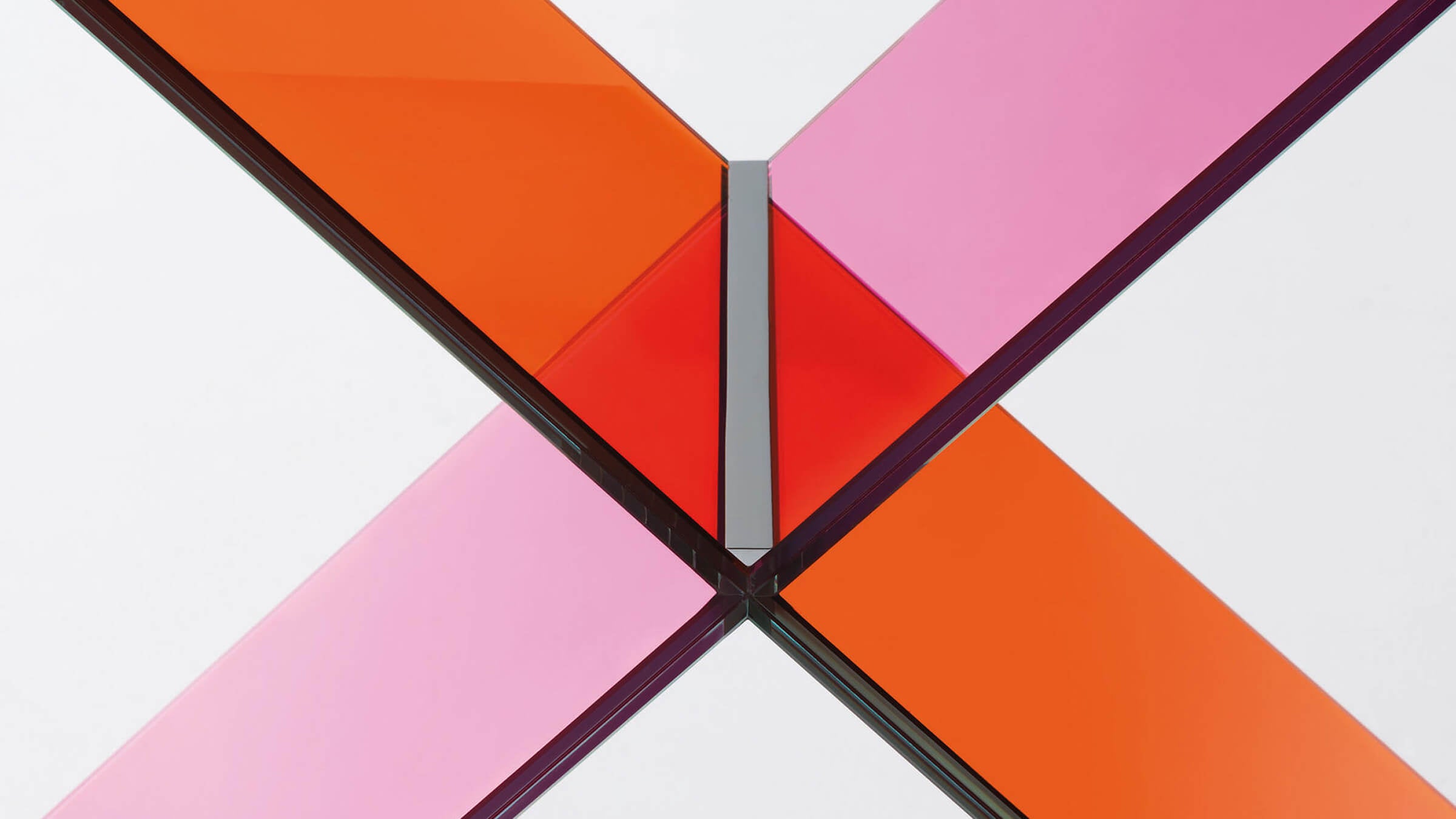
Un processo specializzato di smussatura e incollaggio affina ogni bordo, eliminando qualsiasi ruvidezza industriale e permettendo ai piani in vetro di incontrarsi con silenziosa precisione. Elementi in cromo lucido segnano i giunti, introducendo un accento metallico che riflette il vetro colorato su se stesso. Il piano, anch'esso in vetro laminato, poggia sulla base senza fronzoli, la sua trasparenza preserva la continuità visiva della struttura sottostante.
- Basi in vetro temperato e stratificato, rosa trasparente e arancione
- Spessore vetro: 3/10 di pollice, smussato e incollato
- Elementi metallici in cromo lucido sui giunti
- Piano in vetro stratificato
- Fatto su ordinazione
Made to order by Glas Italia, tailored to you.
Get customization options, swatch samples and pricing for your project.
Si abbina bene a
Tavolo Consolle XX
Product Details
Measurements
Resources
Pricing & Warranty
Pricing for made-to-order items varies based on configuration, finishes, and customization options. Please contact one of our design consultants or visit a showroom near you for current pricing and personalized assistance.
Luminaire is an authorized retailer of Glas Italia. The product comes with a full manufacturer warranty.
Authenticity guaranteed. Genuine product, authenticated and sourced directly from the manufacturer.
Domande Frequenti
Who is Johanna Grawunder?
Johanna Grawunder is an American architect and designer based between San Francisco and Milan. She spent over a decade as a partner at Sottsass Associati before establishing her own practice, working at the intersection of architecture, light, and furniture with a consistent focus on color as a spatial and structural element.
What type of glass is used in the XX Console Table?
The bases and top are constructed from tempered and laminated glass, approximately 3/10 inch thick. Tempering provides structural resilience, while lamination bonds the layers to maintain integrity and optical clarity.
What does the chamfering process involve?
Chamfering is a precision grinding and polishing technique applied to glass edges, removing sharp corners and producing a smooth, angled profile. On the XX Console, it refines each joint and contributes to the overall refinement of the assembled form.
Is the XX Console Table available in other colors?
The piece is made to order, and Glas Italia's production capabilities allow for consultation on colorways. Contacting a design expert is the appropriate step to discuss available configurations.
How does colored glass behave in different lighting conditions?
Transparent colored glass shifts in character depending on the quality and direction of light. In strong natural light it projects color onto surrounding surfaces; in diffused or artificial light it reads as a denser, more saturated tone. This variability is a defining quality of Grawunder's use of glass.