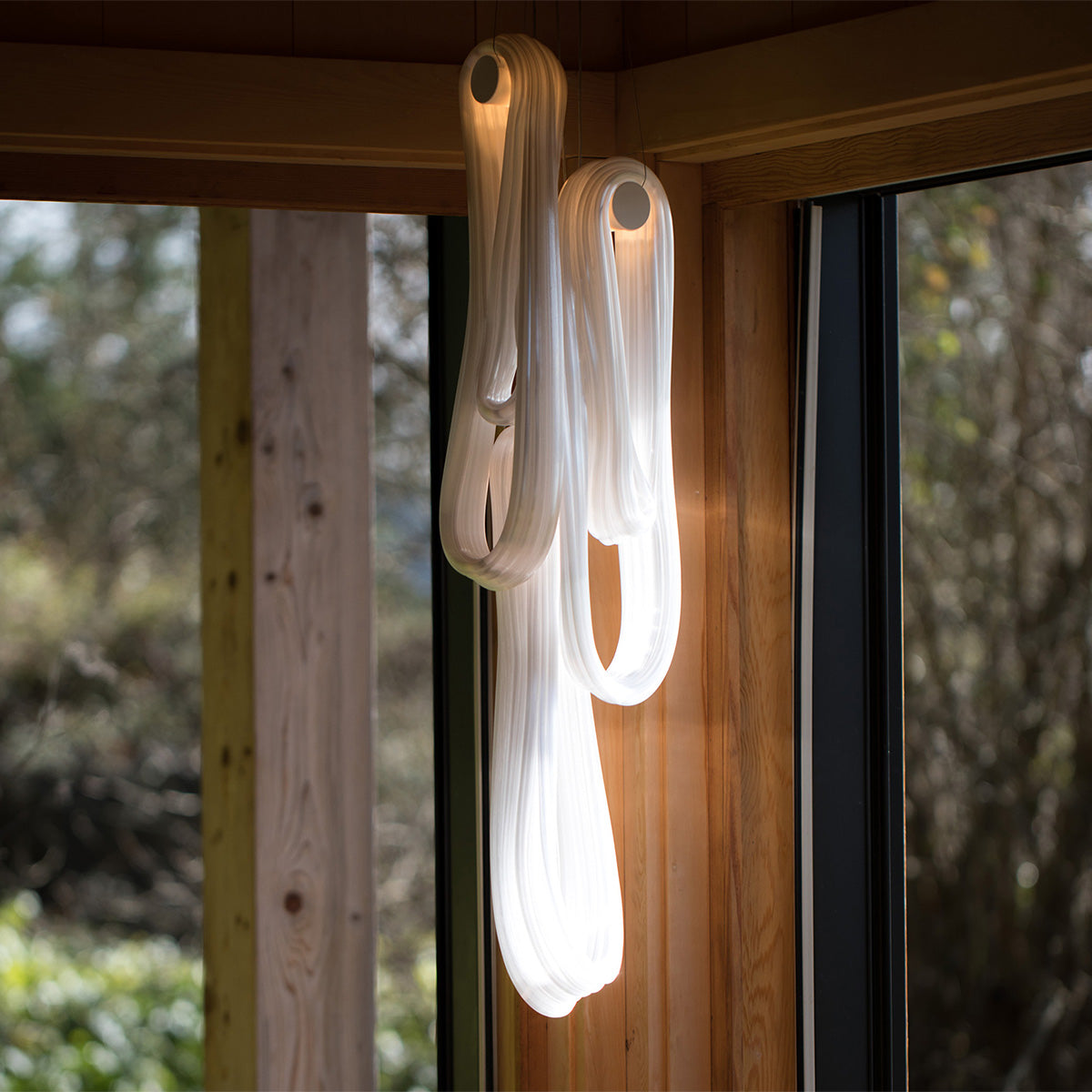

Sospensione Serie 87
Made by Bocci
Designed by Omer Arbel
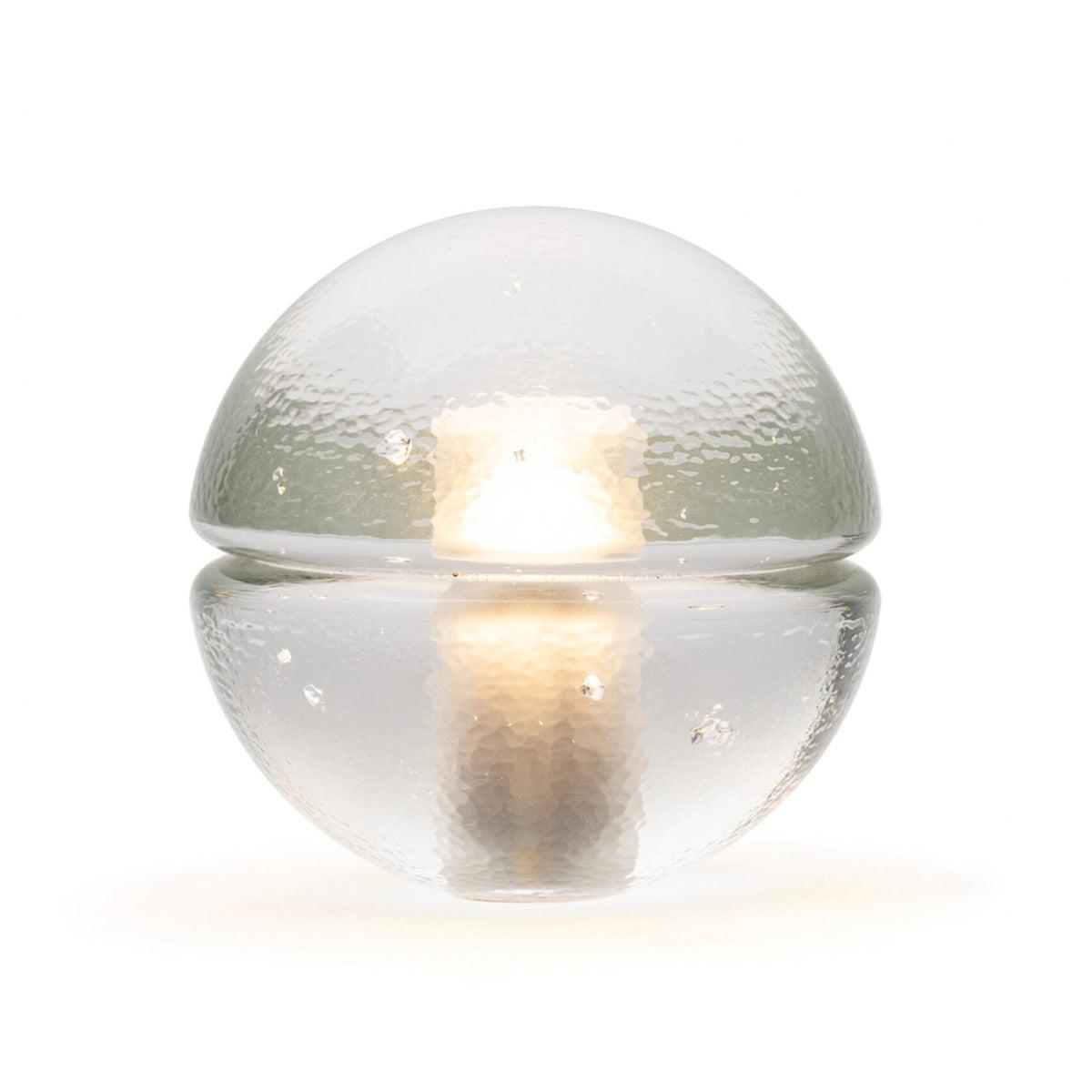
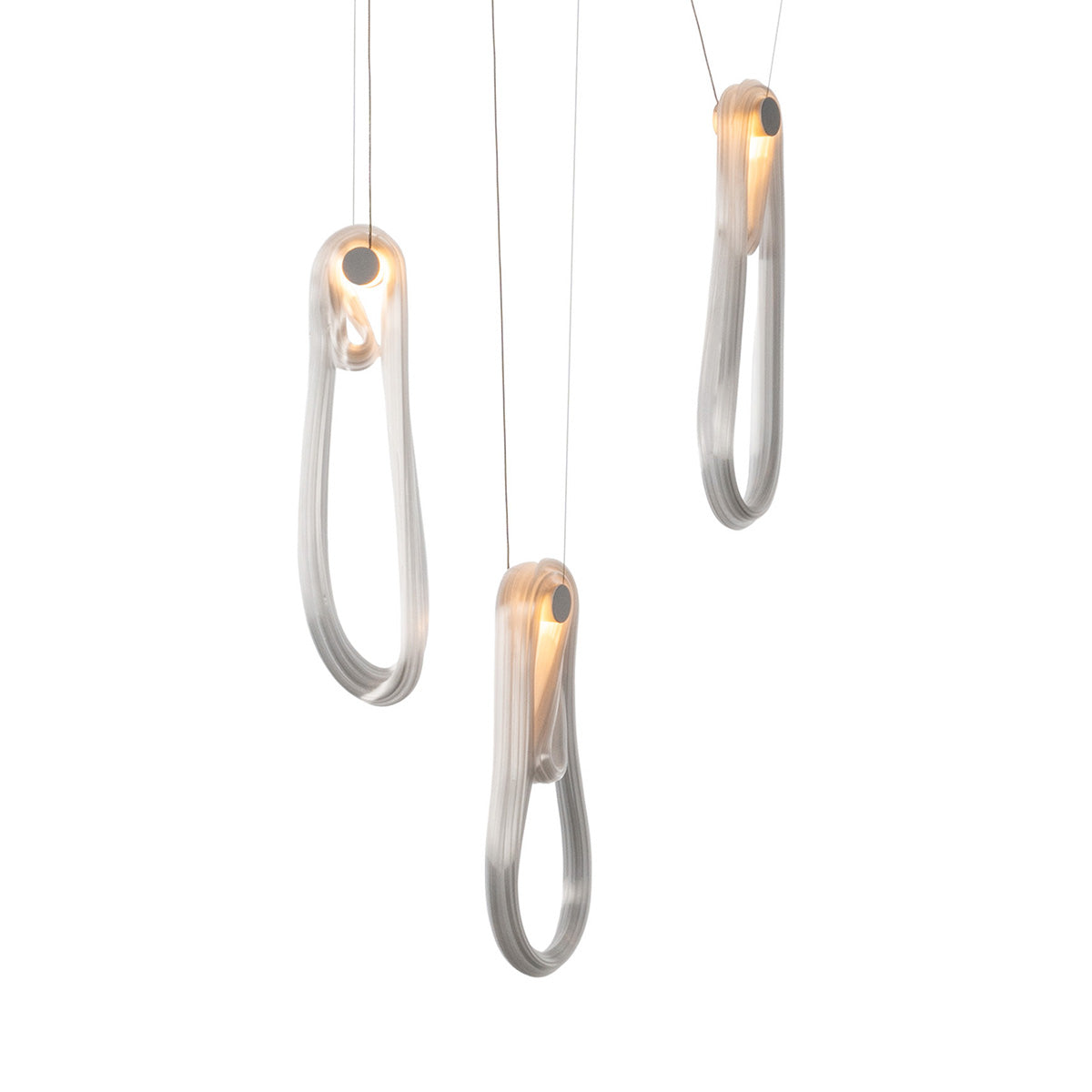
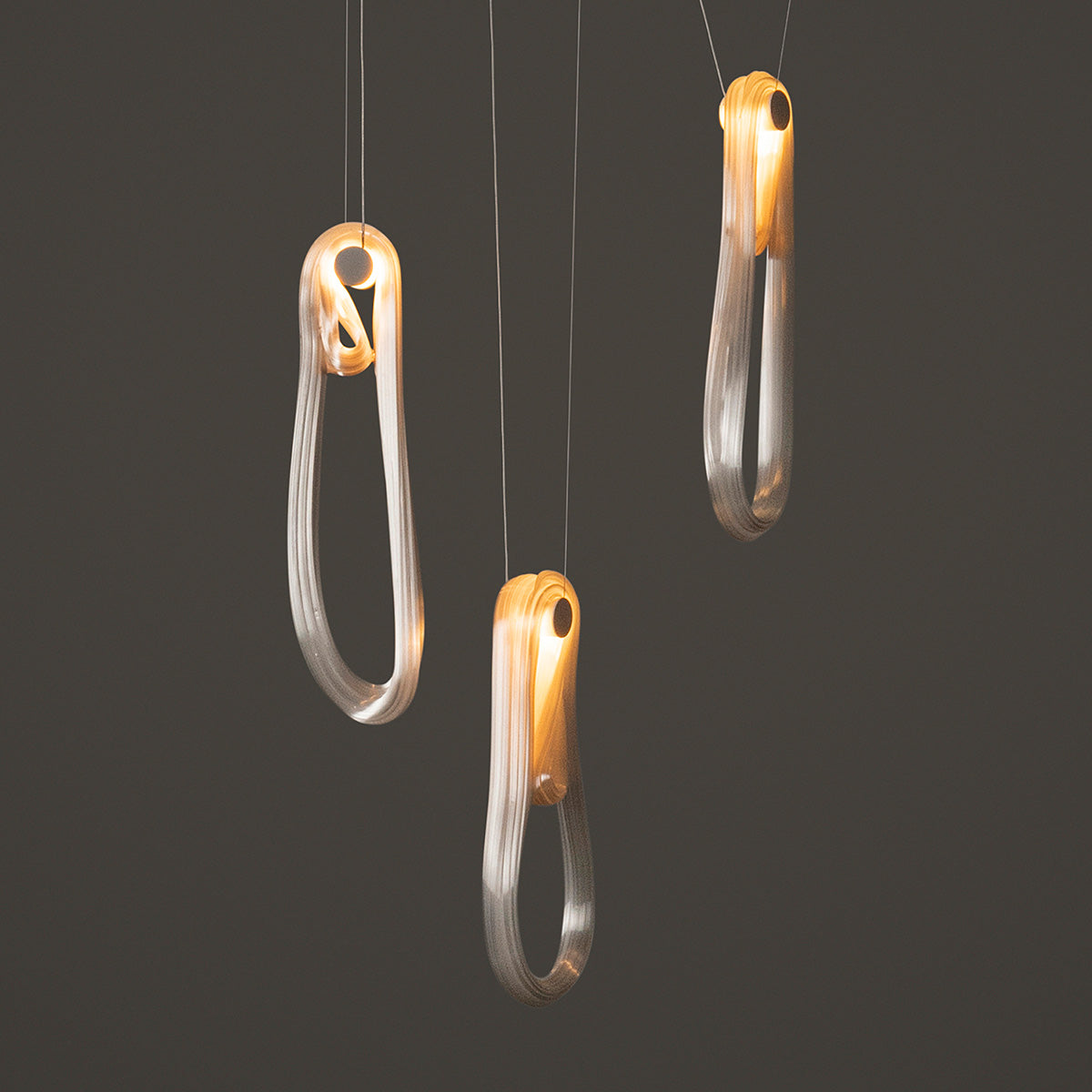
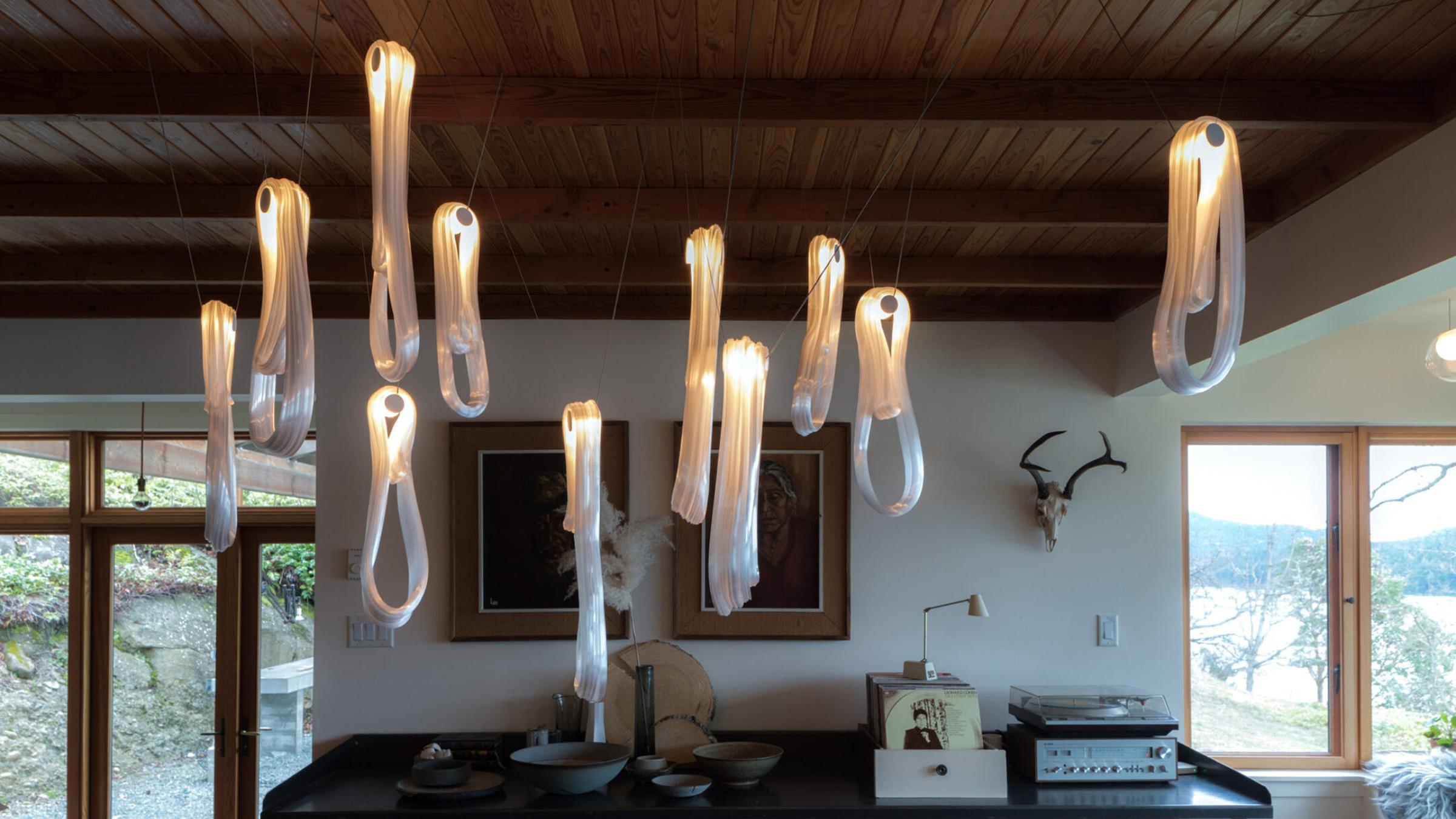
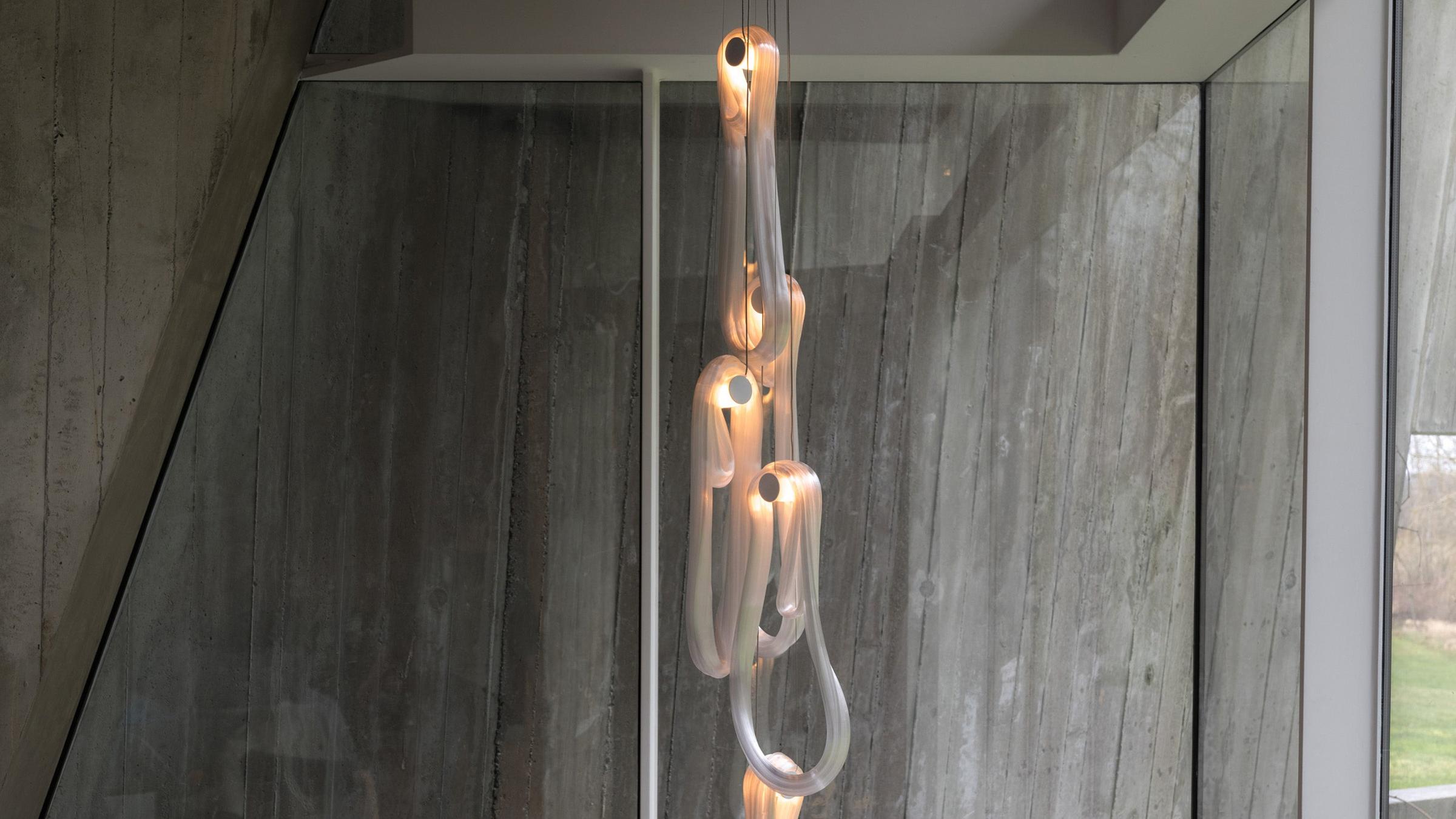
Omer Arbel ha sviluppato la Serie 87 attraverso un processo di iniezione di bicarbonato di sodio e stiramento a mano, piegando il vetro fuso in forme continue e ad anello che sembrano sfidare il proprio peso. Non esistono due pendenti identici.
Minuscole bolle d'aria sospese nelle pareti di vetro diffondono la luce in una morbida iridescenza perlacea, mentre il LED integrato traccia la fluida geometria interna di ogni pezzo. L'illuminazione calda a 2700K trasforma il vetro in una fonte di atmosfera, non una semplice funzione.
Le variazioni naturali nella proporzione, nella densità dell'anello e nel carattere della superficie conferiscono a ogni pendente una sua tranquilla individualità, una qualità inseparabile dal processo di formatura a mano.
- Formato tramite iniezione di bicarbonato di sodio e stiramento del vetro
- LED integrato con temperatura colore di 2700K
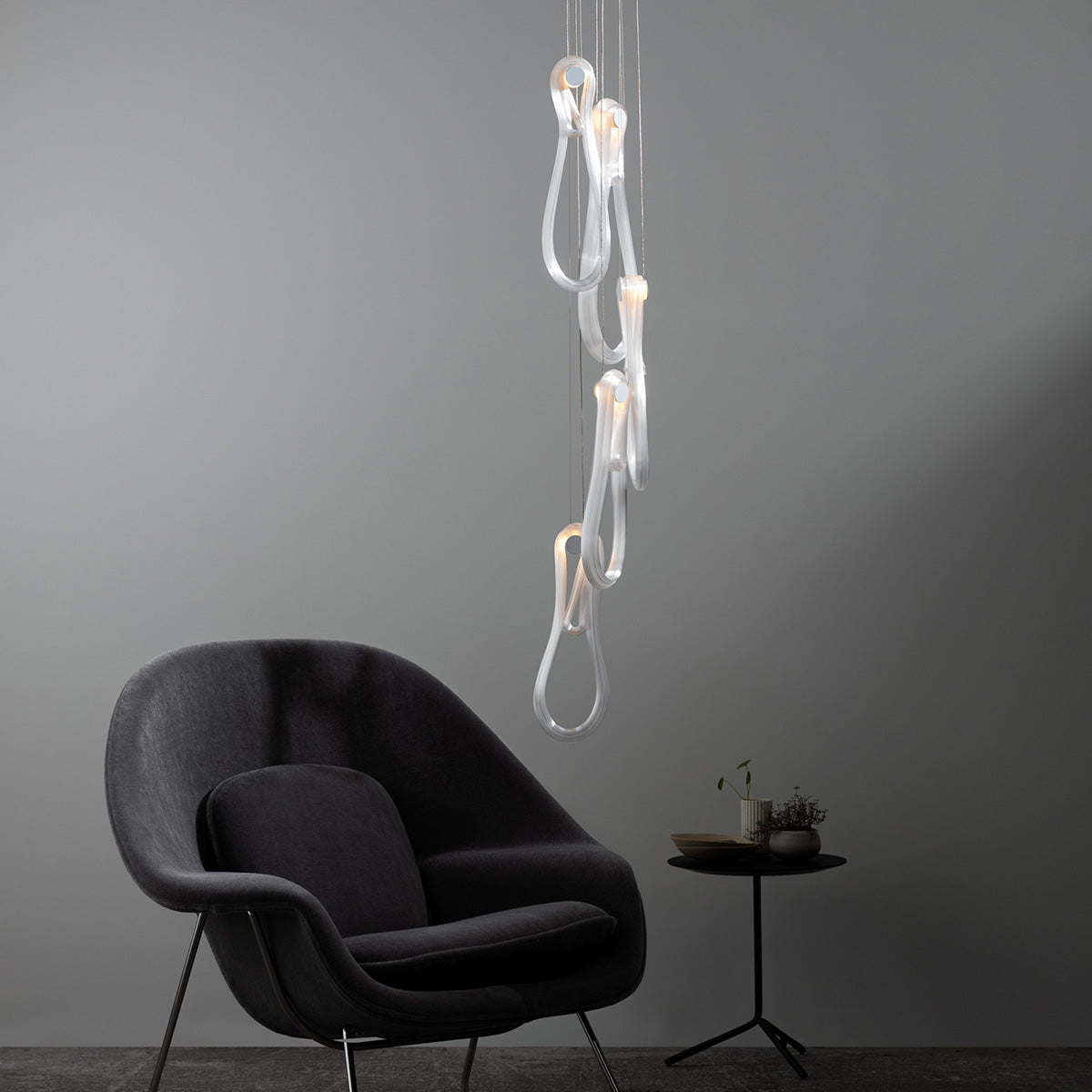
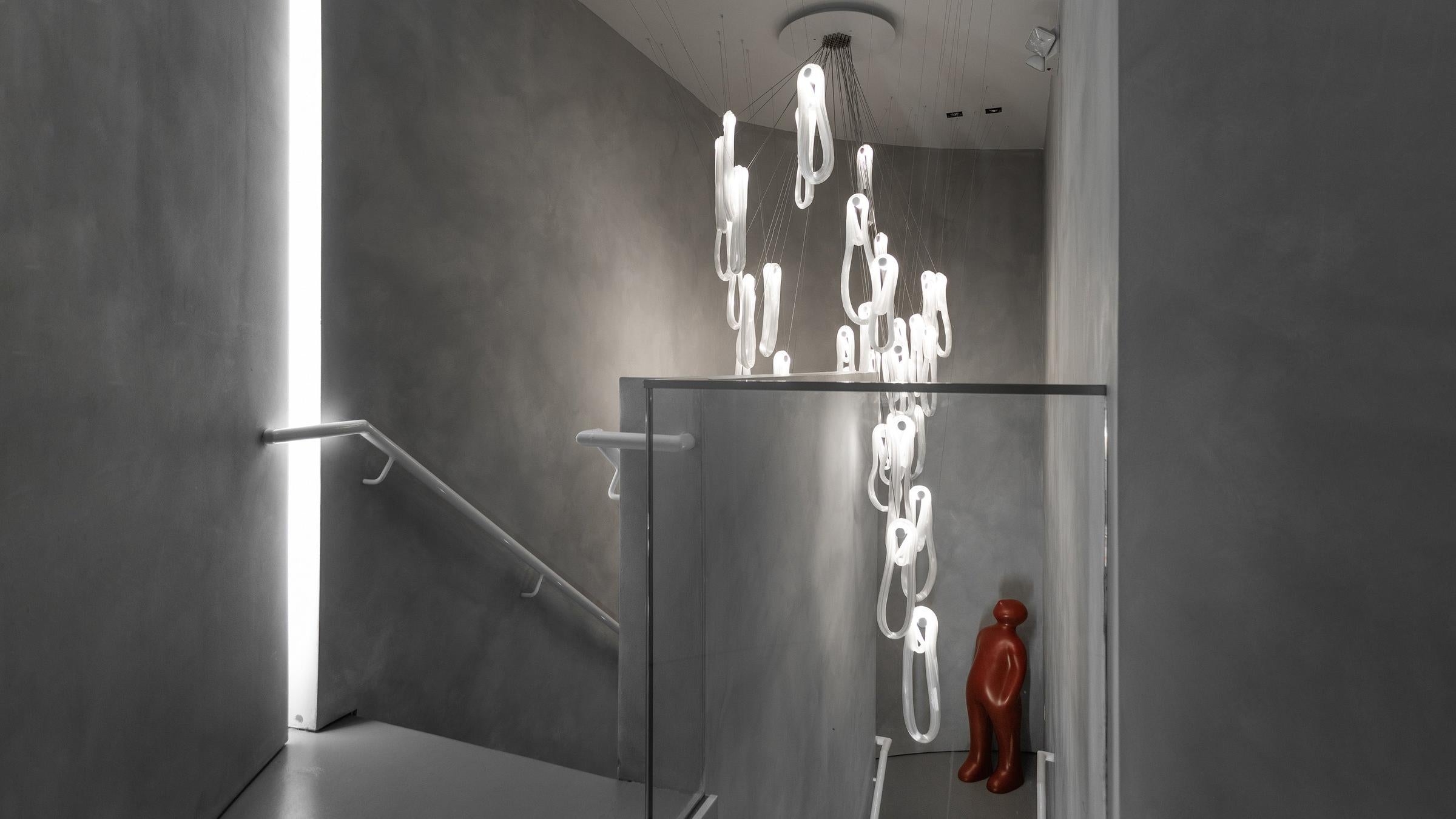
- Disponibile come singolo pendente o in configurazioni personalizzate a più pendenti
- Realizzato su ordinazione
Made to order by Bocci, tailored to you.
Get customization options, swatch samples and pricing for your project.
Si abbina bene a
Sospensione Serie 87
Product Details
Tear Sheet
Pricing & Warranty
Pricing for made-to-order items varies based on configuration, finishes, and customization options. Please contact one of our design consultants or visit a showroom near you for current pricing and personalized assistance.
Luminaire is an authorized retailer of Bocci. The product comes with a full manufacturer warranty.
Authenticity guaranteed. Genuine product, authenticated and sourced directly from the manufacturer.
Domande Frequenti
How is the Bocci 87 Series glass formed?
Each pendant is made by injecting sodium bicarbonate into molten glass, which is then hand-stretched into looped, continuous forms. This process suspends tiny air bubbles within the glass walls, producing the characteristic pearlescent light diffusion.
Are all Bocci 87 Series pendants unique?
Yes. Because each piece is hand-formed, natural variation in loop density, proportion, and surface character is inherent to the process. No two pendants are identical.
What color temperature does the 87 Series use?
The integrated LED source is calibrated to 2700K, a warm tone that reinforces the intimate, atmospheric quality of the glass.
Can the 87 Series be configured as a chandelier or cluster?
Yes. The 87 Series is available as a single pendant or in custom multi-pendant arrangements, making it suitable for large-scale residential and commercial installations.
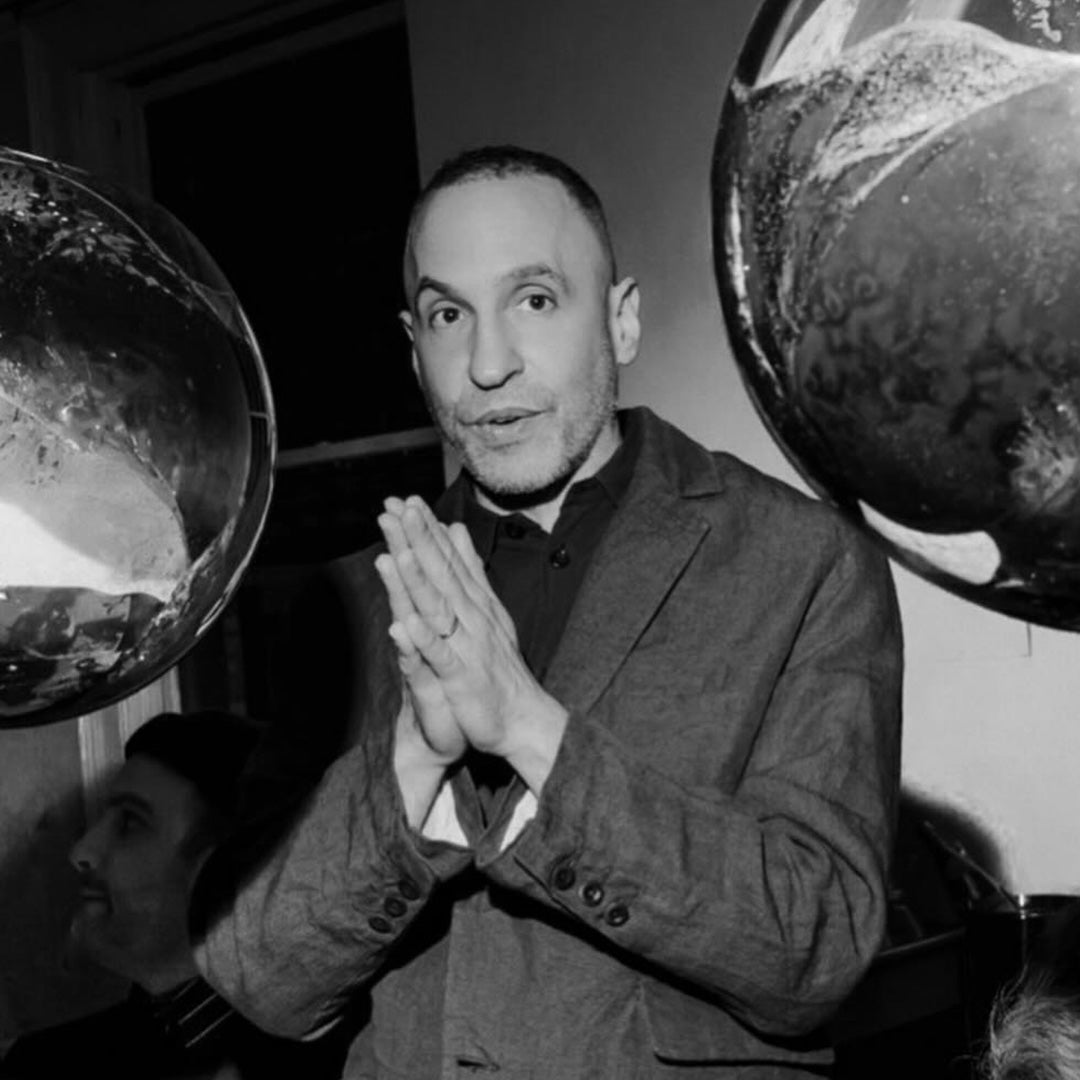
Who is Omer Arbel?
Omer Arbel is a Canadian architect and designer and the creative director of Bocci, a Vancouver-based studio known for experimental glass lighting. His work explores process-driven making, where material behavior during production shapes the final form.