
Wiggle Stool
Made by Vitra
Designed by Frank Gehry
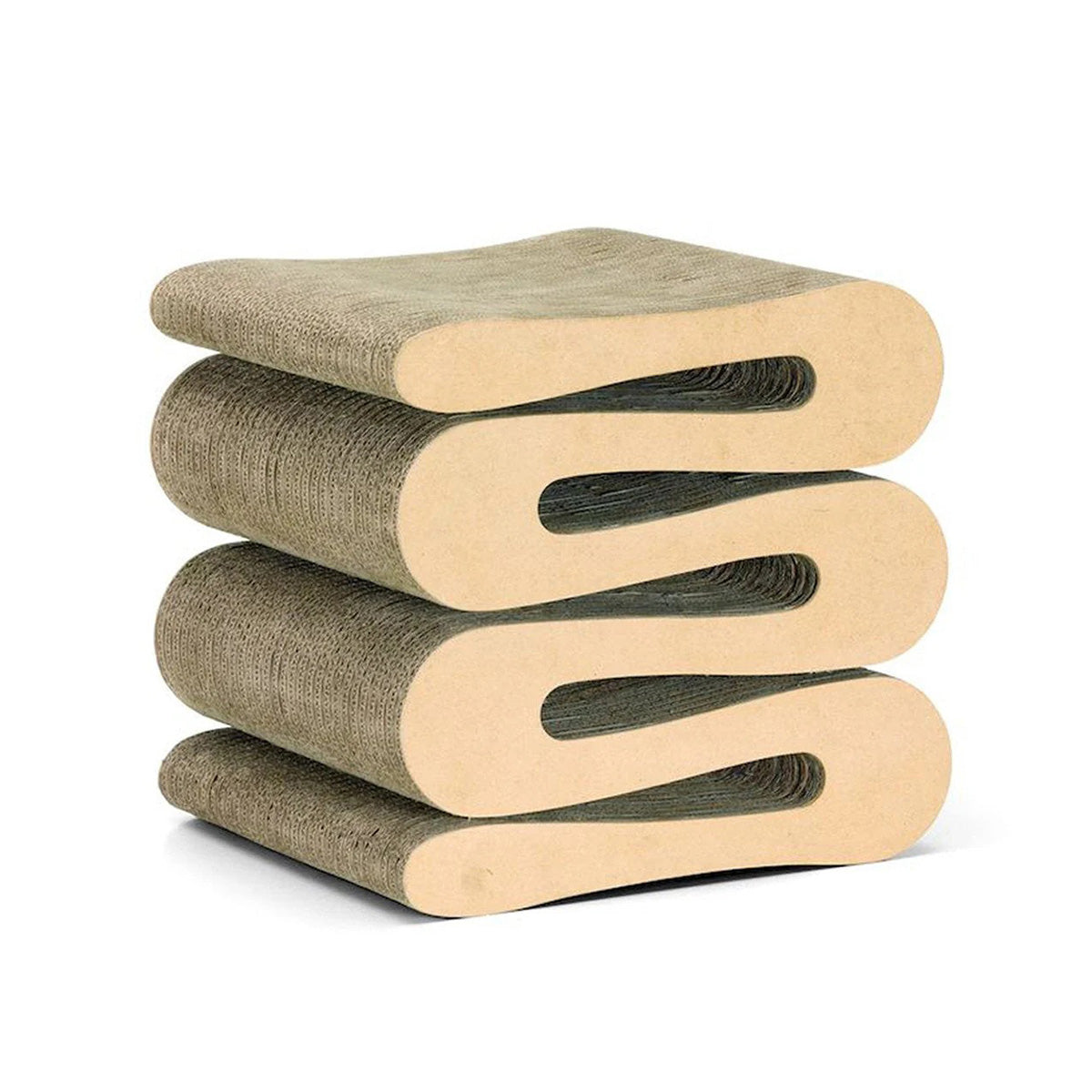
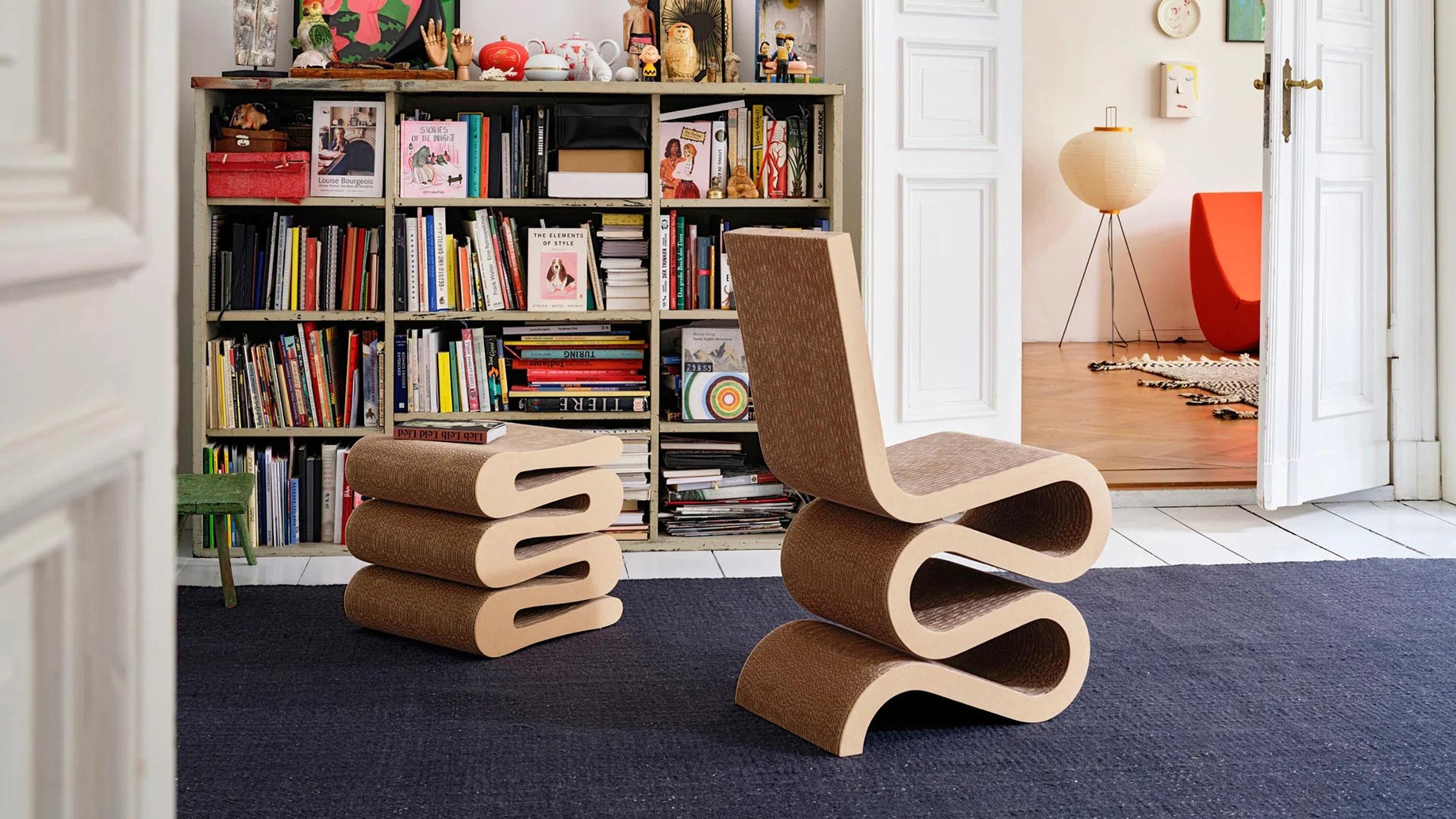
Frank Gehry conceived the Wiggle Stool in the early 1970s as part of his groundbreaking Easy Edges series, a body of work that challenged every assumption about what furniture could be made from. The material, corrugated cardboard, was chosen not despite its ordinariness but because of it. Gehry found that laminating dozens of layers at alternating grain orientations produced a composite of surprising rigidity and warmth.
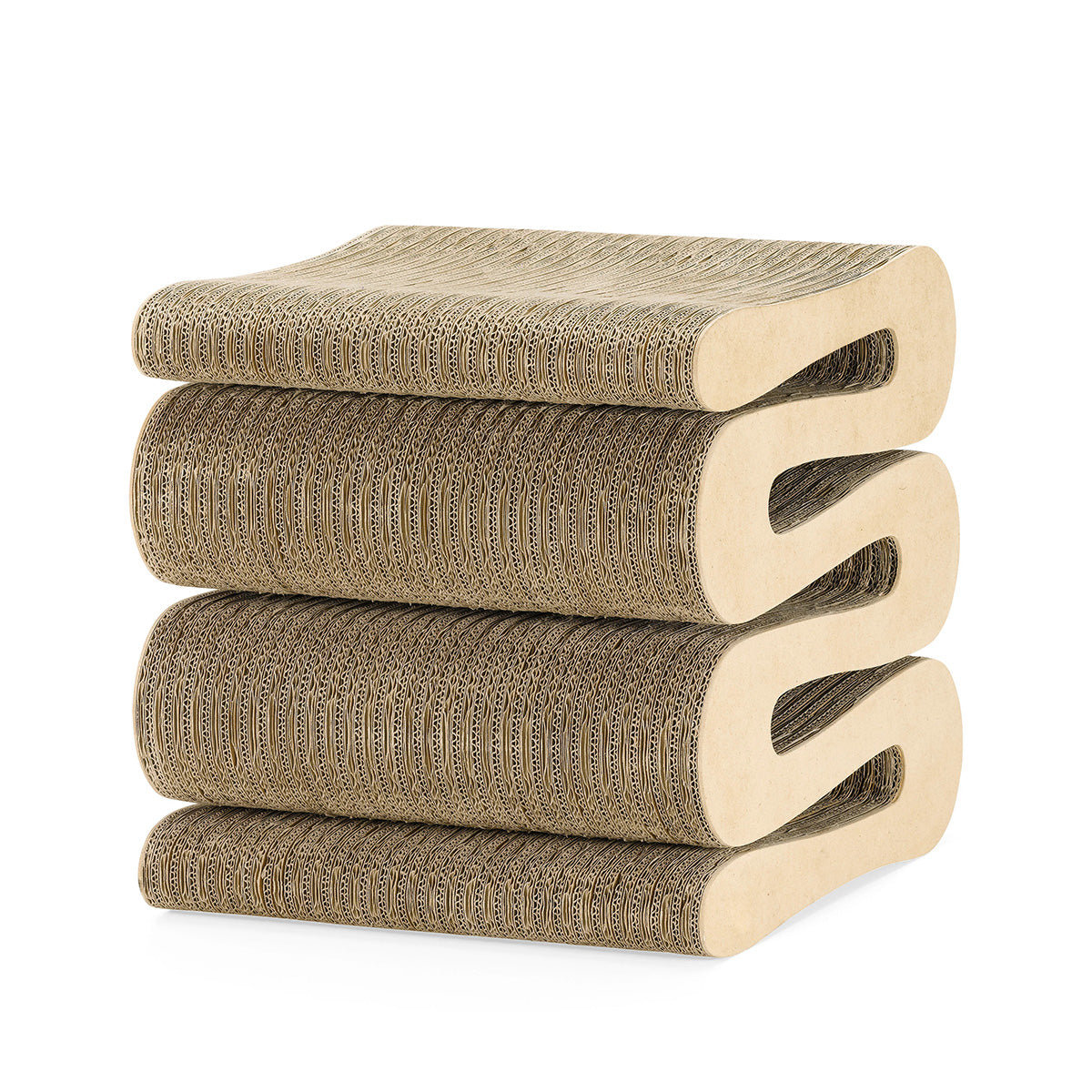
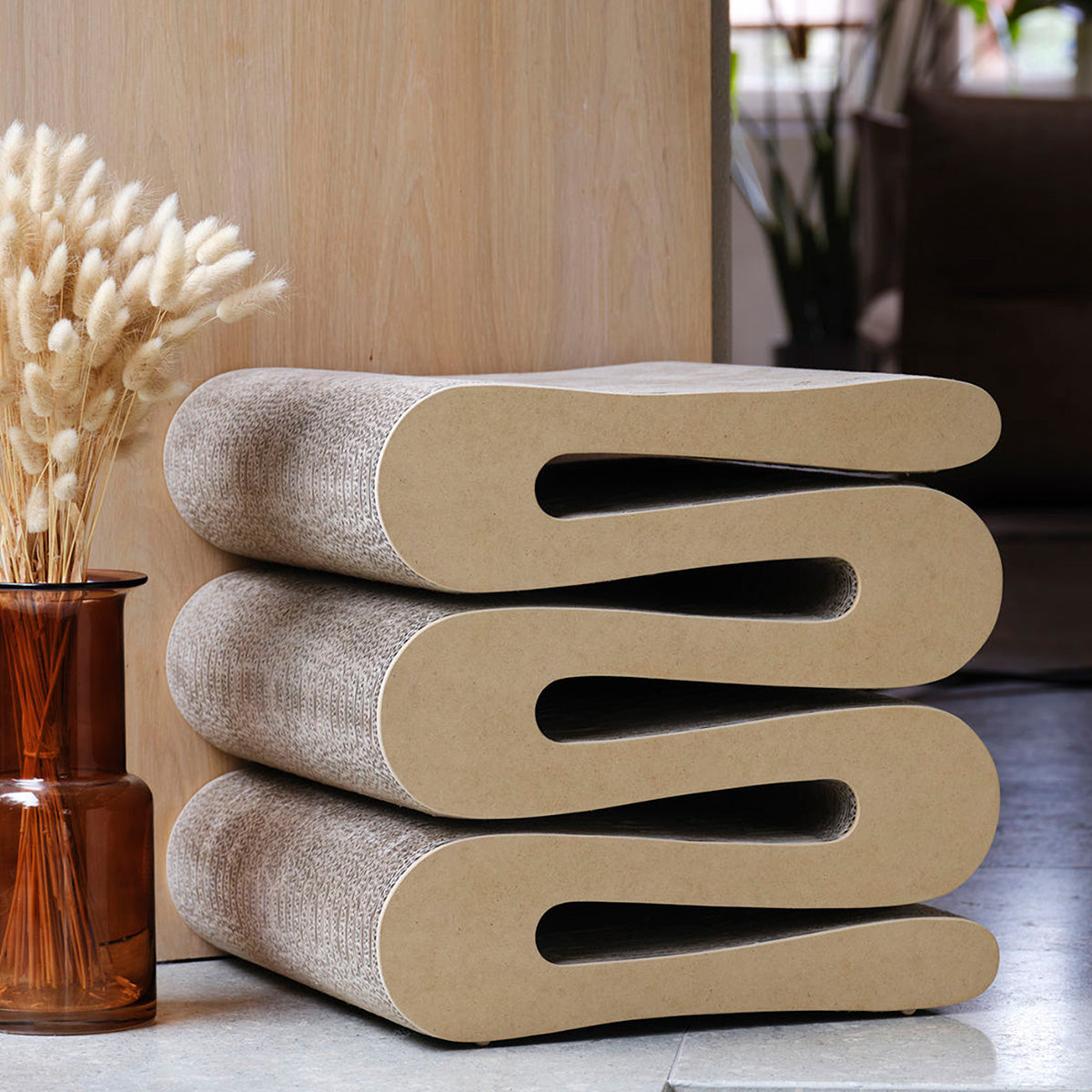
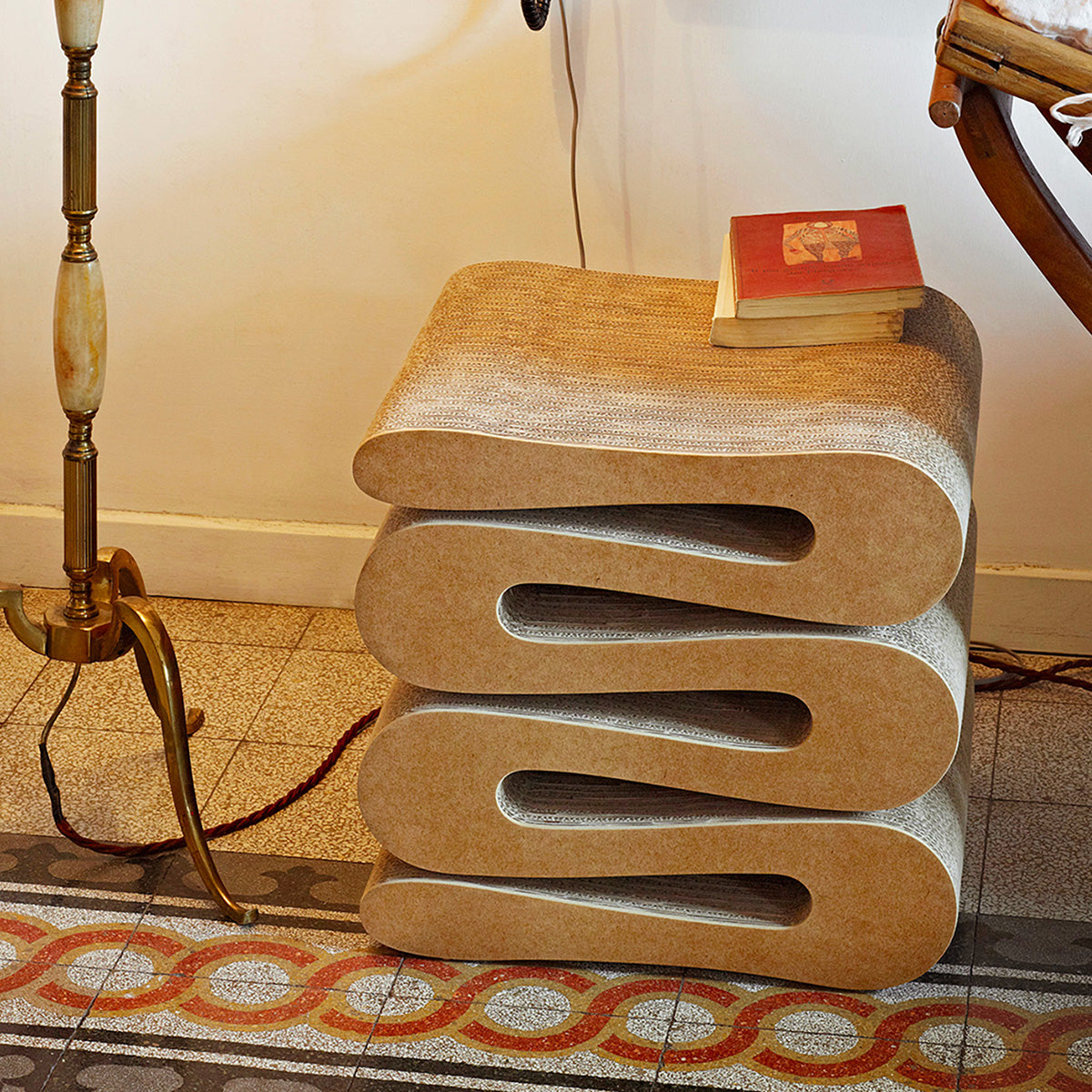
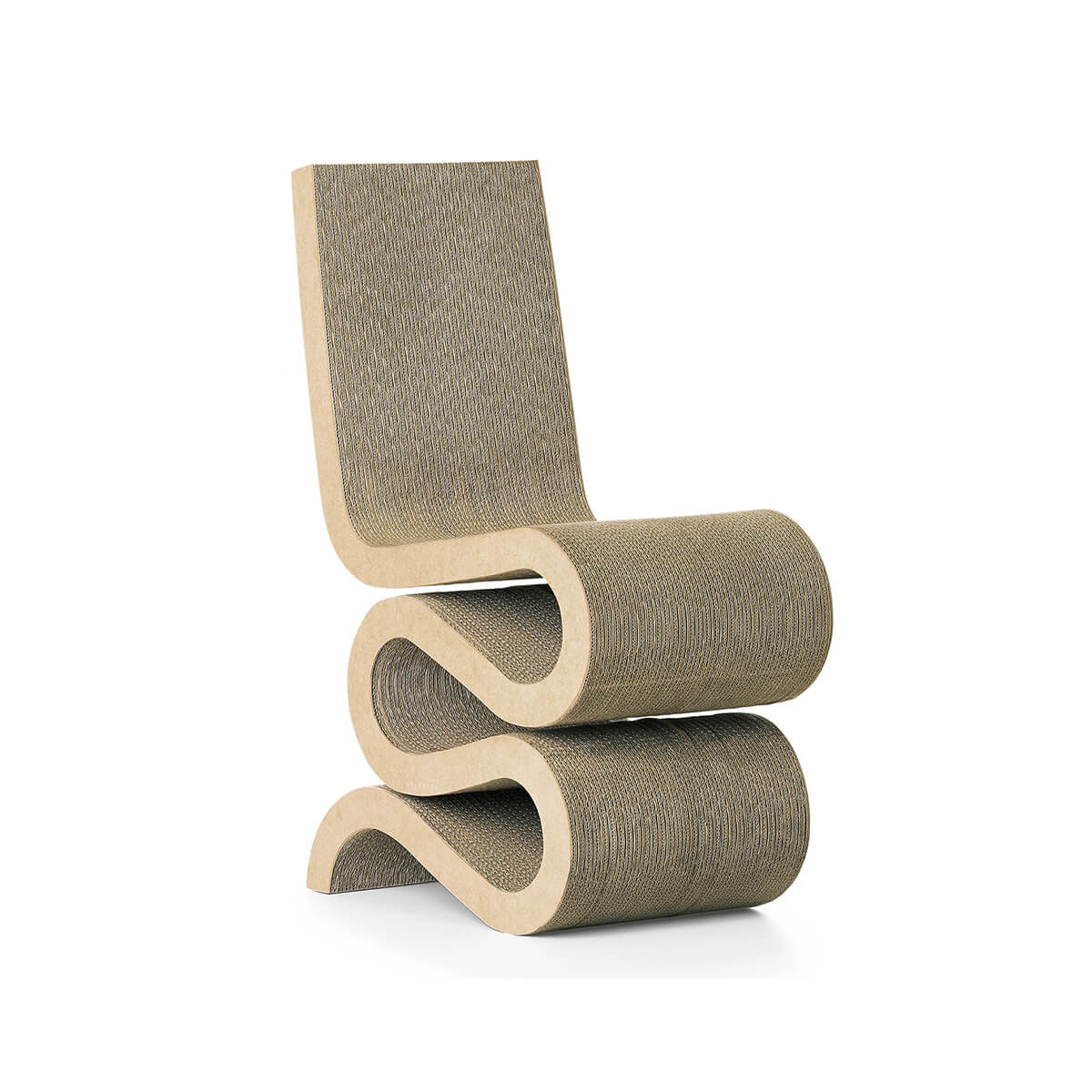
The form follows from the material. That sinuous, ribbon-like silhouette is not decoration applied to a structure - it is the structure, shaped to distribute load through curves rather than corners. The exposed hardboard edges read as fine striation, giving the piece a tactile honesty that rewards close attention.
- Constructed from layered corrugated cardboard with alternating grain orientation
- Exposed natural hardboard edges provide structural integrity and visual texture
- Part of Gehry's Easy Edges series, originally introduced in 1972
- Reissued by Vitra as part of its commitment to preserving landmark experimental design
At once sculpture and seating, the Wiggle Stool occupies a particular position in design history where architecture, art, and function converge without compromise.
Typically ships in 2-4 weeks.
Pairs well with
Wiggle Stool
Product Details
Details
Measurements
Tear Sheet
Shipping, Returns, & Warranty
Please refer to our shipping and return & exchange policy.
The product comes with a full manufacturer warranty. Luminaire is an authorized retailer of Vitra.
Authenticity guaranteed. Wiggle Stool is a genuine product, sourced directly from Vitra.
Frequently Asked Questions
What is the Easy Edges furniture series?
Easy Edges was a line of furniture Frank Gehry developed in the early 1970s, using laminated corrugated cardboard as a primary structural material. The series was deliberately low-cost in material yet ambitious in form, and it was eventually discontinued and later reissued by Vitra due to its cultural significance.
Is the Wiggle Stool structurally strong enough for daily use?
Yes. The strength comes from the lamination technique: dozens of cardboard layers are bonded with their corrugation running in alternating directions, which distributes load across the entire cross-section. Vitra has tested the stool to meet contemporary furniture safety standards.
How should the Wiggle Stool be maintained?
Because the construction is cardboard-based, the stool should be kept away from prolonged moisture or direct water exposure. Dust with a dry or very lightly dampened cloth. It is best used as an accent seat in a controlled interior environment rather than a high-traffic utility stool.
What are the dimensions of the Vitra Wiggle Stool?
The Wiggle Stool measures approximately 17 inches wide, 15 inches deep, and 17 inches high, with a seat height of roughly 17 inches. Exact specifications are confirmed in the product details and may vary slightly between production runs.
How does the Wiggle Stool relate to Gehry's broader architectural work?
The same interest in material honesty and sculptural form that defines Gehry's buildings, from Bilbao to Los Angeles, is visible in the Wiggle series. The stool treats an ordinary industrial material as a medium for spatial thinking, which is precisely the architectural instinct that distinguishes his furniture from conventional product design.


We love Vitra too!
Have any questions about this product or any other product by Vitra, get in touch! We are here to help.
-
Speak with a design consultant
We can help answer any questions you have. Give us a call.
-
Send us a message
Prefer to get an answer to your question via email? Drop us a line.