Progettare senza confini
Oltre alle nostre collezioni curate, ti aspetta un mondo di oltre 400 marchi iconici.
Per pezzi specifici, finiture o soluzioni su misura, il nostro team di progettazione è a tua disposizione.
Frequently Asked Questions
What makes Midgard lamps different from other adjustable task lamps?
Midgard lamps are defined by their mechanical integrity. The original Spring Balanced design, conceived in the 1920s, uses a steel spring counterbalance that holds position without ratchets or friction locks, a solution so resolved that it has remained essentially unchanged. Newer designs eliminate joints entirely through cable tension and fiberglass rods. These are not aesthetic references to Bauhaus principles; they are their direct application.
What is the history behind Midgard lighting?
Midgard's first adjustable lamp was invented in 1919 by Curt Fischer as a direct response to the demands of industrial labor, a lamp that could follow the worker, not the other way around. That lamp entered continuous production and has remained essentially unchanged, a mark not of nostalgia but of a design so proportionally and mechanically resolved that revision would be reduction. The brand's lineage places it at the origin of modern task lighting.
Are Midgard lamps suitable for an architectural or design-forward interior?
Midgard lamps bring a disciplined, industrial honesty that works precisely because they do not announce themselves as decorative objects. The pressed and cast steel construction, the absence of ornament, and the evident logic of each mechanical element read as coherent design, not styling. They suit spaces where structural clarity and material precision are treated as aesthetic values: studios, reading rooms, and architecturally rigorous residential interiors.
What should I know about Midgard's approach to materials and sustainability?
Midgard's material philosophy follows from the Bauhaus principle that form should reflect function without excess. The original lamps are built from pressed and cast steel, dense, durable, and authoritative in hand. More recent designs prioritize reduced material complexity and recyclability, using fiberglass rods and cable tension in place of jointed metal assemblies. The goal in both cases is longevity through resolution, not through added components.
How does the spring counterbalance mechanism in a Midgard lamp work?
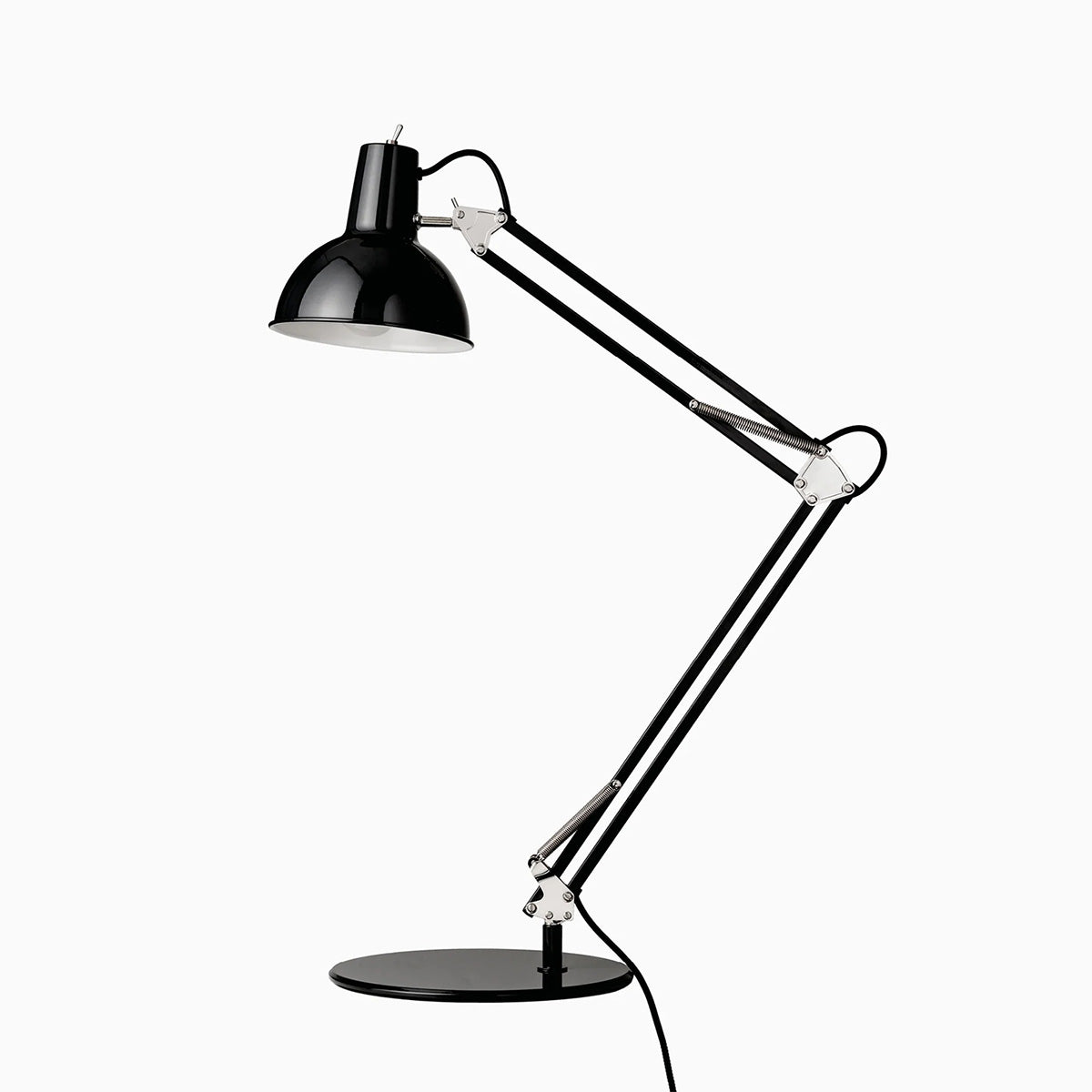
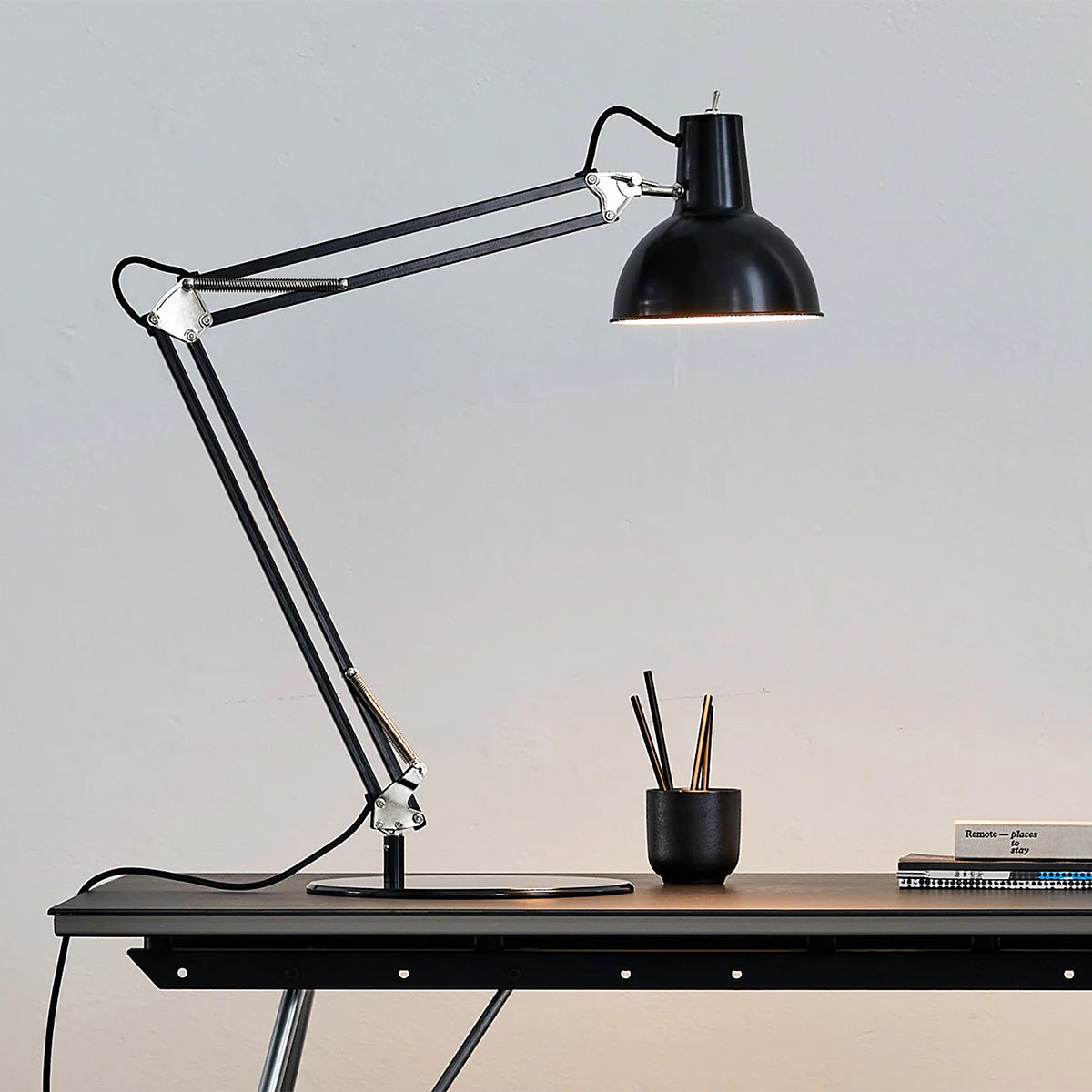
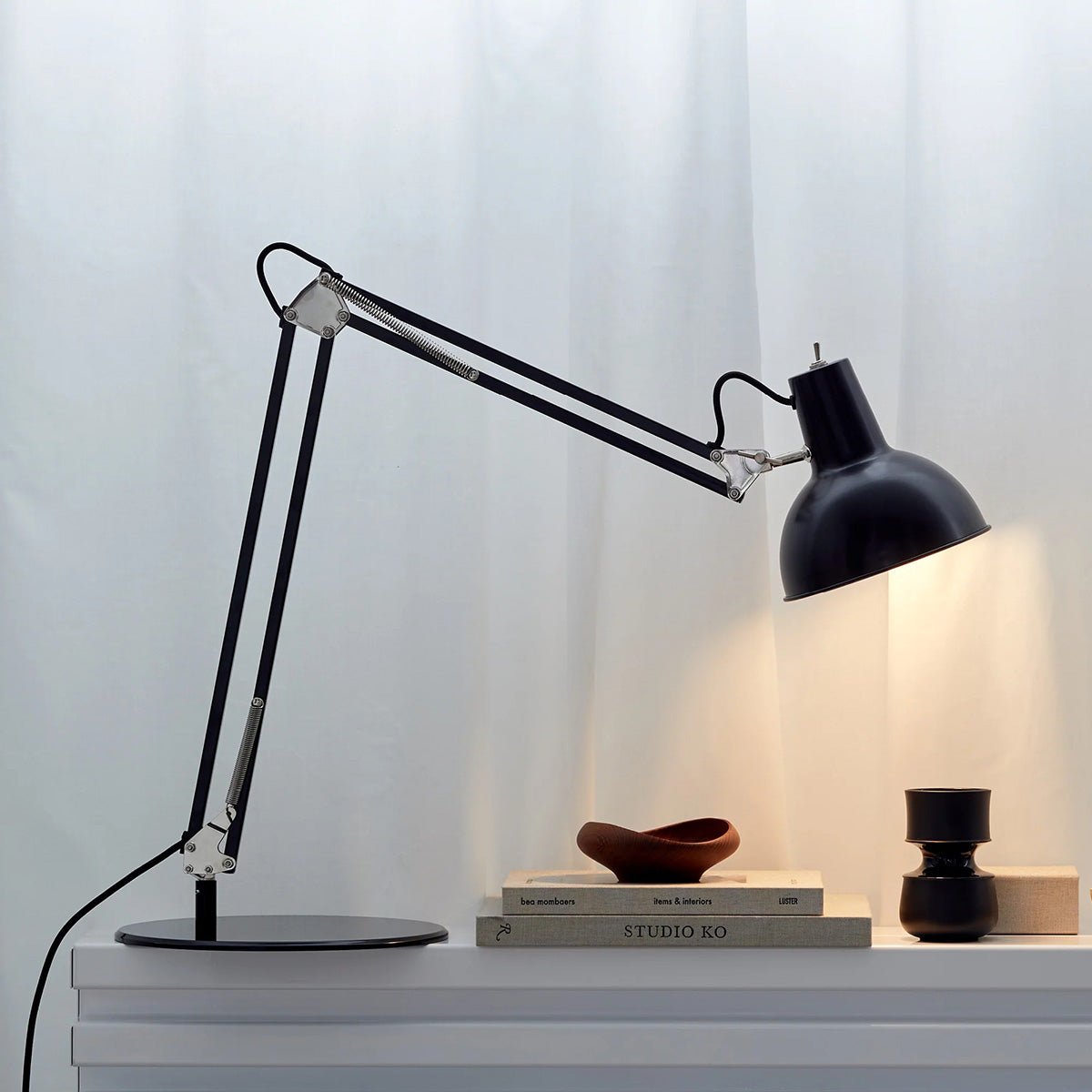
The spring counterbalance holds the lamp arm in equilibrium at any position along its range of movement. A calibrated steel spring offsets the weight of the arm and shade, so the lamp stays where you place it without locking mechanisms or ratchets. Adjustments require almost no effort. This is the same fundamental mechanism Curt Fischer engineered in the 1920s, refined over decades of continuous production rather than reinvented. The Spring Balanced Table Lamp is the clearest illustration of this principle at work.
How do I choose between a Midgard floor lamp and a table lamp?
The choice is primarily one of scale and reach. A table lamp suits a dedicated work surface, a desk or a reading chair with a side table, where the arm's range of motion can bring focused light close to the task. A floor lamp offers greater flexibility: it can serve a reading zone, a workspace, or an architectural corner without the need for a surface. Consider both the height of the light source and how far the arm needs to travel to reach the intended zone. If the geometry of a specific room makes that calculation difficult to visualize, design services can help with lighting coordination and spatial planning.
Can I see Midgard lamps in person before purchasing?
Experiencing an adjustable lamp in person, testing its counterbalance, reading its weight, assessing the quality of its shade and finish, is the most reliable way to understand why these lamps hold their value. We recommend visiting a showroom, where design-literate staff can walk you through the collection in context. Confirm which pieces are currently on display before your visit, as the selection rotates.
What kind of lighting does a Midgard lamp produce - ambient or task?
Midgard lamps are precision task lights. The directional shade, adjustable arm, and swiveling head are all oriented toward delivering focused, controlled light to a specific surface or zone. They do not diffuse light broadly across a room. In a layered lighting scheme they work best as the focused layer, a reading light, a desk light, or a sculptural accent that also performs, rather than as the primary ambient source.
Valorizza il Tuo Spazio
Dal 1974, siamo all'avanguardia dell'innovazione nel campo del design, rivoluzionando le percezioni del buon design.