




Design Without Boundaries
Beyond our curated collections lies a world of over 400 iconic brands.
For specific pieces, finishes, or bespoke solutions, our design team is at your disposal.
Frequently Asked Questions
What distinguishes Anna Torfs glass objects from other contemporary art glass?
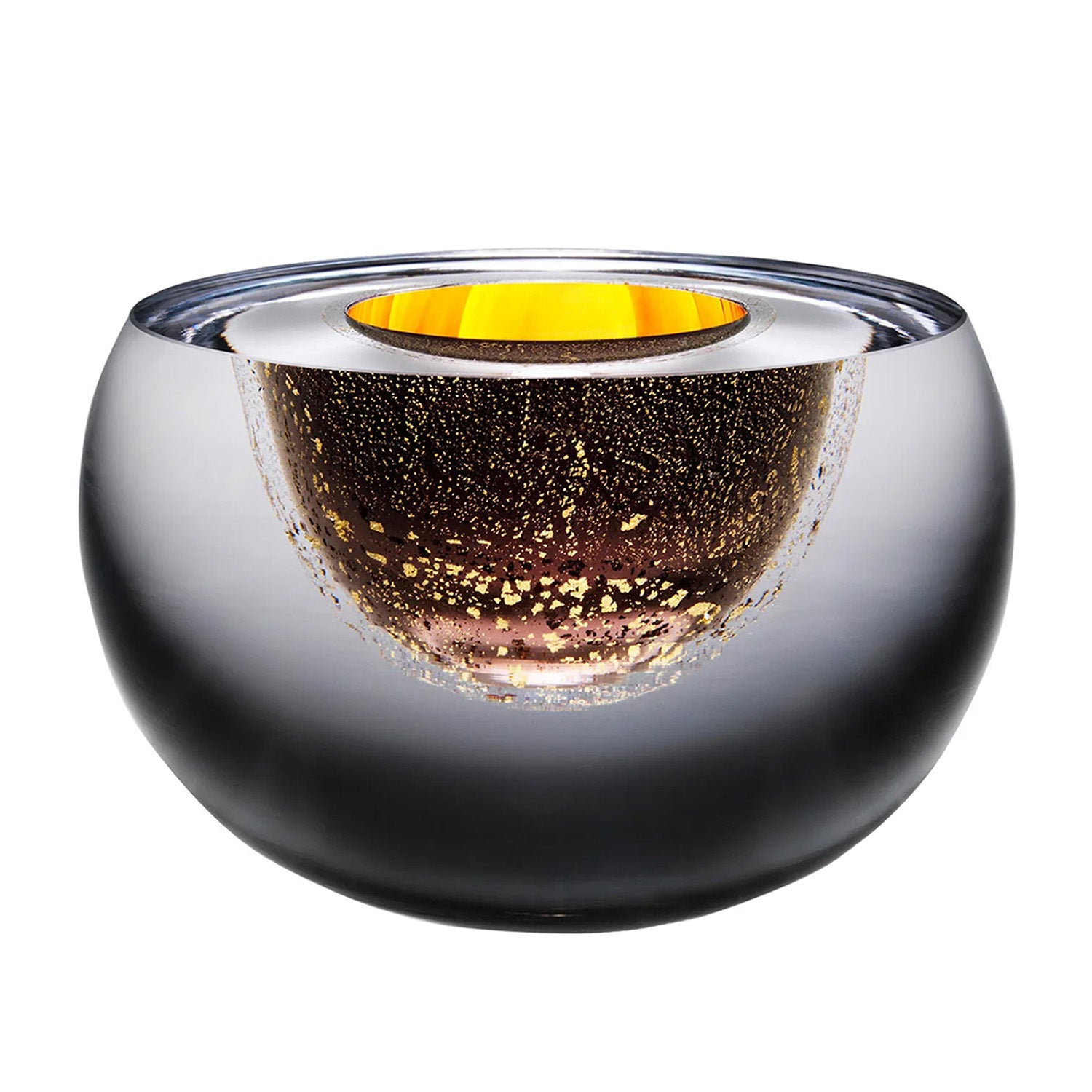
Anna Torfs works at the precise boundary between vessel and sculpture, applying centuries-old Bohemian glass-blowing, cutting, and sanding techniques to forms that read as entirely contemporary. Her signature approach layers translucent and opaque colored glass during the blowing process itself, so color is embedded in the form rather than applied to it. The interior depth that results shifts with light and angle in ways flat or uniformly tinted glass cannot replicate.
Are Anna Torfs pieces hand-blown, and does that affect how they look?
Every piece is mouth-blown by hand using traditional Bohemian techniques that have changed little in over two centuries. Because heat, breath, and the maker's gesture determine each object's final contour, no two pieces are identical. Slight variations in silhouette, color depth, and translucency are inherent to the process and are considered part of the object's character, not imperfections. Buyers should expect, and welcome, that individuality.
How does color work in Anna Torfs glass - is it painted or surface-applied?
Color in Anna Torfs glass is structural, not decorative. Layers of colored glass are built up during the blowing process, making pigment inseparable from form. Translucent and opaque passages interact as light passes through, producing shifts in tone depending on the hour and the angle of the light source. Morning and afternoon read differently on the same object. No surface treatment or paint is involved; the depth is inherent to the glass itself.
What Czech and Bohemian glassmaking traditions inform this work?
The Bohemian glassmaking tradition spans more than two centuries and encompasses free-blowing, precise cold-working cuts, and sanding techniques developed by generations of master glassblowers in the Czech Republic. Anna Torfs works within that lineage, collaborating with skilled makers whose methods are largely unchanged from historical practice. She applies that inherited craft to a formal language that is wholly her own: geometric, restrained, and highly considered.
How do Anna Torfs vases and sculptures behave in different lighting conditions?
The layered construction of translucent and opaque glass means each object performs differently as light changes. In direct sunlight, color intensifies and refracts through the glass body. In softer or indirect light, the opaque passages become more prominent and the form reads more sculpturally. This sensitivity to light is central to the work, not incidental to it. Placement near a window or under a focused light source will reveal different qualities than display in ambient light. Experiencing this in person is the most reliable way to assess how a piece will behave in your space. Our showrooms carry a rotating selection; we recommend confirming what is currently on display before visiting. You can also book a showroom appointment for dedicated time with a design consultant.
Are Anna Torfs objects purely decorative, or can the vases hold flowers?
Many forms in the collection function as both sculptural object and working vessel. Some are conceived primarily as sculpture, while others are shaped to hold stems. Because the collection spans a range of geometric forms, including spheres, cylinders, and flat-based cuts, it is worth reviewing the opening dimensions of individual pieces before use with flowers or water. As a general guide, pieces with visible apertures are suited to flower display; closed or near-closed forms are best treated as sculpture. For a sense of the range, the Termoska Vase illustrates how a hand-blown form can read as sculpture first and vessel second.
Can I see Anna Torfs glass in person before purchasing?
Experiencing hand-blown glass in person is worthwhile, since photographs rarely capture how layered color and translucency shift with real light. Our showrooms across Miami, Chicago, Los Angeles, San Francisco, and Menlo Park carry a rotating selection of works from the collection. Display changes regularly, so we recommend confirming which pieces are currently on view before visiting. Scheduling an appointment ensures dedicated time with a design consultant who can walk you through the collection in depth.
How should Anna Torfs glass objects be displayed and cared for?
These objects are most effective when given space to be read individually. A single piece on a clean surface, or within a considered grouping of varied scales, tends to perform better than a crowded arrangement. Hand-wash only with mild soap and warm water; avoid abrasive cloths that could mark polished or sandblasted surfaces. Because the glass layers are fused during making, the color is entirely stable. Avoid prolonged exposure to harsh direct sunlight over many years, which can affect any colored glass over time.
Elevate Your Space
Since 1974, we have been at the forefront of innovation in the design sphere, revolutionizing perceptions of good design.


