







Design Without Boundaries
Beyond our curated collections lies a world of over 400 iconic brands.
For specific pieces, finishes, or bespoke solutions, our design team is at your disposal.
Frequently Asked Questions
What design philosophy defines Agape's approach to the bathroom?
Agape treats the bathroom as a room deserving the same architectural attention as any other space in the home. Founded in Mantua in 1973, the brand has consistently approached fittings, basins, bathtubs, and accessories as objects of considered proportion rather than pure utility. Geometry is deliberate, material choices are precise, and each piece reads as resolved rather than assembled.
What materials does Agape use across its bathroom collections?
Agape works across a range of materials selected for their atmospheric and tactile qualities. Proprietary composites developed in Italy, including mineral-based and plant-derived formulations, appear alongside natural stone, refractory clay, enameled surfaces, stainless steel, and solid surface. Many pieces offer multiple material expressions of the same form, allowing the same design to carry different weight, warmth, or finish depending on the room it enters.
How does Agape approach freestanding bathtub design?
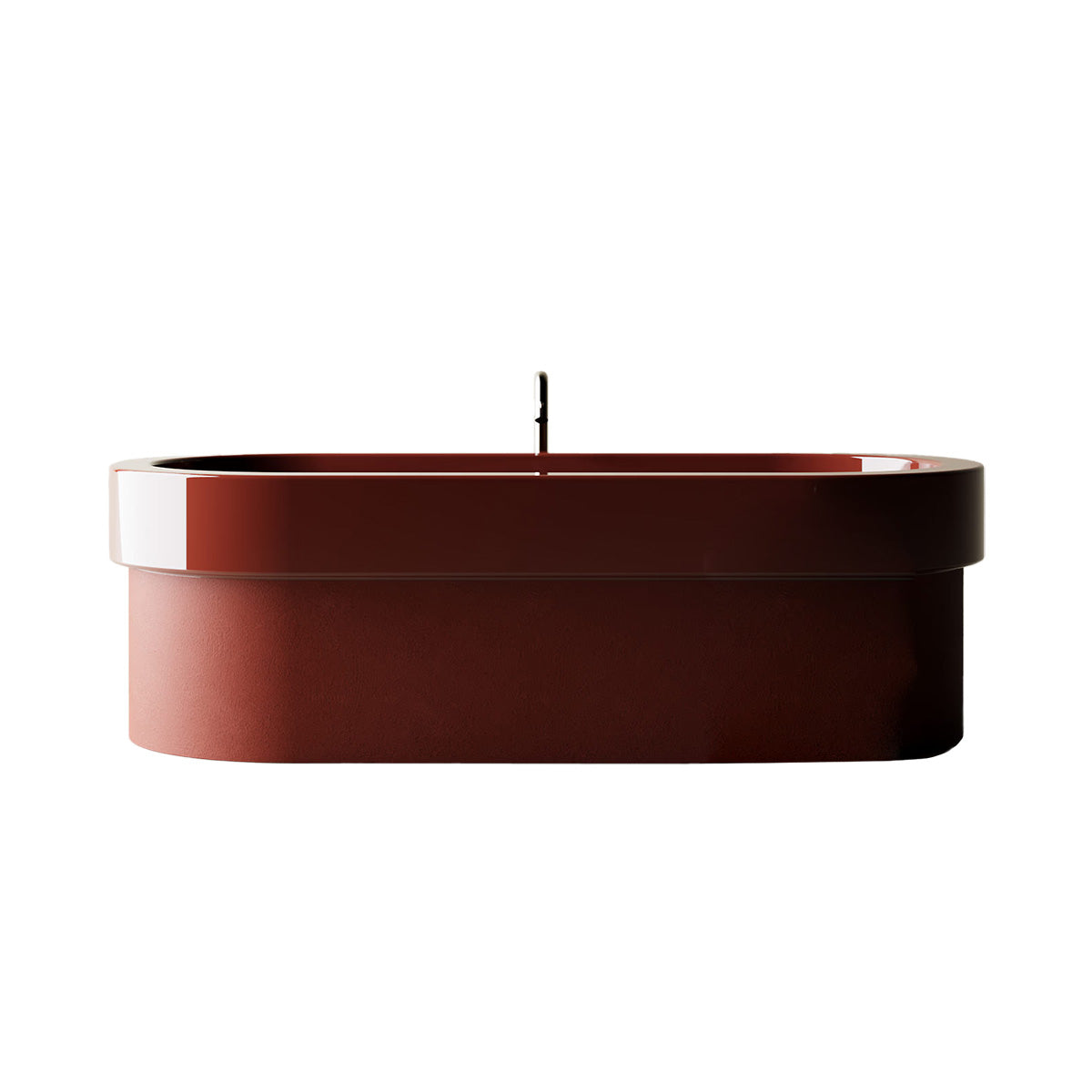
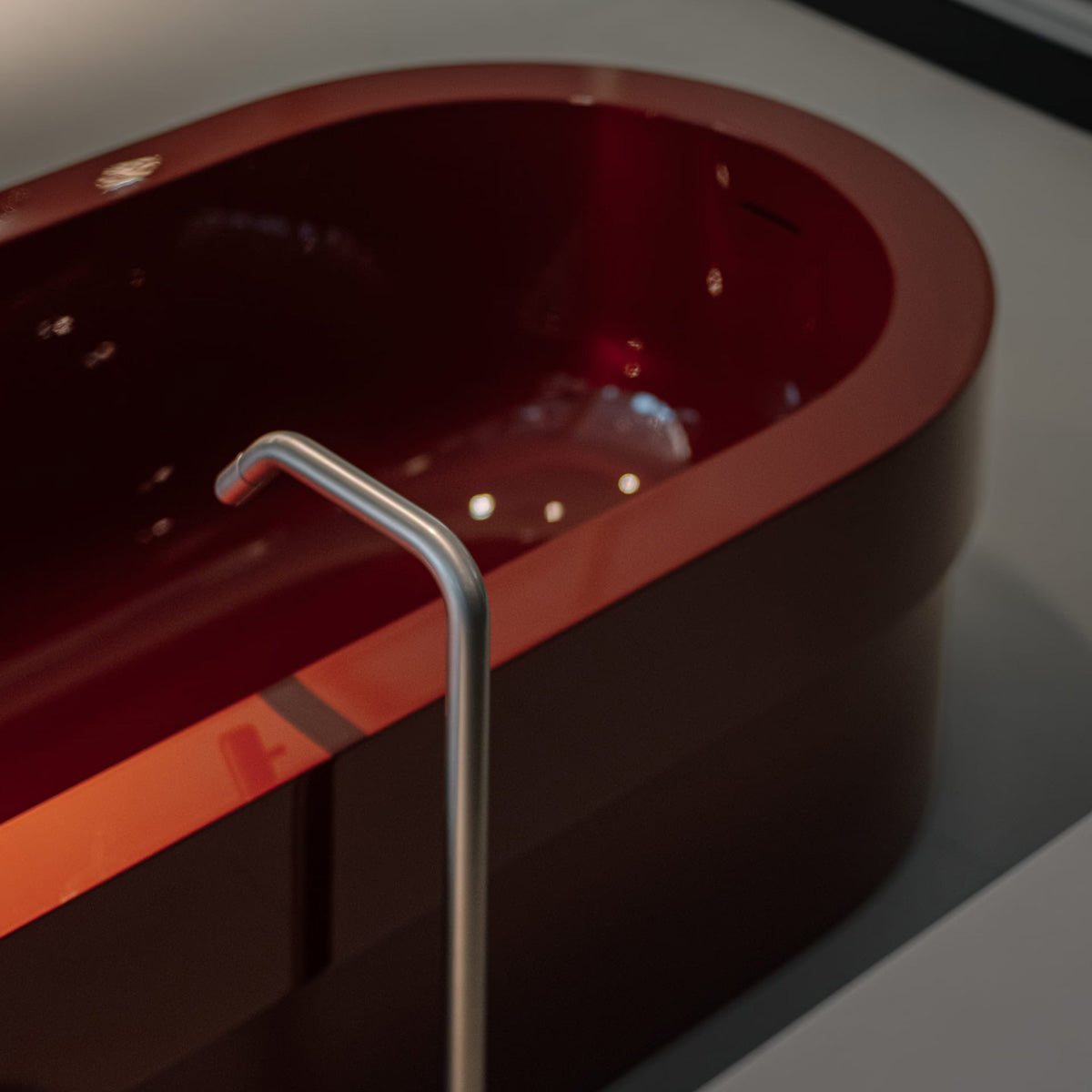
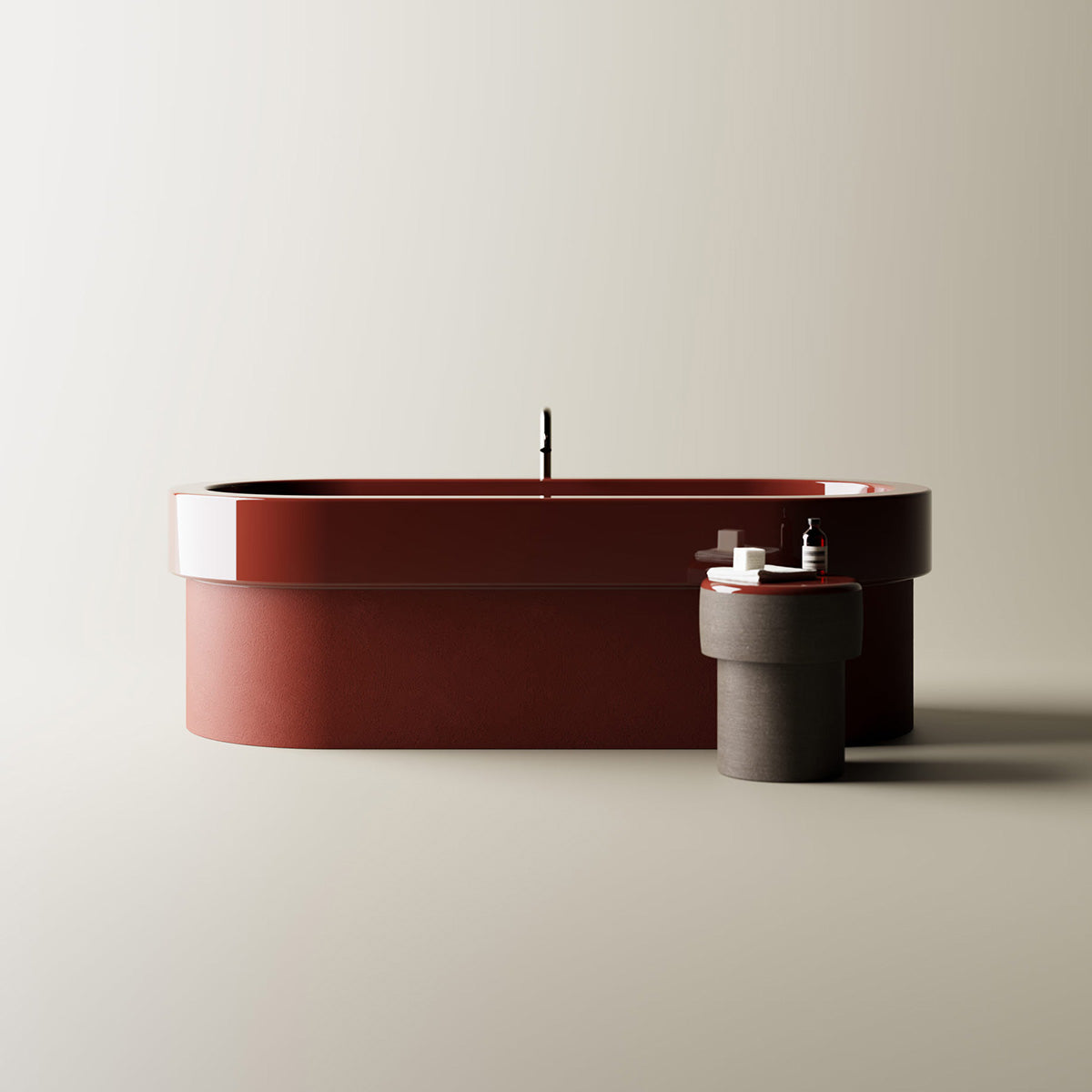
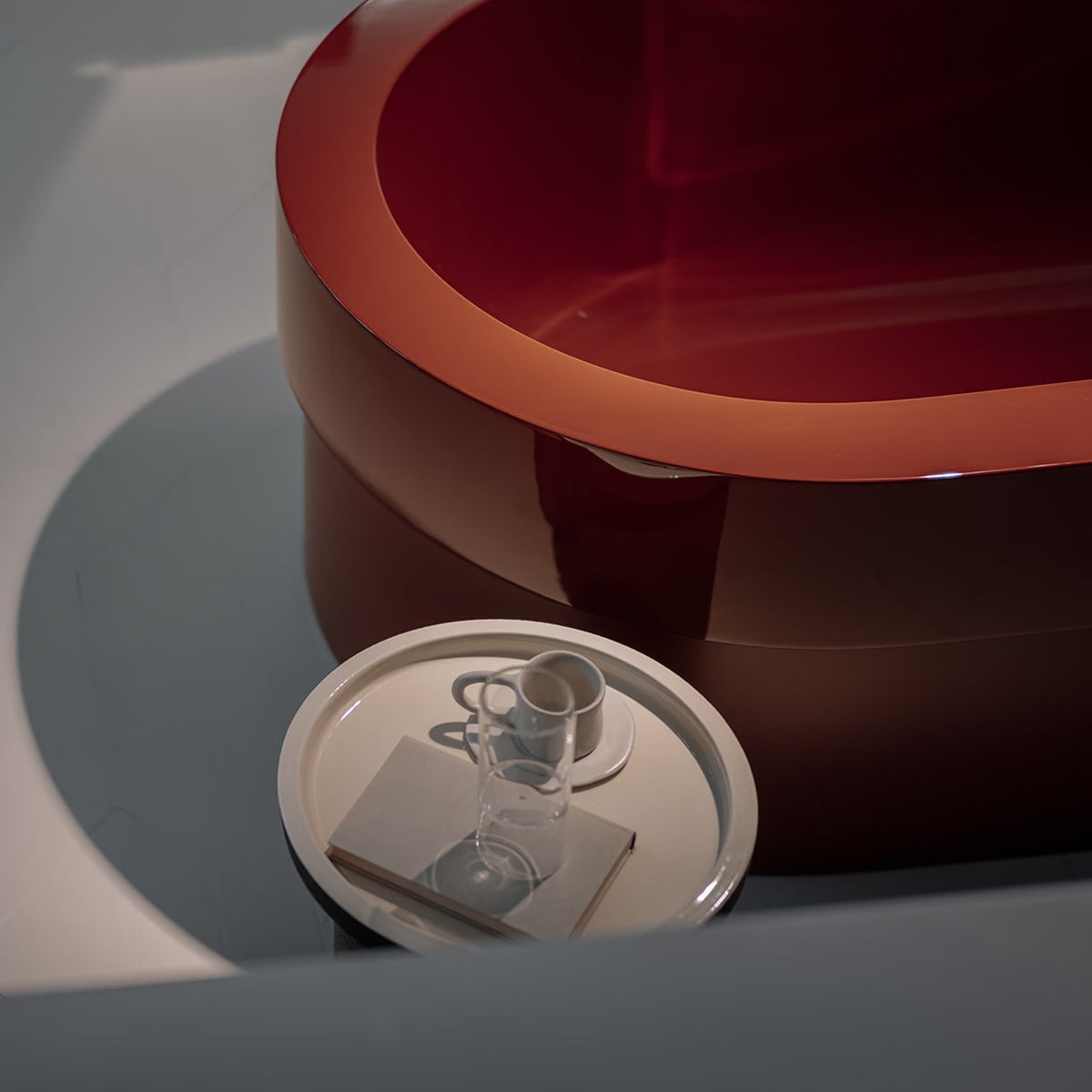
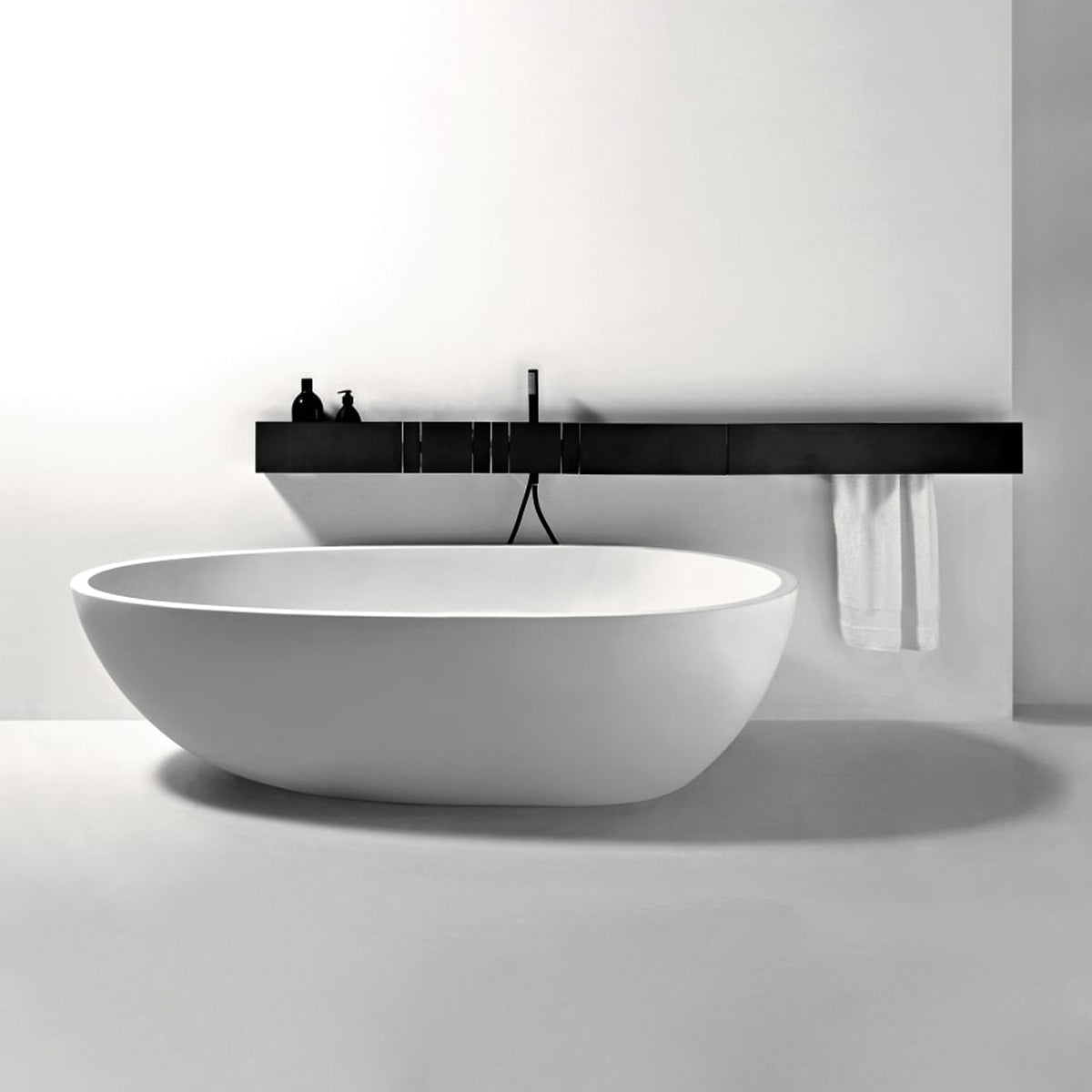
Agape's freestanding bathtubs are conceived as sculptural objects first. The silhouette carries as much design intention as the interior ergonomics, and material choices, stone, composite, solid surface, or steel, are central to each form's identity. Several pieces are available in multiple material expressions. The In-Out Bathtub by Benedini Associati is one example of this thinking, a circular footprint offered in marble, solid surface, and Cemento, each carrying its own atmospheric weight. Tap placement is considered as part of the overall composition, with floor- or wall-mounted fittings preserving the clarity of the tub's outline.
Can Agape bathroom fittings be specified as a unified system?
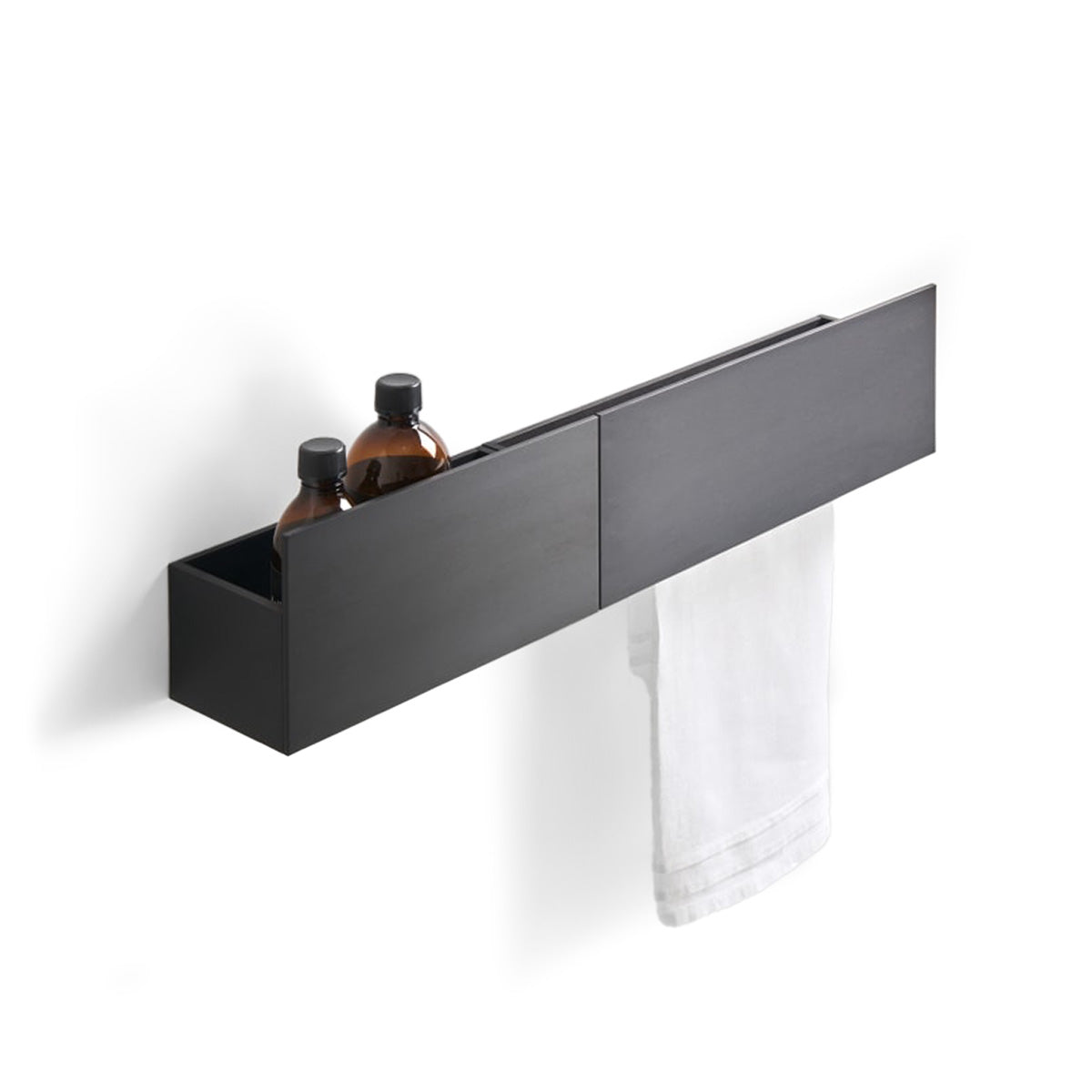
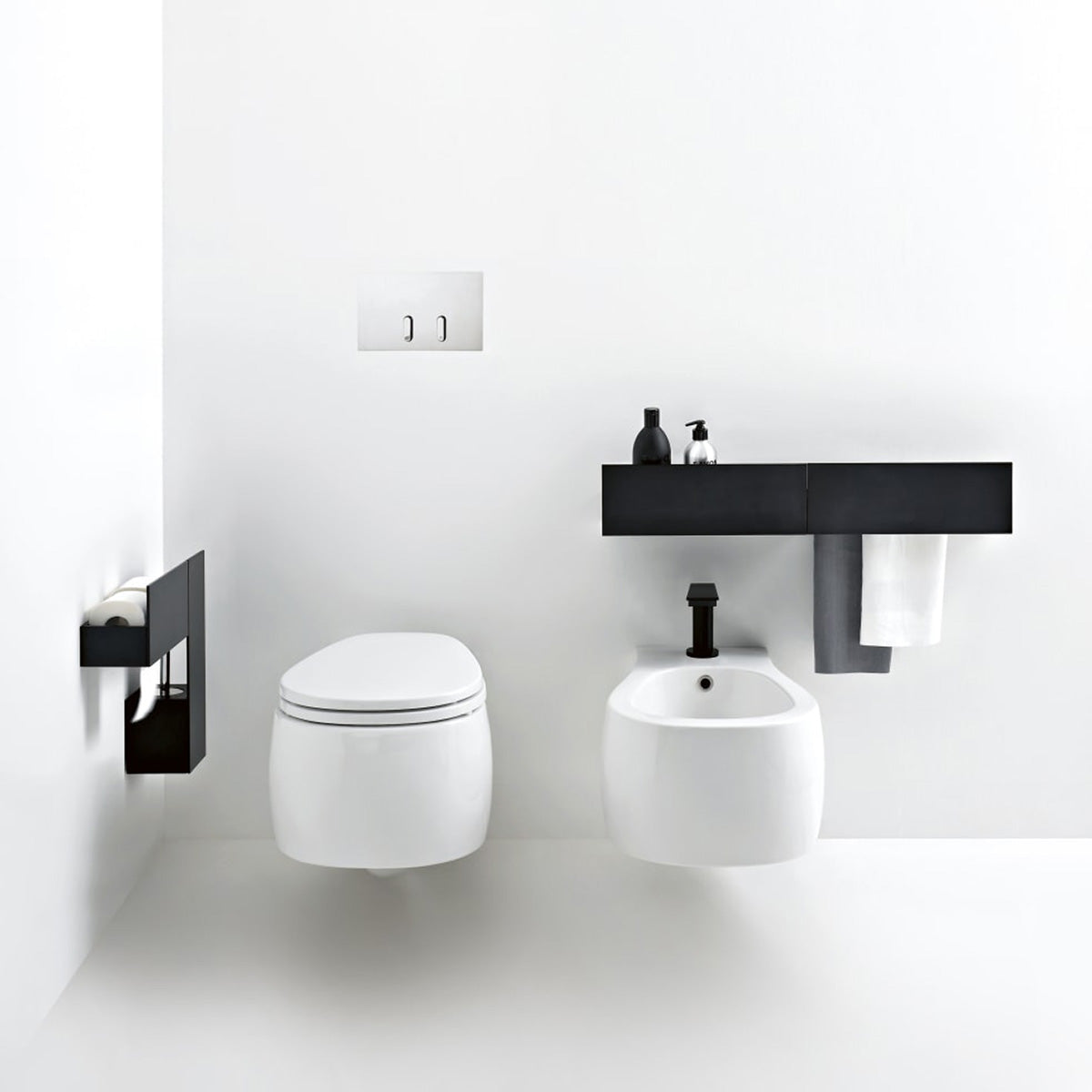
Yes. Several of Agape's tapware and accessory programs are conceived as complete compositional systems: mixer taps, shower heads, soap dispensers, and wall-mounted shelving share the same geometric language and finish options so that the entire wall plane reads as a single, coherent gesture. This systems approach reflects Agape's broader conviction that the bathroom should be designed as a whole rather than furnished piece by piece.
What distinguishes Agape's washbasin designs from standard ceramic basins?
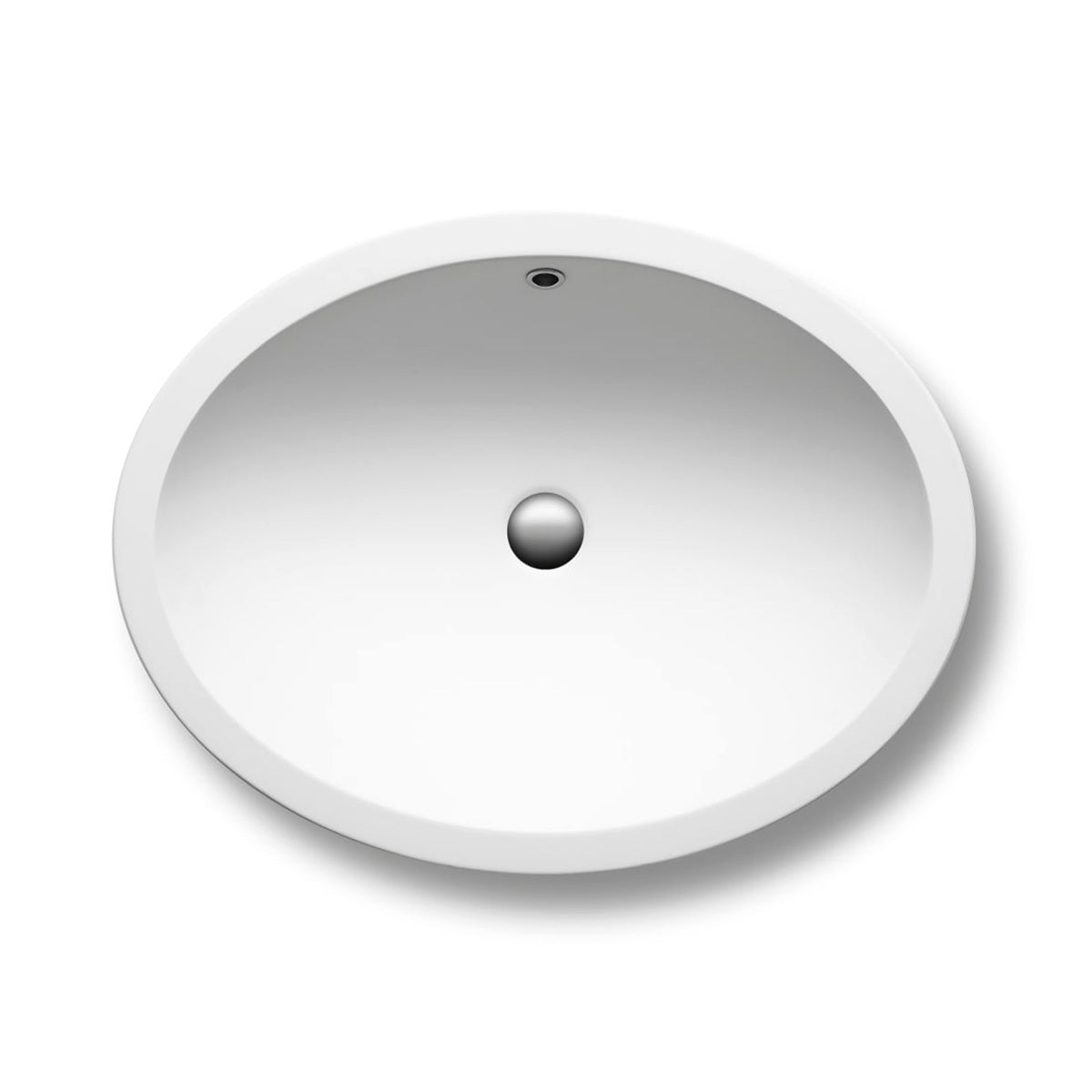
Agape washbasins frequently depart from ceramic convention in both form and material. Proprietary composite materials, some with plant-derived components, others mineral-based, offer surfaces that are repairable, warm to the touch, and responsive to light in ways ceramic rarely achieves. Hand-formed clay and enameled finishes appear in other collections, where deliberate surface variation is a design intention rather than a manufacturing inconsistency. The Cenote washbasin by Patricia Urquiola, with its raw clay exterior set against a smooth enameled interior, is a precise illustration of this approach. Configuration options typically span freestanding, wall-mounted, over-countertop, and semi-recessed placements.
How does Agape integrate storage and cabinetry into the bathroom?
Agape's storage systems are conceived as architectural elements rather than additions. Thin profiles, modular configurations, and a range of top materials, from oak and marble to composite and lacquer, allow the cabinetry to anchor the room rather than recede into it. Units can be wall-hung, floor-standing, or set on casters, and washbasin integration is offered in supported, semi-recessed, and fully recessed options, so the composition responds to the specific demands of each project. For projects where the full bathroom layout requires coordinated planning across cabinetry, basins, and fittings, design services can help coordinate the specification.
What shower enclosure and shower system options does Agape offer?
Agape's shower thinking covers both the enclosure and the fittings that animate it. Enclosure systems are designed for visual restraint, toughened glass panels held by minimal hardware so the space reads as open as possible. Shower tray options include flush-to-floor formats in composite materials or marine-quality wood. Tapware programs extend from square-profiled shower heads to fully coordinated recessed and external mixer systems, all available in consistent finishes.
Does Agape collaborate with internationally recognised designers?
Yes. Agape has sustained long-term collaborations with architects and designers whose practices extend well beyond product design. These partnerships bring distinct cultural and formal sensibilities into the collection, from the systematic rigour of Italian architecture studios to the cross-cultural material thinking of Japanese-based practitioners. Gwenael Nicolas, whose Tokyo-based studio Curiosity produced the Sen faucet collection, is one example of this cross-continental dialogue. The breadth of collaboration is one reason the collection holds formal consistency while avoiding a single, repetitive aesthetic signature.
Elevate Your Space
Since 1974, we have been at the forefront of innovation in the design sphere, revolutionizing perceptions of good design.


