

Little Giraffe
Made by Fritz Hansen
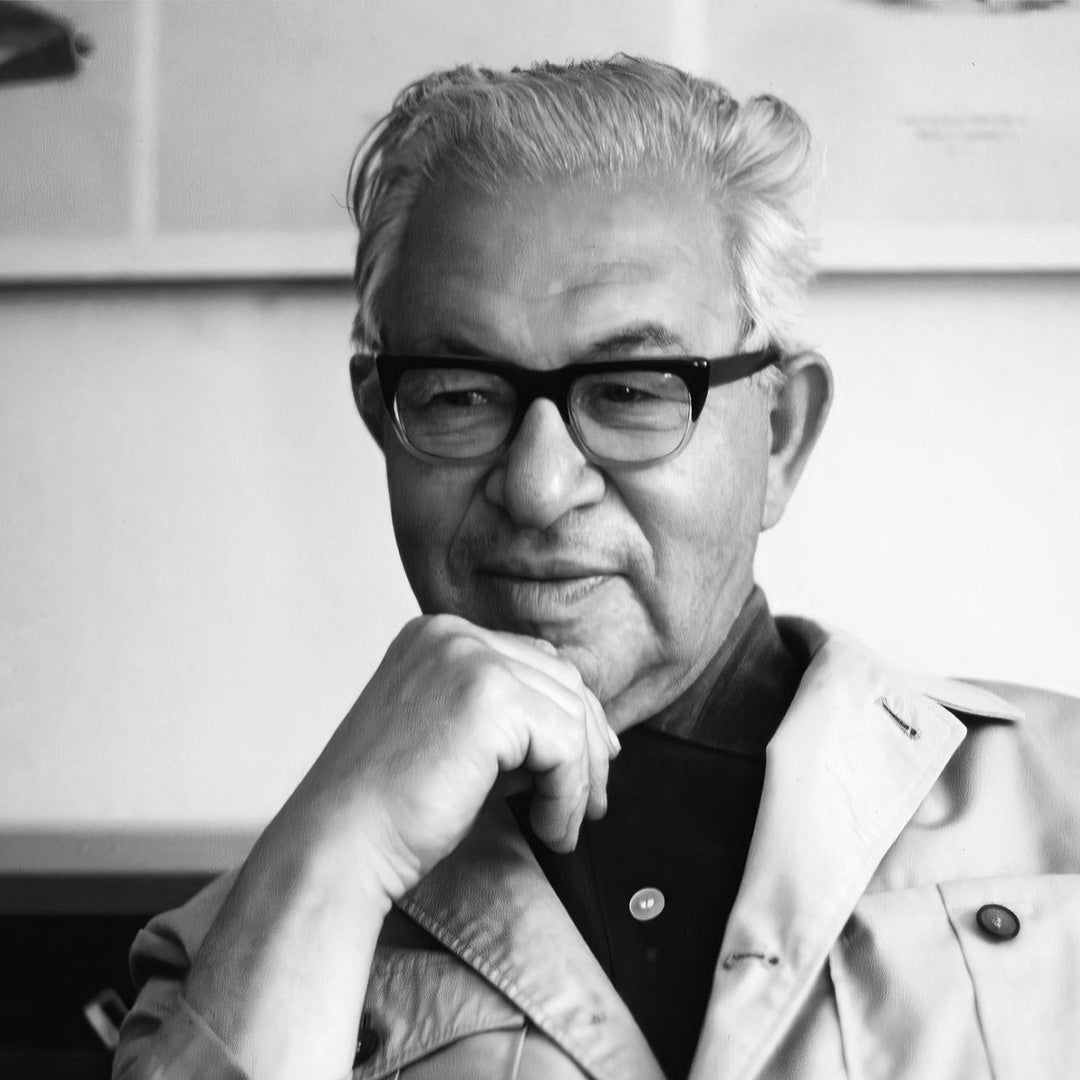
Designed by Arne Jacobsen
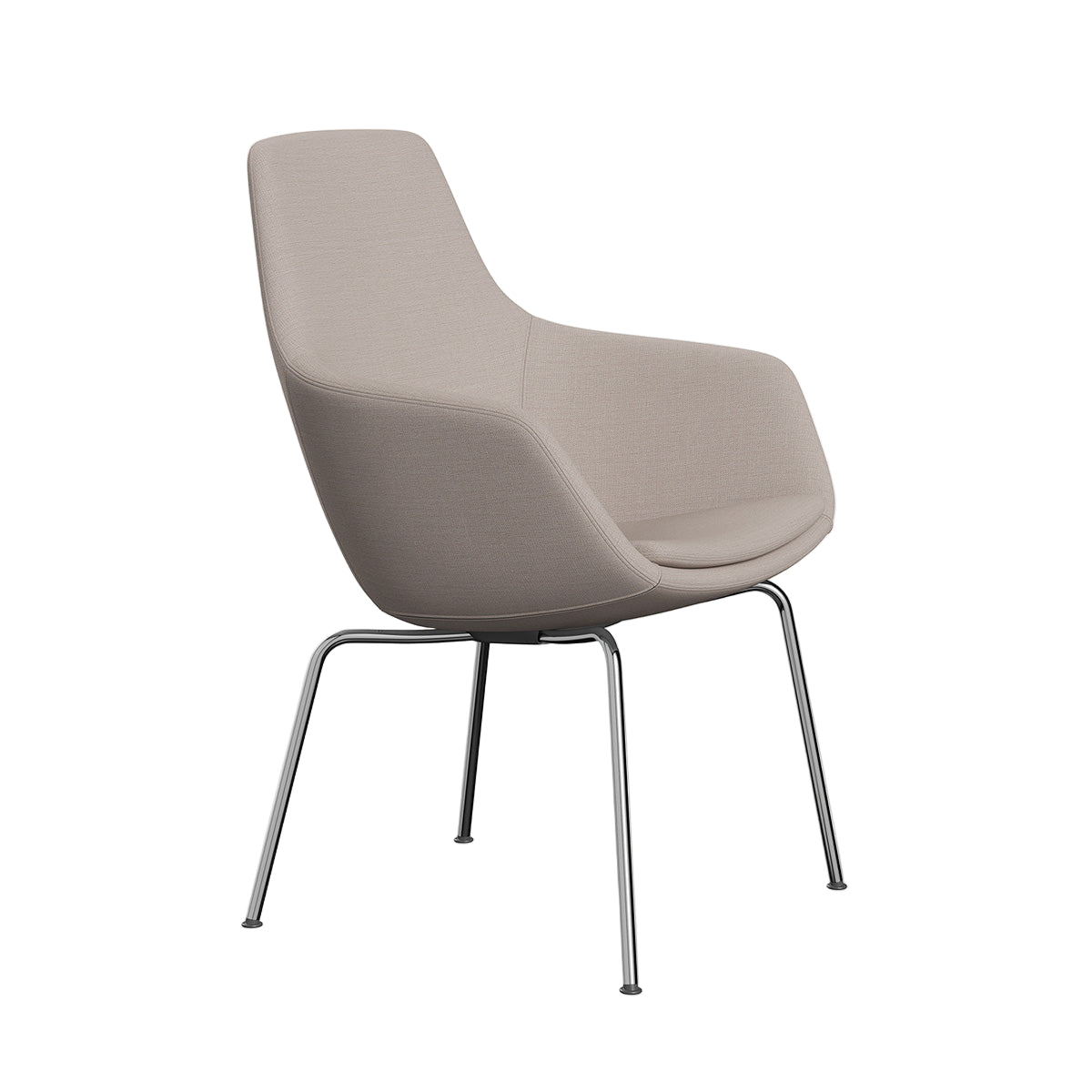
Arne Jacobsen designed the Little Giraffe as a study in proportion, its tall, gently curved backrest giving the chair both its name and its singular silhouette. The form is unmistakably Jacobsen: precise in geometry, generous in comfort, shaped by a modernist sensibility that never sacrifices warmth for austerity.
Produced by Fritz Hansen with the craft standards the Copenhagen house has maintained since 1872, the chair is available in fixed four-legged and swivel configurations. Upholstery can be specified with either a fixed or removable cover, allowing the piece to adapt to the demands of residential, hospitality, and contract settings alike.
- Designed by Arne Jacobsen
- Produced by Fritz Hansen, Copenhagen
- Available in four-legged fixed and swivel base versions
- Fixed or removable upholstery cover options
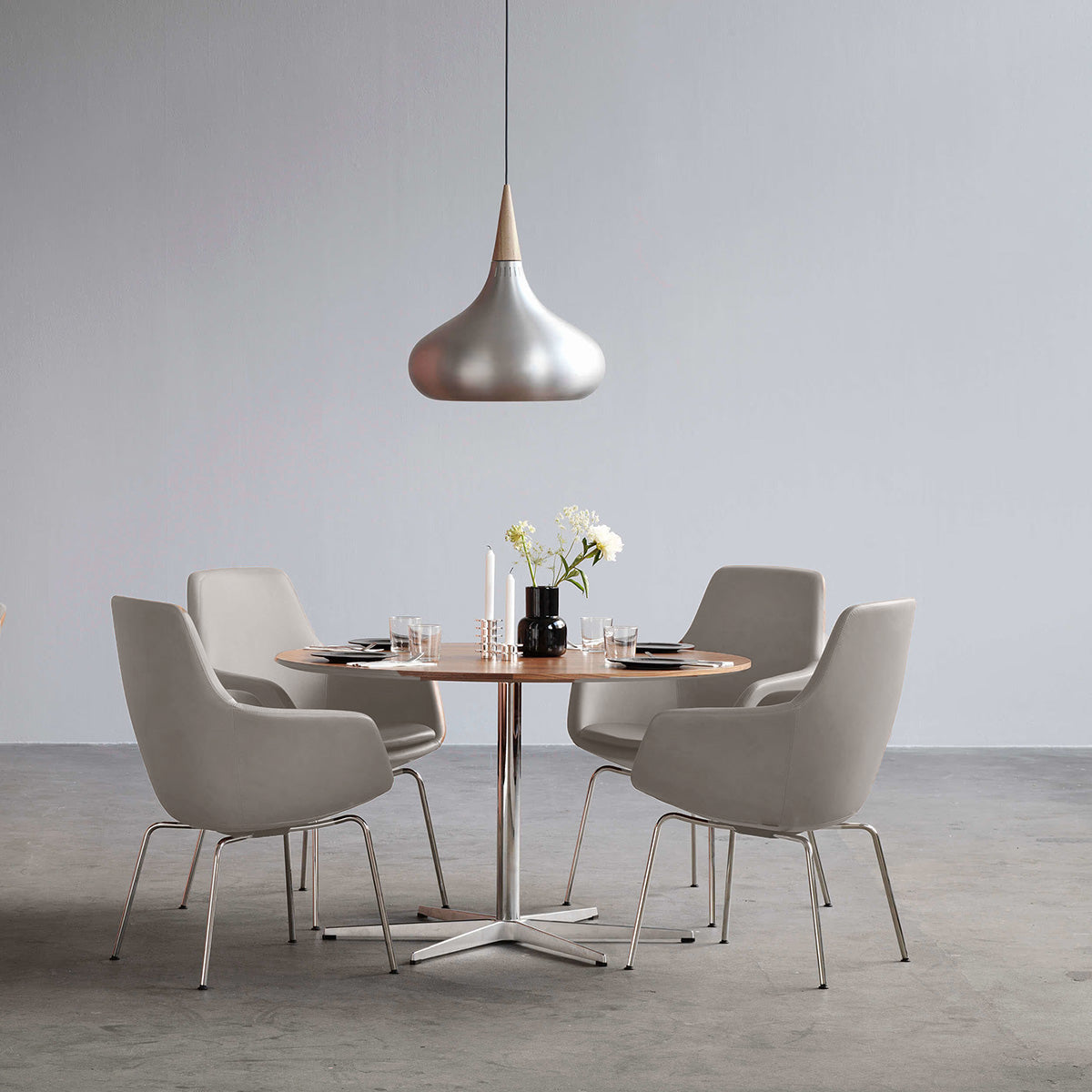
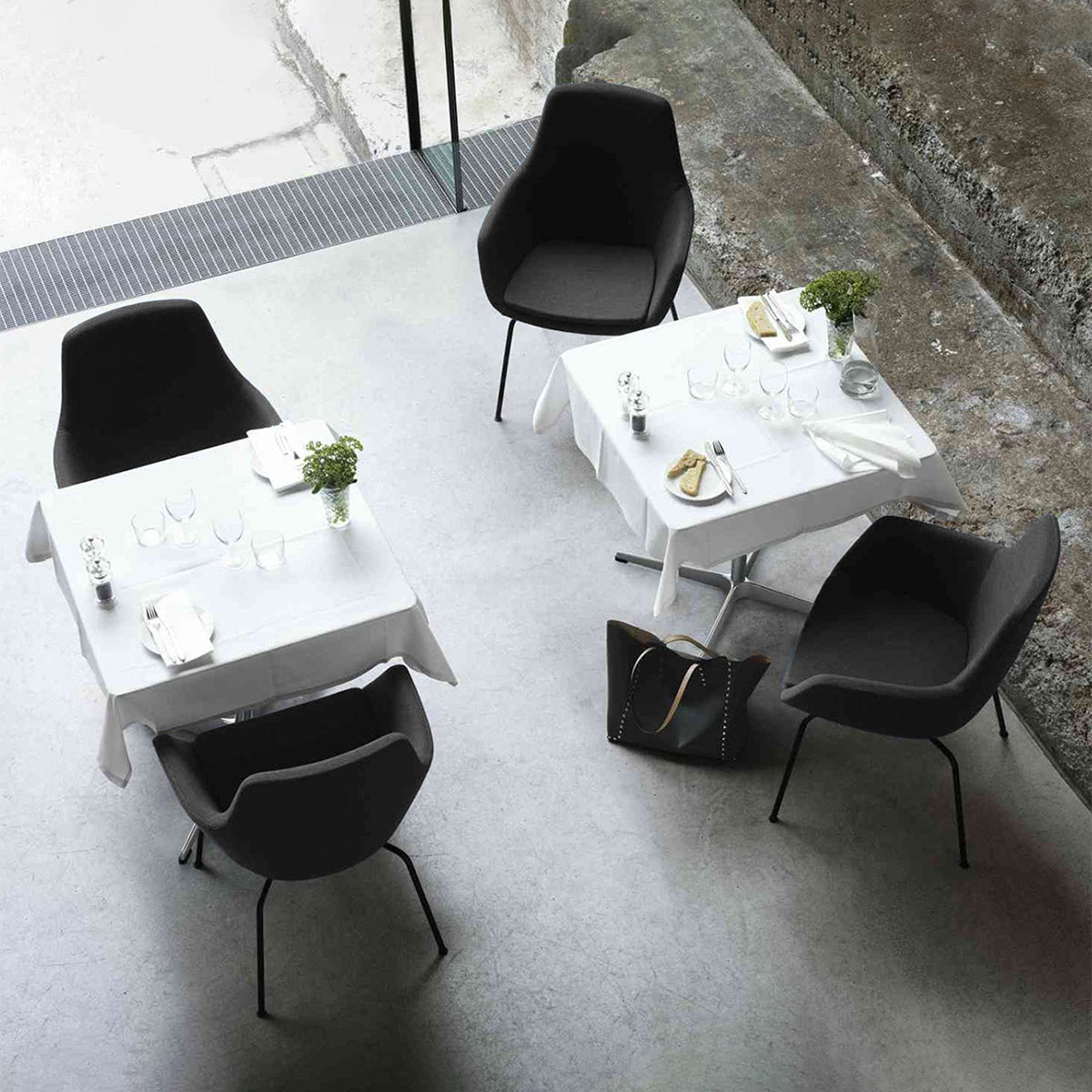
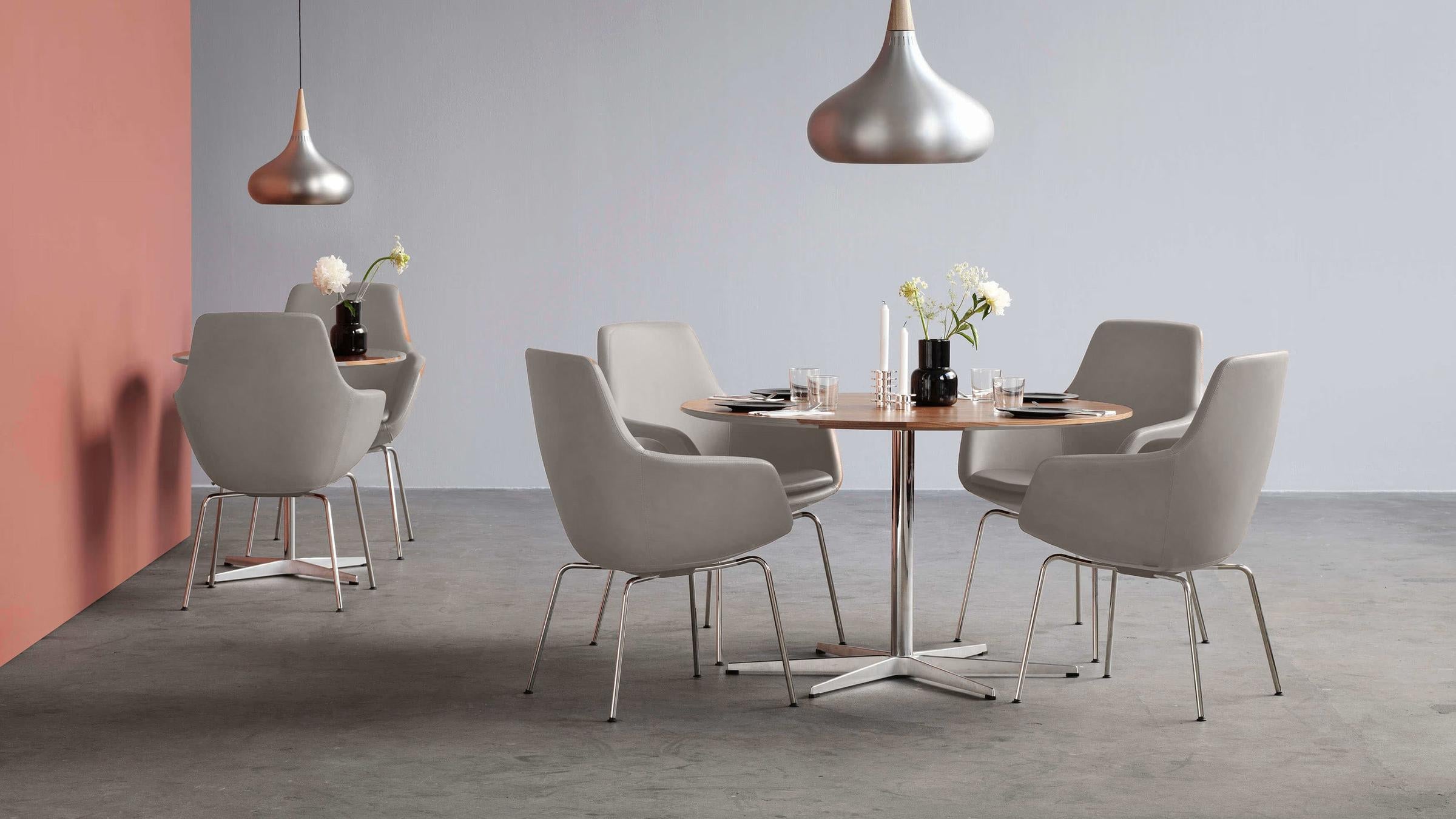
- Suited to dining, lounge, and meeting environments
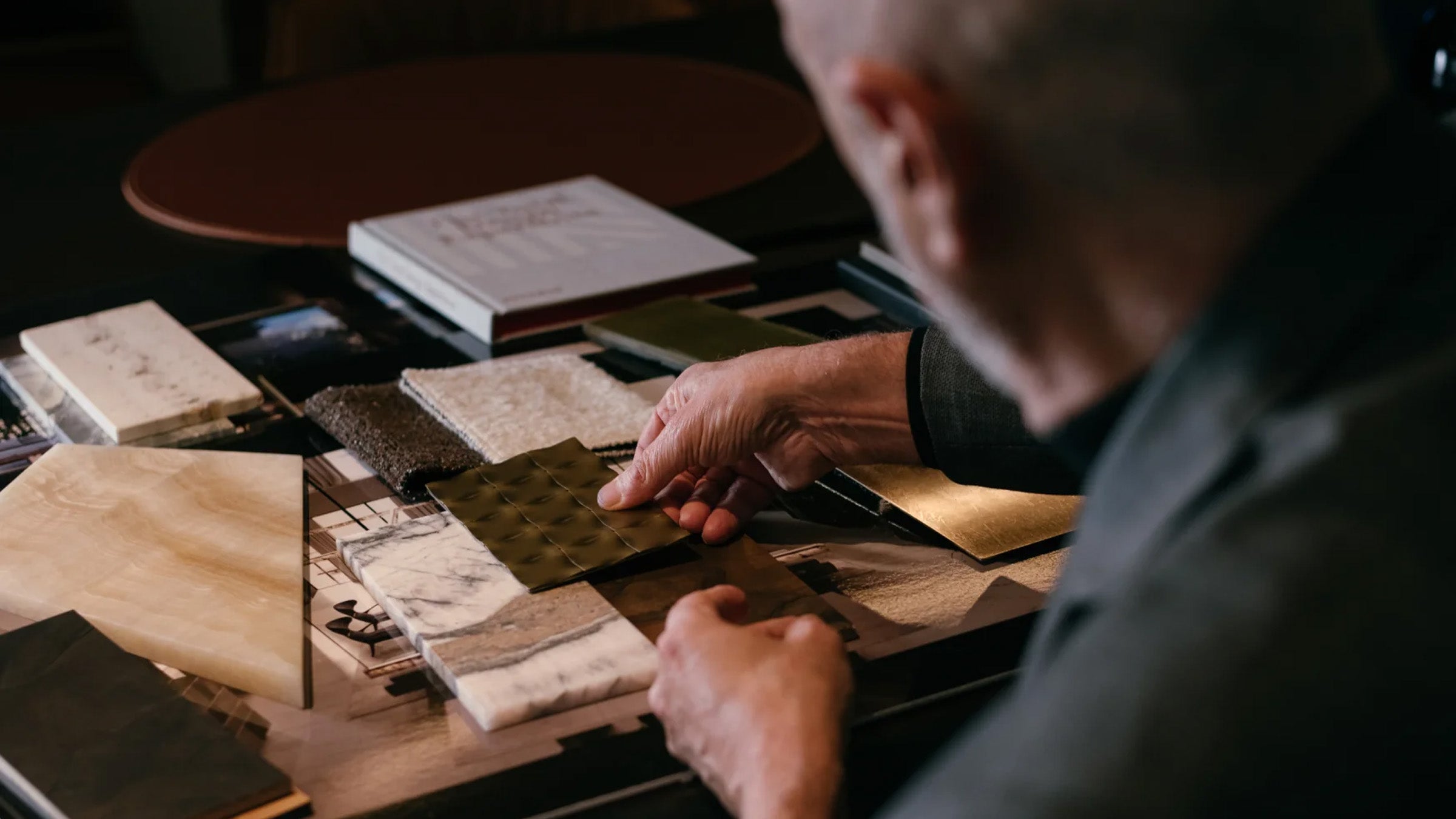
Made to order by Fritz Hansen, tailored to you.
Get customization options, swatch samples and pricing for your project.
Pairs Well With
Little Giraffe
Product Details
Measurements
Tear Sheet
Pricing & Warranty
Pricing for made-to-order items varies based on configuration, finishes, and customization options. Please contact one of our design consultants or visit a showroom near you for current pricing and personalized assistance.
Luminaire is an authorized retailer of Fritz Hansen. The product comes with a full manufacturer warranty.
Authenticity guaranteed. Genuine product, authenticated and sourced directly from the manufacturer.
Frequently Asked Questions
Who designed the Little Giraffe Chair?
The Little Giraffe was designed by Arne Jacobsen, the Danish architect and designer whose work with Fritz Hansen produced several of the twentieth century's most recognized seating forms. The chair's elongated backrest reflects Jacobsen's characteristic attention to silhouette and ergonomic proportion.
What is the difference between the fixed and swivel versions?
The fixed version rests on a four-legged base and suits dining and meeting settings where stability and a traditional chair profile are preferred. The swivel variant offers rotational movement, making it well suited to lounge or hospitality contexts where ease of movement matters.
Can the upholstery on the Little Giraffe be replaced or cleaned easily?
Fritz Hansen offers the Little Giraffe with both fixed and removable cover options. The removable cover configuration simplifies maintenance and allows for reupholstery over the life of the piece, which is a practical consideration in commercial or high-use environments.
Is the Little Giraffe suitable for contract or hospitality use?
Yes. Its available configurations, including the removable cover option and swivel base, are well suited to contract, hospitality, and corporate environments. Fritz Hansen's production standards meet the durability expectations of professional specification.
How does the Little Giraffe relate to Jacobsen's other Fritz Hansen designs?
The Little Giraffe belongs to a lineage that includes the Egg, Swan, and Series 7 chairs, all developed during Jacobsen's long collaboration with Fritz Hansen. Like those works, it prioritizes organic form and structural economy, though its tall back gives it a distinct formal character within the collection.