Monk Chair
Made by Molteni&C
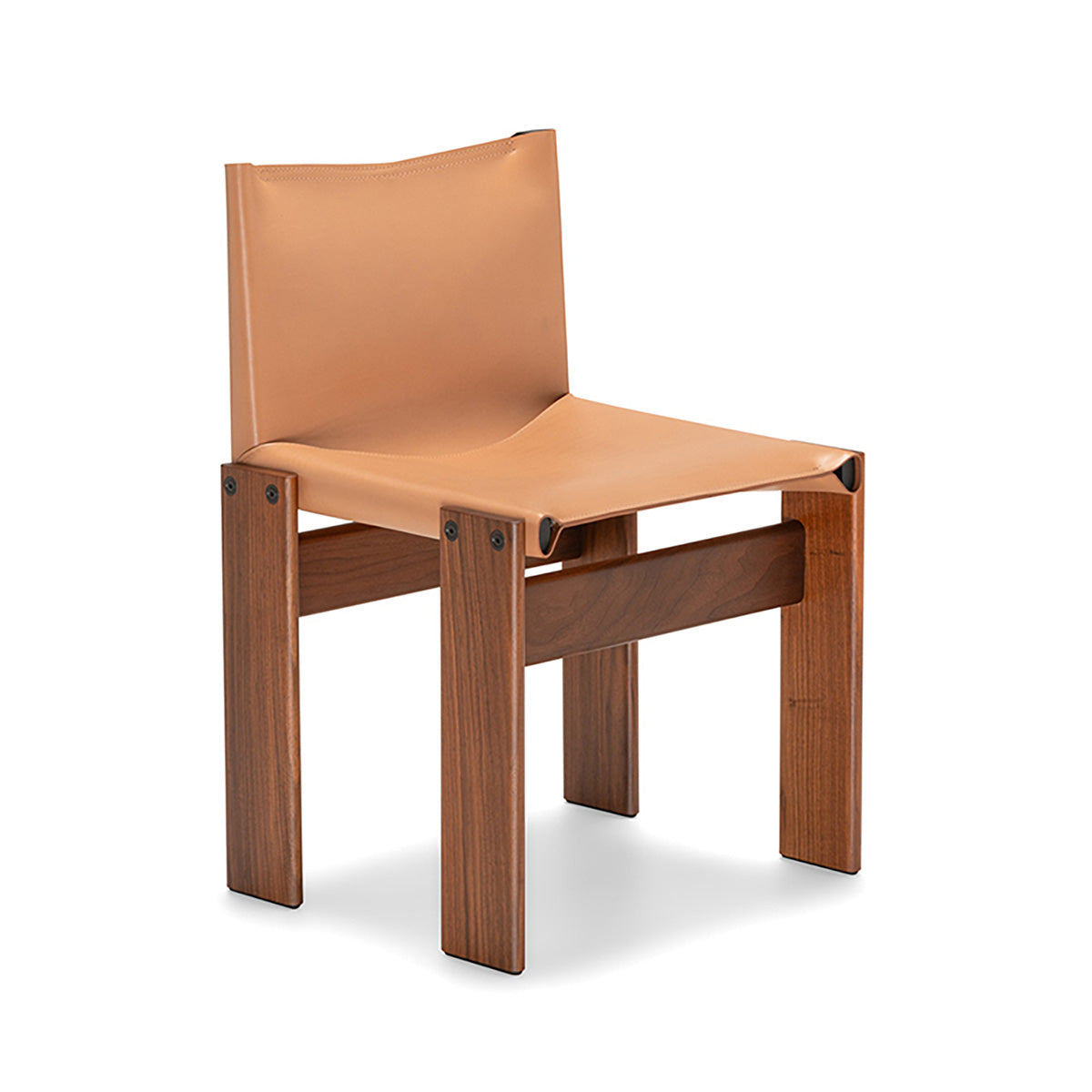
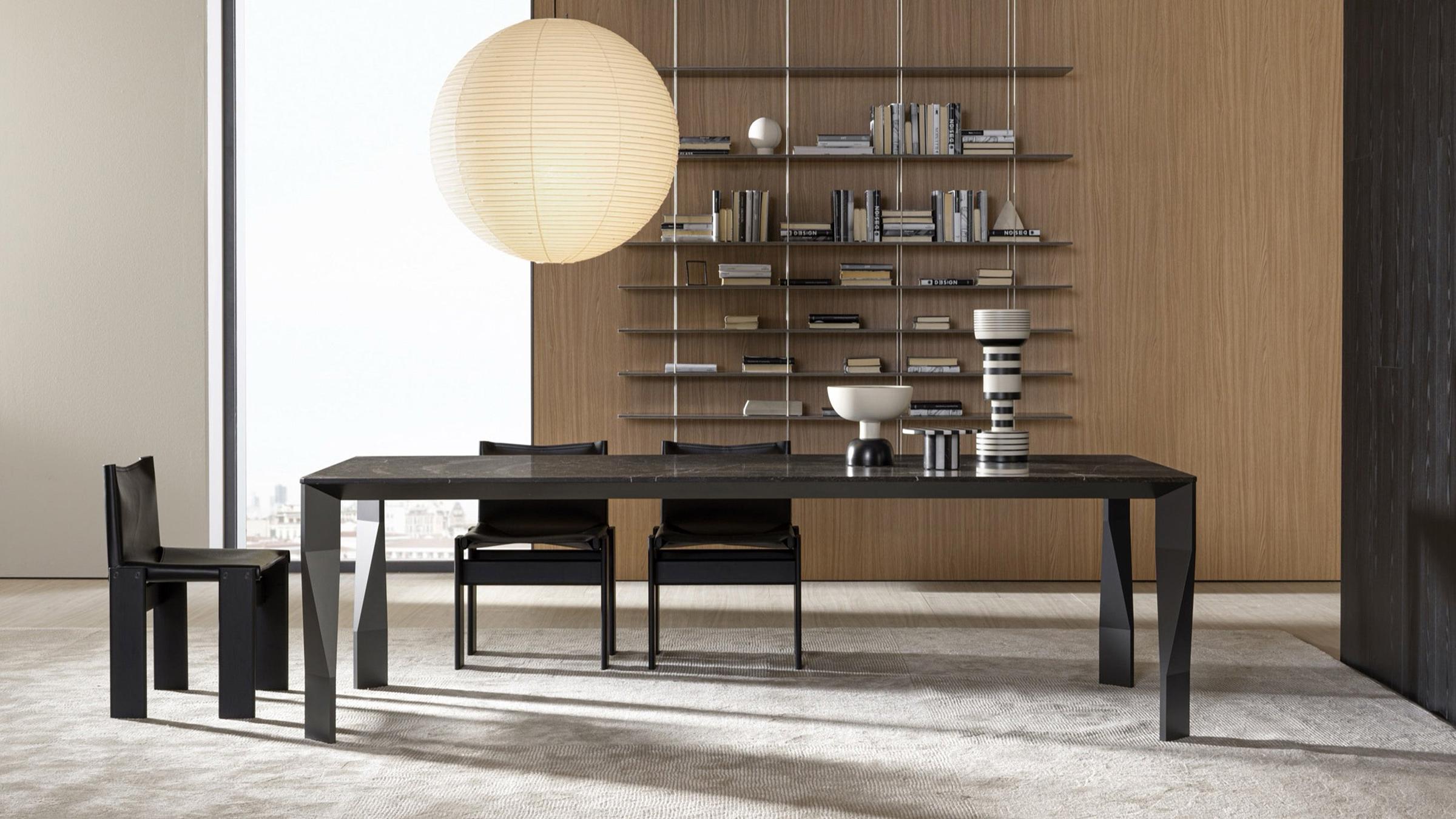
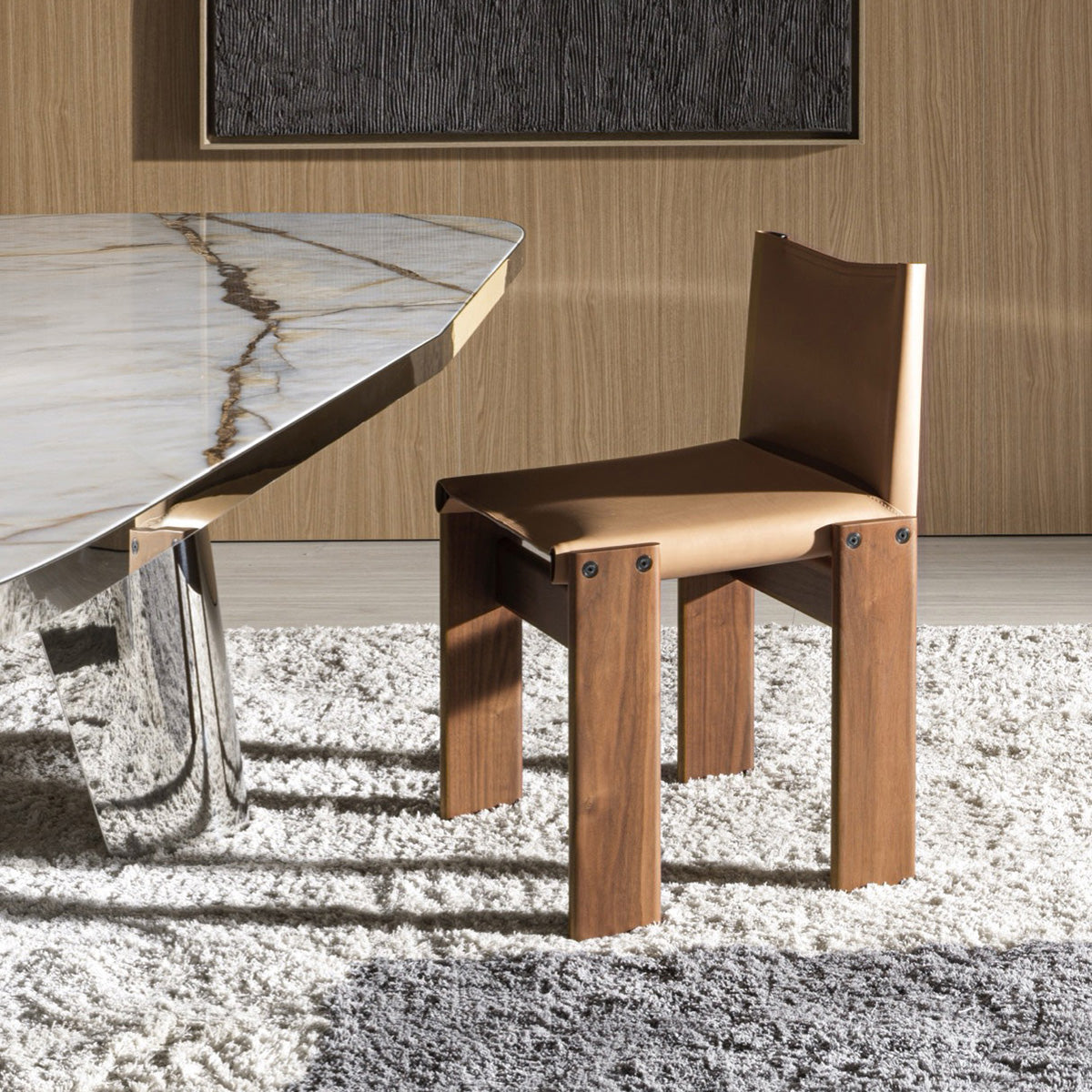
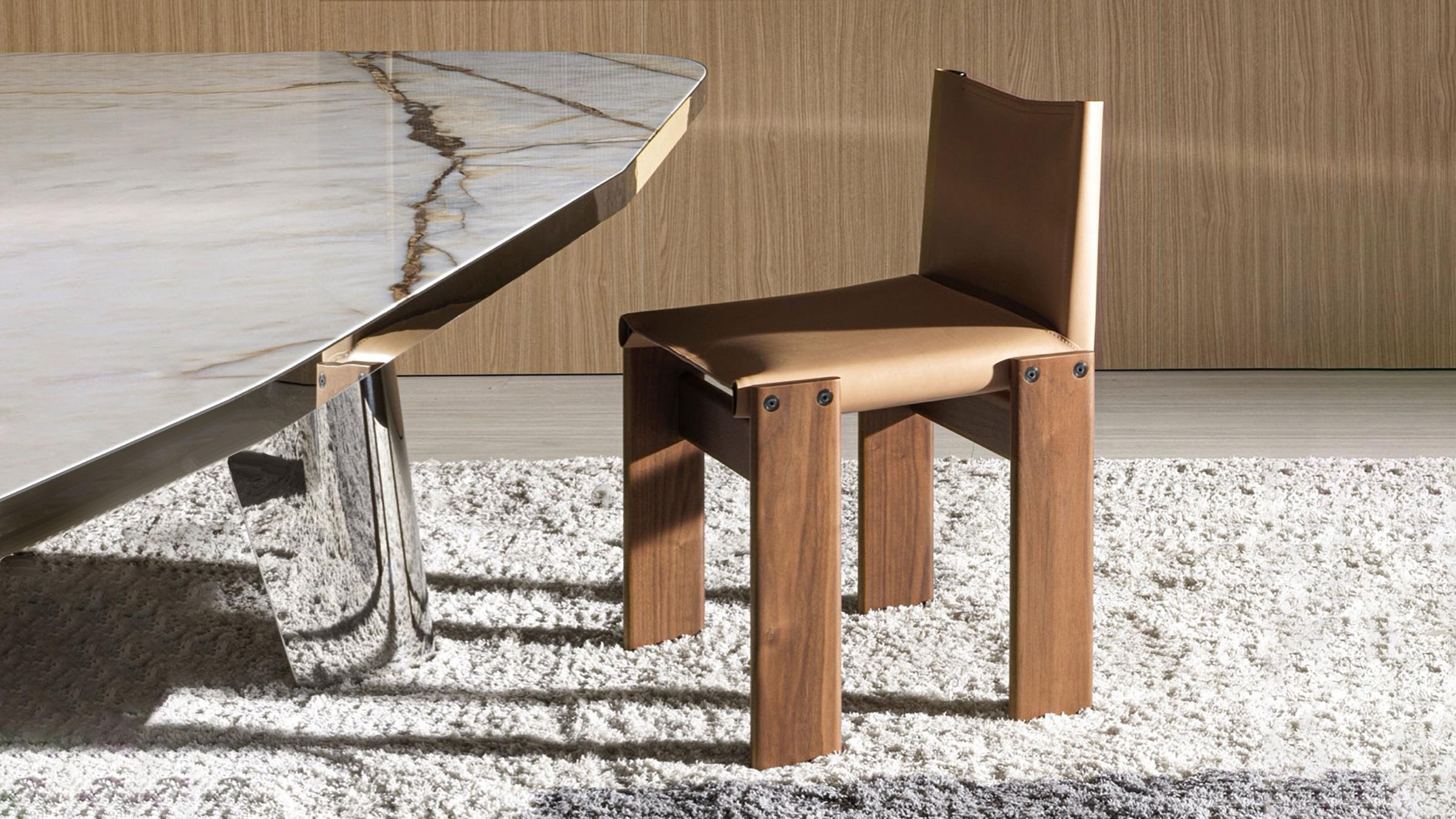
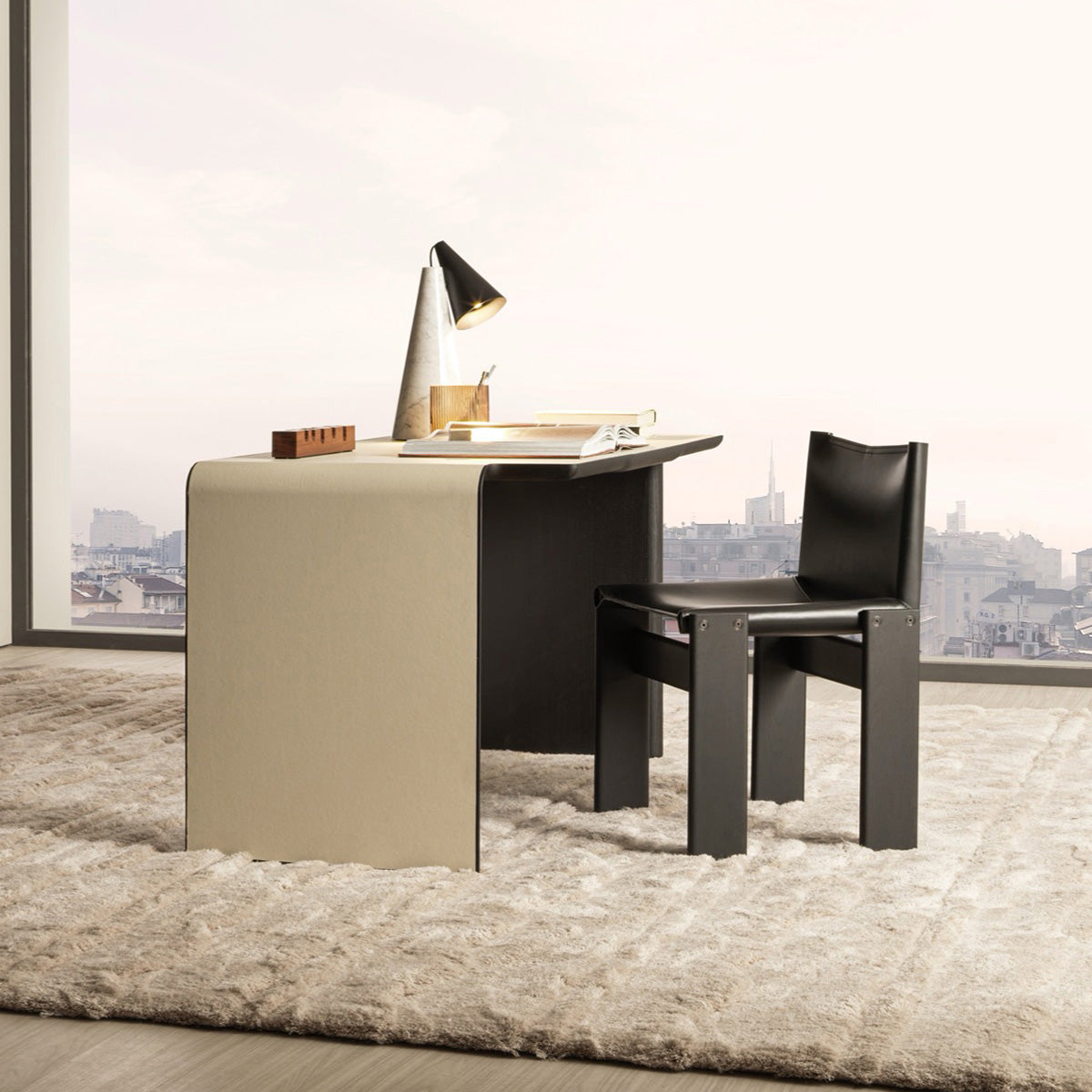
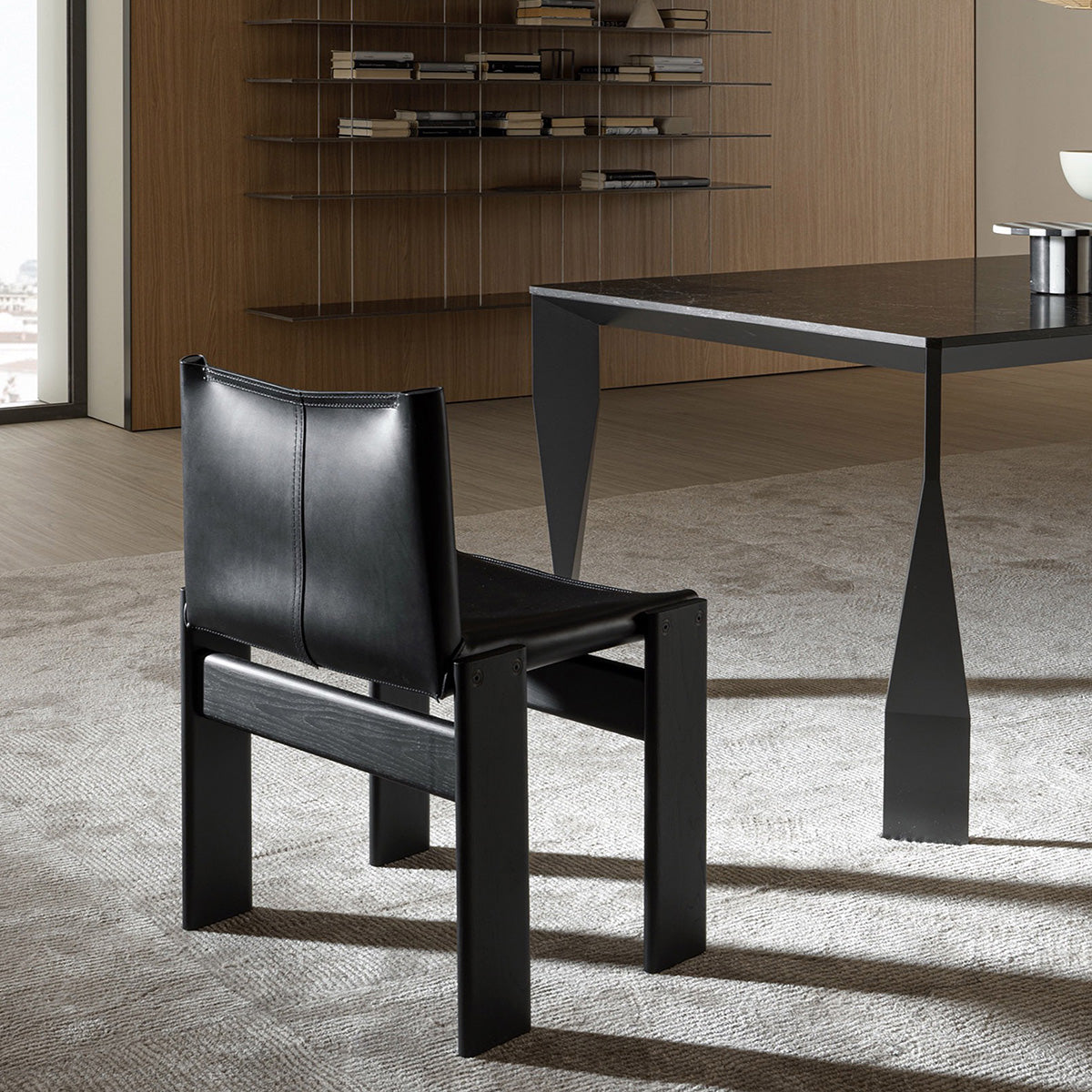
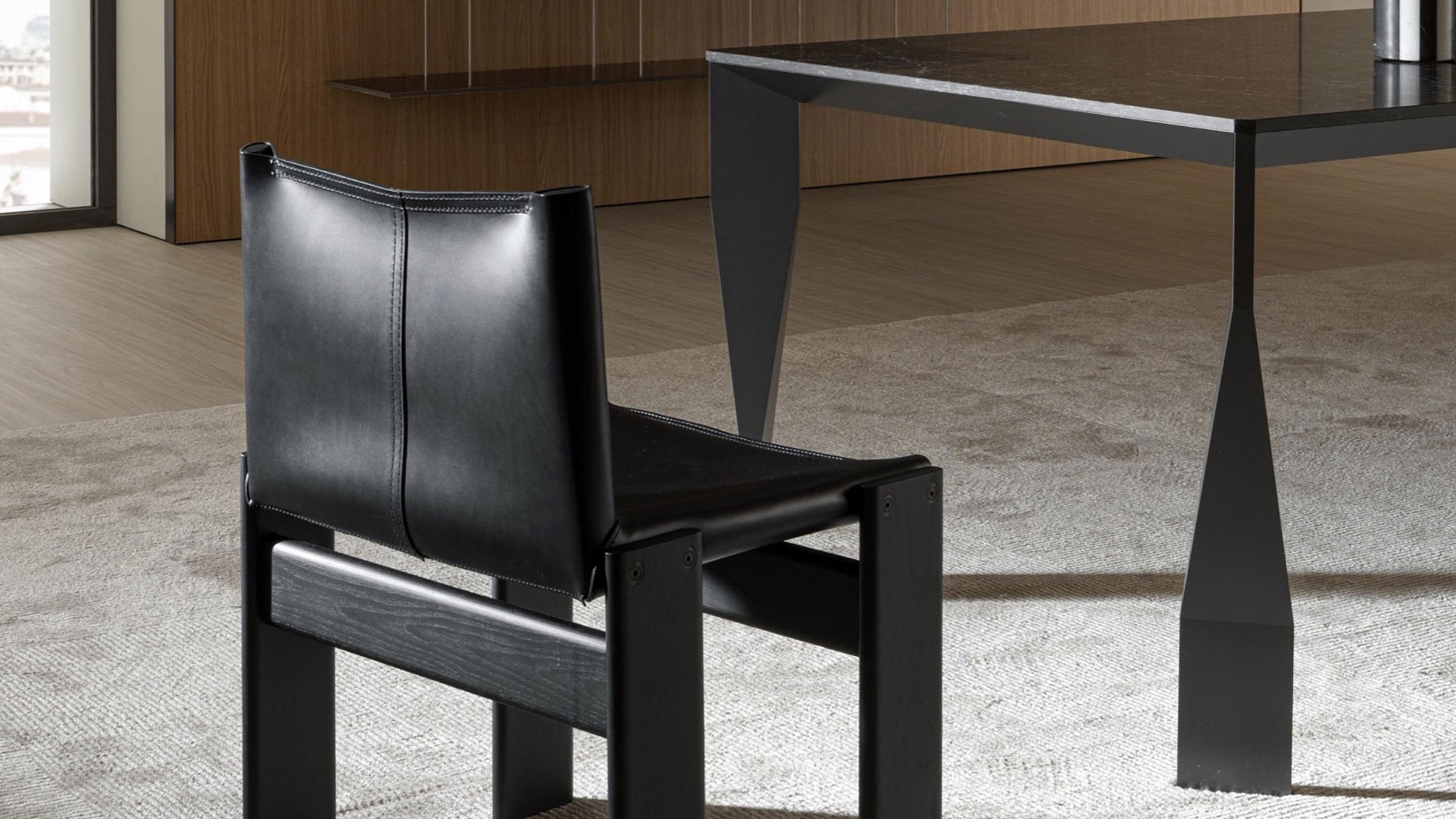
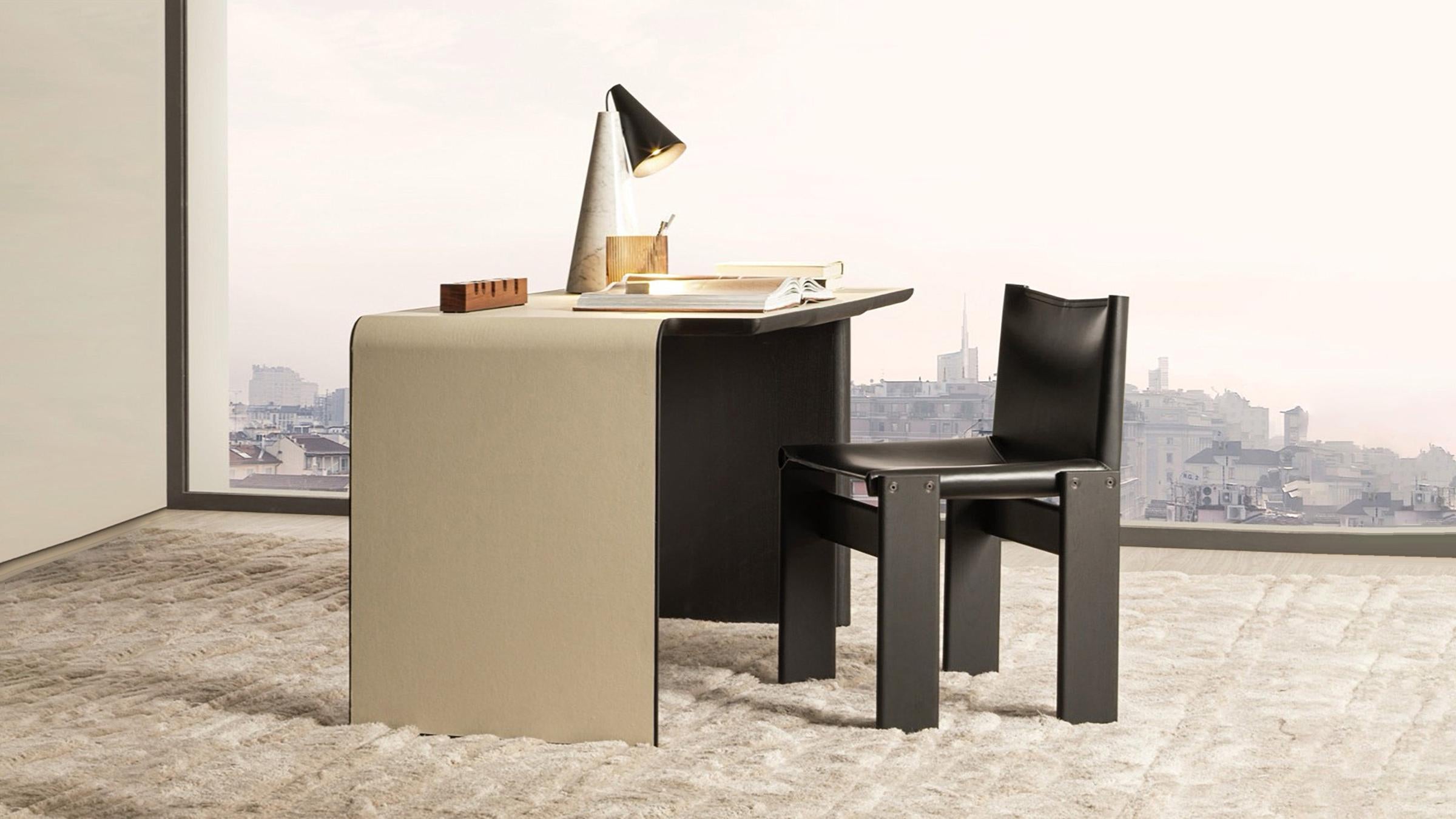
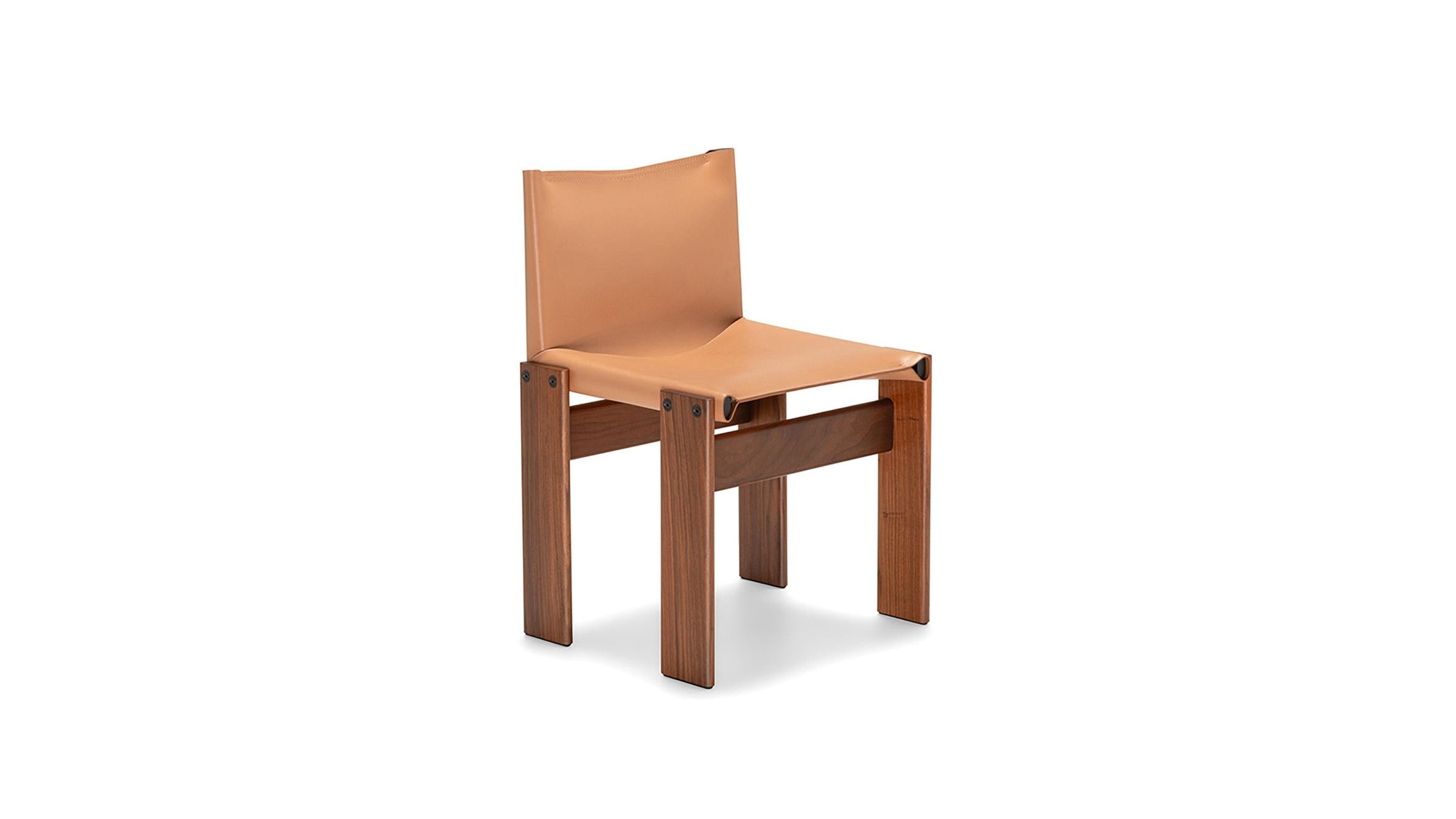
Designed in 1973, the Monk Chair is among the most quietly resolved works Afra and Tobia Scarpa produced for Molteni&C. The form is spare by conviction: leather or canvas pulled taut across a tubular steel frame, grounded by solid wood legs. Nothing is incidental. Every tension in the material is also a decision about proportion.
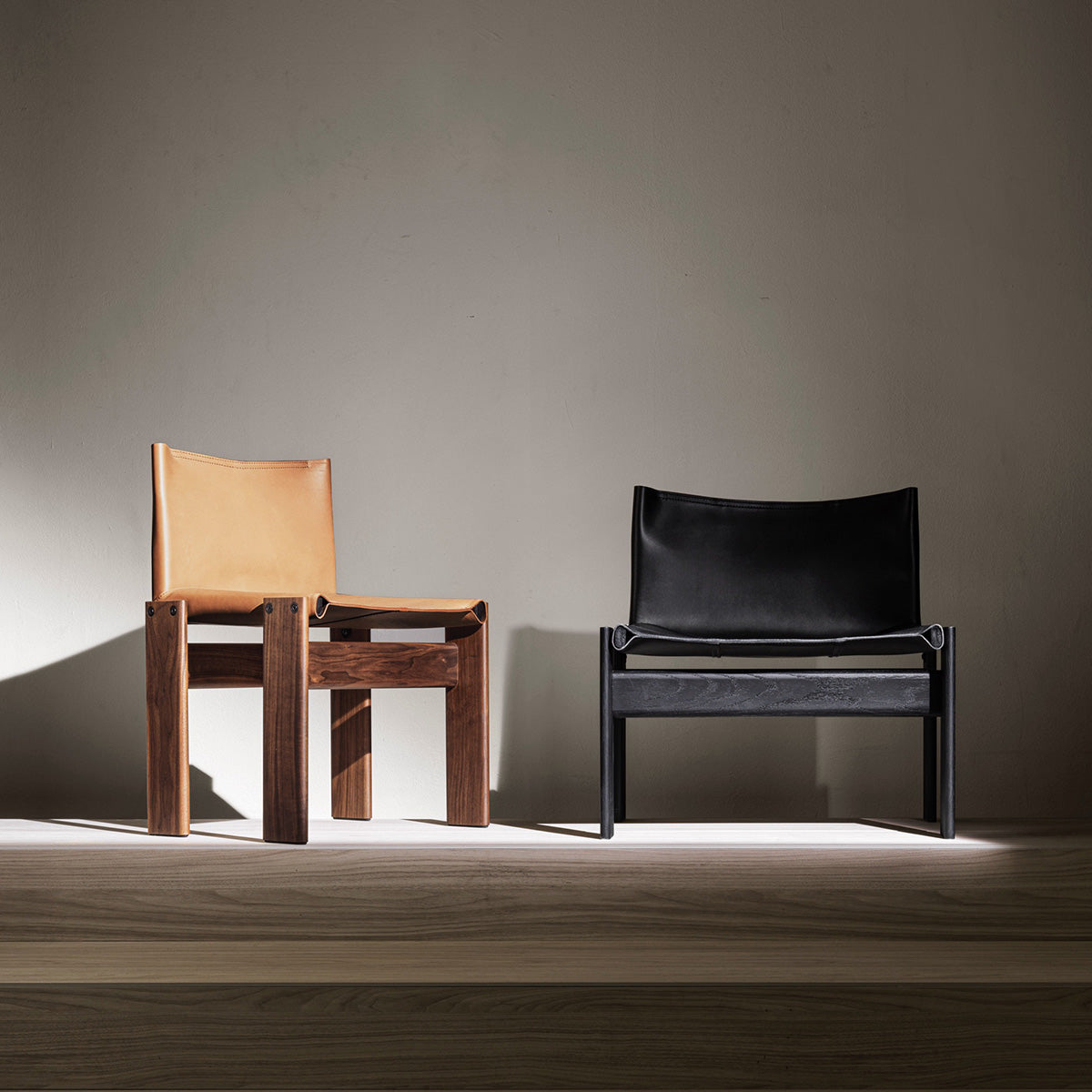
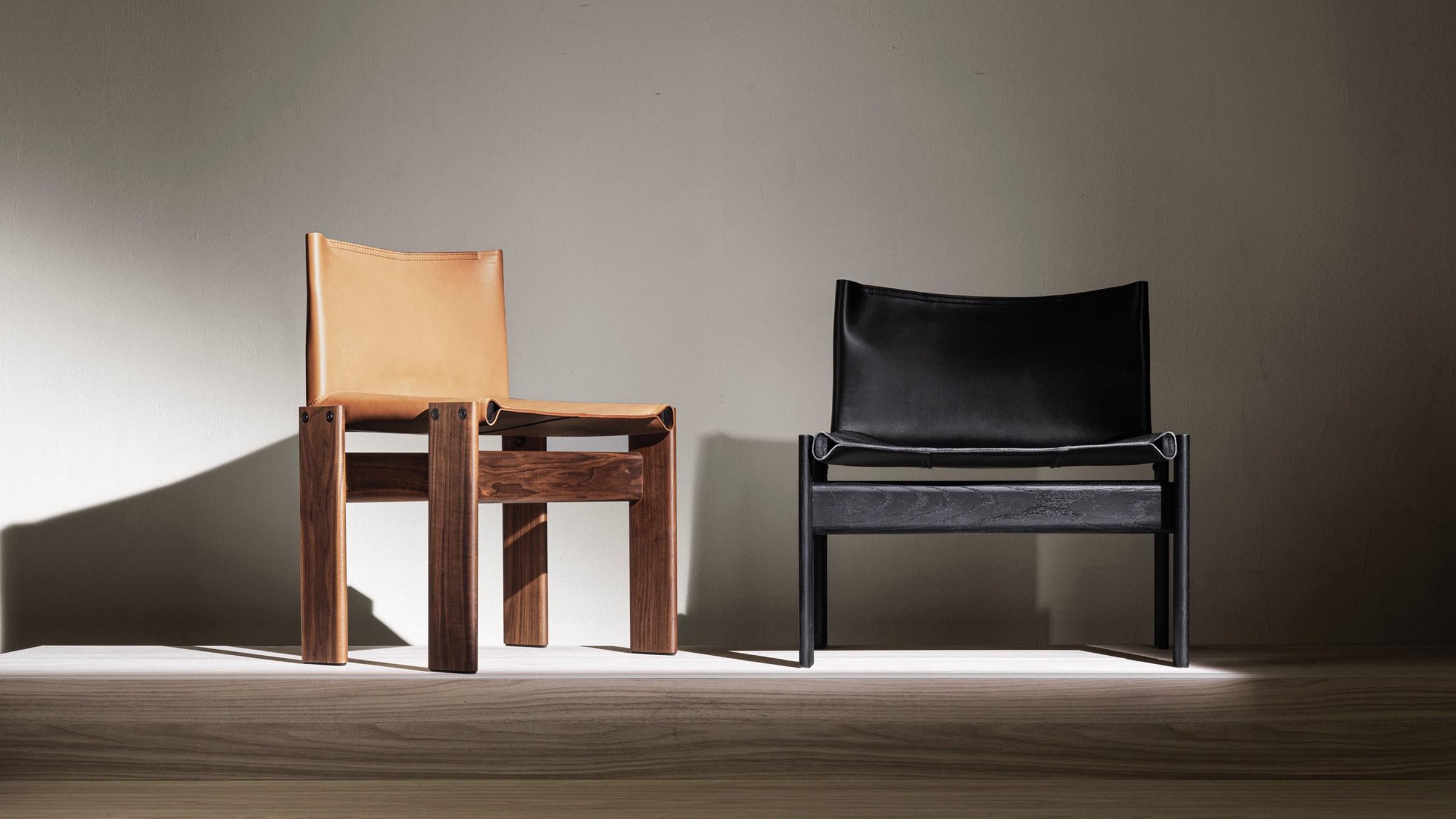
The 2025 reissue revisits the chair with considered refinements. Leg finishes now include American walnut, black oak, and coffee oak, each reading differently against the stretched upholstery. A new armchair variant, wider and lower in profile, extends the silhouette without overwriting it.
- Original design: Afra and Tobia Scarpa, 1973
- Frame: tubular steel with solid wood legs in walnut, black oak, or coffee oak
- Upholstery: leather or canvas
- Available as side chair or armchair
- Made to order
The Scarpas worked at the intersection of Venetian craft tradition and postwar Italian rationalism. Their furniture rarely announces itself, preferring instead to settle into a room and earn attention over time. The Monk Chair is precisely that kind of object.
Made to order by Molteni&C, tailored to you.
Get customization options, swatch samples and pricing for your project.
Pairs Well With
Product Details
Tear Sheet
Pricing & Warranty
Pricing for made-to-order items varies based on configuration, finishes, and customization options. Please contact one of our design consultants or visit a showroom near you for current pricing and personalized assistance.
Luminaire is an authorized retailer of Molteni&C. The product comes with a full manufacturer warranty.
Authenticity guaranteed. Genuine product, authenticated and sourced directly from the manufacturer.
Frequently Asked Questions
Who designed the Monk Chair and when?
The Monk Chair was designed by Afra and Tobia Scarpa in 1973 for Molteni&C. The Scarpas were among Italy's most consequential design partnerships, working across furniture, architecture, and lighting with a sensibility rooted in Venetian craft and rationalist discipline.
What materials are used in the Monk Chair?
The frame is tubular steel, with legs in solid wood available in American walnut, black oak, or coffee oak finishes. The seat and backrest are leather or canvas, stretched taut across the frame to create the chair's characteristic spare profile.
What is different about the 2025 Molteni&C Monk Chair reissue?
The 2025 reissue introduces new wood finish options, including American walnut, black oak, and coffee oak, and adds a wider, lower armchair configuration alongside the original side chair form. The essential design character of the 1973 original is preserved.
Is the Monk Chair suitable for use as a dining chair?
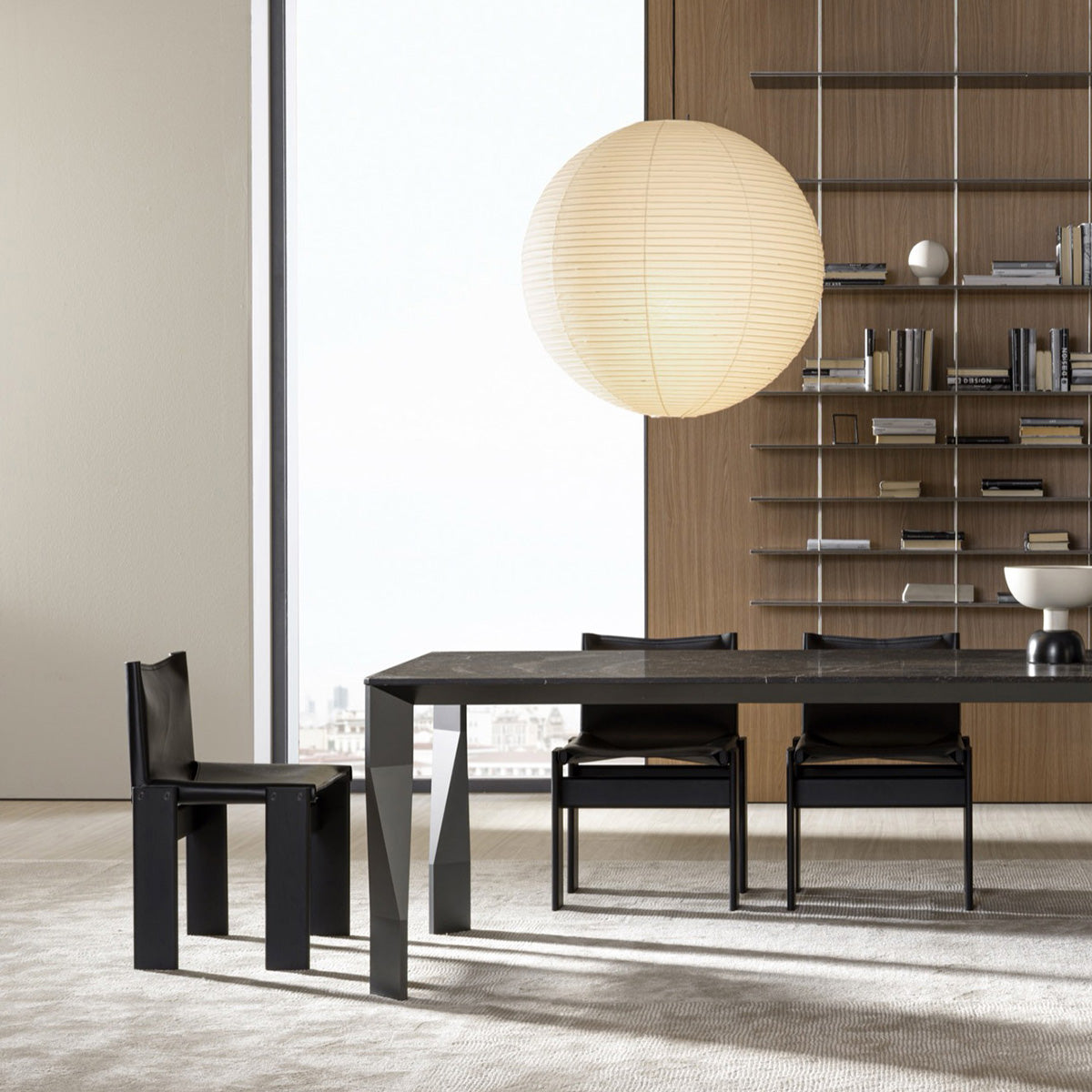
Yes. Its proportions and frame height make it well suited to dining contexts, and its spare form integrates naturally with both contemporary and mid-century interiors. The 2025 armchair version offers an alternative scale for more generous seating arrangements.
How does the Monk Chair relate to Afra and Tobia Scarpa's broader body of work?
The Monk Chair reflects the Scarpas' consistent interest in structural honesty and material restraint. Like much of their work, it resists ornamentation, letting the logic of construction carry the aesthetic, a position that kept their objects relevant well beyond the decade in which they were conceived.