
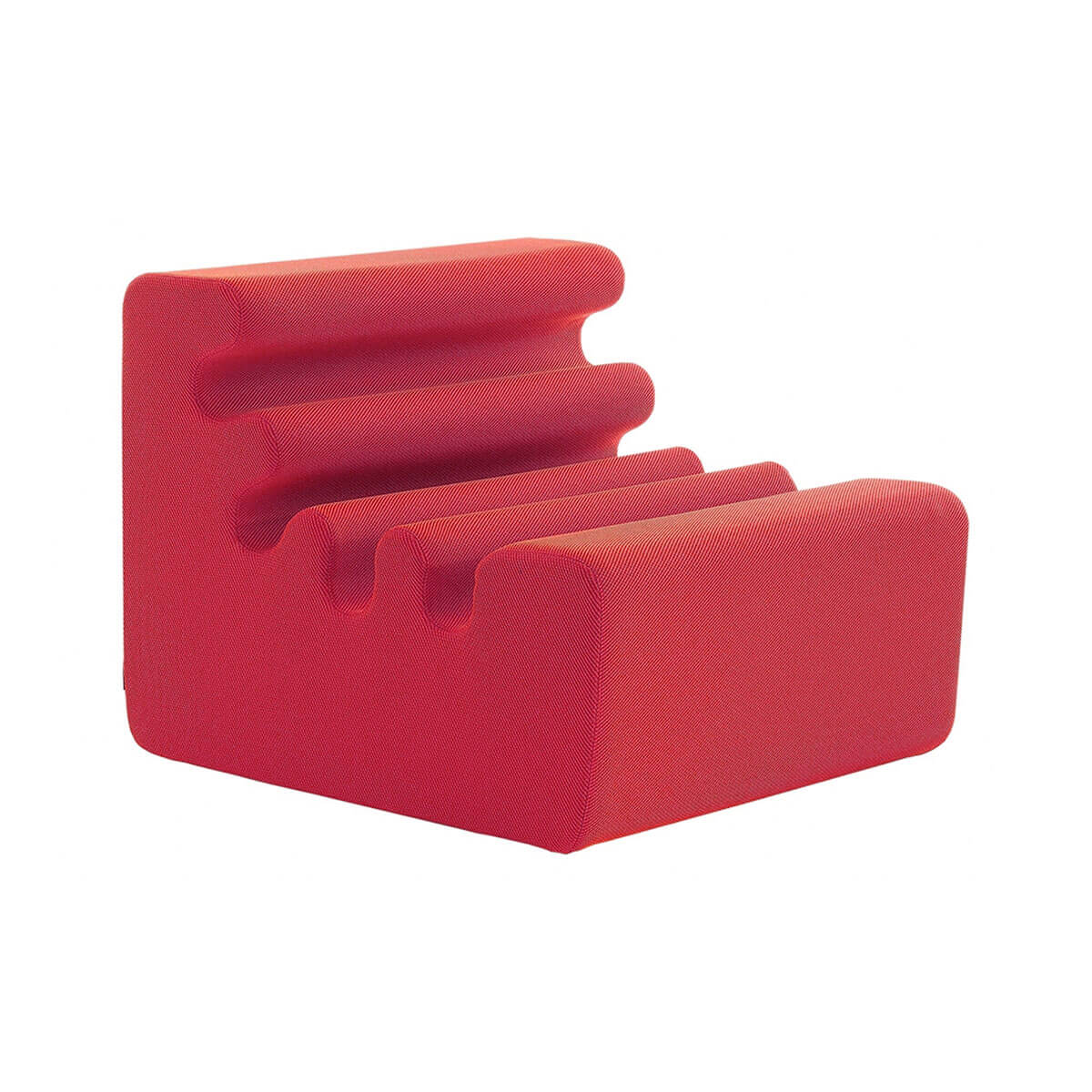
Karelia Chair
Made by Zanotta
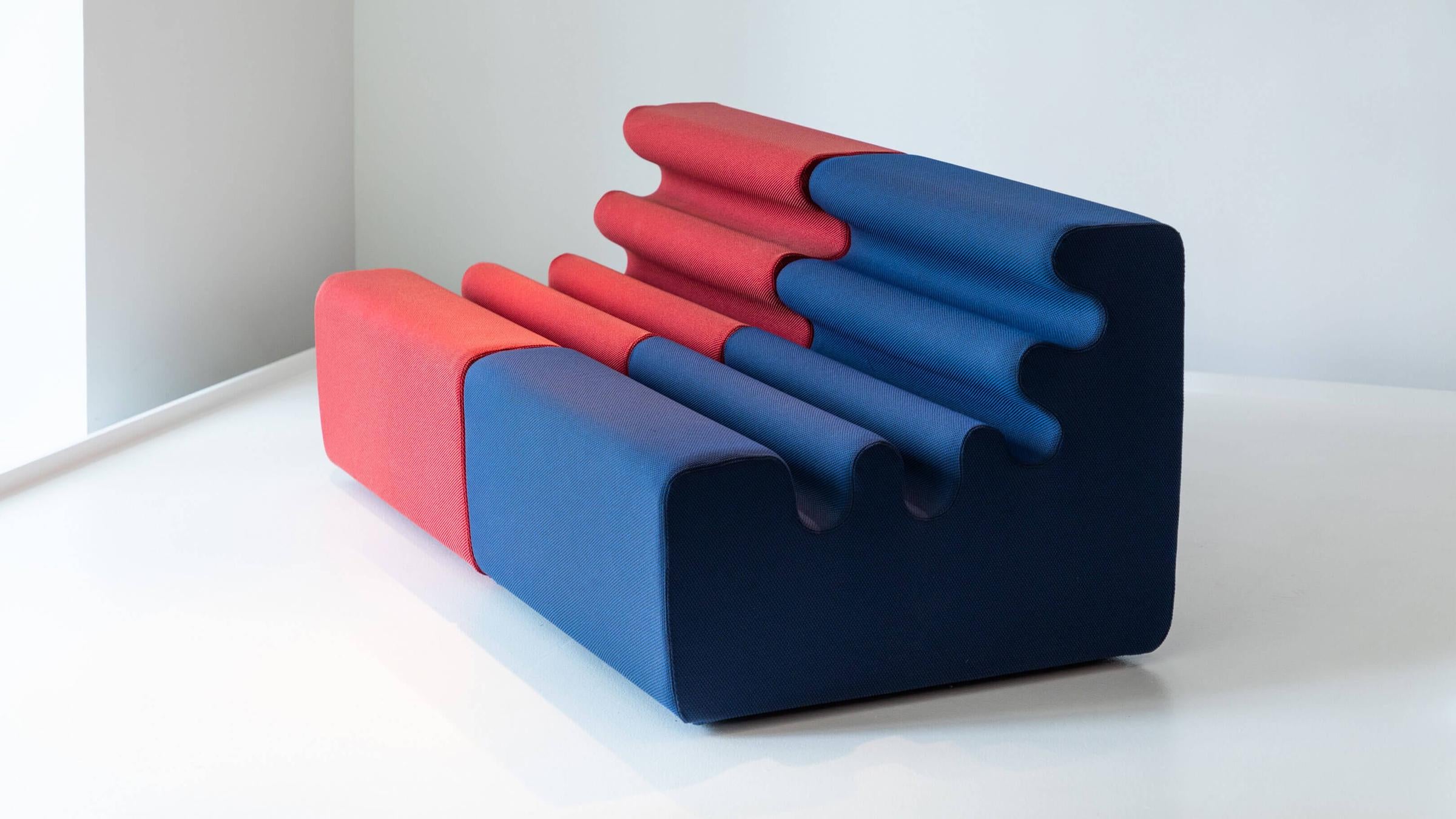
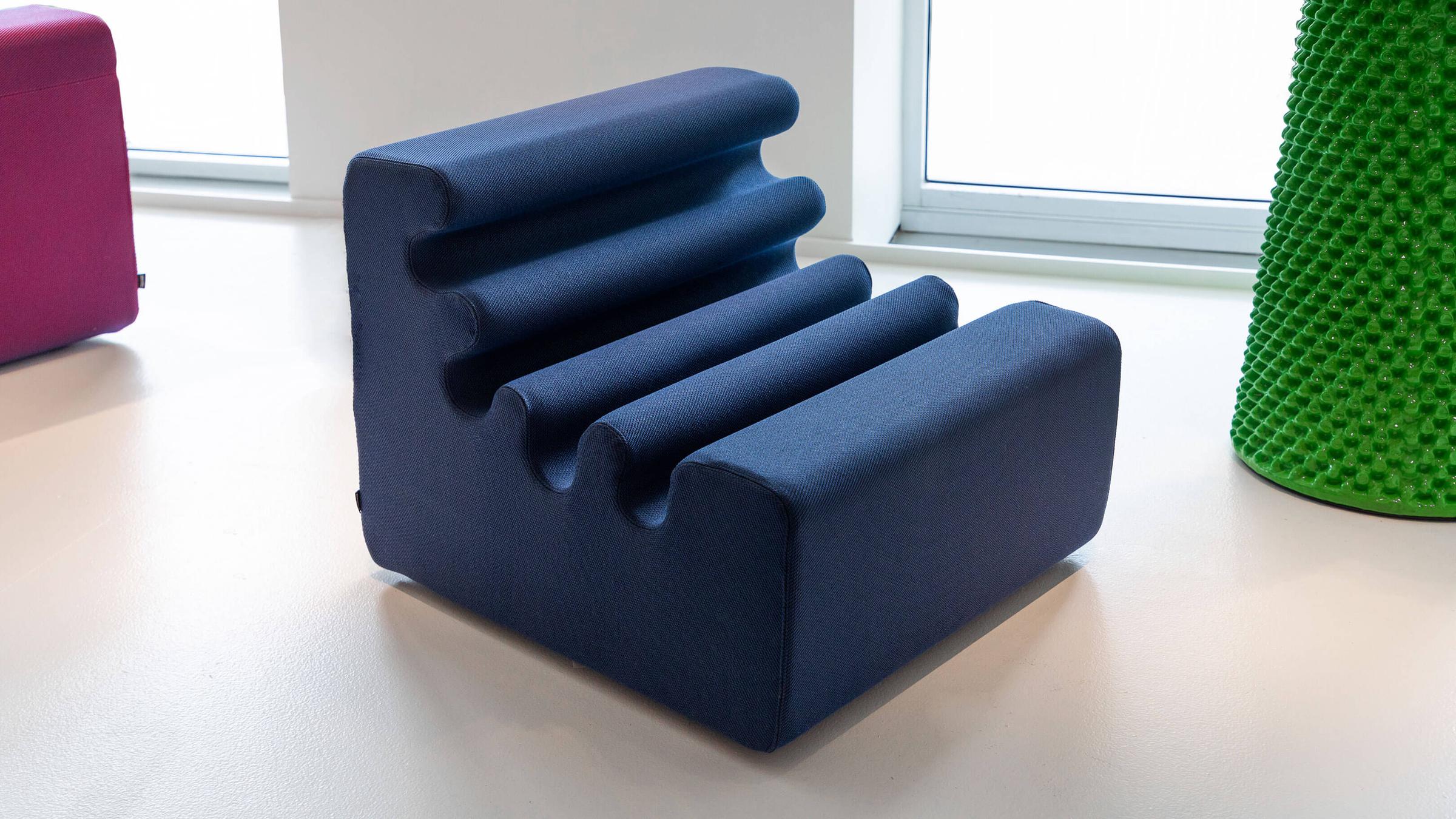
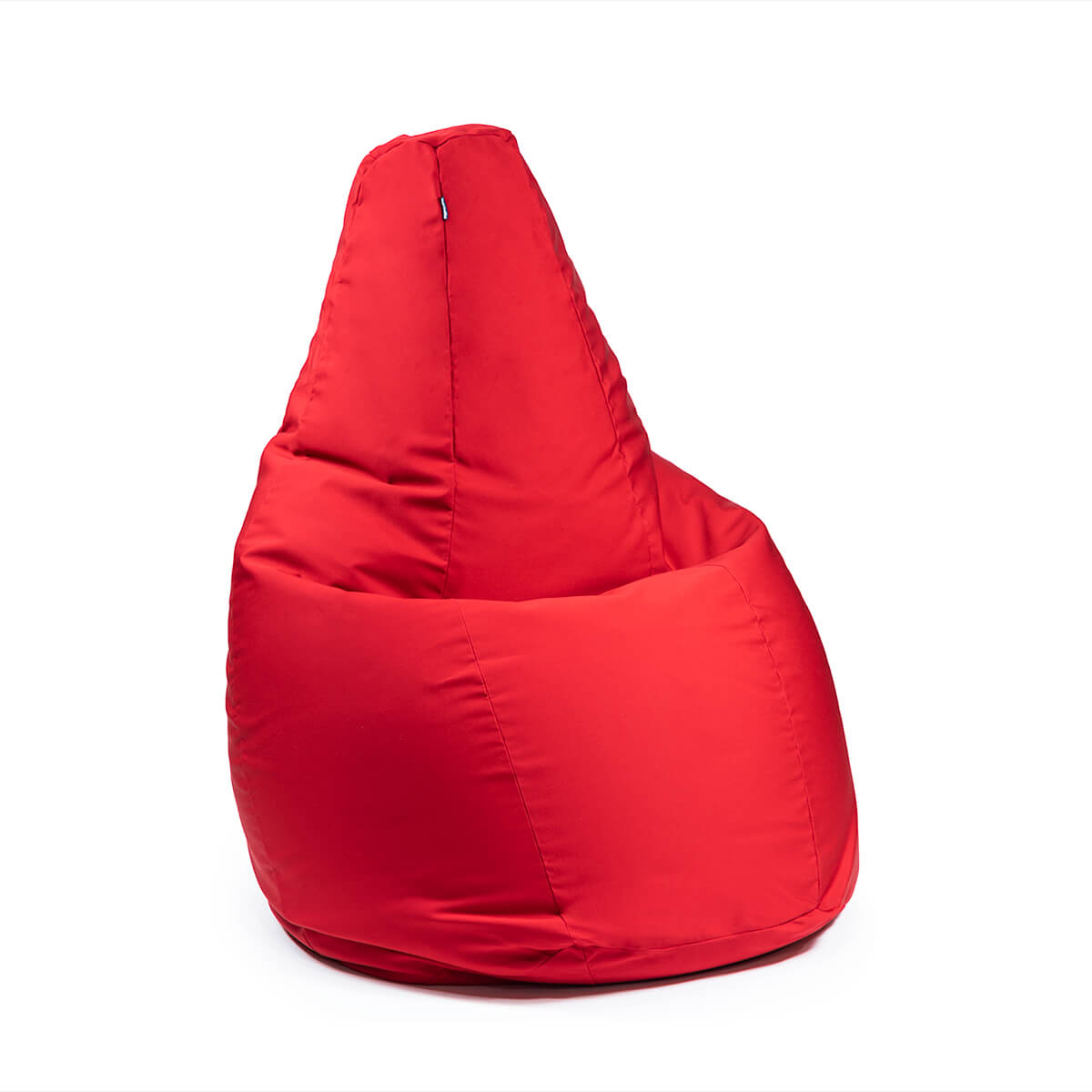
Liisi Beckmann designed the Karelia in 1966 as a direct refusal of convention. There is no frame, no legs, no visible structure of any kind. The form is entirely polyurethane foam, shaped into a continuous wave that supports the body through contour alone.
The inspiration came from the bays and inlets of Beckmann's native Finland, landscapes defined by soft, undulating edges rather than hard geometry. That sensibility translated into a silhouette at once sculptural and inviting, as organic as it is considered.
- Frameless construction in continuous polyurethane foam
- Wave-form profile rooted in Finnish coastal geography
- Updated fabric covering compatible with contemporary interiors
- Original design by Liisi Beckmann, 1966, produced by Zanotta
Karelia belongs to a generation of Italian and European design that treated furniture as a cultural statement. Its Pop spirit has not softened with time. If anything, the chair reads more clearly now as an object that understood freedom of form before the discipline had a language for it.
Typically ships in 12-14 weeks.
Pairs well with
Karelia Chair
Product Details
Details
Measurements
Resources
Shipping, Returns & Warranty
Please refer to our shipping and return & exchange policy.
Luminaire is an authorized retailer of Zanotta. The product comes with a full manufacturer warranty.
Authenticity guaranteed. Genuine product, authenticated and sourced directly from the manufacturer.
Frequently Asked Questions
How does the Karelia fit into a contemporary interior?
Its organic silhouette reads well against both minimal and expressive interiors. The updated fabric covering makes it adaptable, while the form itself carries enough presence to anchor a room on its own.

We love Zanotta too!
Have any questions about this product or any other product by Zanotta, get in touch! We are here to help.
-
Speak with a design consultant
We can help answer any questions you have. Give us a call.
-
Send us a message
Prefer to get an answer to your question via email? Drop us a line.