




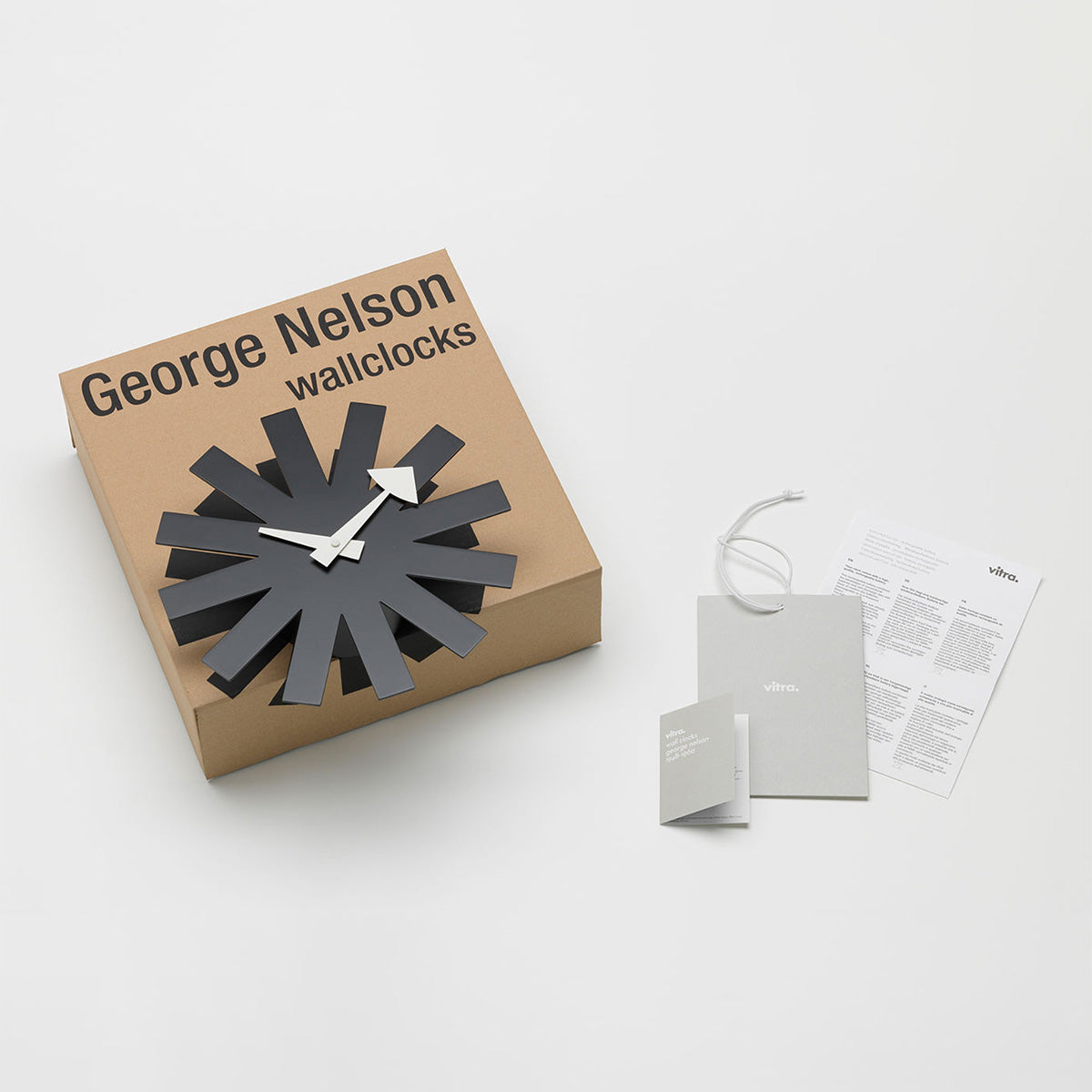
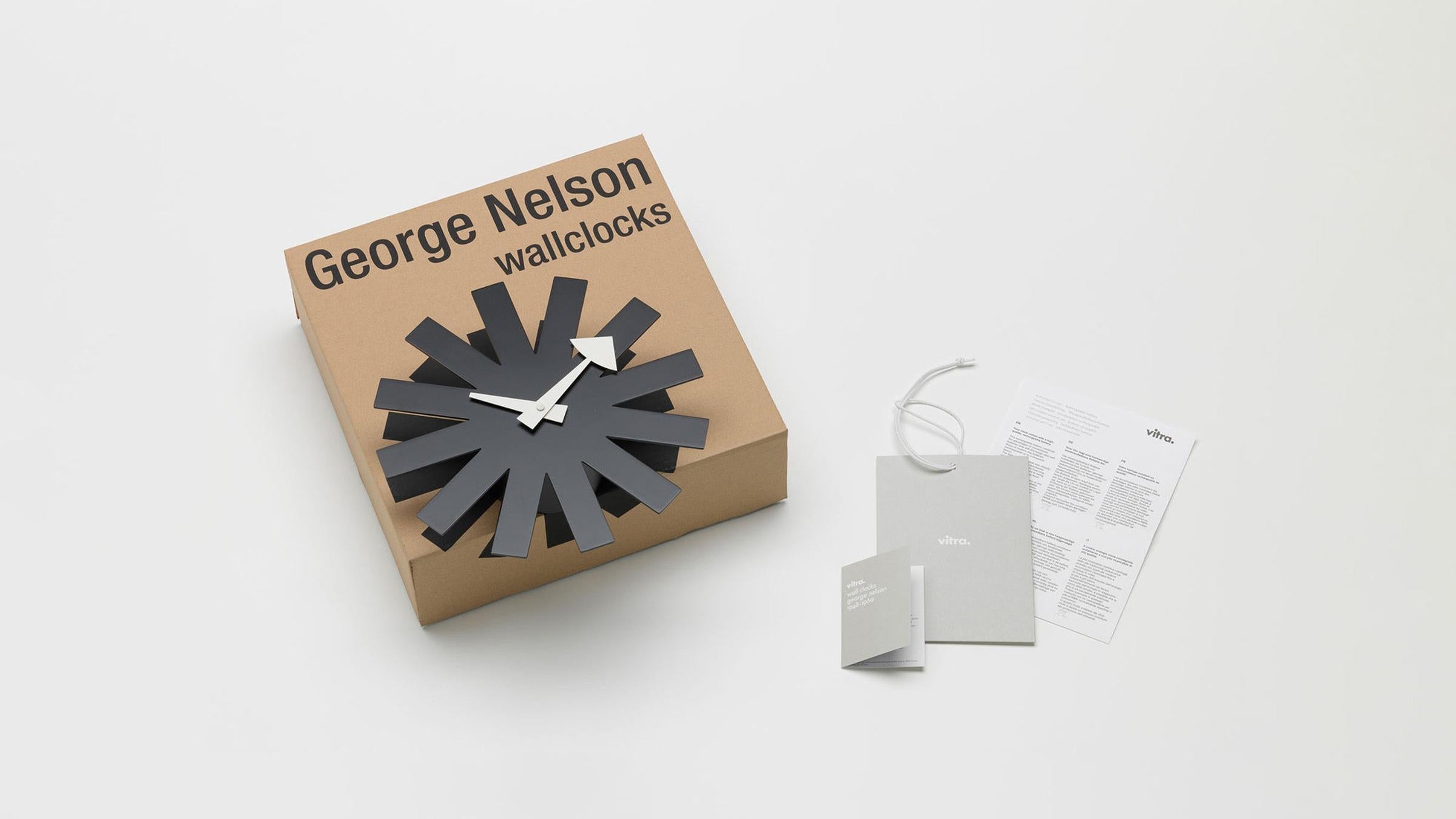
Asterisk Clock
Made by Vitra
Designed by George Nelson
George Nelson conceived the Asterisk Clock in the 1950s as part of his landmark series for Howard Miller, a body of work that redefined what a clock could be. Where conventional timepieces orient the eye toward numerals, Nelson removed them entirely, letting pure form carry the reading of time.
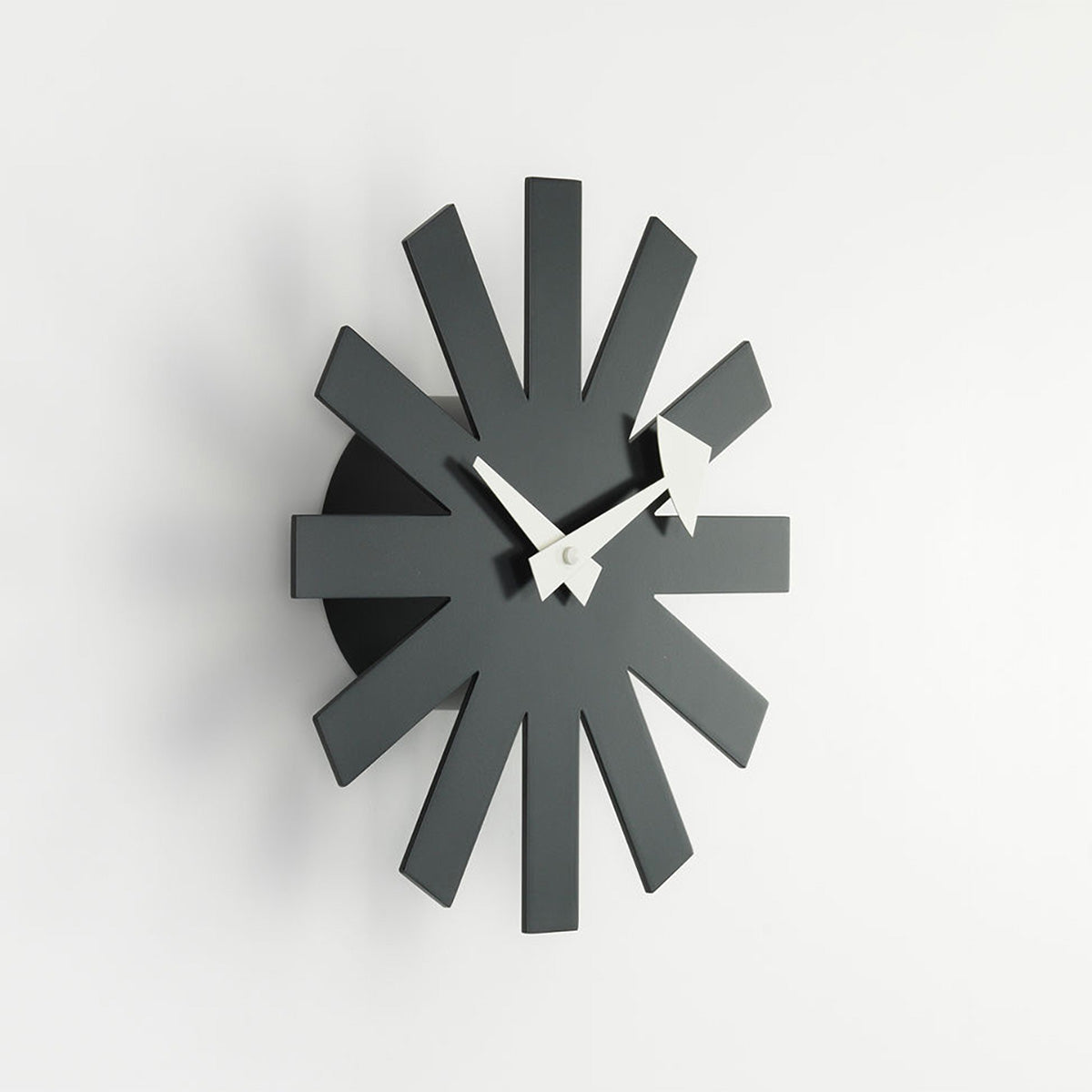
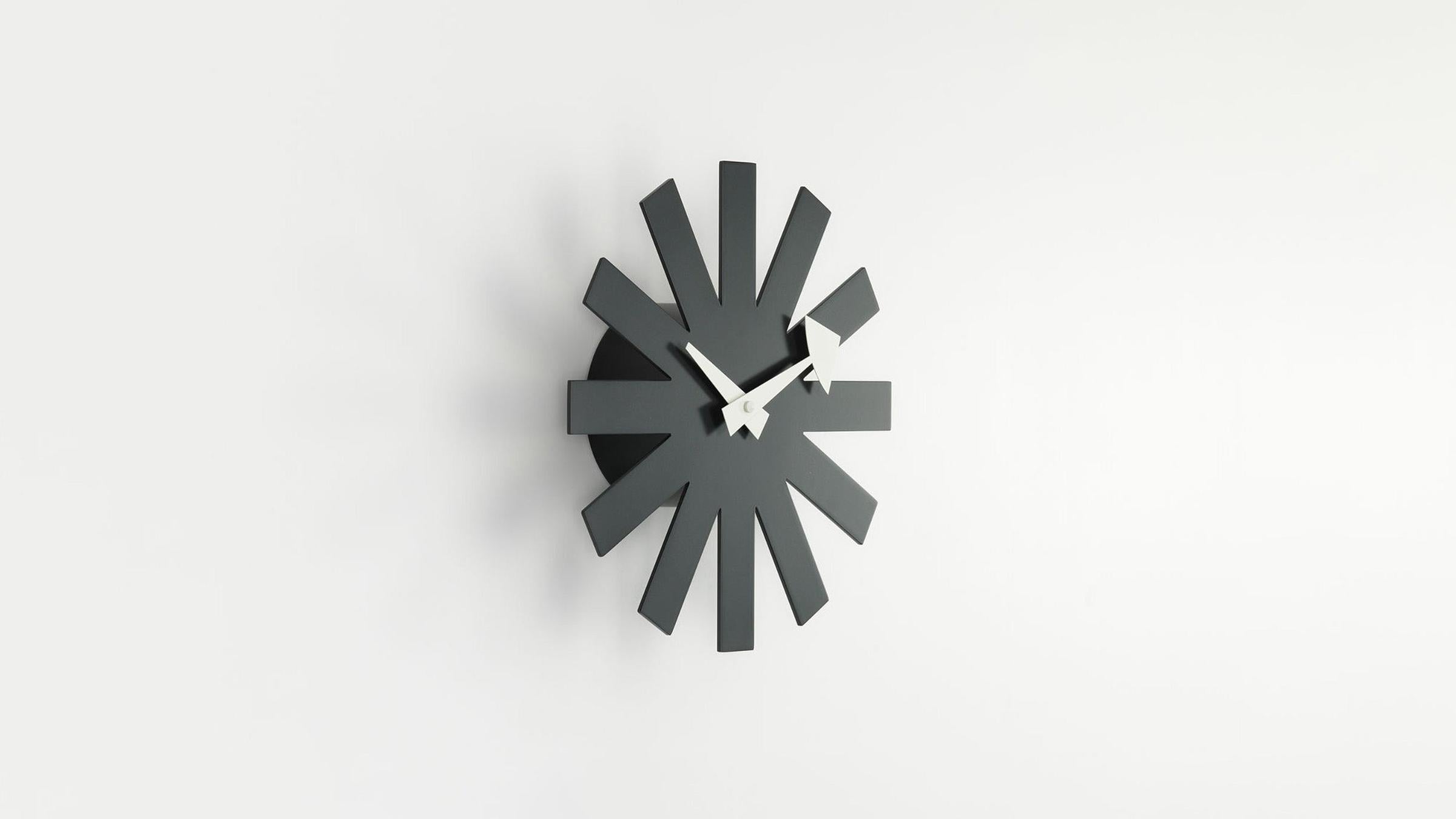
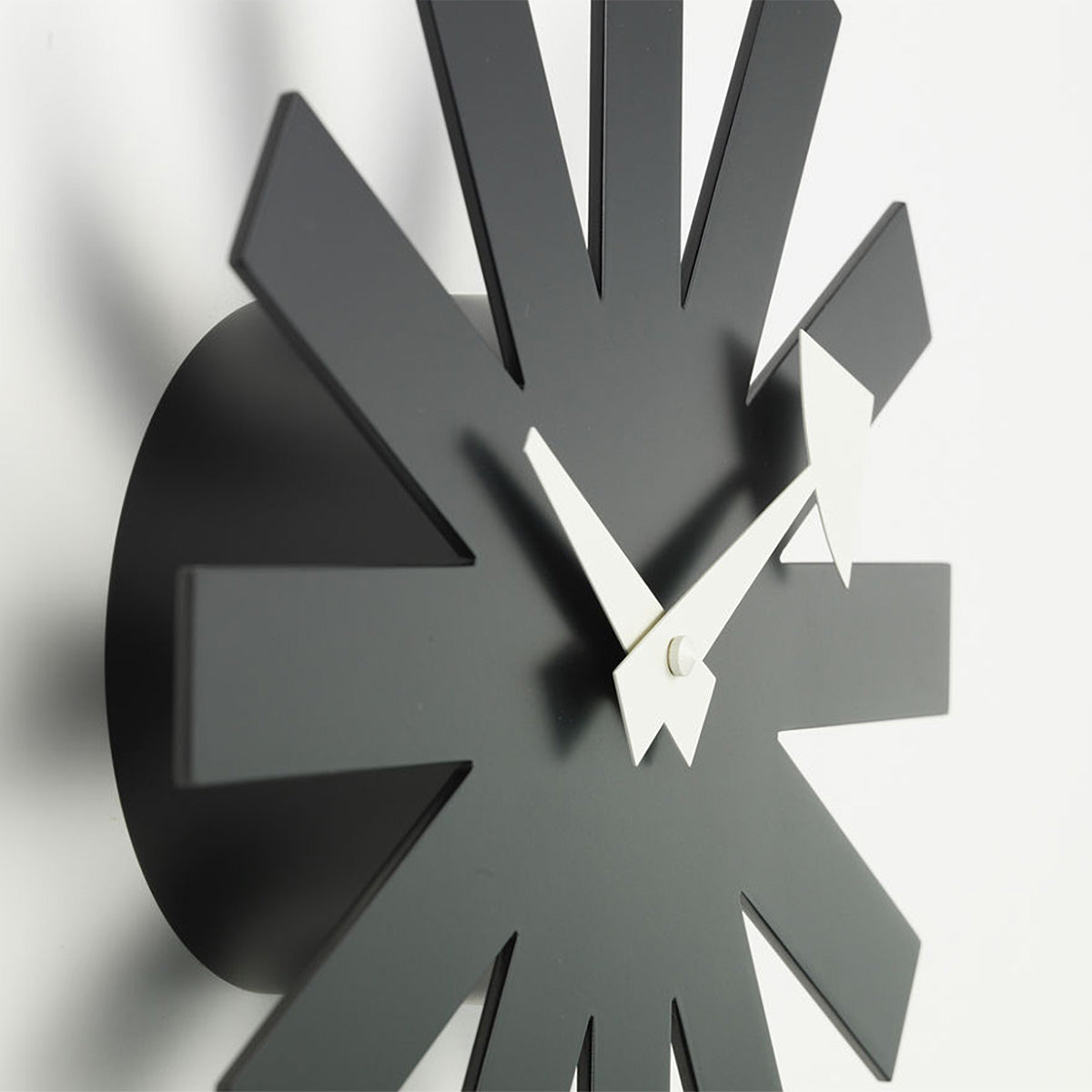
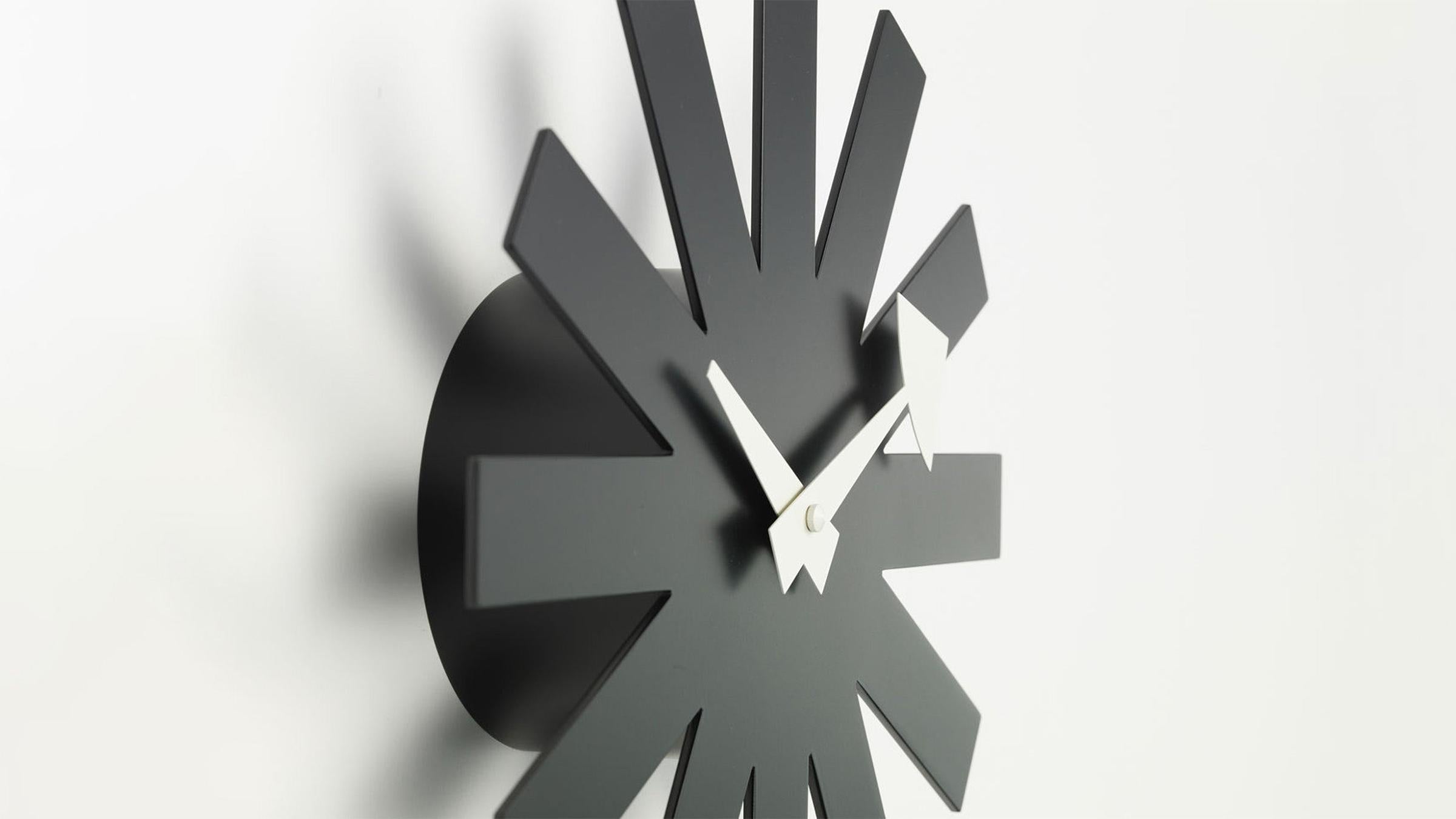
Twelve radial spokes extend from a central hub, evoking the typographic asterisk and giving the clock its name. The composition is at once kinetic and composed, suggesting movement without sacrificing calm. Vitra's production preserves Nelson's original proportions and finishing choices, including brass and painted accents that reward close attention.
- Designed by George Nelson in the 1950s
- Produced by Vitra under the original Howard Miller license
- Number-free dial, twelve radial spokes
- Available with brass or painted spoke finishes
- Battery-operated quartz movement
The clock reads as graphic art from across a room and as considered craft up close. It belongs to a lineage of American mid-century design that treated everyday objects as opportunities for genuine invention.
Typically ships in 2-4 weeks.
Pairs well with
Asterisk Clock
Product Details
Details
Measurements
Tear Sheet
Shipping, Returns, & Warranty
Please refer to our shipping and return & exchange policy.
The product comes with a full manufacturer warranty. Luminaire is an authorized retailer of Vitra.
Authenticity guaranteed. Asterisk Clock is a genuine product, sourced directly from Vitra.
Frequently Asked Questions
Who designed the Asterisk Clock and when?
George Nelson designed the Asterisk Clock in the 1950s as part of a series of sculptural clocks originally produced by Howard Miller. Vitra now holds the license and continues production faithful to Nelson's original specifications.
Why does the Asterisk Clock have no numbers?
Nelson's design philosophy held that the graphic form of a clock could communicate time without relying on numerals. The twelve evenly spaced spokes orient the eye intuitively, making the face as readable as any numbered dial while functioning as a wall sculpture in its own right.
What materials are used in the Vitra Asterisk Clock?
The clock features a combination of brass and painted wood or metal accents depending on the finish variation. Vitra maintains the material palette established in Nelson's original mid-century designs.
How large is the Asterisk Clock, and how is it mounted?
The Asterisk Clock measures approximately 66 cm (roughly 26 inches) in diameter and mounts to the wall with a single hook or screw at the rear of the central housing. Its span makes it a confident presence on most wall surfaces.
How does the Asterisk Clock relate to other George Nelson clock designs?
The Asterisk Clock is one of several sculptural timepieces Nelson created in the 1950s, a series that also includes the Ball Clock and the Sunflower Clock. Each design shares a radial vocabulary while exploring a distinct graphic identity, and the series as a whole is considered one of the most influential contributions to American mid-century industrial design.



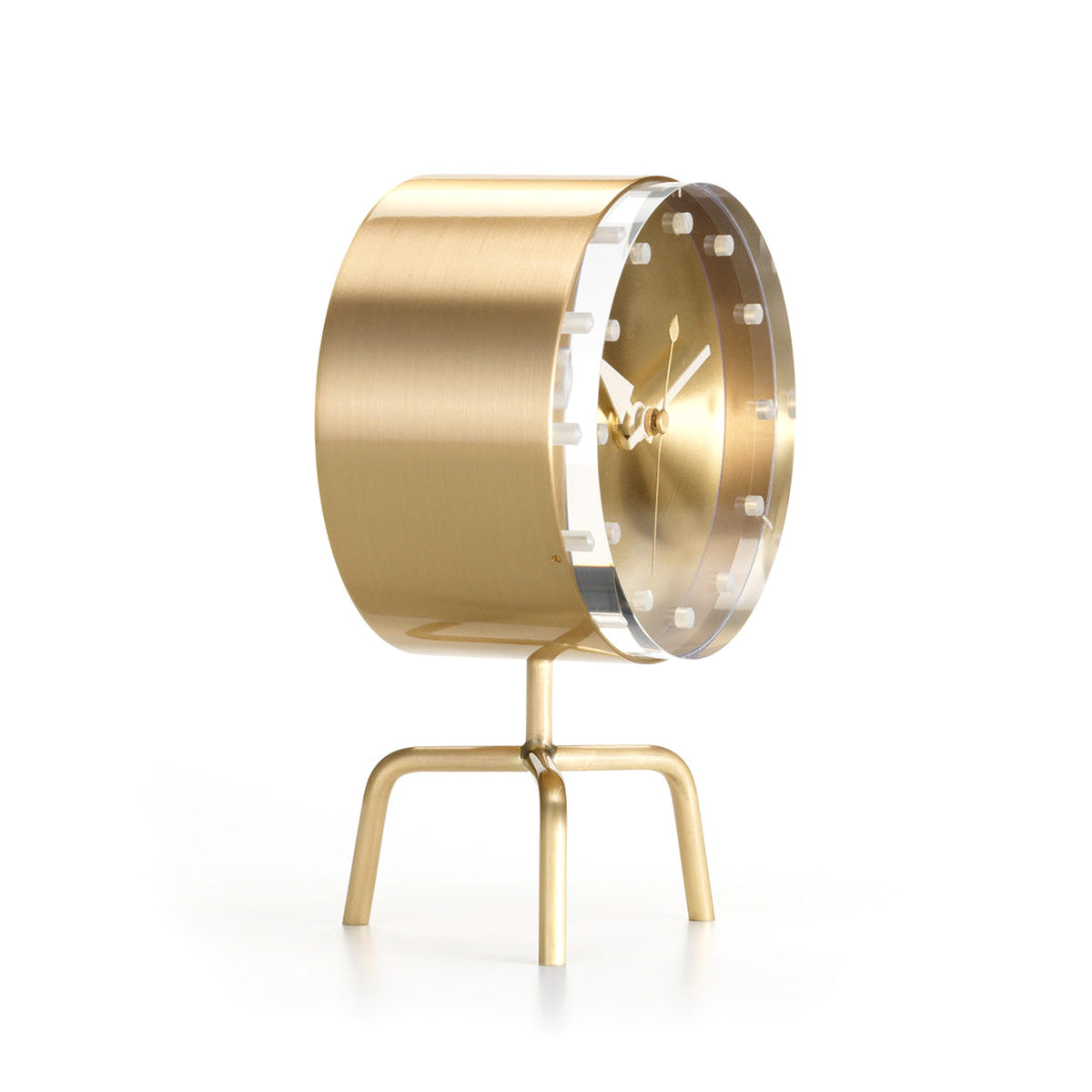
We love Vitra too!
Have any questions about this product or any other product by Vitra, get in touch! We are here to help.
-
Speak with a design consultant
We can help answer any questions you have. Give us a call.
-
Send us a message
Prefer to get an answer to your question via email? Drop us a line.